
By Chris Dubuque….
“Our hobby is our job” – Alice Fergusson, 1960
One of the more colorful characters in the history of Citroëns in North America was a woman named Alice Fergusson. She raced and rallied cars, she operated a speed shop, she ran a multi-marque dealership, and much more. She was a force. Read on to learn more about her.
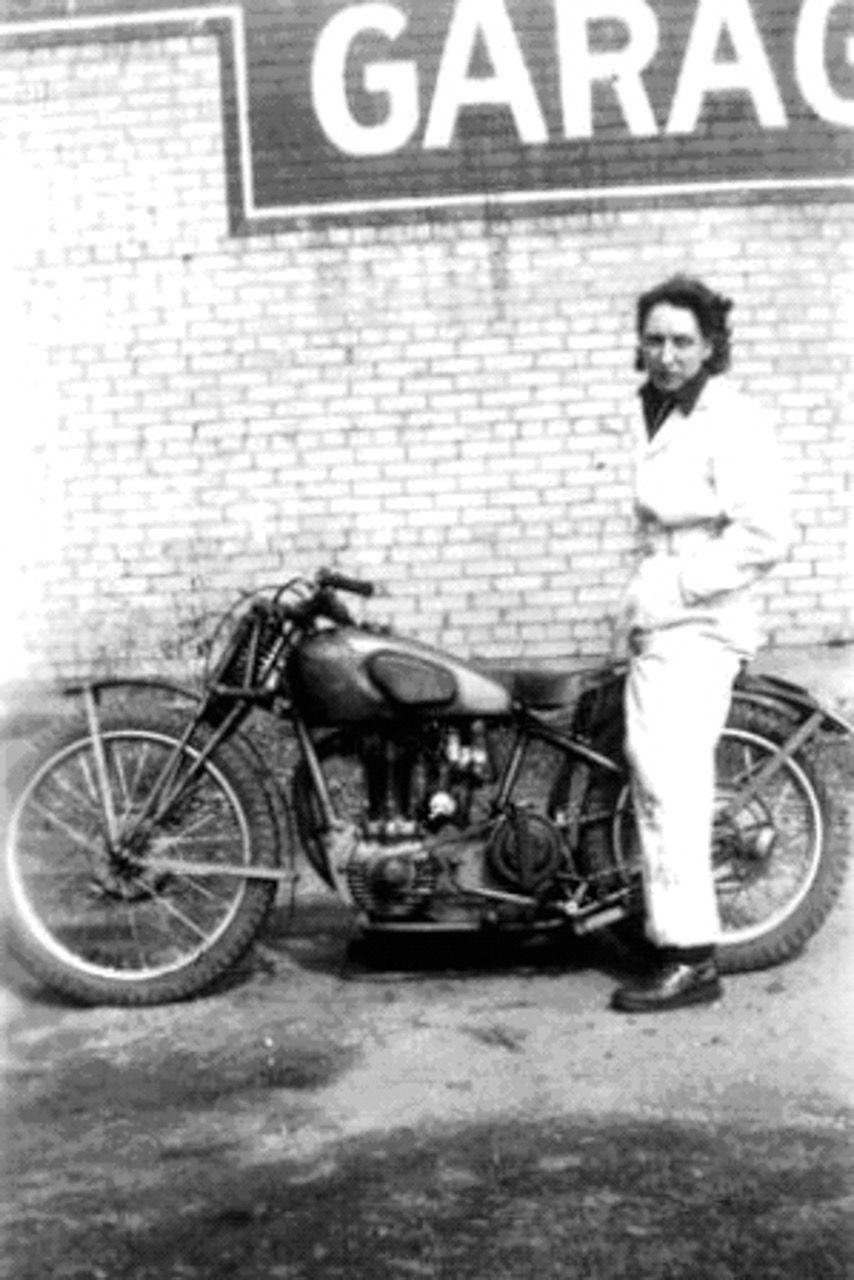
– Canadian Motorsport Historical Society
Alice became involved in motorsport because of her relationship with a man named Jim Fergusson. Jim was a prominent motorcycle racer and automotive enthusiast who began gaining recognition in Canada in the 1930s.
James William Fergusson (Jim) was born in Manitoba on January 31, 1910. He was fascinated with cars and motorcycles, a passion that led him to enter the automobile business as his career. Even before motorsport was widely established in Canada, Jim Fergusson was experimenting with performance modifications, building a reputation as a skilled mechanic, capable of extracting winning performance from modest vehicles.
In 1937, Jim met Alice Doreen Clarke, a young woman from Toronto. Alice, born on April 15, 1916, was a talented and competitive athlete, with interests that are said to have included archery, baseball, golf, and skiing. Her interest in mechanical things developed after meeting Jim. Later in life, she told a reporter that their dates often consisted of helping Jim grind the valves on one of his motorcycle engines.
Jim and Alice married in 1939, just before the outbreak of World War II. Alice became deeply involved in all aspects of automobiles, quickly establishing herself as a capable salesperson, driver, and mechanic. Alongside her growing mechanical expertise, she also embraced family life as the couple had two daughters in the late 1940s.
THE FERGUSSON CAR DEALERSHIPS
Jim and Alice’s experience running a car dealership began at the Scarborough Beach Garage, located at 2301 Queen Street East, in a suburb of Toronto. The spelling of the word Scarborough in the business name was inconsistent, appearing as both Scarboro Beach Garage and Scarborough Beach Garage. This caused some confusion trying to research this article, but I eventually came to discover that the shorter spelling variation was once common in the Toronto area and eventually fell out of favor.
The Scarborough Beach Garage had been established in 1928 by Jim’s father, William Fergusson, who had immigrated from Scotland in 1899. Jim was working side-by-side with his father at the garage when World War II started ramping-up. Jim entered the Canadian Military and was sent overseas, where he was assigned duties associated with vehicles, with one source saying that he became a Lieutenant and managed a repair depot.
Although Alice initially worked as a stenographer, she soon left her clerical career to become fully involved in the garage. In February of 1942, just three weeks after Jim had left Canada to support the war, his father died, leaving the business to Jim and Alice. But with Jim overseas, operation of the Scarborough Beach Garage fell entirely in Alice’s lap.
As with many industries, the war stopped the production of new cars and parts for the home front. This meant that car dealerships and auto repair facilities had to resort to creative solutions to remain in business and to keep vehicles running. This period likely proved formative for Alice, forcing her to sharpen her business and technical skills.
At the time they inherited the business, Scarborough Beach Garage operated as a Nash dealership.
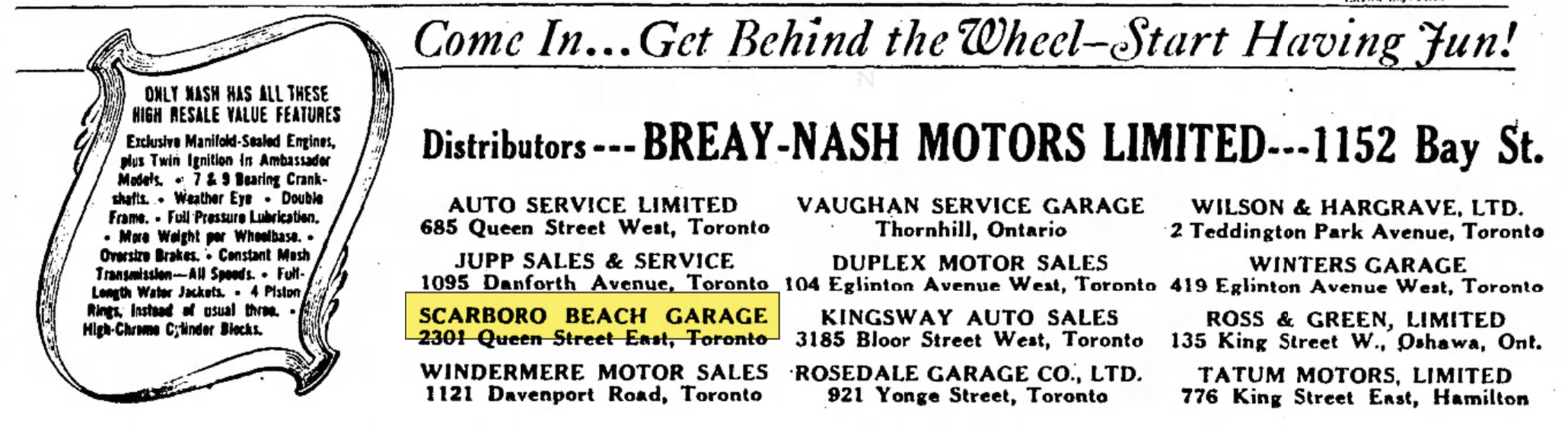
After the war, Jim returned and the couple expanded the business. By the mid-1950s, their dealership had experimented with selling a range of vehicles other than Nash, including Morris, MG, Austin-Healey, Riley, Jaguar, Willys (Jeep), Studebaker, Fiat, and others.
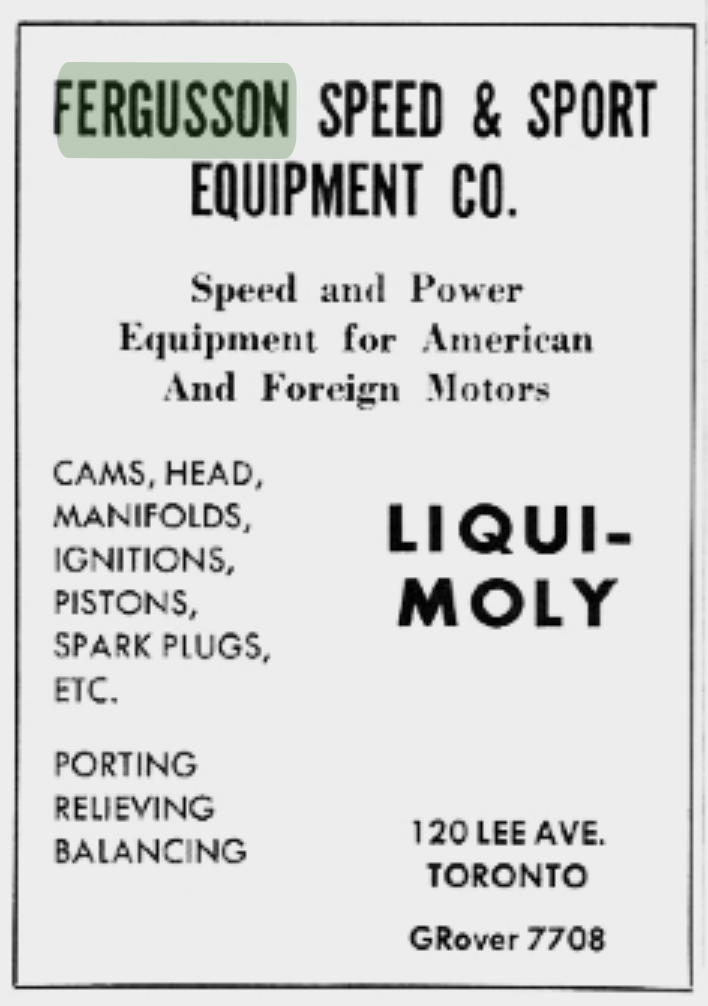
In addition to their dealership, the Fergussons ran a lesser-known side business; a speed shop specializing in performance parts for both domestic and imported vehicles. The speed shop also built and modified engines for local racers. According to several accounts, the speed shop was largely Alice’s venture as Jim was focused on the dealership. I found an advertisement for the speed shop, dating from 1952.
– Canadian Motorsport Historical Society
Interestingly, the address listed in the speed shop advertisement corresponds to a house in a residential neighborhood of Toronto, located just a few blocks from the Scarborough Beach Garage. A review of period city directories indicates that this address was Jim and Alice’s residence – or possibly a property directly across the street. This suggests that their speed shop business may have operated from their home, which could make sense since Alice had two small children at the time and would likely have needed to stay close to home.
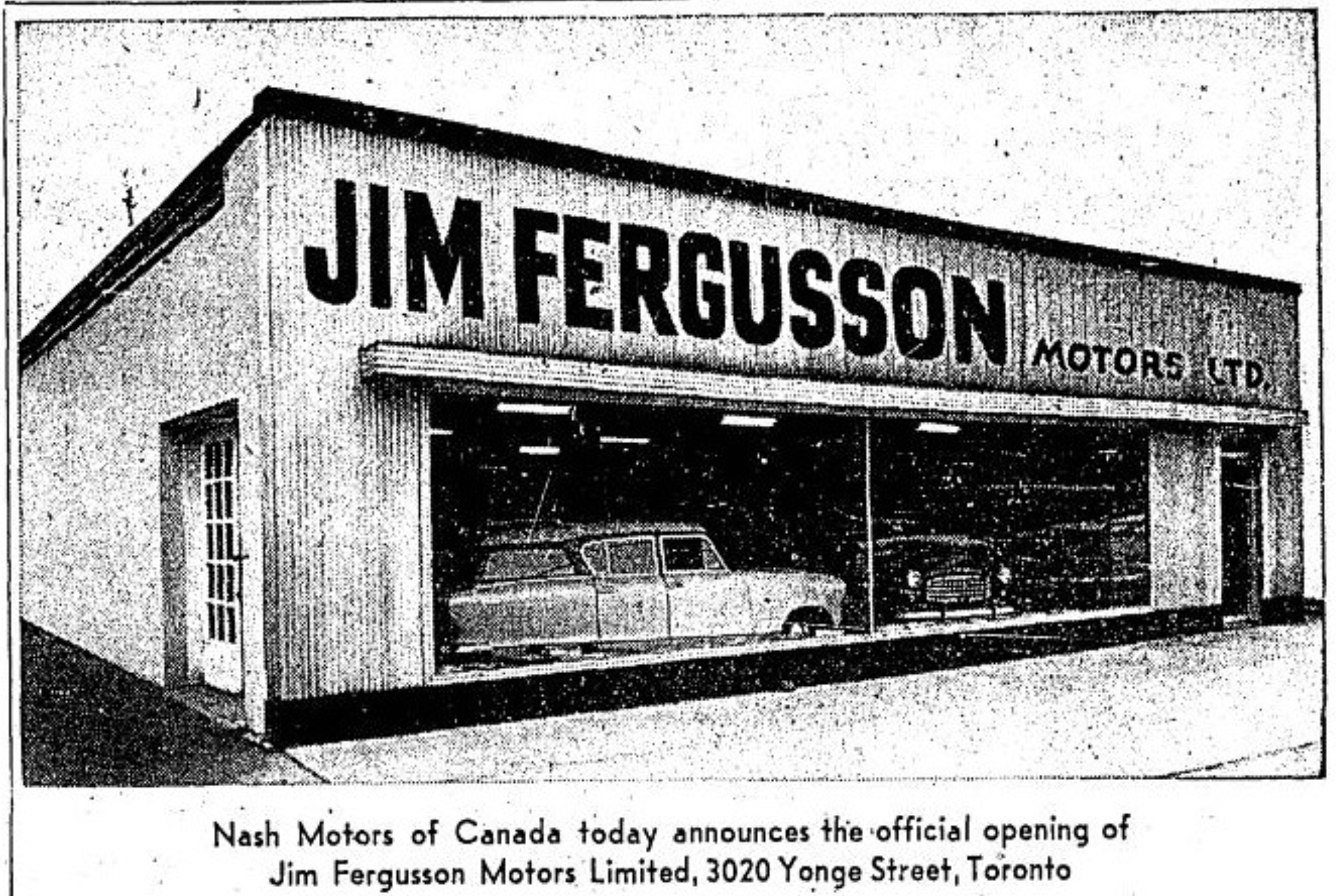
In May of 1955, the Fergussons expanded their operations by opening a second dealership at 3020 Yonge Street in Toronto, operating under the name Jim Fergusson Motors. For the next five years, Jim and Alice managed both the Yonge Street and Scarborough Beach locations concurrently. However, in late 1960, they closed the original Scarborough Beach Garage.
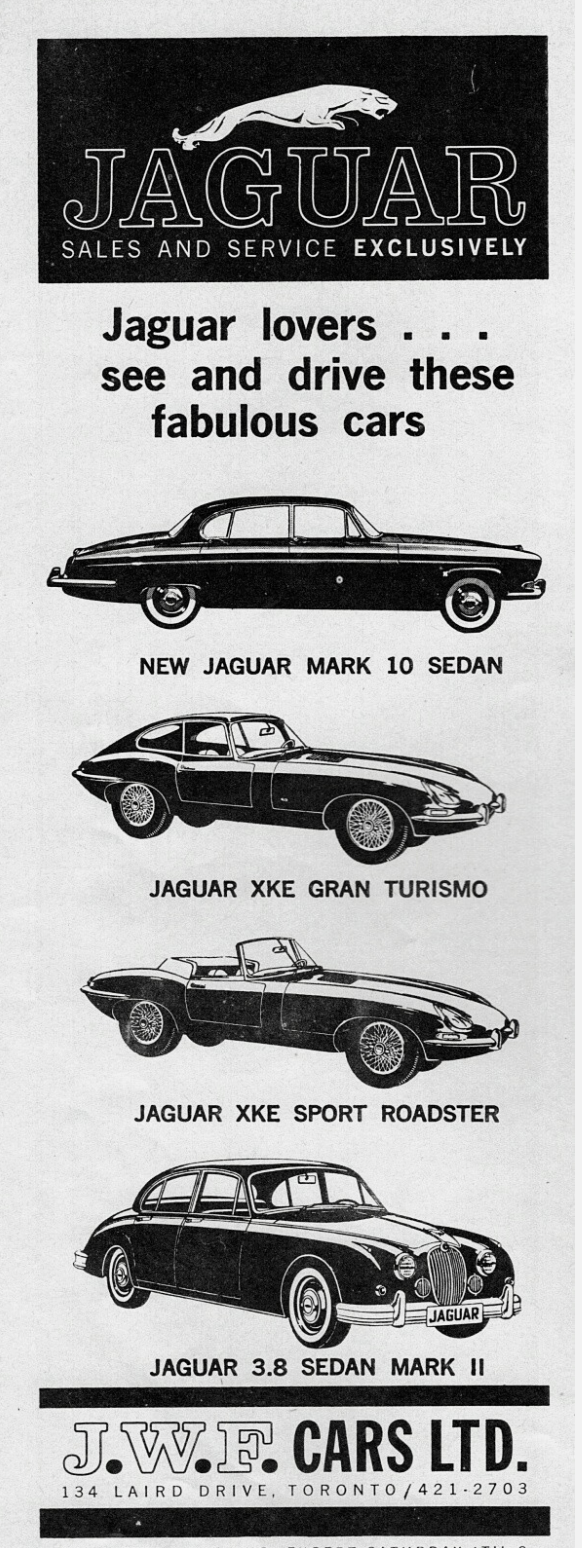
Around the same time that they closed Scarborough, they launched a new venture: J.W.F. Cars Ltd., located at 134 Laird Drive in Leaside, an affluent neighborhood in North Toronto (J.W.F. reflecting Jim’s initials). J.W.F. Cars Ltd. was marketed as, Toronto’s only exclusive Jaguar dealership.
In addition to their dealership(s) and the speed shop, the Fergussons were involved in several smaller side ventures in the 1950s, including the operation of a body shop, located at 7 Dibble Street in Toronto.
FERGUSSONS AND CITROËN
One of the more unusual and ambitious chapters in the Fergussons’ story involves the entry of Citroën into the Canadian market.
Rather than committing the substantial financial resources required to establish a formal distribution network in Canada (as they had done in the United States) Citroën pursued a different strategy. The company attempted to recruit independent Canadian businesses to act as importers and distributors. Under this arrangement, these individuals were responsible for the entire operation; purchasing vehicles directly from France, importing them into Canada, and managing all aspects of sales, service, spare parts, staffing, facilities, and advertising. Support from Citroën itself appears to have been minimal. As Richard Bonfond once remarked about this Canadian strategy, “…once the cars left France, the company washed their hands of them….”
Jim and Alice Fergusson became participants in this ill-fated scheme by taking on the role of the Citroën importer / distributor for the Province of Ontario. Other Canadian entrepreneurs took on this role for other provinces. This all began in early 1958, exactly two years after Citroën’s official introduction into the United States.
The Fergussons were clearly enamored with Citroëns. They worked to establish a network of third-party dealers across Ontario to sell the cars they imported. They invested in promotion by advertising Citroëns extensively in local newspapers. Their efforts even included commissioning large billboards across Toronto promoting DSs. George Dyke found photographs of several of these billboards hidden away in the Toronto city archives.
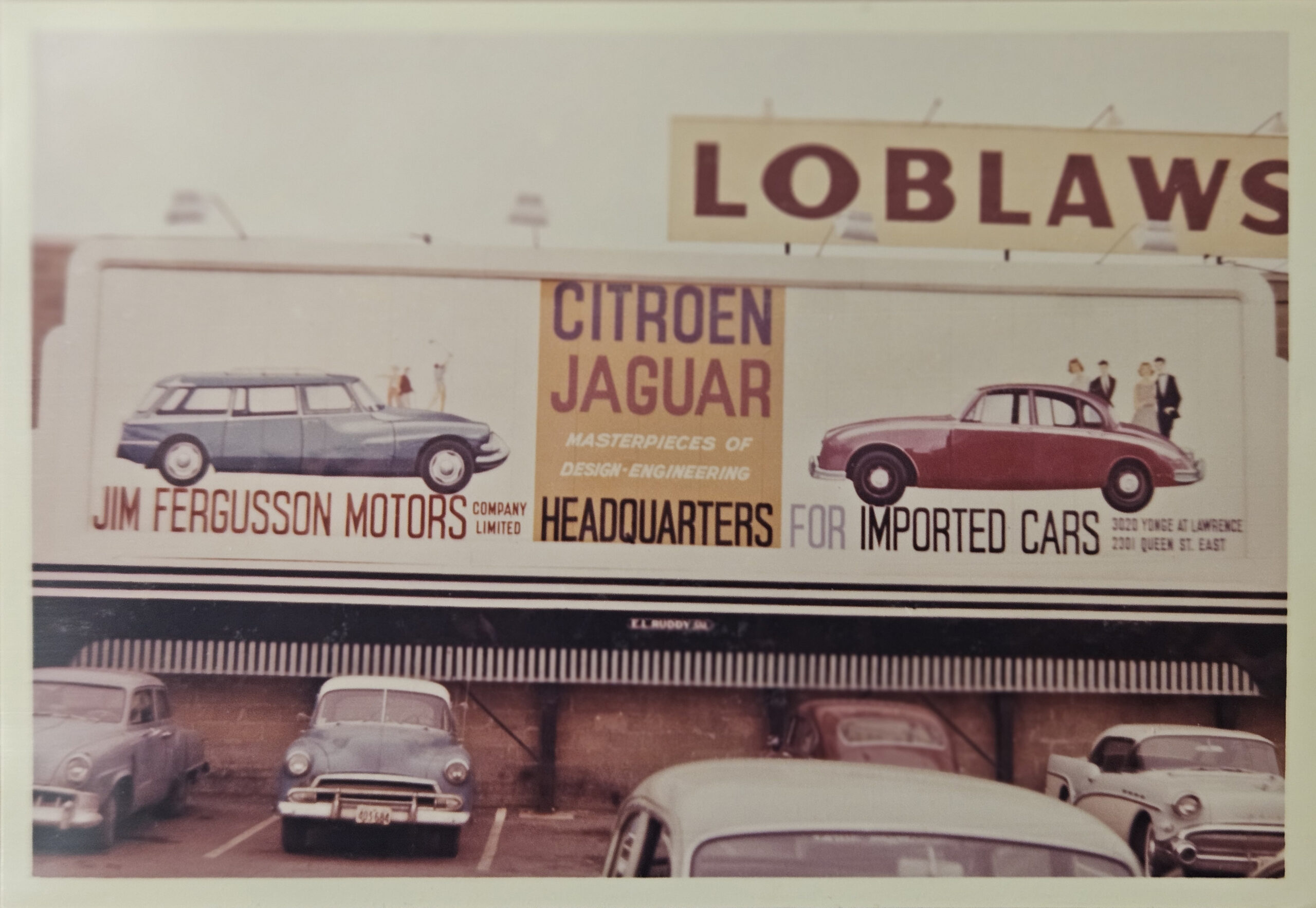
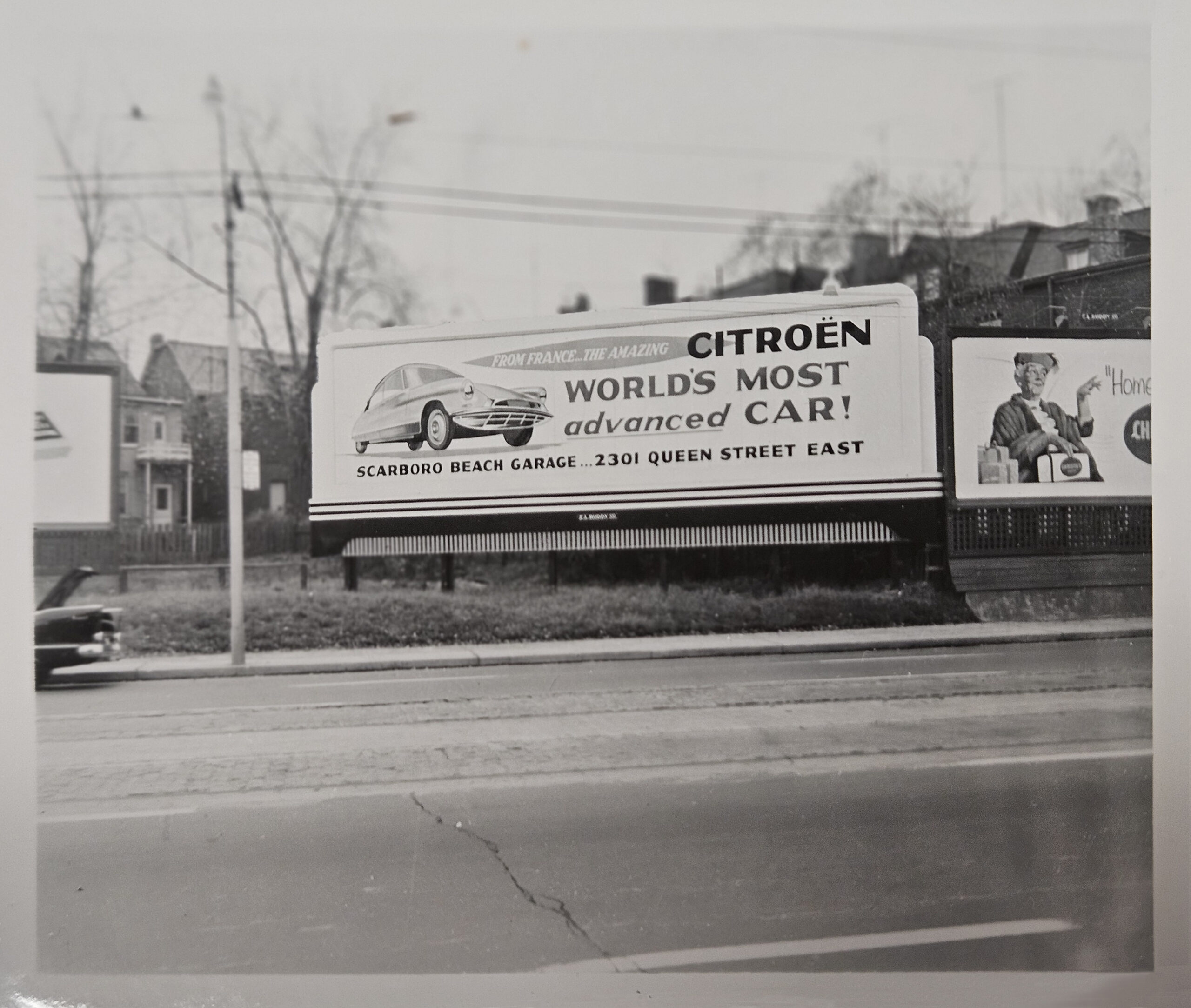
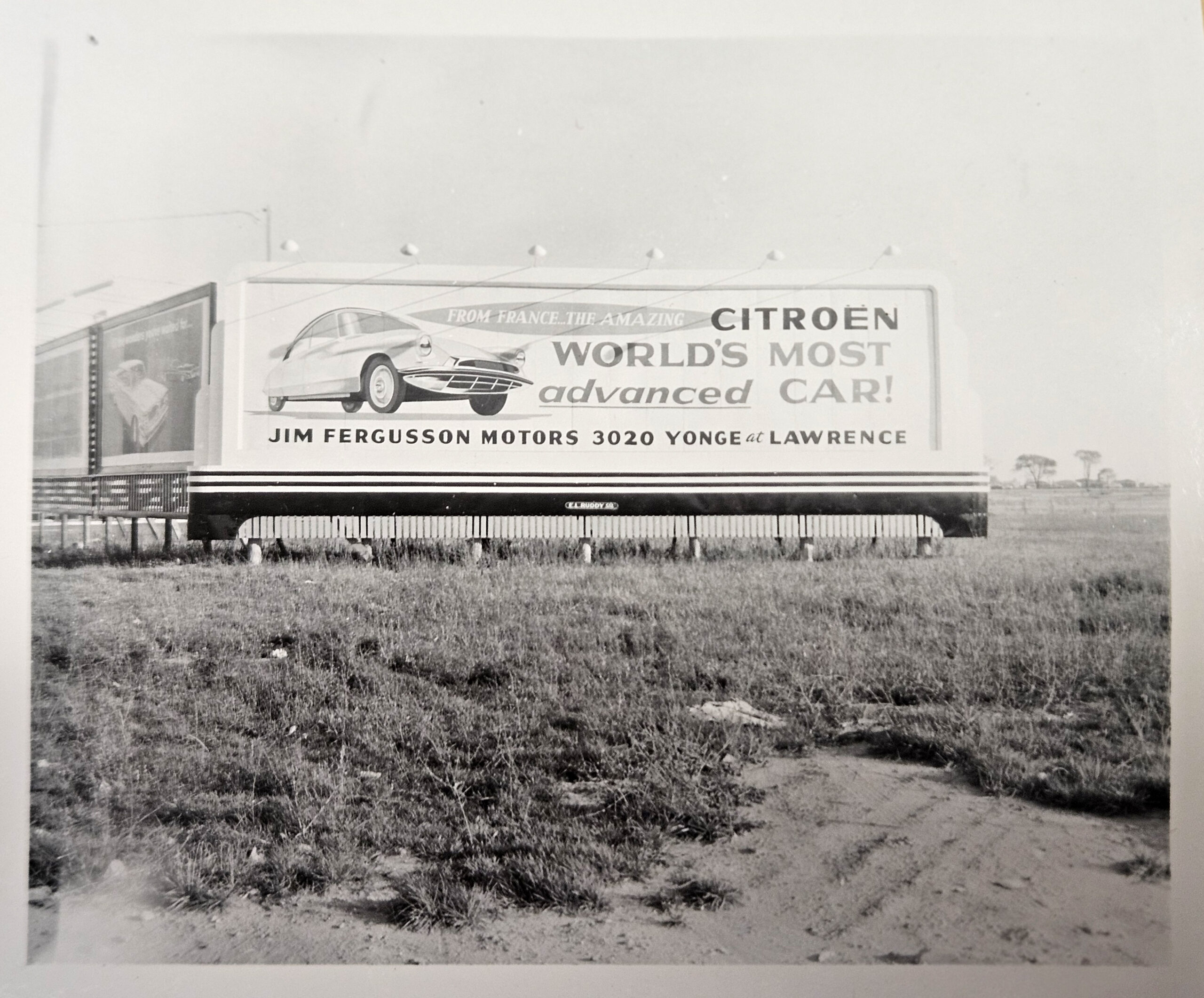
– Toronto City Archives
ALICE AS A DRIVER
Alice Fergusson’s entry into competitive motorsport began in the 1940s. She competed in several events organized by the British Empire Motor Club, one of Canada’s earliest and most influential motorsport organizations. Her involvement with the club extended beyond competition as she later served as editor of its publication, Small Torque, reflecting both her technical knowledge and her active role within the motorsport community. She also wrote for various motorsport publications.
Alice established herself as a prominent female competition driver in Canada. What set Alice Fergusson apart from many of her contemporaries was her refusal to be limited to women-only competitions, which at the time were referred to as “powder-puff” events. Instead, she chose to compete in open events alongside male drivers, placing herself in the most demanding and competitive environments. This decision not only demonstrated her confidence and skill as a driver, but also positioned her as a trailblazer in Canadian motorsport.
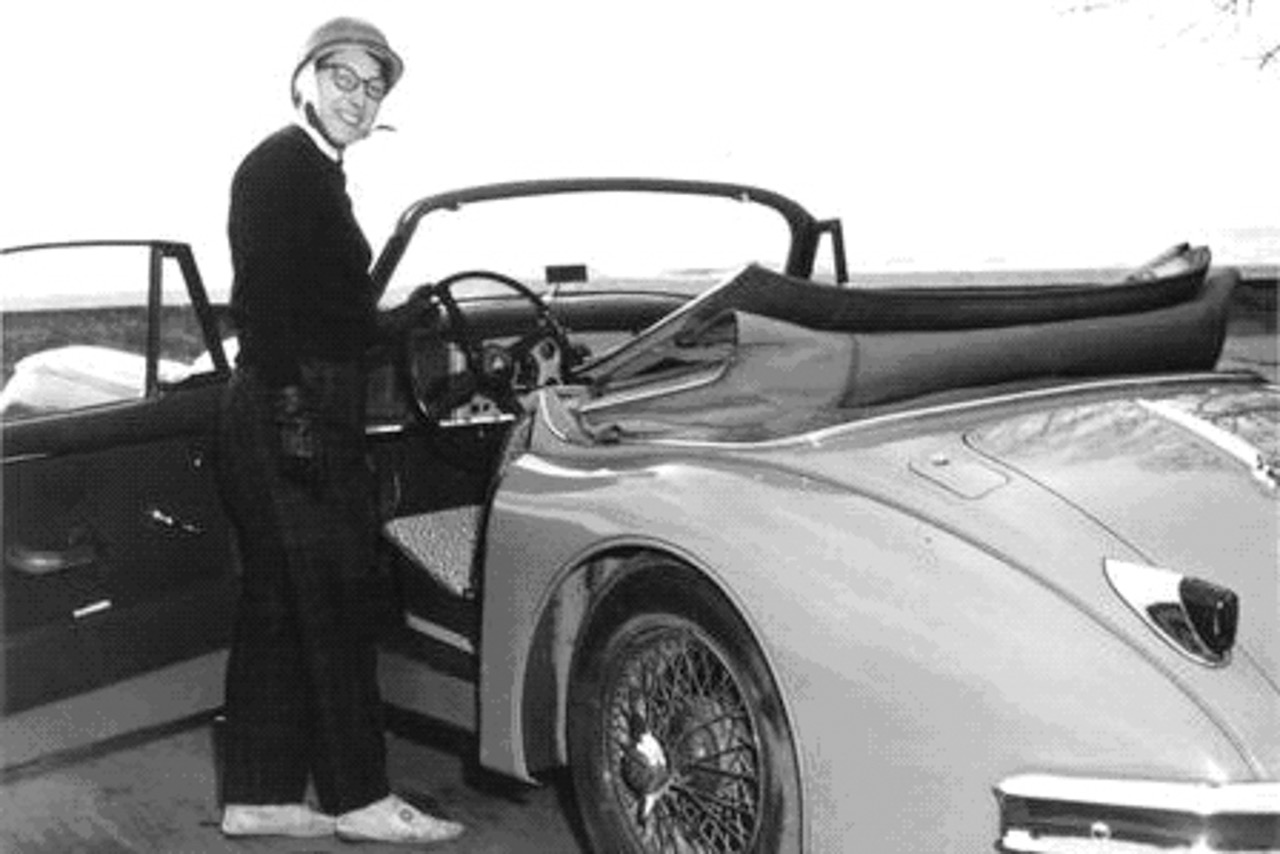
– Canadian Motorsport Historical Society
Alice Fergusson had not always been deeply engaged in driving or rallying. A 1963 newspaper article recounts a moment from early in her relationship with Jim when he first suggested they enter a rally. Alice’s response was to go out and have her hair done. “Little did I know…” she told the reporter with a grin.
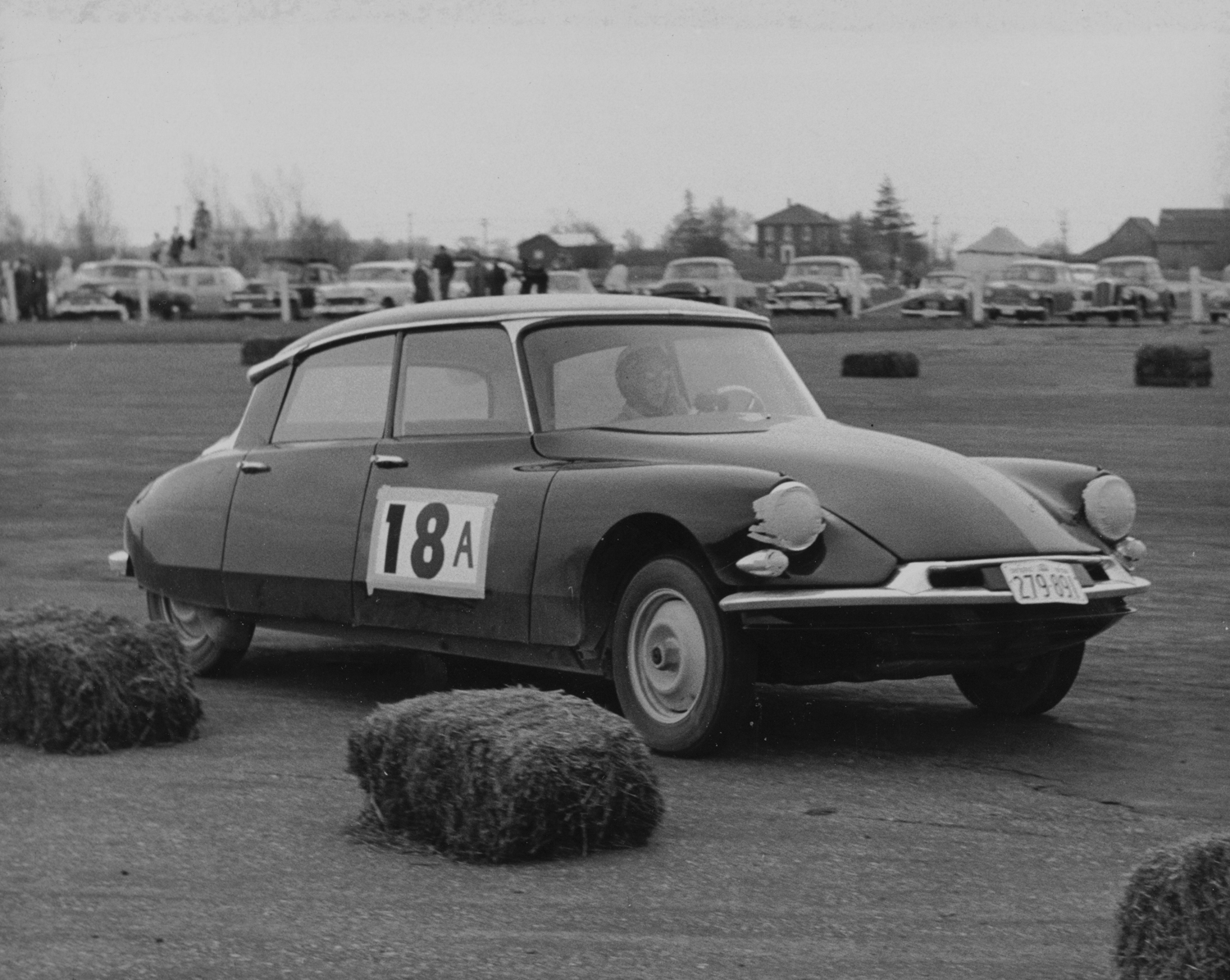
One example of her ability came on May 10, 1958, at the Harewood Acres Four Hour Relay, where she drove a 1958 Citroën ID19 – nicknamed The Fergusson Flash – to a third-place finish. Note that Citroën’s ID19 was brand new for the 1958 model year, and the Fergussons had only just begun importing Citroëns at the time. This means that the car must have been basically brand new. A fantastic photo exists of her driving the ID19 in this event.
Alice shifted her focus from circuit racing to rallying – a discipline that demands not only driving skill, but also endurance, navigational skills, and teamwork. It was in rallying that her career in competitive motorsport flourished.
SHELL 4000
Her first major rallying milestone came in 1961 with her entry into the Shell 4000, one of the most demanding motorsport events in Canada. The rally spanned 4,000 miles from Montreal to Vancouver, traversing a wide range of surfaces including pavement, dirt, mud, and snow. Competitors were often routed over remote logging roads and other rugged terrain, making the event more of a test of endurance and reliability than of speed.
For the 1961 Shell 4000, Alice teamed with co-driver Gillian Field, and together they piloted a shortened Citroën ID19 along the grueling transcontinental route. Their effort was especially notable given that they were not backed by a manufacturer. Instead, they competed as a self-funded team, in a self-prepared car.
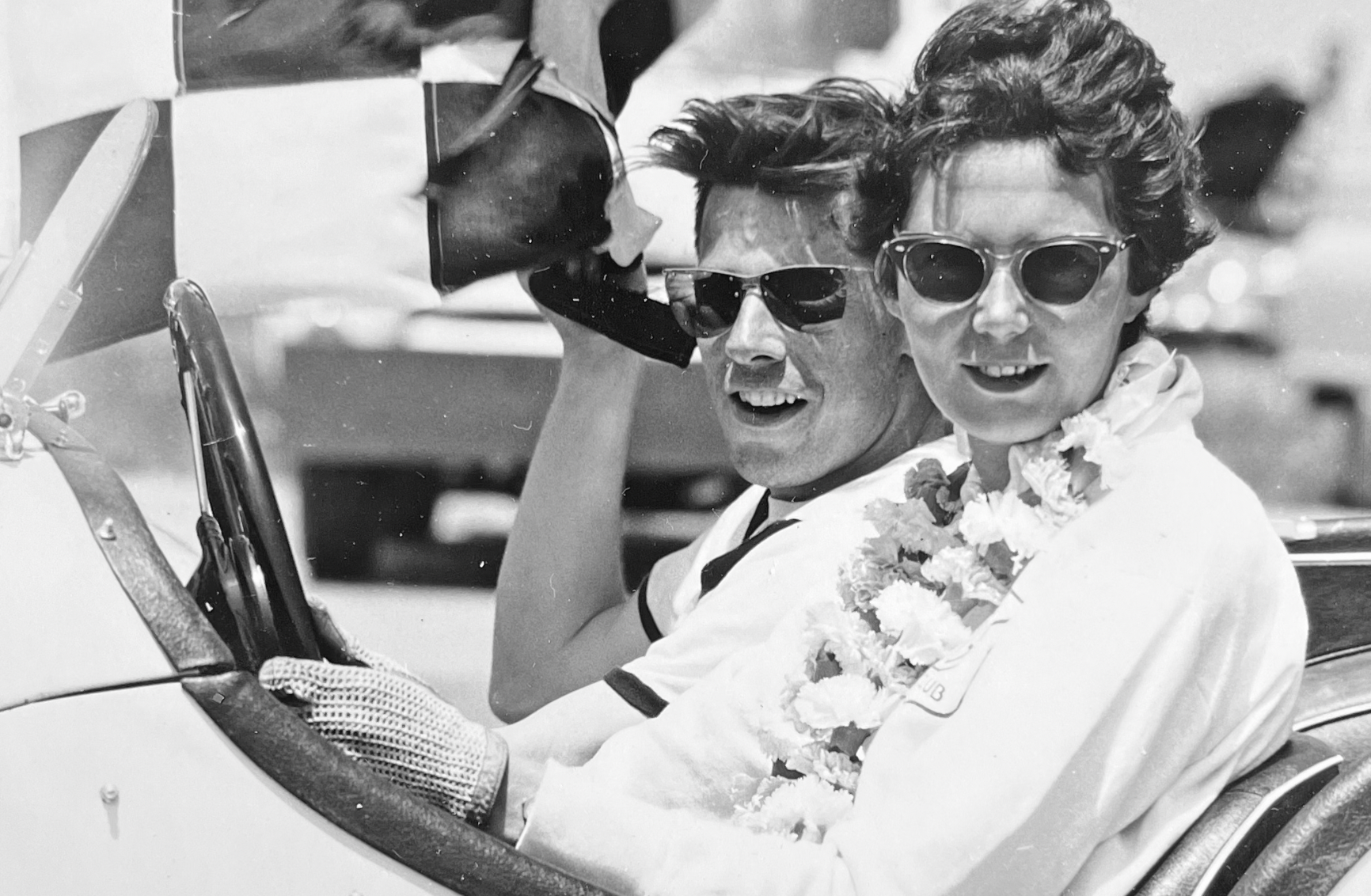
– Len (Steve) Stevens, Canadian Motorsport Historical Society, 1960
They delivered an impressive performance, finishing 35th overall, placing them within the top third. Within the women’s category, Alice and Gillian initially were thought to have been in first place, but a last-minute scoring mistake ultimately dropped them to second. Even so, their performance firmly established Alice Fergusson as a serious competitor on the national stage and marked a defining moment in her motorsport career.
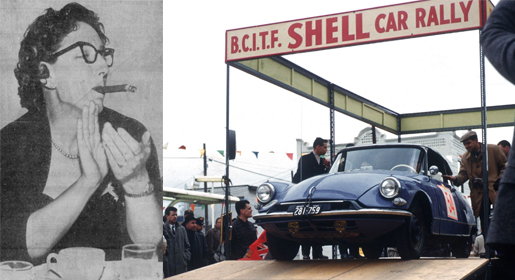
For many years, I was only able to find a single, small, blurry image of her shortened ID19, taken at the starting line. But recently, a striking color photograph of the same car, captured at the same moment, but from a different angle, has come to light.
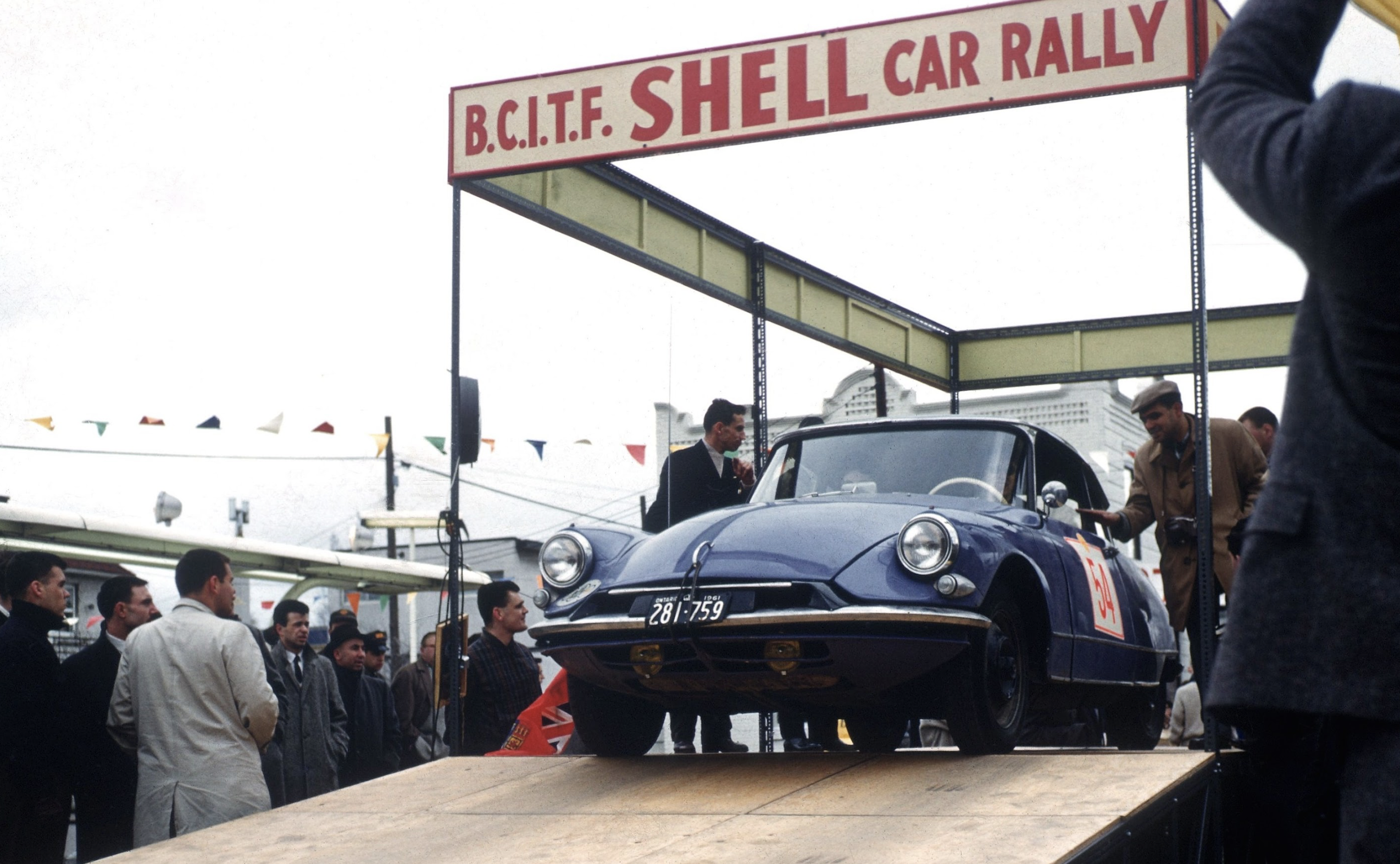
– Bob Cowie, Canadian Motorsport Historical Society
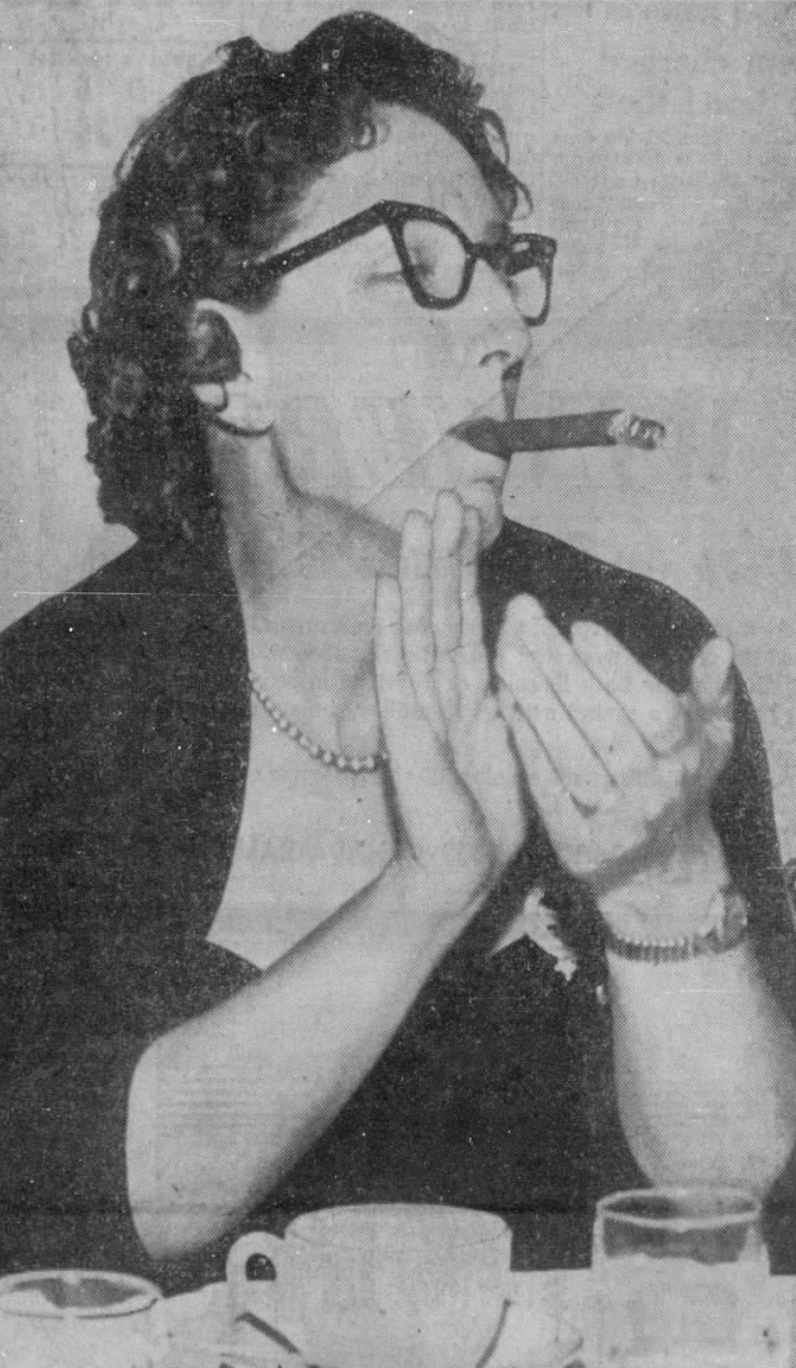
After the rally, Alice Fergusson took part in the post-rally awards celebration in Vancouver. It was there that an unforgettable image was captured: Alice, cigar in mouth, applauding during the event. The photograph stood in stark contrast to conventional expectations of women at the time; she was confident, unreserved, and unmistakably part of the motorsport community.
Published in newspapers across Canada, this single photograph quickly took on a life of its own. It elevated Alice Fergusson from a skilled and determined competitor to something more – the photo cemented her place in history as a prominent player in Canadian motorsports.
Following her breakthrough performance in the 1961 Shell 4000, Alice Fergusson returned to the event in both 1962 and 1963, this time driving under a manufacturer’s sponsorship with Studebaker of Canada.
In the 1962 Shell 4000, Fergusson partnered with a woman named Mary Clark. The pair competed in a V8-powered Studebaker Lark, entered as car number 608 and sponsored by Studebaker of Canada. However, their run was cut short when severe road conditions damaged the car’s undercarriage, forcing them to abandon the event. It turns out that a stretch of a dirt road had a particularly nasty rock hidden in a pothole, taking several cars out of the race, including the Fergusson/Clarke Studebaker.
The following photo was taken of the two women before the start of the race, with Alice standing outside of the car, trademark cigar in hand. The number on the door was staged for the photo and later swapped out to number 608.
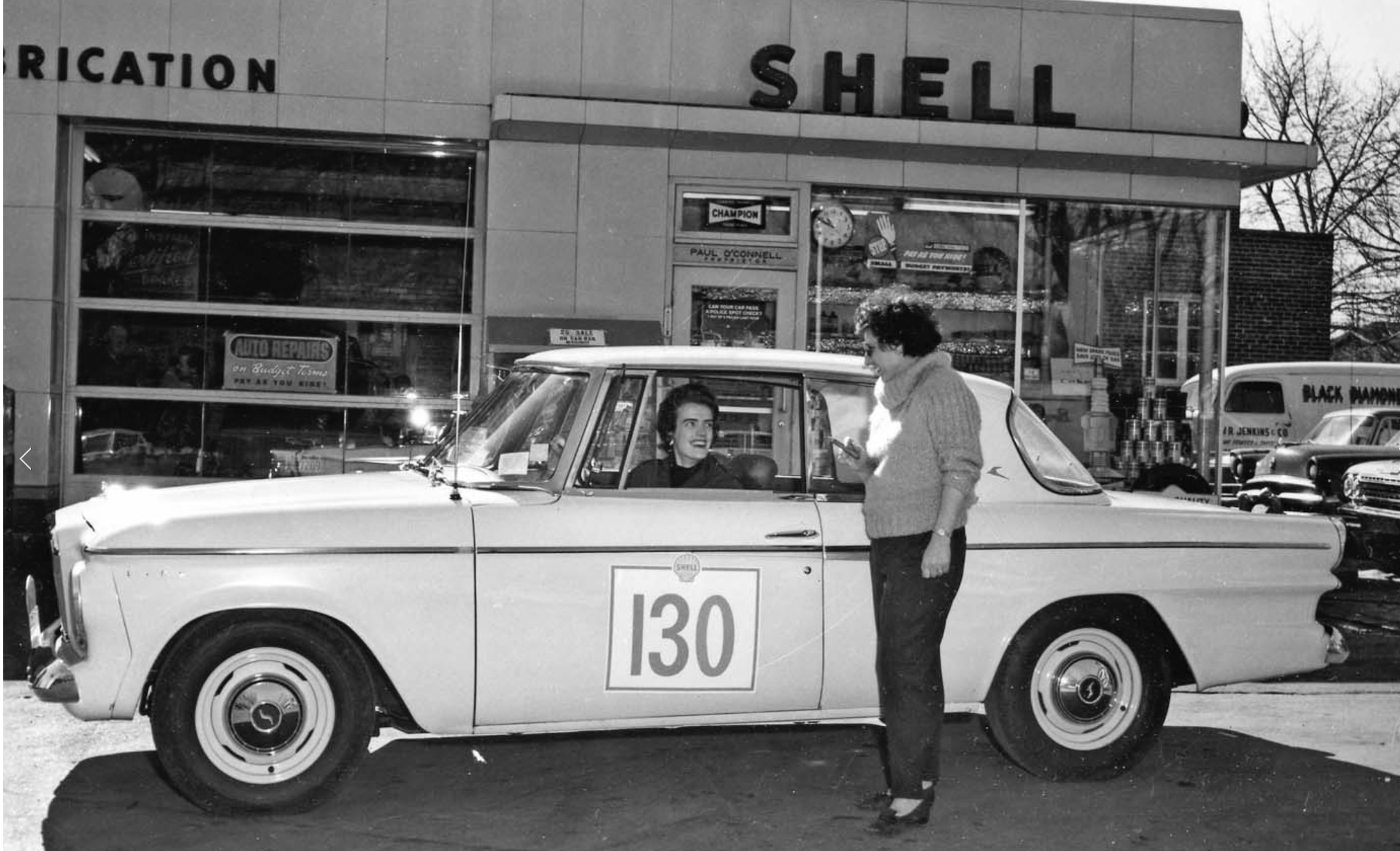
– Canadian Motorsport Historical Society
Alice returned again in 1963, this time with a co-driver named Clare Stuart. Once again, they piloted a V8 Studebaker Lark, backed by Studebaker of Canada. This time, their car was wearing number 105. A period publication recounts the story of a scary stretch were the headlights in the Studebaker failed at night, causing Clare Stuart to have to hold a flashlight out the window all night long to allow Alice to see where they were going. They completed the grueling rally, finishing in 40th place. While slightly behind their 1961 result in the shortened Citroën, the finish was still respectable.
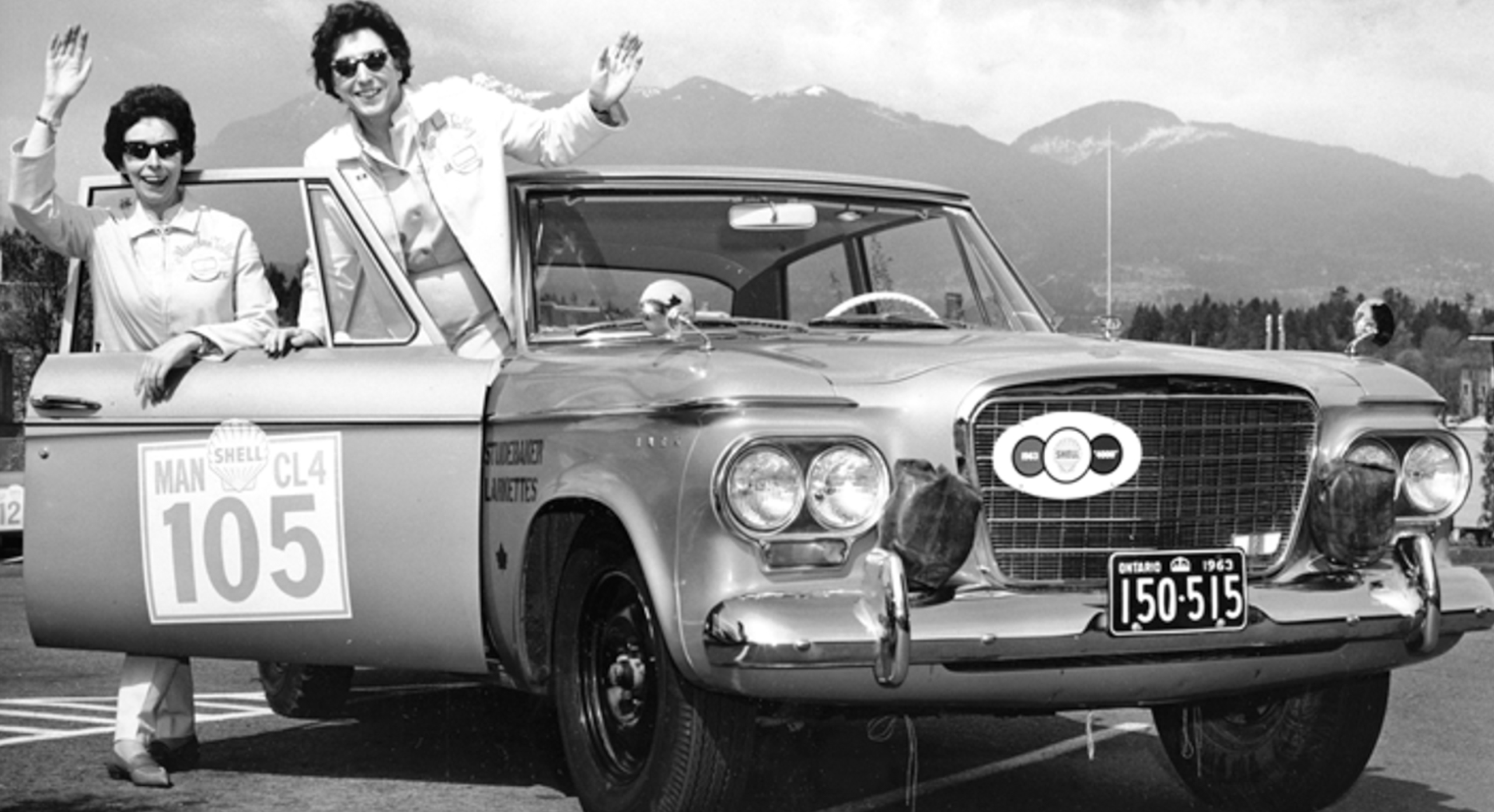
– Canadian Motorsport Historical Society
BLINDSIGHTED BY CITROËN
By the early 1960s, it had become clear to Citroën that its strategy of entering the Canadian market through independent importers was not working. This sales and distribution model resulted in inconsistent service, lack of spare parts, inadequate training, and the absence of a coherent warranty system – all of which were sorely needed on early DSs. These problems were damaging the Citroën brand.
In response, Citroën changed course. In 1962, the company established a formal subsidiary called Citroën Canada Limited and began importing and distributing vehicles directly. While this move brought improved structure and control to the brand’s Canadian operations, it had immediate consequences for the independent importers. Virtually overnight, their role became obsolete and they were pushed out of business. This included the Fergussons.
This abrupt shift by Citroën was compounded by other industry challenges already facing Jim and Alice Fergusson. By the early 1960s, the domestic marques they were representing – such as Nash, Willys, and Studebaker – were all faltering and on the verge of collapse. At the same time, Canada had a 17.5% tariff on imported cars in this era, making it difficult to make a living selling the British cars they were offering. Fergussons needed to make a change – and they started by closing down their Toronto dealerships.
LIFE IN THE USA
Following the closure of their Canadian dealerships, Jim and Alice Fergusson relocated to Pennsylvania. I was not able to find the exact date they made this move, but it was likely in 1964 since this coincides with their disappearance from the Toronto phone books and the end of newspaper advertisements for their businesses.
In Philadelphia, Alice joined forces with Otto Linton, a veteran race car driver who operated a company called Speedcraft Enterprises. The business focused on foreign car importation and racing-related activities – an ideal match for Alice’s experience. According to an interview with Linton from many years later, Alice served as his office manager for 17 years, remaining in the role until her retirement in the early 1980s.
Jim Fergusson also remained active in the automotive world. Sources indicate that he became involved with several Philadelphia-area dealerships specializing in exotic marques, including Jaguar, Lancia, Maserati, and Ferrari. He is also said to have participated in a few rallying events during his time in America.
The Fergussons’ media profile became much quieter during their years in the USA and little has been written about them in this era. But they had one more important motorsport milestone event in their lives.
THE CANNONBALL RUN
In 1972, Jim and Alice Fergussons took part in one of the most infamous events in automotive history: the Cannonball Baker Sea-to-Shining-Sea Memorial Trophy Dash, better known as the Cannonball Run.
Created by automotive journalist and racer Brock Yates, the event was conceived as a protest against the newly imposed national speed limit of 55 mph. It was an unsanctioned, no-rules, high-speed dash from New York to Los Angeles, attracting a mix of professional drivers, enthusiasts, and eccentrics.
What car did the Fergussons drive? You got it – it was a Citroën. Some sources state that it was the black 1958 Citroën ID19 that Alice had raced at Harewood Acres, while others claim it was the shortened blue ID19 used in the 1961 Shell 4000. However, both of these possibilities seem unlikely given the fact that these cars were about 14 years old at the time of the Cannonball and probably had endured very hard lives.
Because the Cannonball race was illegal, participants at the time maintained low profiles, making reliable documentation and photos scarce. Despite the lack of detailed information, I think a more plausible candidate for the car they drove might be the Citroën DS shown in the following photograph. Little is known about the photo, other than the car was owned by the Fergussons and their poodle can be seen the back seat. It is a late 1960’s DS21 Pallas, and it has a large auxiliary fuel tank in the trunk – precisely the kind of modification needed for a timed cross-country run. One account of the 1972 Cannonball indicated that an auxiliary fuel tank was one of the Fergusson’s strategies to effectively compete against much faster cars as fewer fuel stops saved refueling time. Notice also that it has a Pennsylvania license plate, which matches the Fergusson’s home at the time.
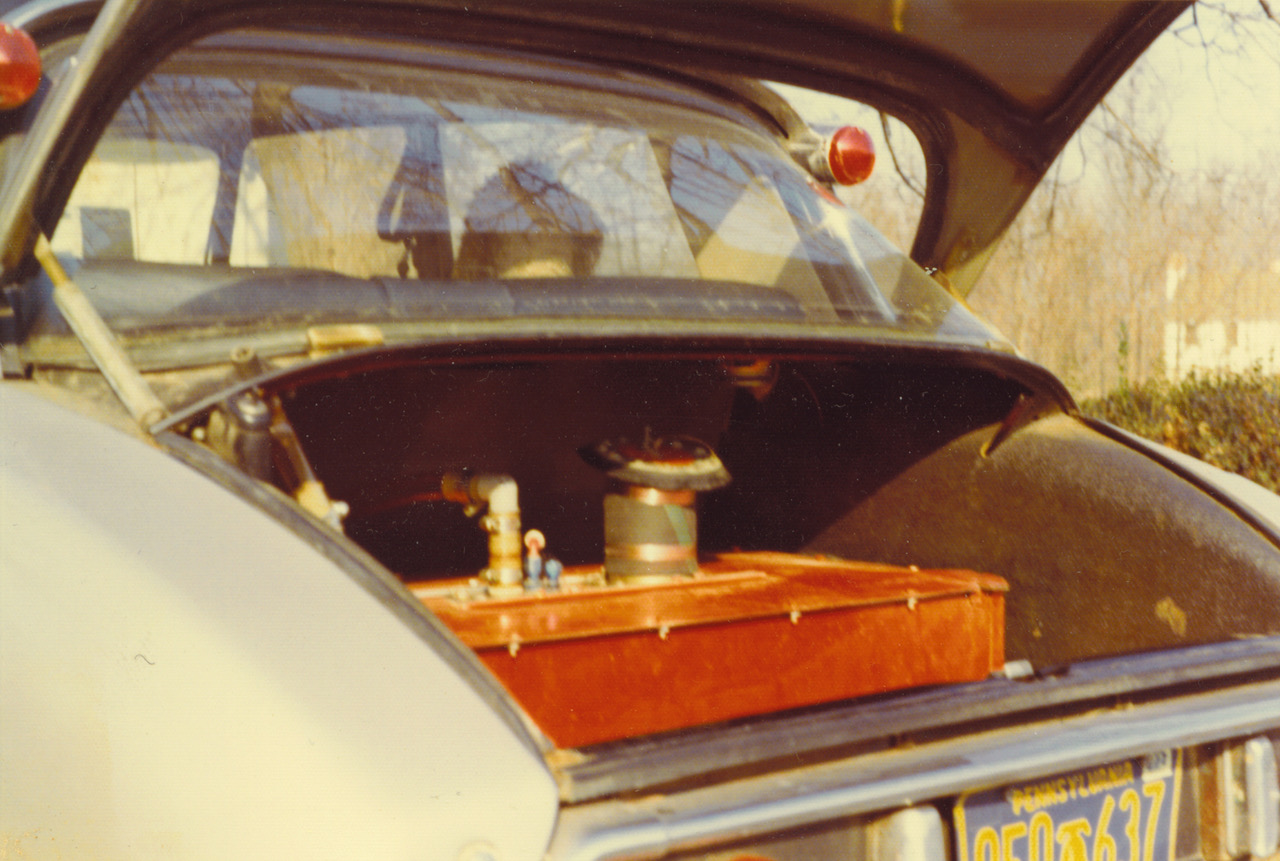
– Supercars.net
Their Citroën, whatever one they used, lacked the horsepower of many competitors’ cars. Yet with clever modifications, their combined driving skills, years of navigational practice, and the car’s inherent capabilities, they performed admirably in one of the most daring endurance events of the era. Over the 2,900-mile course, they completed the race in 42 hours and 8 minutes, averaging 68.9 mph, placing them in 15th place (comfortably in mid-pack). One article about the event claims that on their return trip home, they beat their official race time.
The 1972 Cannonball run would be their last major motorsport event. But what a way to end their competitive driving careers!
Jim Fergusson passed away on January 14, 1976 at the age of 65, just four years after the Cannonball Run. Alice lived until April of 1997, leaving behind a remarkable legacy as a trailblazer in Canadian motorsport.
LEGACY
In recognition of their lifelong contributions to motorsport, Alice and Jim Fergusson were inducted into the Canadian Motorsport Hall of Fame in 2004. This honor celebrated not only their achievements as competitors, but also their broader impact on racing and rallying in Canada.
Alice Fergusson’s legacy is particularly noteworthy in the context of women in motorsport. At a time when opportunities for female drivers were limited, she proved that women could compete at the highest levels. By refusing to be confined to “women-only” events, she helped pave the way for future generations of female racers.
Over the course of her career, Alice ran car dealerships, built high-performance engines, operated heavy machinery, wrote for and edited motorsport publications, raced and rallied cars, managed a performance parts business, and participated in four transcontinental rallies/races. She did all this while raising two daughters. Through her accomplishments and pioneering determination, Alice Fergusson left an enduring mark on Canadian motorsport, establishing herself as a legend in the history of auto racing.
POSTNOTE
If you want to see a good short movie on the Shell 4000, you can watch the following YouTube video, which shows highlights of the 1963 run. For 1963, the route was in the reverse direction, west-to-east, starting in Vancouver. There are a number of Citroëns that can be seen in the movie, and you can spot Alice Fergusson at 18:28 in a diner.
SOURCES AND CREDITS
- Canadian Motorsport Historical Society website: https://motorsporthistory.ca/search.php
- Supercars.net website: https://www.supercars.net/blog/canadian-road-racing-pioneers-jim-and-alice-fergusson/
- Citroenvie website: https://citroenvie.com/citroen-in-canada-history/
- SeattleCitroen.net website: https://www.seattlecitroen.net/general-info-56-65
- Lampton Musings Newsletter: https://issuu.com/lclibrary/docs/2023.02-winter-lambton-musings/s/18500828
- Various newspaper archives
- Personal archives