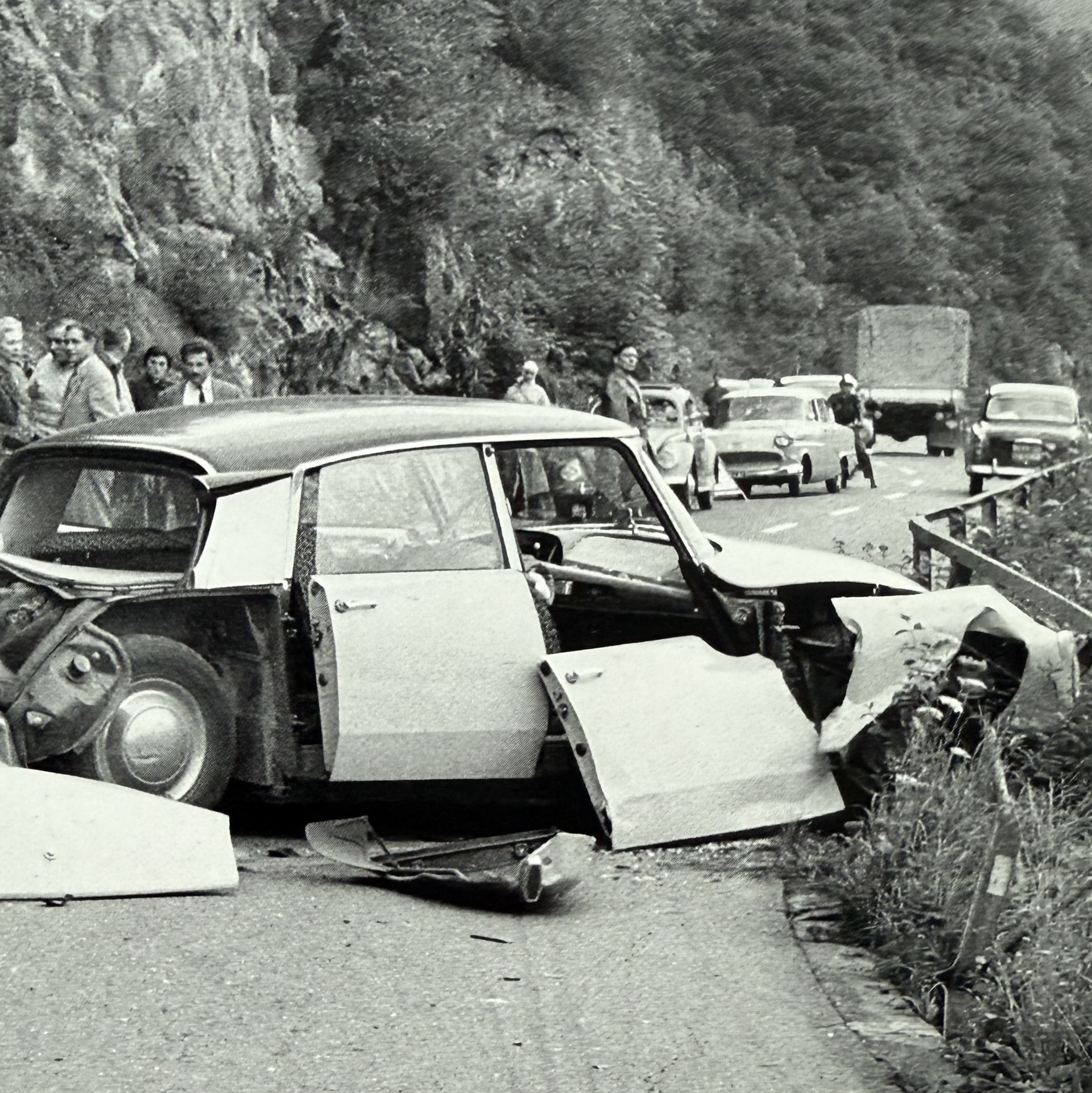
By Chris Dubuque….
It turns out that the door latches on European DS’s did not meet USA rules, thus forcing Citroën to develop special versions, just for North America. To see what they did and why they did it, read on.
THE RULES
Starting on January 01, 1968, all cars sold in the USA had to meet a new set of rules called, the Federal Motor Vehicle Safety Standards (FMVSS). Before the FMVSS’s, there was an uncoordinated patchwork of state laws and industry recommendations in place in the USA for automotive design and safety.
Canada had a similar progression of regulations. The most significant change to Canadian laws happened in 1971 when Canada adopted automotive safety rules similar (but not identical) to the US rules. Canadian rules were called, Canada Motor Vehicle Safety Standards (CMVSS), a name and acronym very similar to the US version. Before the CMVSS’s were adopted, early Canadian rules were like the early US rules; sporadic across the various Provinces and not organized into one agency.
THE DOOR LATCH PROBLEM
Throughout the 1950’s and 1960’s, studies of car accidents were finding that a leading cause for fatalities was if the occupant was ejected from the vehicle during the crash. As an example, a mid-1960’s study by the Society of Automotive Engineers (SAE) found that 27% of fatalities in car crashes were caused because the occupant had been ejected from the vehicle, usually though doors that had popped open during the accident.
Seat belts are of course a prime remedy to prevent people from being ejected during a crash, but experts believed that keeping doors closed during an accident was also very important. Recognizing the value of robust door latch systems, the SAE created a design and test guideline in 1962 that was identified as SAE paper J839. This document specified testing conditions for door latches that were intended to help keep the latch engaged during accidents. In 1965, the SAE released a related guideline for door hinge strength in SAE paper J934. Initially, these documents were just guidelines for auto designers and were not requirements.
Consumer safety advocate Ralph Nader was involved in the push for improved door latches in the 1960’s and one latch design has been named after him, the Nader-Pin.
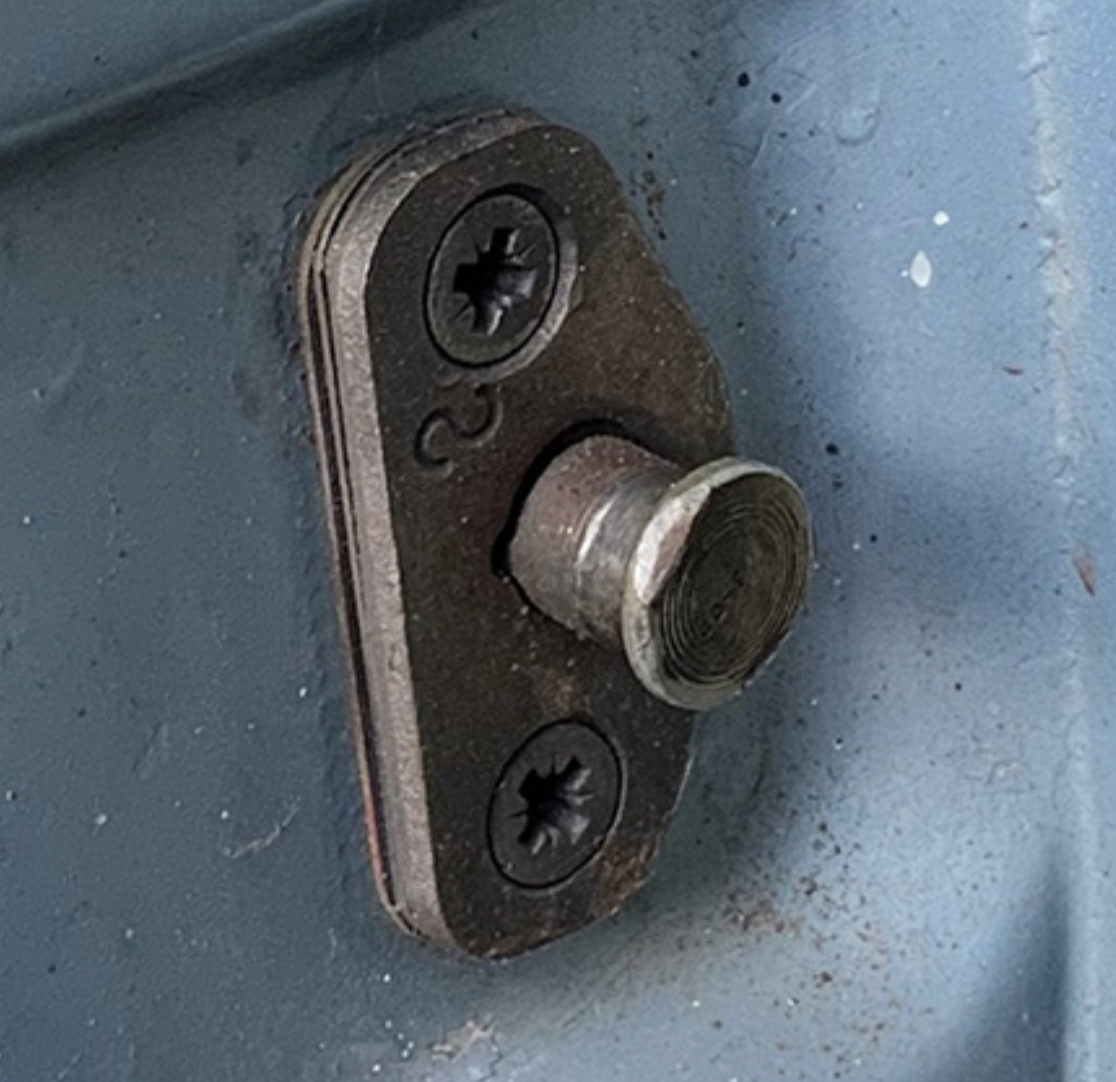
It is widely accepted that the Nader-Pin latch offered a tremendous safety improvement over earlier latch designs and has saved thousands of lives. One of the few criticisms I could find for the Nader-pin latch design is a minor one, but it apparently can be prone to snagging clothing (such as belt loops) as one gets in or out of the car. Today, many manufacturers have gravitated to a U-shaped loop on the striker plate instead of the Nader-pin.
FEDERAL MOTOR VEHICLE SAFETY STANDARD (FMVSS) #206
When the US government implemented its federal program to enhance auto safety in the late 1960’s, they used the content of SAE documents J839 and J934 to create Federal Motor Vehicle Safety Standard (FMVSS) #206, titled, Door locks and door retention components.
FMVSS #206 has subsequently been updated several times to reflect global harmonization efforts and technology changes.
WHAT DOES FMVSS #206 REQUIRE?
When reading through the text of an FMVSS, it is easy for one’s eyes to become glazed over. But after several readings, I think that FMVSS #206 comes down to a few simple concepts: The door latch mechanisms and door hinges must withstand loads in applied in various directions without disconnecting or separating. The loading direction for the latches are in three axes, as shown below (fore/aft, up/down, and left/right).
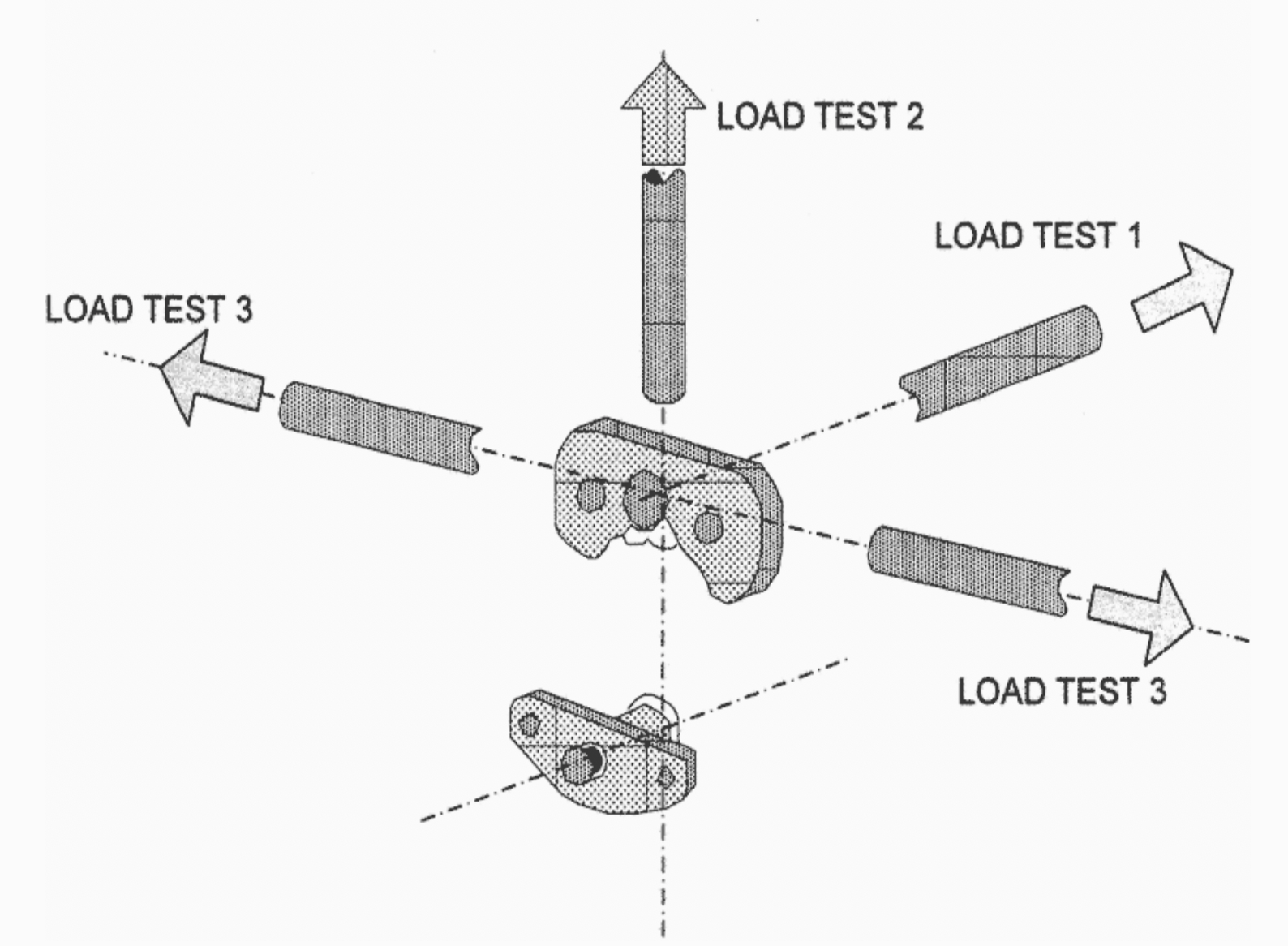
The testing required by FMVSS #206 requires that the latch and striker plate be mounted in a test fixture that allows the testers to precisely load the components in the required directions and at the required loads. The loads themselves vary for each test and for each axis, but some loads are as high as 11000 N (2500 lbf).
Latches designed to these regulations are often called, anti-burst latches. The term comes from preventing doors from bursting open during an accident.
DS DOOR LATCHES
A problem with the latches on early DS’s (and many other cars of the era) is that if the car’s B or C-pillar becomes distorted during an accident and moves away from the door’s aft edge, the star wheel on the door latch will disengage from the striker plate, thus allowing the door to open. There is no provision on the latch or striker plate to hold the parts together in this scenario.
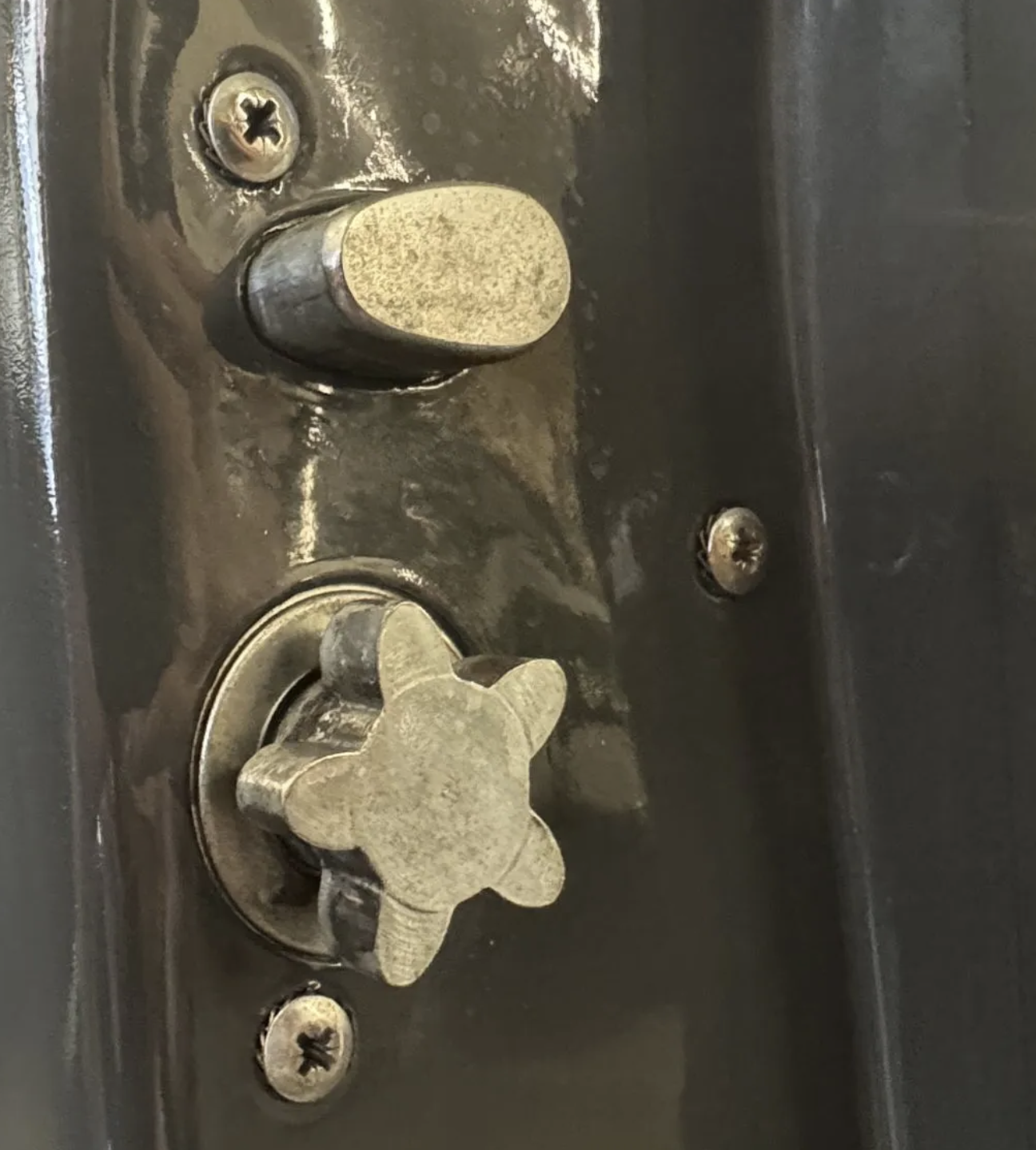
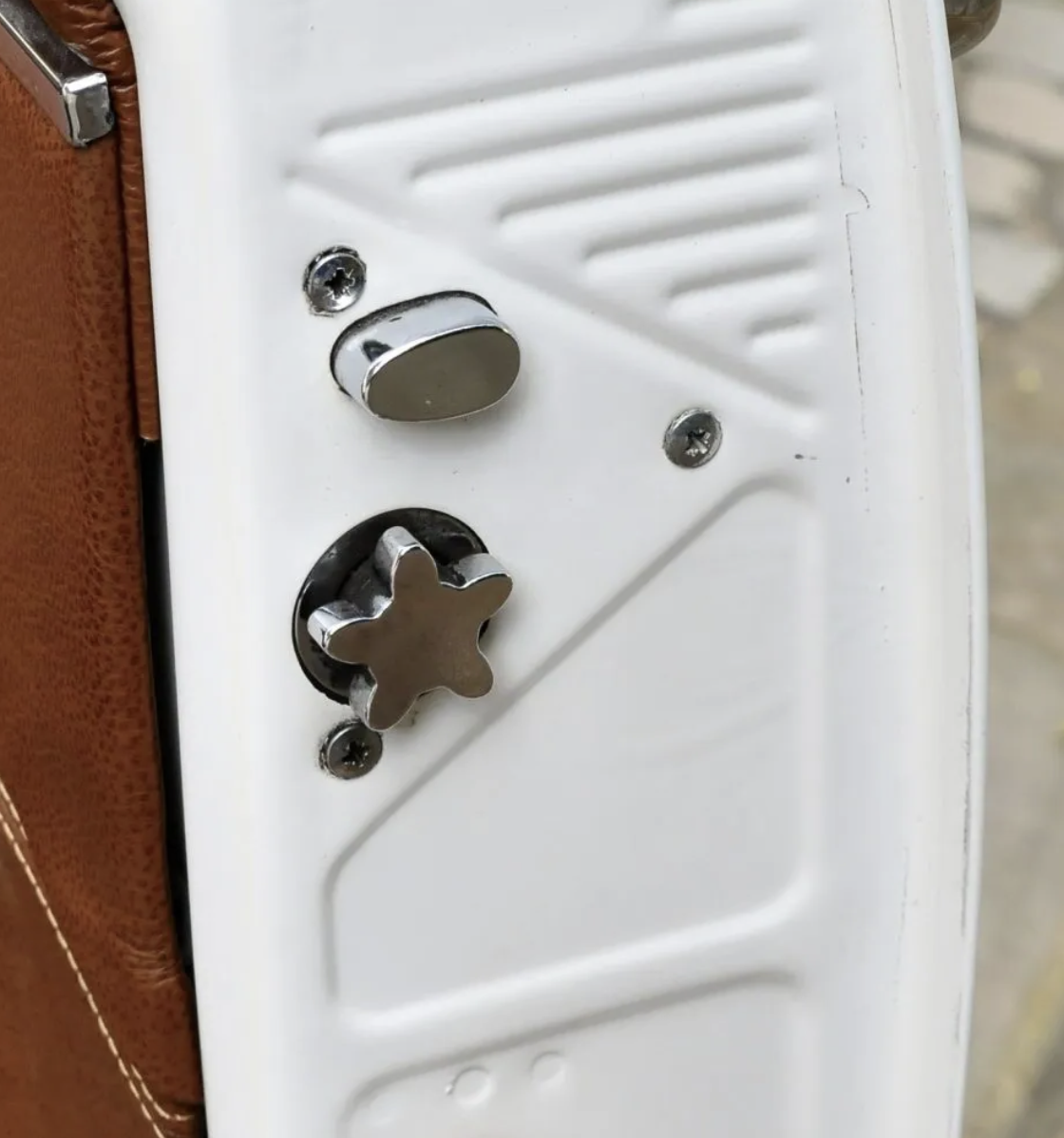
FMVSS #206 requires that the latch be able to withstand loading in this direction without disconnecting from the striker plate. To address this requirement, Citroën re-designed the striker plate on DS’s intended for the USA to have an extra plate of steel, designed to capture the star wheel in the fore/aft axis. This caused design changes to both the striker plate and the latch mechanism itself. The photos below compare the Euro and the USA latches and striker plates.
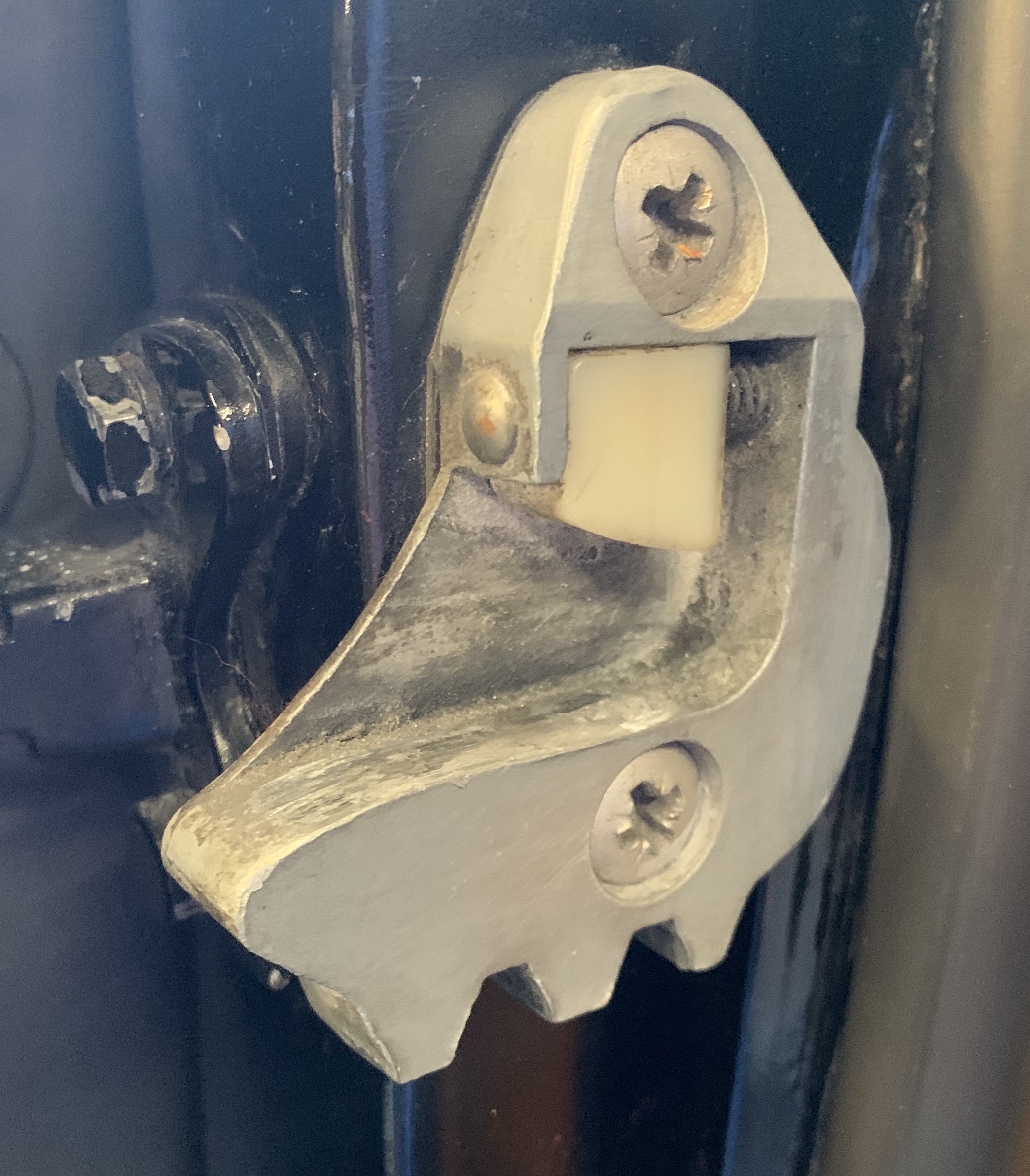
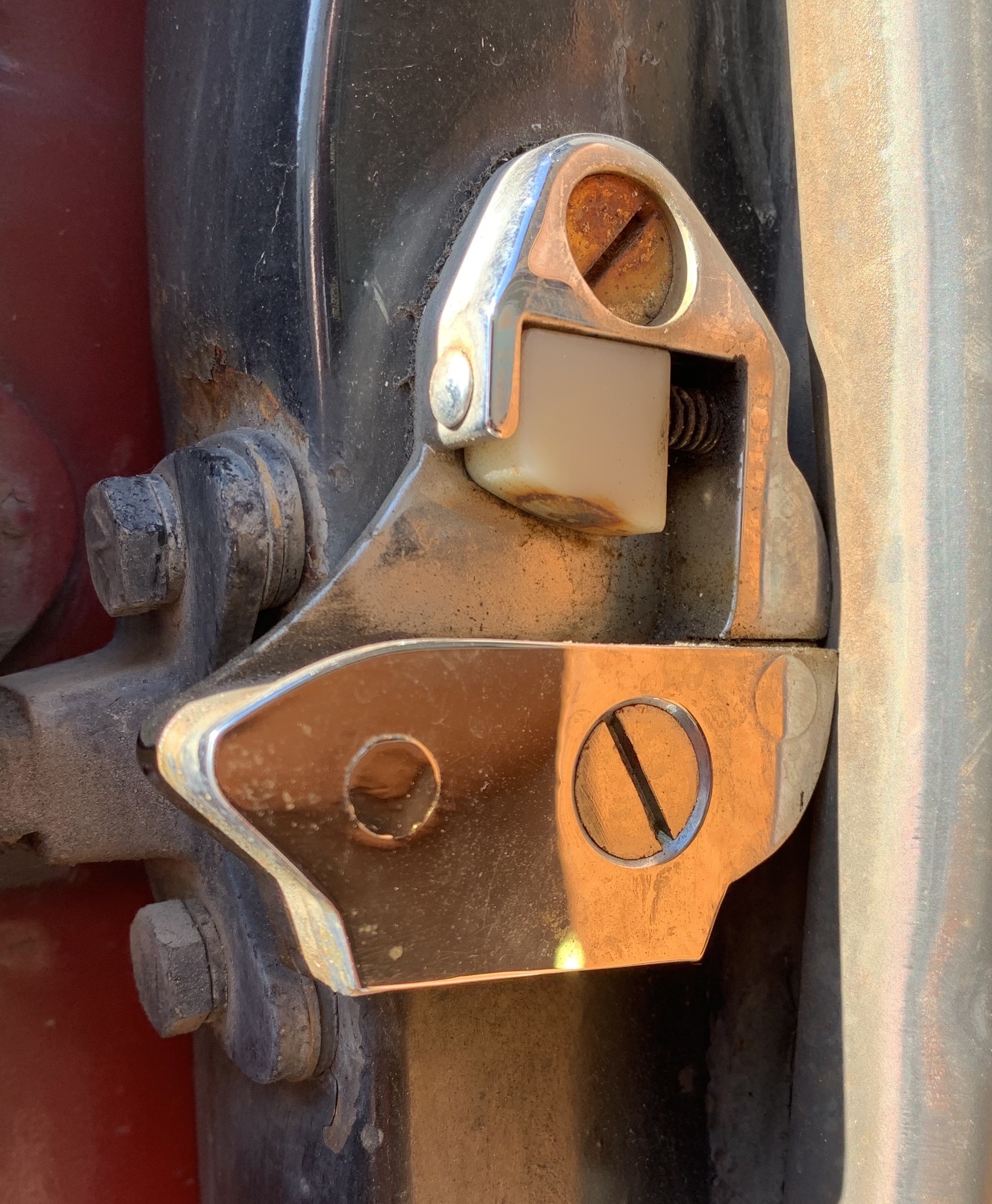
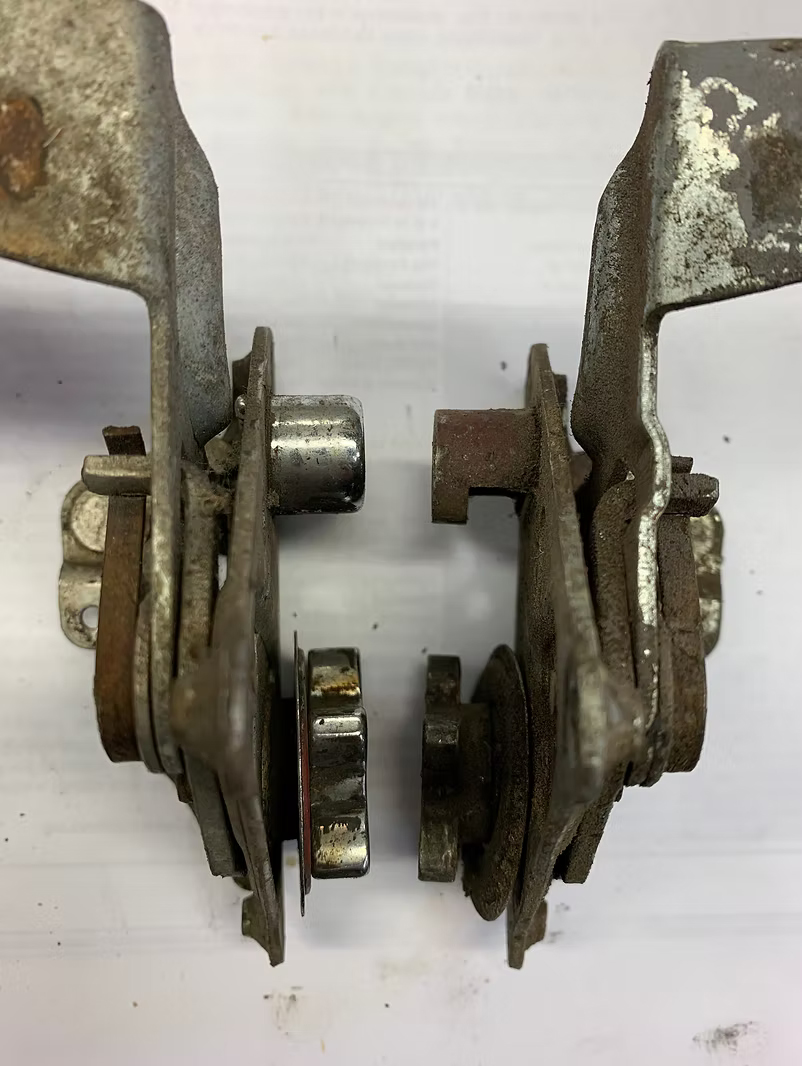
If you study these photos, you can see how the latch’s star wheel and the teardrop-shaped alignment guide both become captured in the striker plate on the USA latches. As such, if the B or C-pillar distorts away from the latch mechanism in a crash, this design will not allow the latch to disconnect.
These special latches were first used on 1969 DS models in the USA. It is unclear to me why Citroën was not required to have these latches on 1968 models, noting that nearly all of the FMVSS’s were mandatory for 1968 models.
THE LITTLE BLACK KNOB
There was another requirement in FMVSS #206 that affected the DS. This is a requirement that all passenger doors must be able to be locked from the inside. DS’s of the era did not have this provision on the front doors. Wording in the FMVSS is as follows:
“Door Locks. Each door shall be equipped with at least one locking device which, when engaged, shall prevent operation of the exterior door handle or other exterior latch release control and which has an operating means and a lock release/engagement device located within the interior of the vehicle.”
Citroën complied with this requirement by modifying the front door latch assemblies to include a small black knob that allowed the door to be locked from the inside. This feature was used on all 1969-1971 DS’s in the USA, coincident with the anti-burst features discussed above.

The plastic locking knob was the same knob used for the dashboard fresh air vent levers on 1960’s vintage DS’s.

North American SM’s also received different door latches than their Euro counterparts since they were required to incorporate a means to allow the doors to be locked from the inside.
1972-1975 DOOR LATCHES
For 1972, Citroën completely redesigned the entire door latch mechanism on the DS. The new design complied with all rules internationally, meaning that there was no longer a need for unique latches for North American cars.
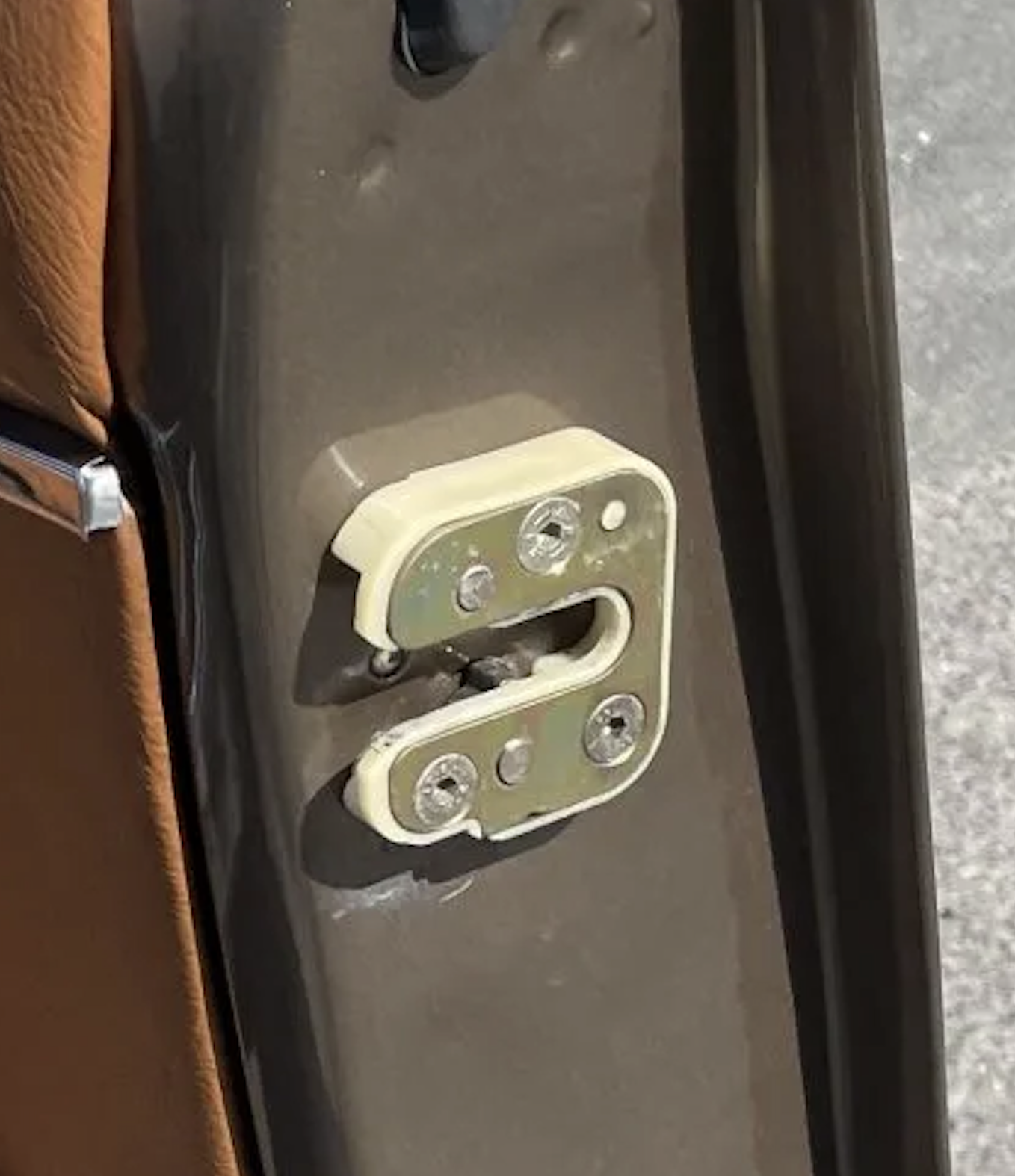
Similar latches were used on other Citroën models in the 1970’s and 1980’s, such as the SM, 2CV, GS, CX, etc., each with design variations to accommodate the specific models, but all having similar anti-burst designs.
WHAT ABOUT CANADIAN DS’s?
The Canadian safety rules (CMVSS) phased-in in 1971, several years after the US rules became mandatory. These requirements forced Citroën to start including many of the USA safety and smog control features onto Canadian DS’s.
As a result, starting in April of 1971, Citroën gave up having substantially different versions for the USA and Canada and started selling DS’s in Canada that were ‘almost’ identical to US models. This means that Canadian DS’s received the anti-burst door latches for just a few months, from April 1971 to the end of the 1971 model year.
The parts book(s) do not correctly reflect door latch configurations for Canadian cars.
PART INTERCHANGEABILITY
One of the biggest hassles with these unique latches and striker plates is that they are not interchangeable with any of the Euro latches or striker plates. This makes finding a spare part difficult on North American models equipped with the anti-burst latches.
It turns out that there are 16 different latch part numbers used between 1956 and 1971. Since the parts books are a bit confusing and have errors, we tabulated all of the part numbers and their usage in the following table:

The Pallas and non-Pallas latches in the above table are interchangeable, and only differ due to whether or not they are chrome plated.
SUMMARY
I think that holding the door closed during an accident is important and has been shown to save lives. So, despite the fact that parts availability and interchangeability is problematic, I think this was a good rule. And I am also happy that within a few years, Citroën redesigned their latch systems across their product line to include anti-burst features.