Celebrating Claudia Schiffer’s Impact For Citroën

It was 25 years ago that Claudia Schiffer slinked down a staircase in a french chateau, shedding her clothes along the way and coming to rest in a Citroën Xsara parked outside.
That commercial spurred sensationalism and at the time, and probably would be heavily criticized today for exploiting feminism. At the time, Citroën’s marketing team, prepped to emphasize sensuality rather than specifications, was fairly thrilled with the news that they’d be promoting a car called the “Xsara”.
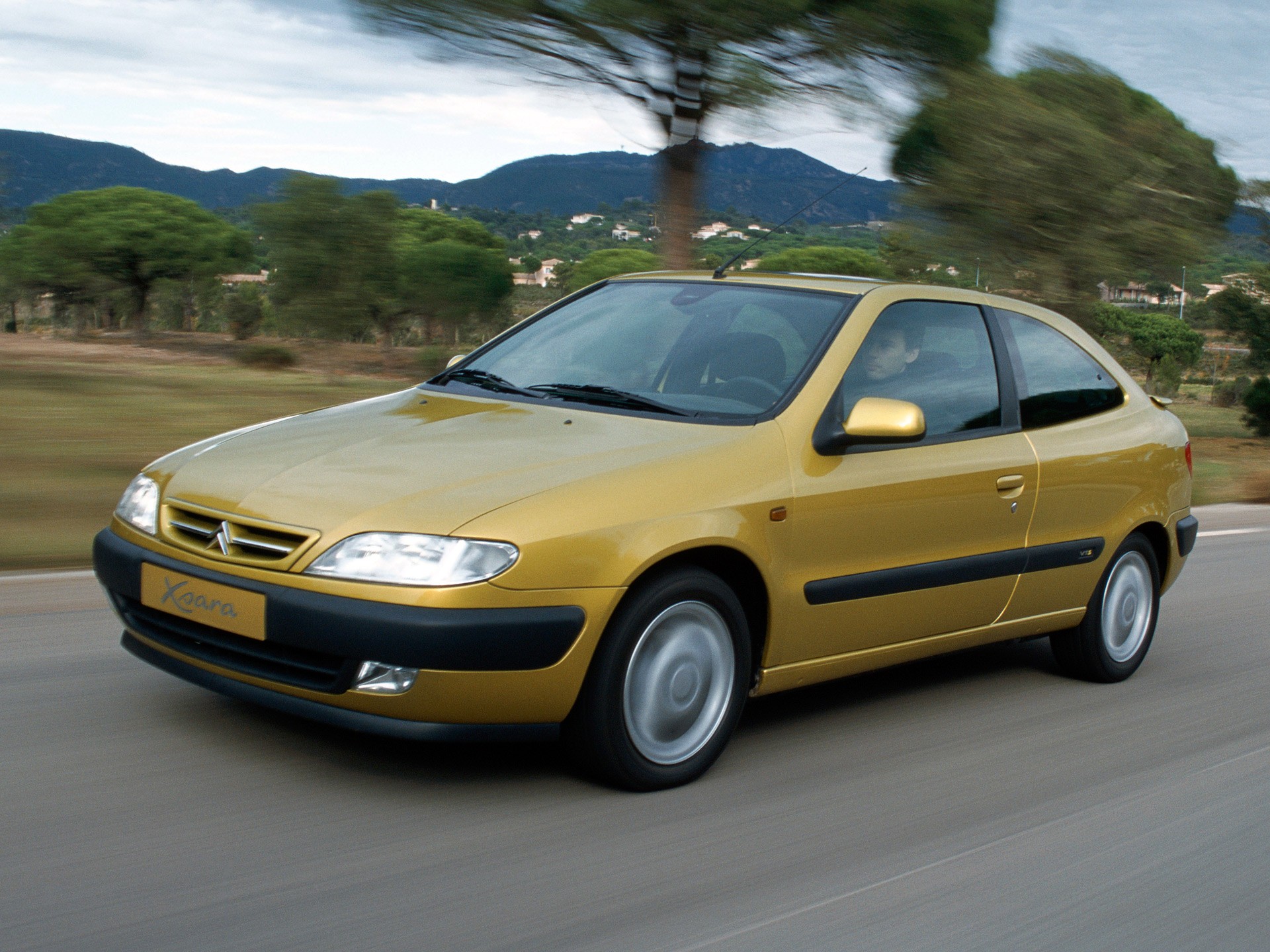
Underneath, like all Citroëns since the 1980s, the Xsara rode on Peugeot corporate hardware. It was a rework of the Citroën ZX (which, to be fair, had come before the Peugeot 306 it had spawned).
“Xsara” continued a tradition of sorts that Citroën names (where the company had chosen to apply names) ended in “A” — Athena, LNA, Visa, Xantia. Credit for the name, Citroënet’s Julian Marsh suggests, goes to Pierre Bessis, also responsible for “Citroën Xanae” (a concept), and Renaults “Scénic,” “Clio,” and “Mégane.” For Bessis, Xsara conjured up images of the queen of Babylon, mating femininity with “Xsar” or “Tsar,” connoting unbridled luxury, and “Sahara,” which implied a long distance journey (which Citroën used for their 4×4 version of the 2CV). Far from road rage, gridlock, accidents, and breakdowns, “Xsara” seemed the perfect name to sell dreams and loose promises.
When the marketing team set eyes on the final product which looked rather mundane, they determined that applying feminine sexuality in its advertising would deliver on the old adage “sex sells”. And who better attract eyeballs than supermodel Claudia Schiffer? Their approach was designed to appeal to consumers’ emotions rather than focusing solely on the car’s specifications.
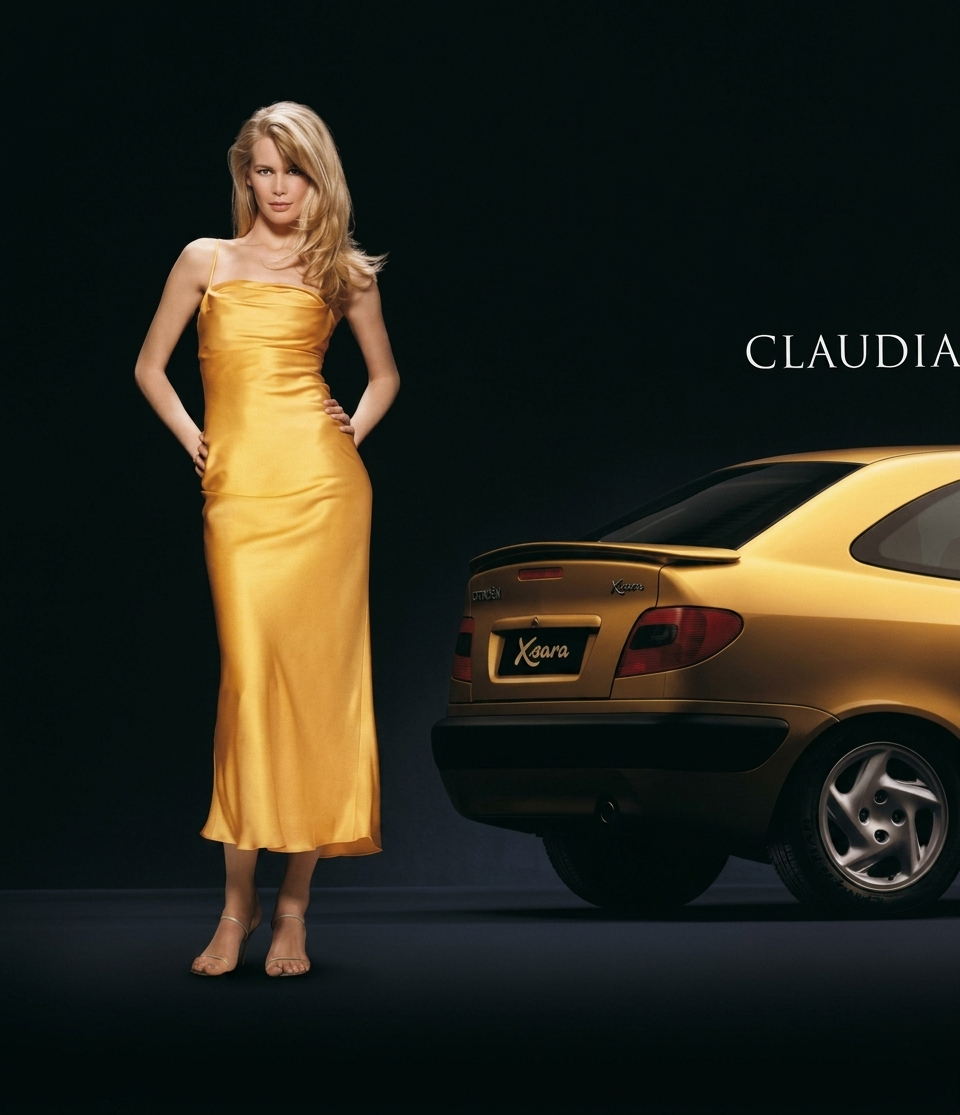
Schiffer’s status as a supermodel attracted considerable attention. By leveraging Schiffer’s image, Citroën effectively differentiated the Xsara from competitors, enhancing its appeal and making it more recognizable in a crowded market.
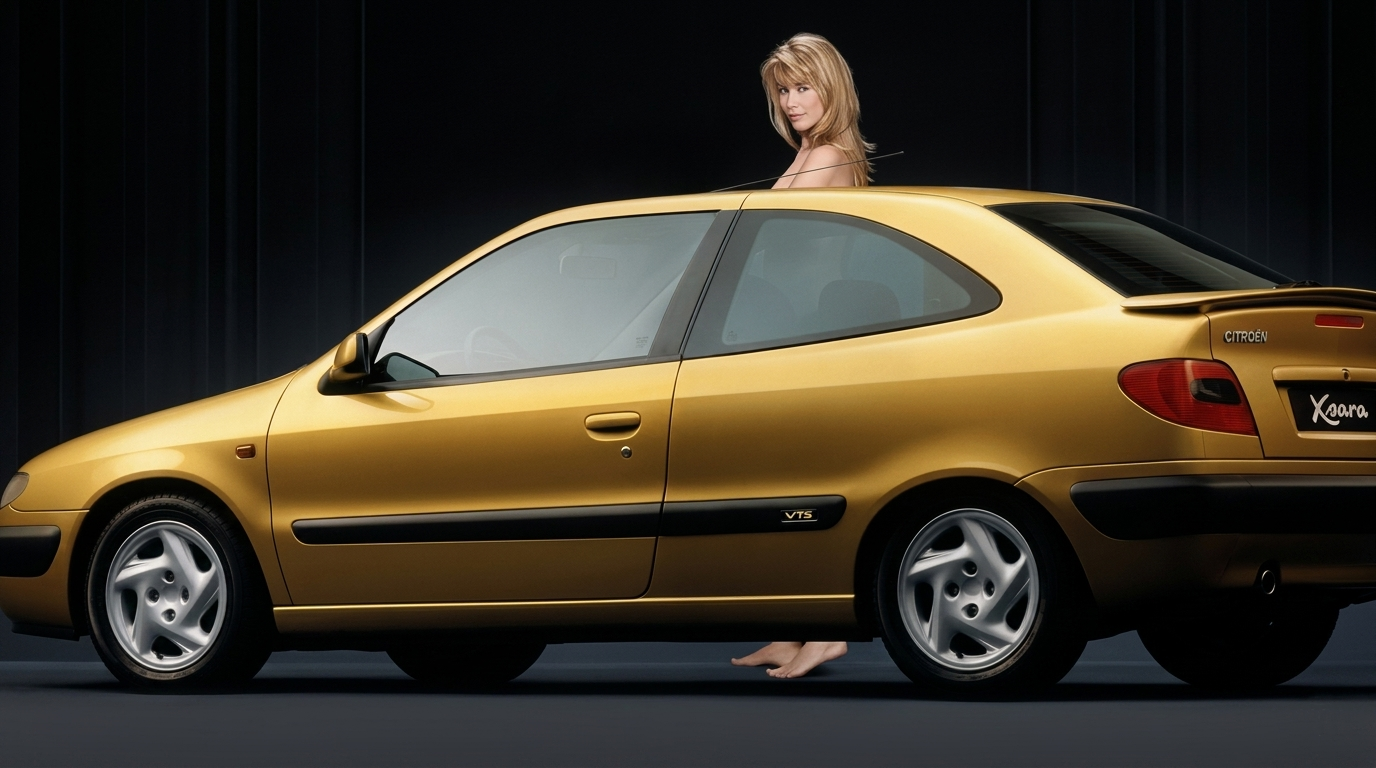
Would you really buy a car because a well-known model decides she doesn’t need to wear her expensive lingerie when driving it?
In May 1998, television screens showed her walking down the stairs and entering her Xsara, progressively taking all her clothes off before driving away naked; because, apparently, “the only thing to be seen in is a Citroën Xsara coupé.”

Citroën’s nondescript compact ad caused quite a stir.
Britain’s Independent Television Commission, used to receiving about three complaints per ad, received a full one hundred and twenty-one, complaining that the Citroën spot was degrading to women; that it was sexist, and that its gratuitous use of a woman’s body was unacceptable.
Surprisingly, Spain was even more offended, although the reason for this became evident when it was revealed that most of the members of the country’s Advertising Observatory, who intervened to prevent the ad from being run, were women.
It’s not clear whether the response would have been quite so harsh if the Xsara had offered at least a modicum of the sultry seductiveness of its co-star. Indeed, there was little evidence of a feminine touch to the Xsara’s lines, which even Citroën described as a “robust.”
Lars Bech Christensen, Danish academic in marketing/advertising and co‑editor with Flemming Hansen of the book “Branding and Advertising” explained;
“When the Citroën Xsara ad featured Claudia Schiffer taking off her clothes, implicit memory would have stored her and linked her to the Citroën Xsara… implicit memory would have stored the concept ‘striptease’ and linked it to the Xsara.”
“It cannot work out that Claudia Schiffer is taking her clothes off because the Xsara is so well-equipped ‘it’s the only thing to be seen in.”
Hansen & Christensen went on to conclude that the evidence from research was that both these messages were unknown to the vast majority of TV viewers.
“Unless you understand why Claudia Schiffer is taking her clothes off, then all you are left with is the rather dated sexist concept of using scantily-clad models to strip in order to sell cars.”
In the end the dichotomy worked, and the ads achieved exceptional levels of awareness, particularly in the late 1990s, where it briefly outsold the VW Golf in the UK. They contributed significantly to Citroën’s market share during that period.
For the record, the ITC did not uphold the complaints, remarking that “the nudity in this light-hearted, tongue-in-cheek advertisement was not explicitly filmed.” Most viewers, it noted, “would not share the complainants’ view that the tone of the advertisement was unacceptably offensive, degrading, or sexist.” The Spanish authorities, too, relented.