
30th Anniversary of the Citroën Saxo
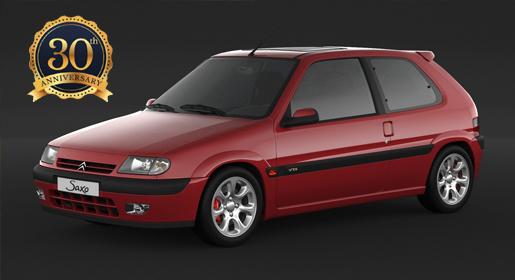
In 1996, Citroën launched the 16-valve Saxo VTS, powered by a 1.6-liter engine producing 88 kW (120 hp) and weighing just 935 kg, making it one of the most popular small sports cars of its generation.
In addition to its excellent power-to-weight ratio, which ensured outstanding performance, this “little powerhouse” featured a highly efficient and well-balanced chassis that delivered driving pleasure and easy handling. Far from being just a city car with a dynamic design, it embodied a clear vision: to offer all driving enthusiasts a true go-kart feel for the road – reliable, affordable, and designed for driving pleasure.
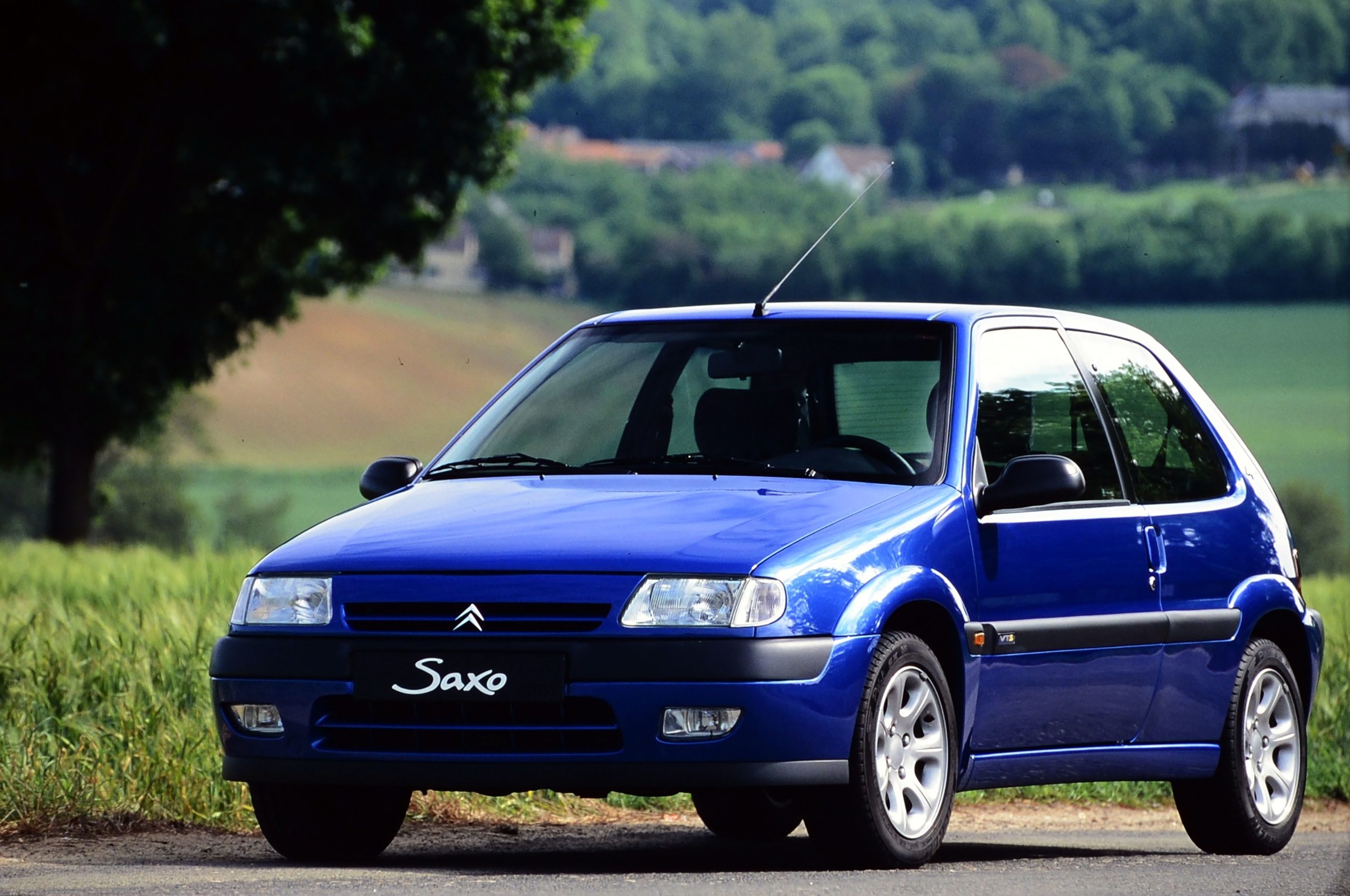
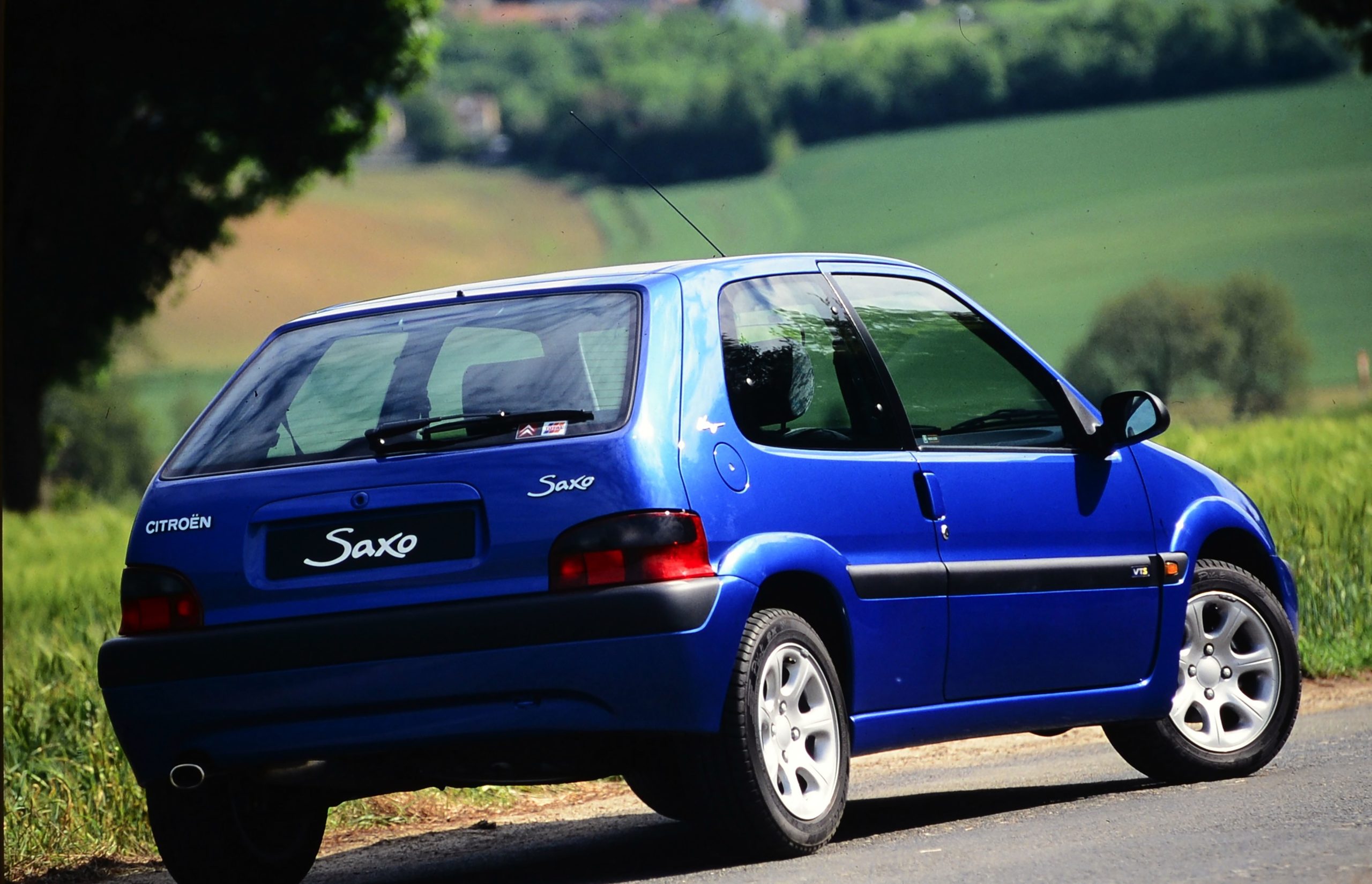
The Saxo was produced at the Aulnay-sous-Bois plant until 2003 and remains a highly sought-after collector’s item and a symbol of an era in which sportiness and affordability went hand in hand.
To understand the origins of the Saxo VTS, the journey begins with the AX. With the AX, AX Sport, and AX GTi, launched in 1986, Citroën established itself in the sporty city car segment – these models were characterized in particular by precise handling and an impressive power-to-weight ratio.
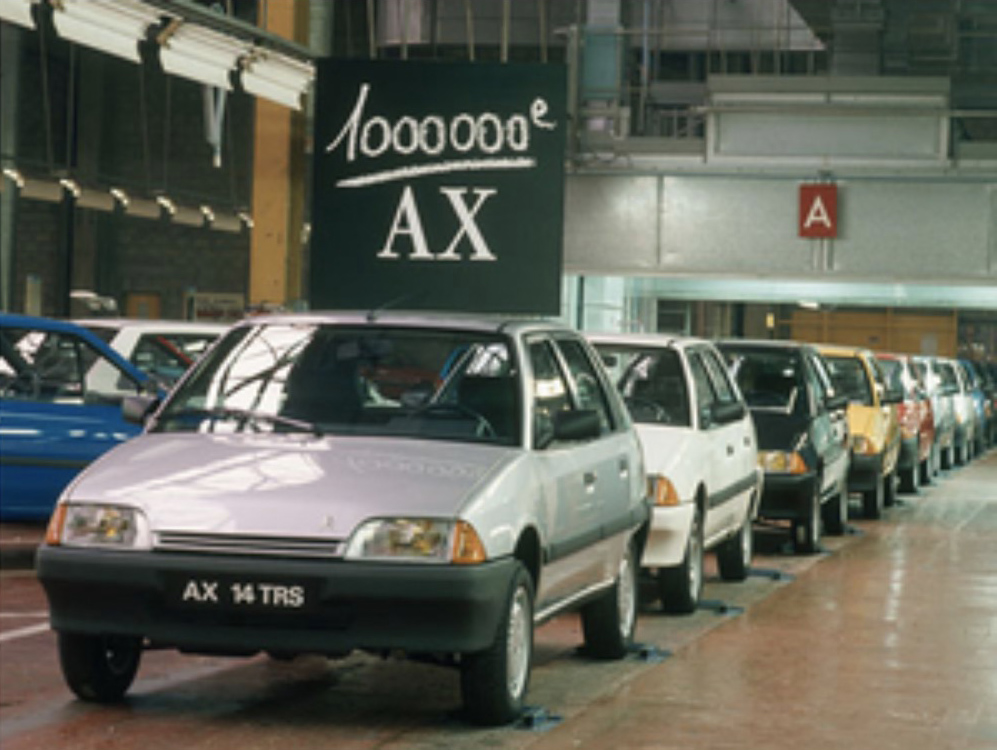
Introduced in February 1996, the Saxo initially replaced the AX as the brand’s entry-level model. That same year, the Saxo VTR debuted with a 1.6-liter 8-valve engine producing 66 kW (90 hp).
Then came the model intended to continue the legacy of the AX GTi: the Saxo VTS, powered by a 1.6-liter 16-valve TU5J4 engine generating 88 kW (120 hp) at 6,600 rpm, with a rev limit of 7,300 rpm. Combined with a 5-speed gearbox featuring a shorter final drive ratio and a weight of just 935 kg, it propelled the VTS to a top speed of 205 km/h and enabled a 0-100 km/h sprint in around 8 seconds.
On winding roads, the Saxo VTS held its own against vehicles that were far larger and more powerful. Ventilated disc brakes at the front complete the picture of a small sports car designed for pure driving pleasure. But it’s the chassis that made the decisive difference: a front end with surgical precision, well-tuned power steering, and a playful, dynamic rear.
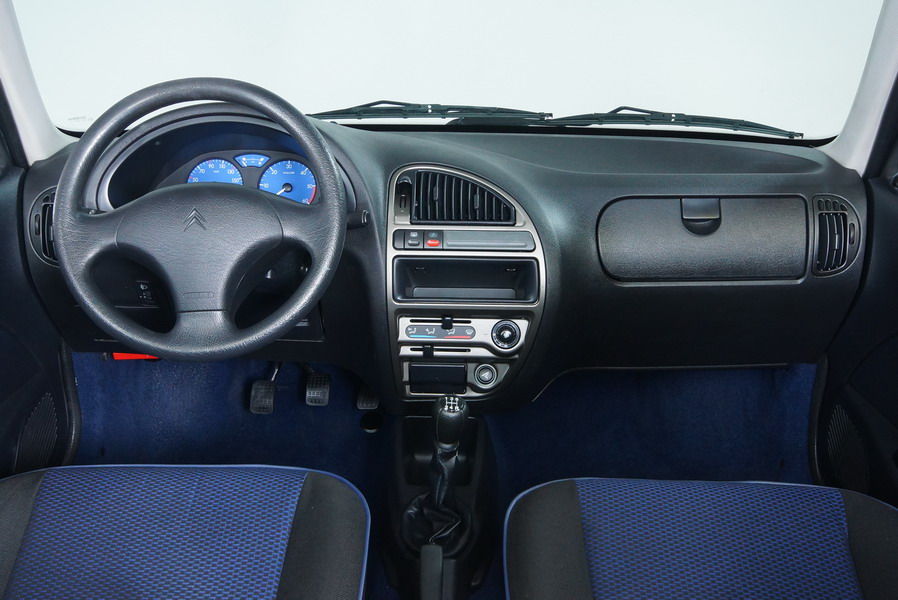
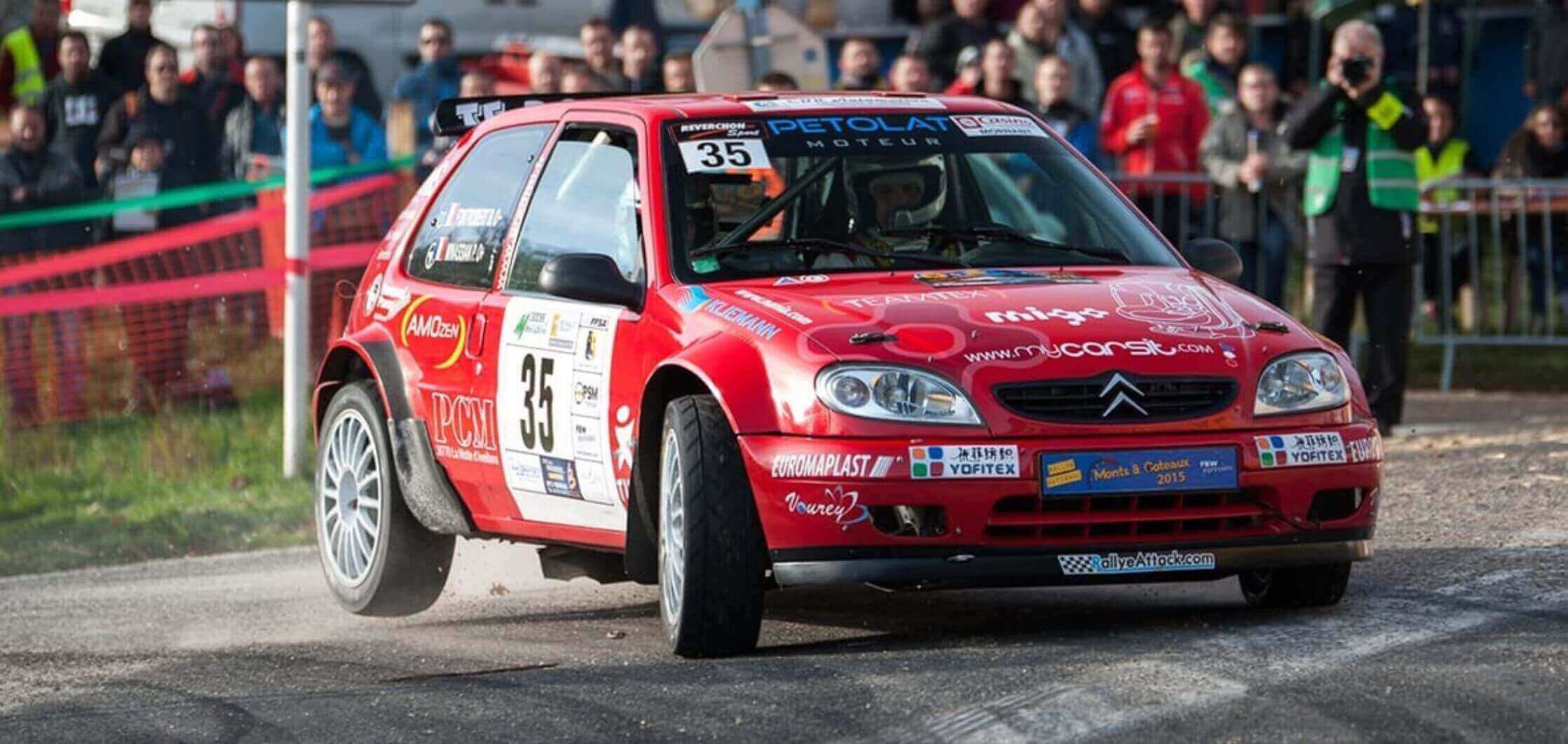
The Saxo VTS was used in a variety of motorsport disciplines, including rally, rallycross, and circuit racing, and helped train an entire generation of amateur and semi-professional drivers.
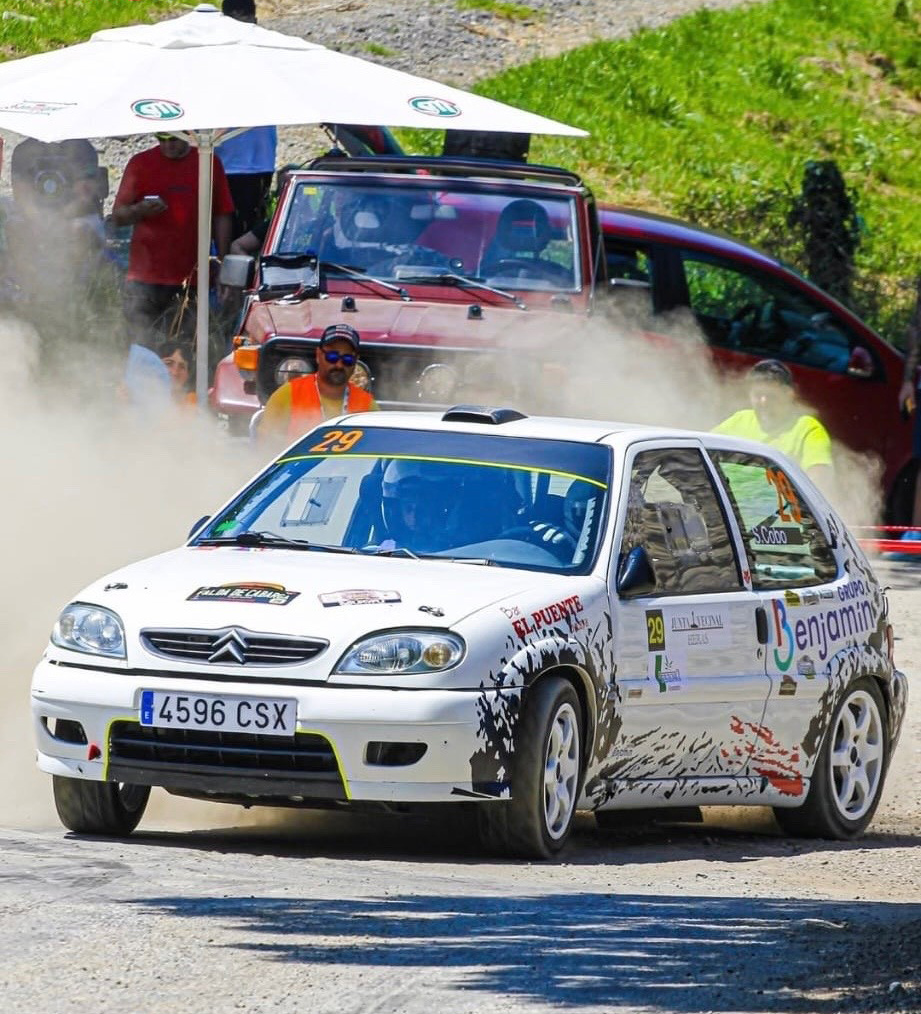
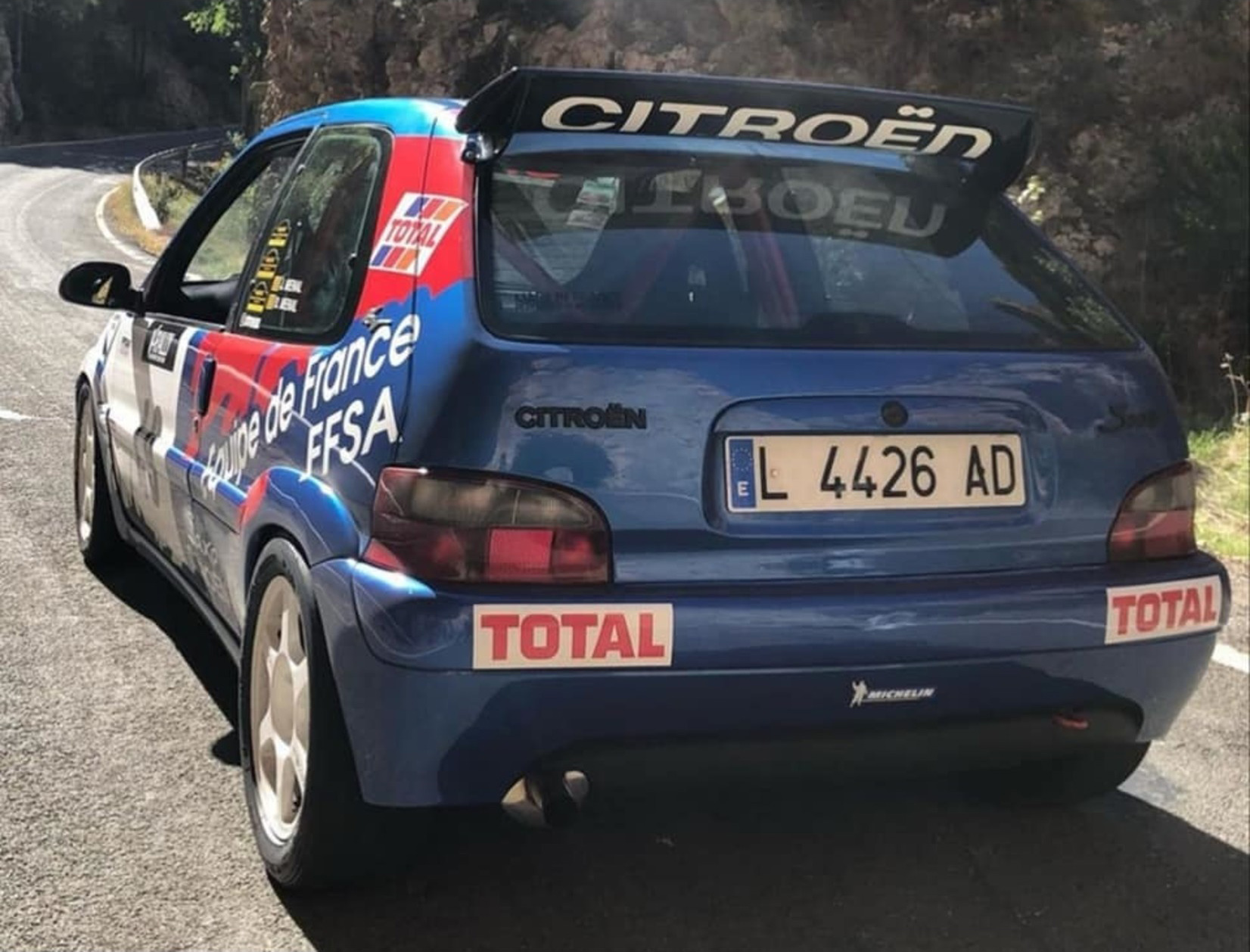
While the overall design of the Saxo was the work of Italian designer Donato Coco, a very young designer was entrusted with the sporty variant. Gilles Vidal’s very first assignment for Citroën in 1996 was precisely to develop the VTS body kit. It was a meticulous undertaking that resulted in, among other things, carefully integrated fender flares and widened bumpers.
The Saxo VTS never rested on its laurels. At the end of 1997, the sporty model range was restructured as part of its first facelift, and the 16-valve model adopted the “16V” emblem previously reserved for the ZX. This also presented Citroën with an opportunity to broaden the reach of the VTS designation.
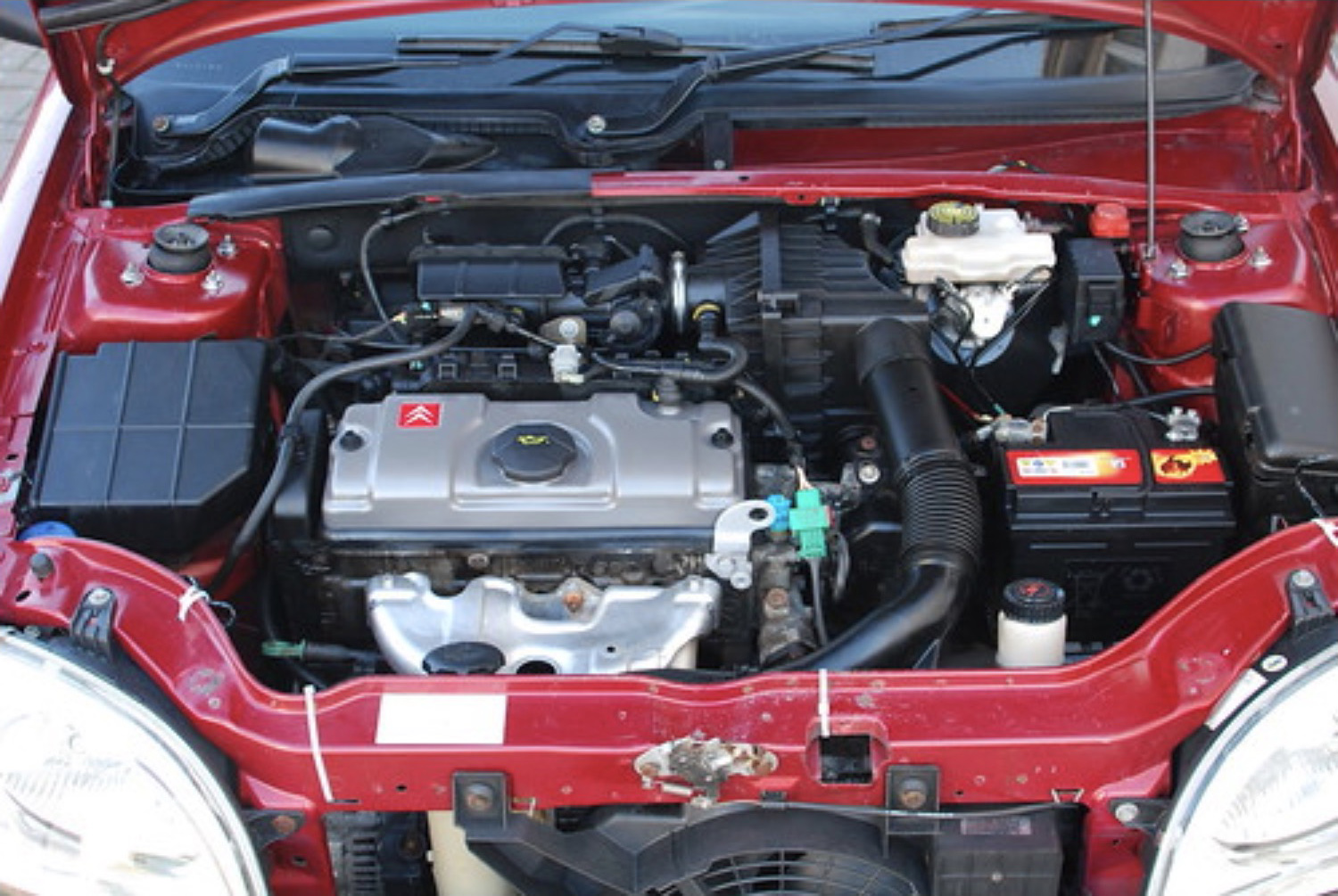
While the 88 kW (120 hp) 16V version remained the flagship model, the VTS’s sporty look and sophisticated chassis were now combined with more affordable engines to appeal to a wider customer base seeking aesthetic dynamism without prioritizing pure performance. The VTS range was thus expanded to include the 66 kW (90 hp) 1.6i (previously reserved for the VTR), the 73 kW (100 hp) 1.6i, and even the 55 kW (75 hp) 1.4i.
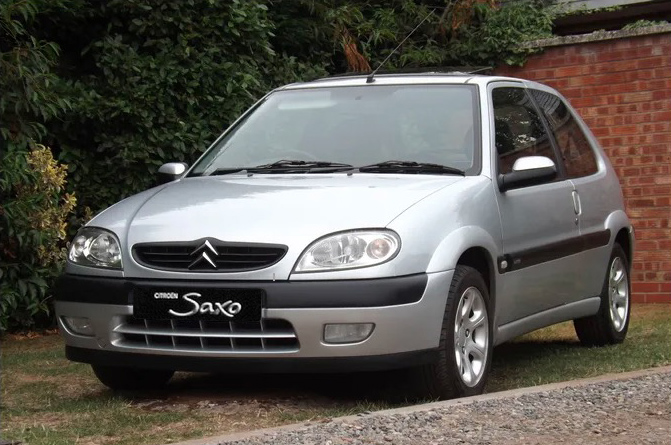
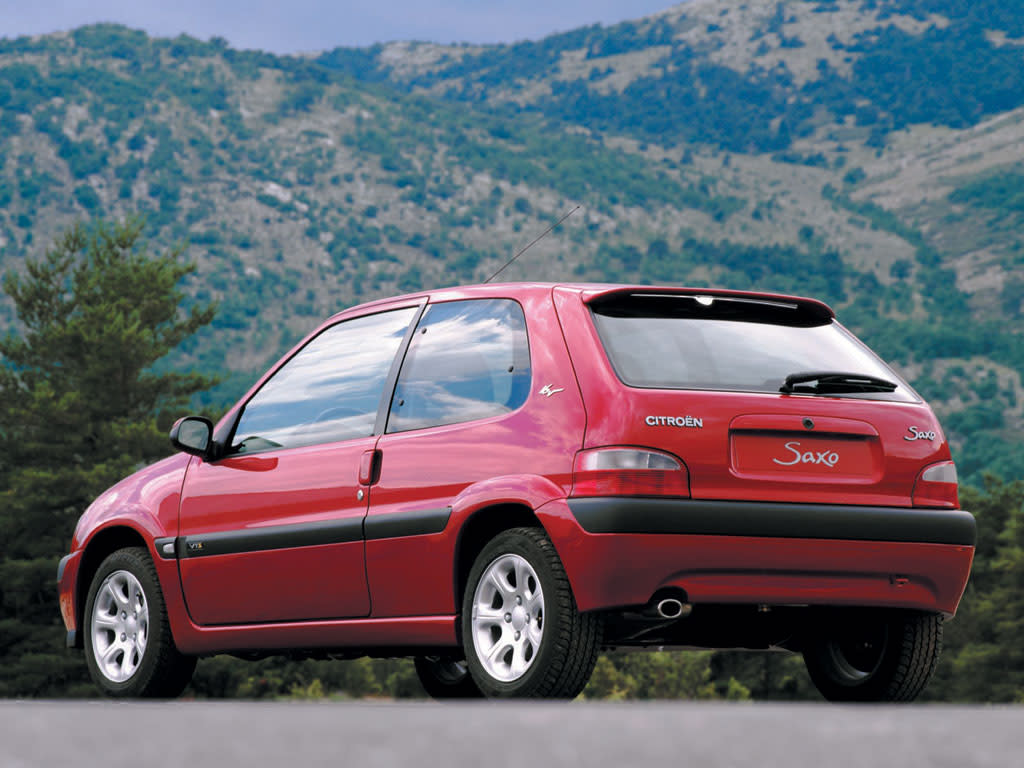
In 1999 the VTS was modernized without losing its character. A comprehensive facelift changed the front end with almond-shaped headlights, a sculpted hood, and a grille featuring a large double chevron. A spoiler was added above the rear window on the hatchback.
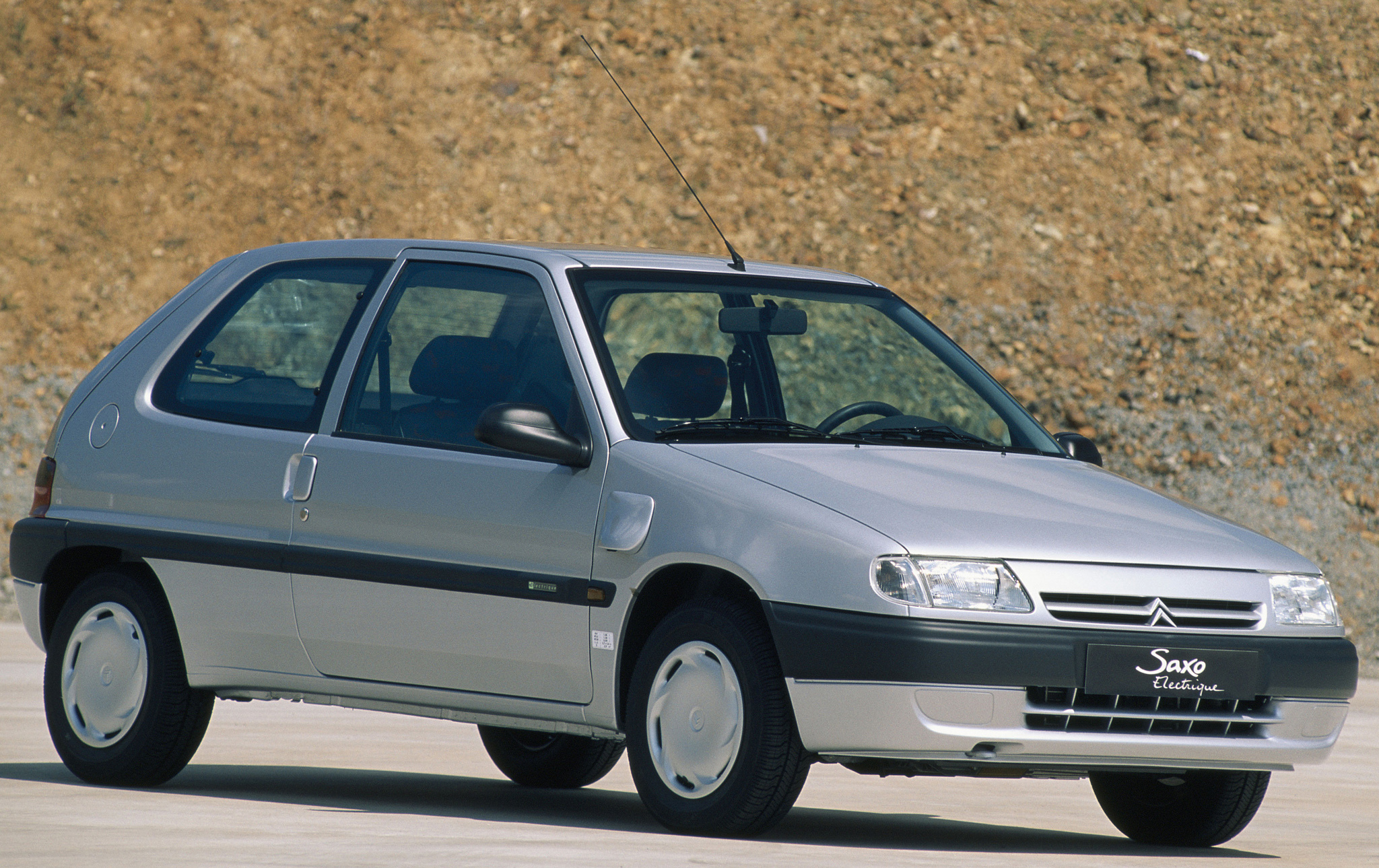
The Saxo Électrique, produced between 1996 and 2003, remains one of the most fascinating “compliance car” pioneers of the pre-modern EV era. While it shared a body with the ubiquitous petrol Saxo, it was a completely different animal under the skin, developed primarily for French municipal fleets and the “Electric Cité” program.
Citroën Saxo — Trims, Engines & Production Years
| Trim / Engine | Power (bhp / kW) | 0–62 mph (0–100 km/h) | Economy (combined mpg / L/100km) | Key features | Production years (approx.) |
|---|---|---|---|---|---|
| 1.0 LX / Entry (1.0L 8V) | ~50 bhp (37 kW) | ~16–18 s | ~55–60 mpg / 5.1–4.7 L/100km | Basic fit: manual windows, simple interior | 1996–2003 |
| 1.1 / 1.1LX (1.1L 8V) | ~60 bhp (44 kW) | ~14–16 s | ~50–55 mpg / 5.6–5.1 L/100km | Slightly quicker, still basic | 1996–2003 |
| 1.4i (8V) | ~75 bhp (55 kW) | ~12–13 s | ~45–50 mpg / 6.3–5.6 L/100km | Mid-range trim options, better mid-range torque | 1996–2003 |
| 1.6i 8V (SX/LX early) | ~90 bhp (66 kW) | ~10–11 s | ~40–45 mpg / 7.1–6.3 L/100km | Decent performance for daily driving | 1996–2003 |
| 1.6i 16V / VTR | ~103 bhp (76 kW) | ~9.5–10.5 s | ~36–42 mpg / 7.8–6.7 L/100km | Sportier cam, sharper throttle, sport trims available | 1996–2003 (16V more common from late-1990s) |
| 1.6 VTS / GTI (16V) | ~120 bhp (88 kW) | ~8.5–9.5 s | ~34–38 mpg / 8.3–7.4 L/100km | Sports suspension, better brakes, sport seats, tuned engine | 1996–2003 (VTS widely from 1997 onward) |
| 1.5 D / Diesel (1.5L turbodiesel – market dependent) | ~50–60 bhp (37–44 kW) | ~15–18 s | ~60–70 mpg / 4.7–4.0 L/100km | High economy, torque at low revs | Late 1990s–early 2000s (market dependent) |
Saxo Électrique
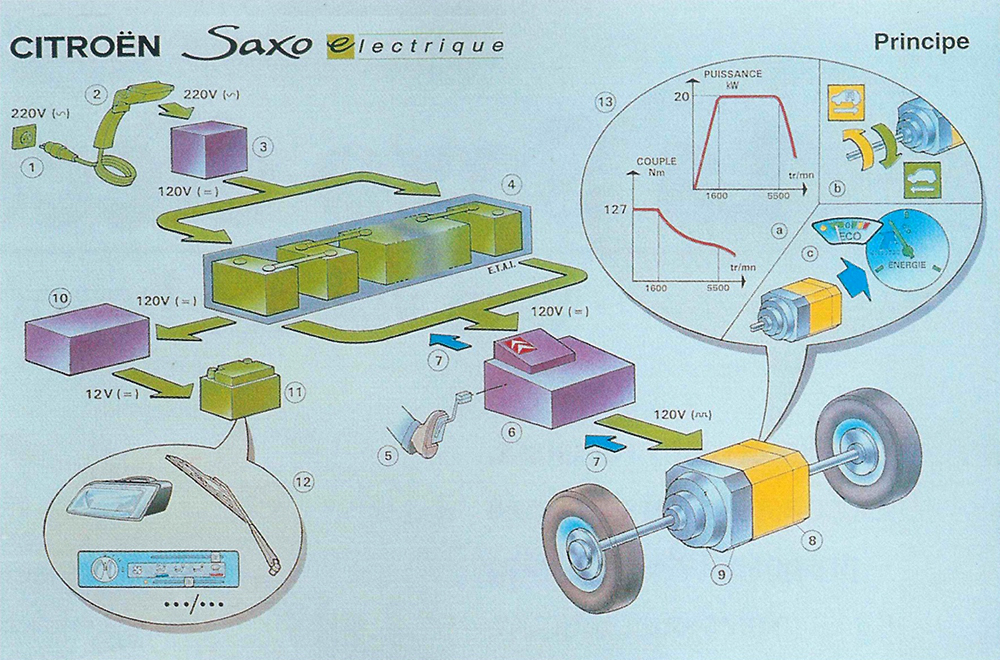
The Saxo Électrique relied on a surprisingly robust industrial powertrain for its time:
- Motor: An air-cooled Leroy Somer SA13 DC motor producing a modest 11 kW (15 hp) continuous and 20 kW (27 hp) peak.
- Batteries: 20 Saft NiCd (Nickel-Cadmium) 6V monoblocks, liquid-cooled to manage heat during charging. These were split into three “coffers” (battery boxes): one in the front and two in the rear.
- Top Speed: Approximately 91 km/h (56 mph), making it strictly a city/suburban runabout.
- Range: Rated at 80–100 km (50–62 miles) in ideal conditions, though real-world range usually settled around 70 km.
One of the most unique (and somewhat ironic) features was the petrol-powered auxiliary heater. Because early EVs couldn’t afford to waste battery capacity on resistive heating, Citroën installed a small 5L fuel tank and a Webasto heater to keep the cabin warm in winter.
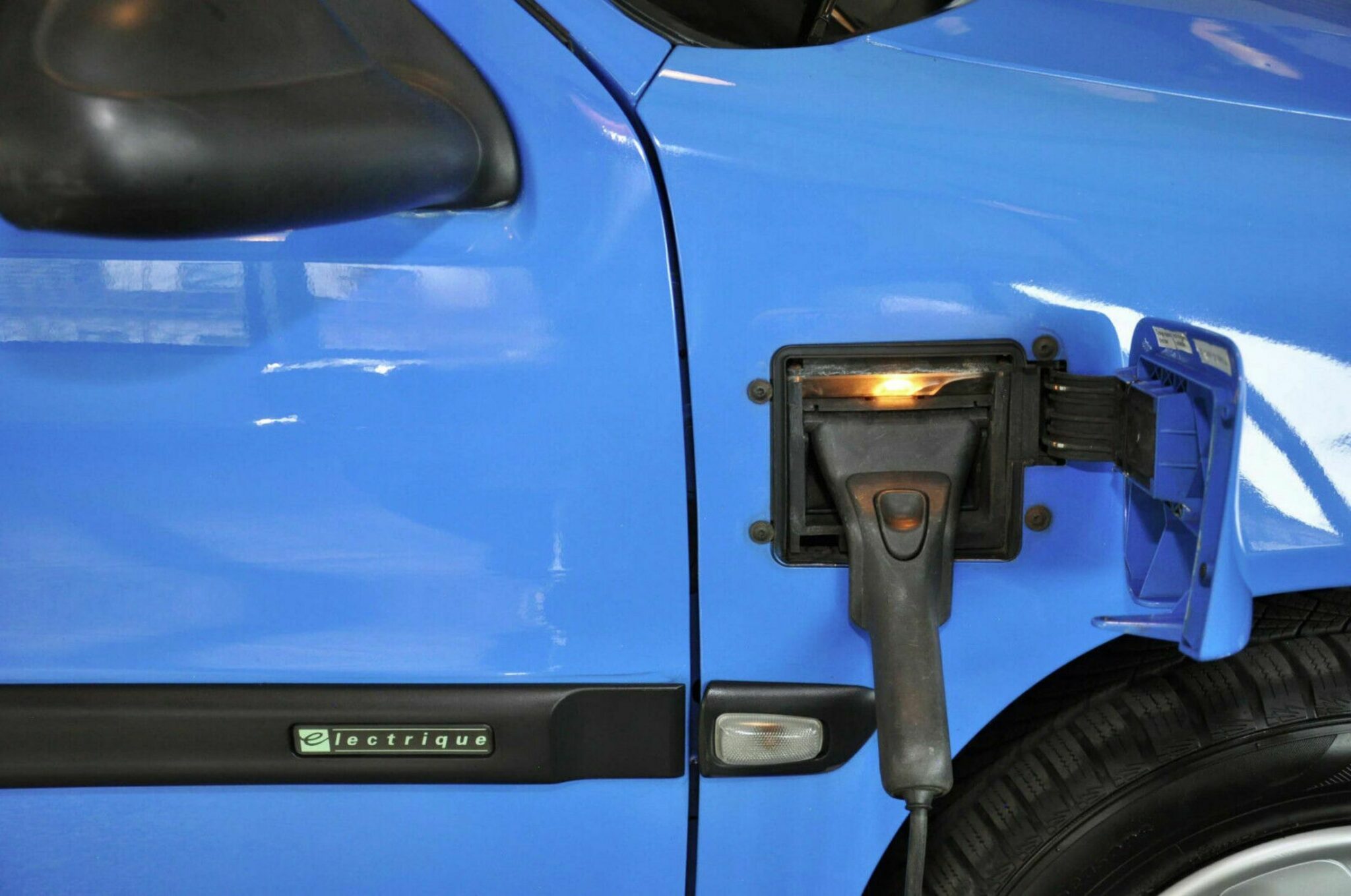
Critical Maintenance (Watering): Unlike modern Lithium-ion batteries, the Saxo’s NiCd cells are “wet.” During the final phase of charging, the batteries undergo electrolysis, converting water into gas. Owners must perform a “Mise en eau” (watering) roughly every 4,000–5,000 km to top up the electrolyte levels.