Cobble Beach Concours d’Elegance – 2026 Report
Cobble Beach Concours d’Elegance is the Canadian version of the prestigious Pebble Beach Concours.
Back for its 13 year, the 3-day event commenced on Friday, September 18th with a Tour d’Elegance of Ontario’s beautiful Bruce Peninsula north of Owen Sound, presented by Chevron Canada.
On Saturday, September 19th, there were 2 car show events in the city; Cars & Coffee, presented by Brackett Auto Group and Oblivion Avenue, a showcase bringing the Canadian cars and culture of the 80s and 90s back, was presented by Hagerty.
On Saturday afternoon at the Roxy Theatre in Downtown Owen Sound, legendary automotive designer Peter Brock served as a keynote speaker for a seminar on the Origins & History of the Daytona Cobra Coupes.
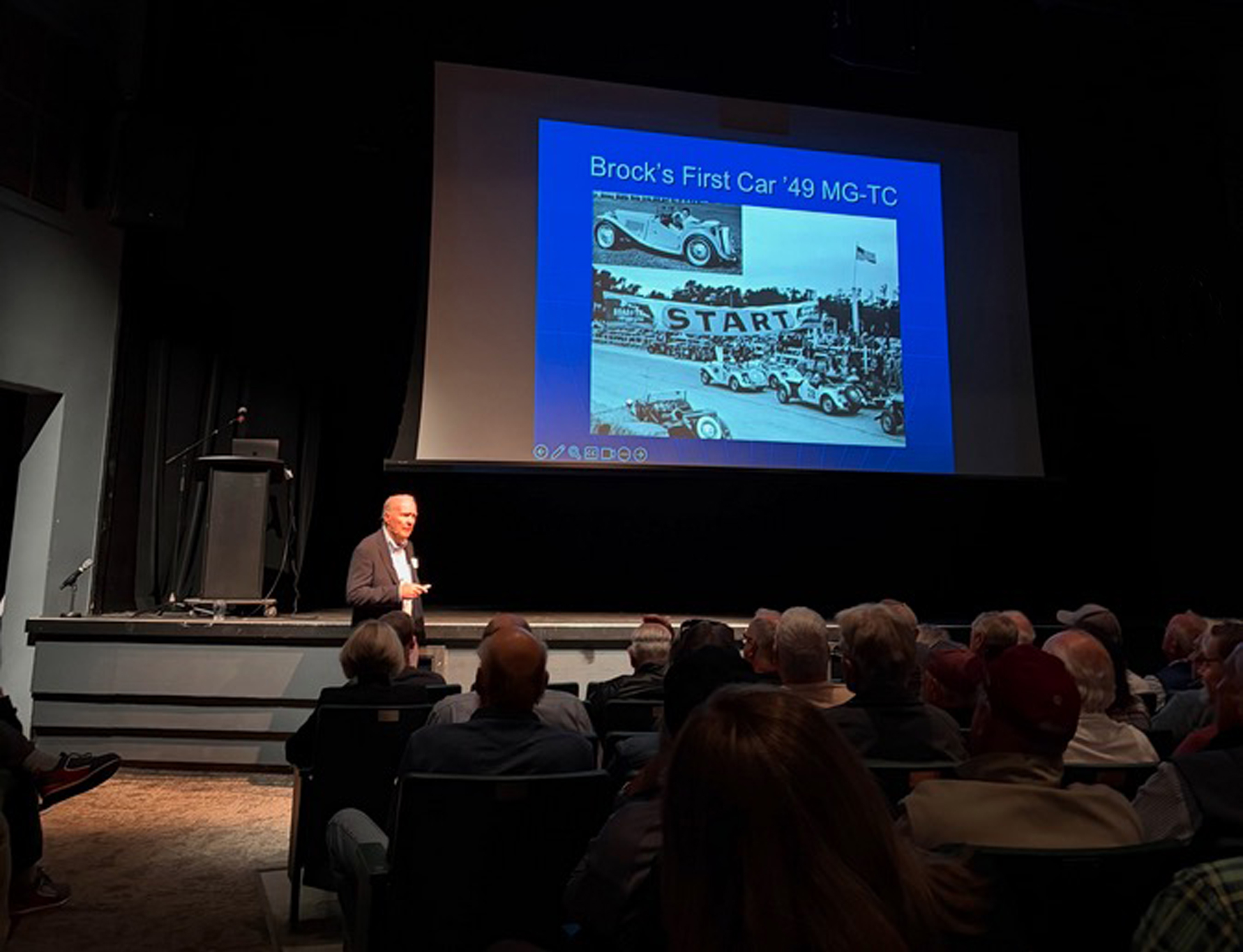
Peter penned the lines of the original ’59 Sting Ray Racer and by extension the 1963 production Corvette. To Cobra fans, Brock’s the guy who took the brick-like Shelby Cobra roadster and turned it into the slippery Cobra Daytona Coupe – the first American car to beat out the European regulars and grab the FIA’s GT World Championship.
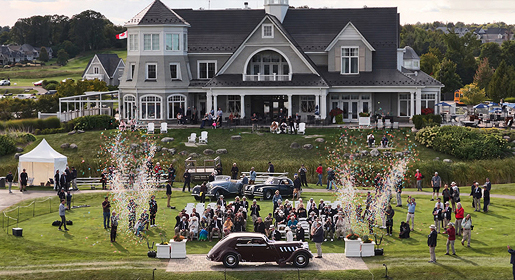
Sunday September 20th was the Concours show field at the Cobble Beach Golf Club – a gorgeous setting with an exceptional lineup of vehicles.
View a full photo gallery of the Concours here: https://flic.kr/s/aHBqjD5uwZ
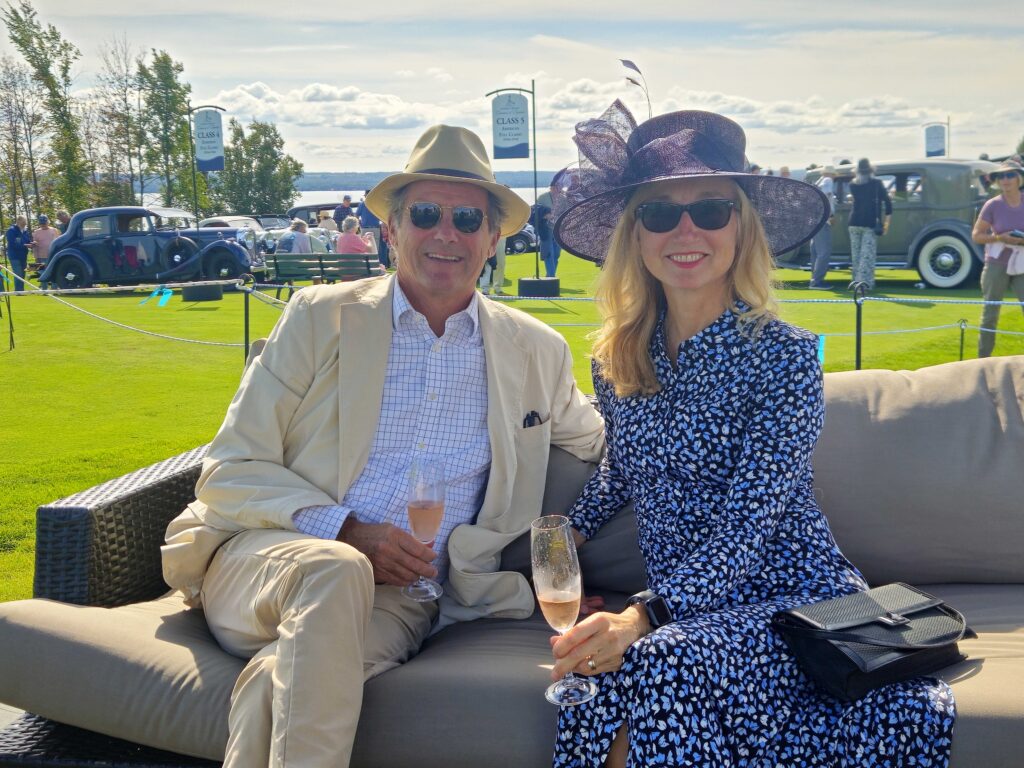
A few highlights were;
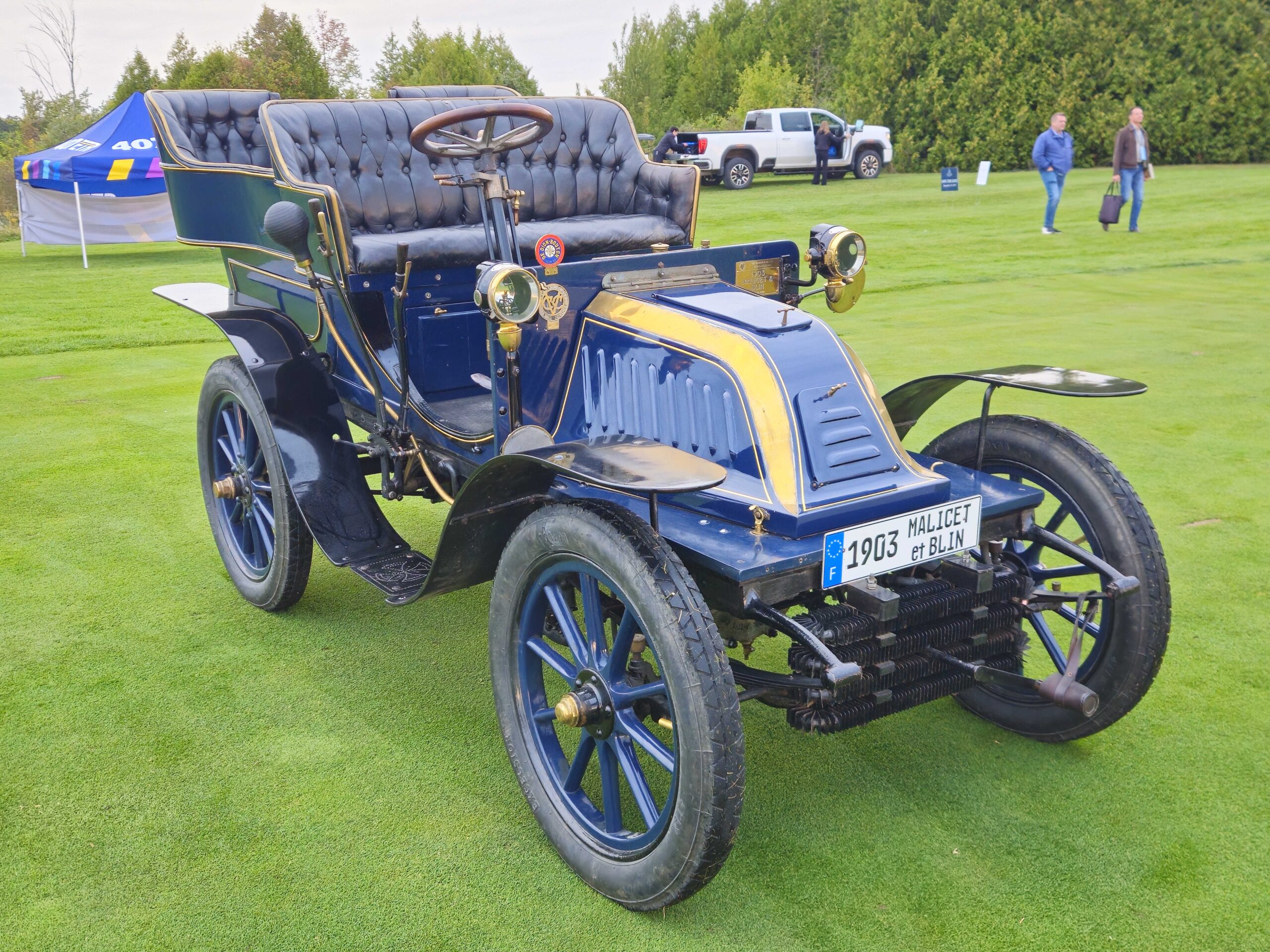
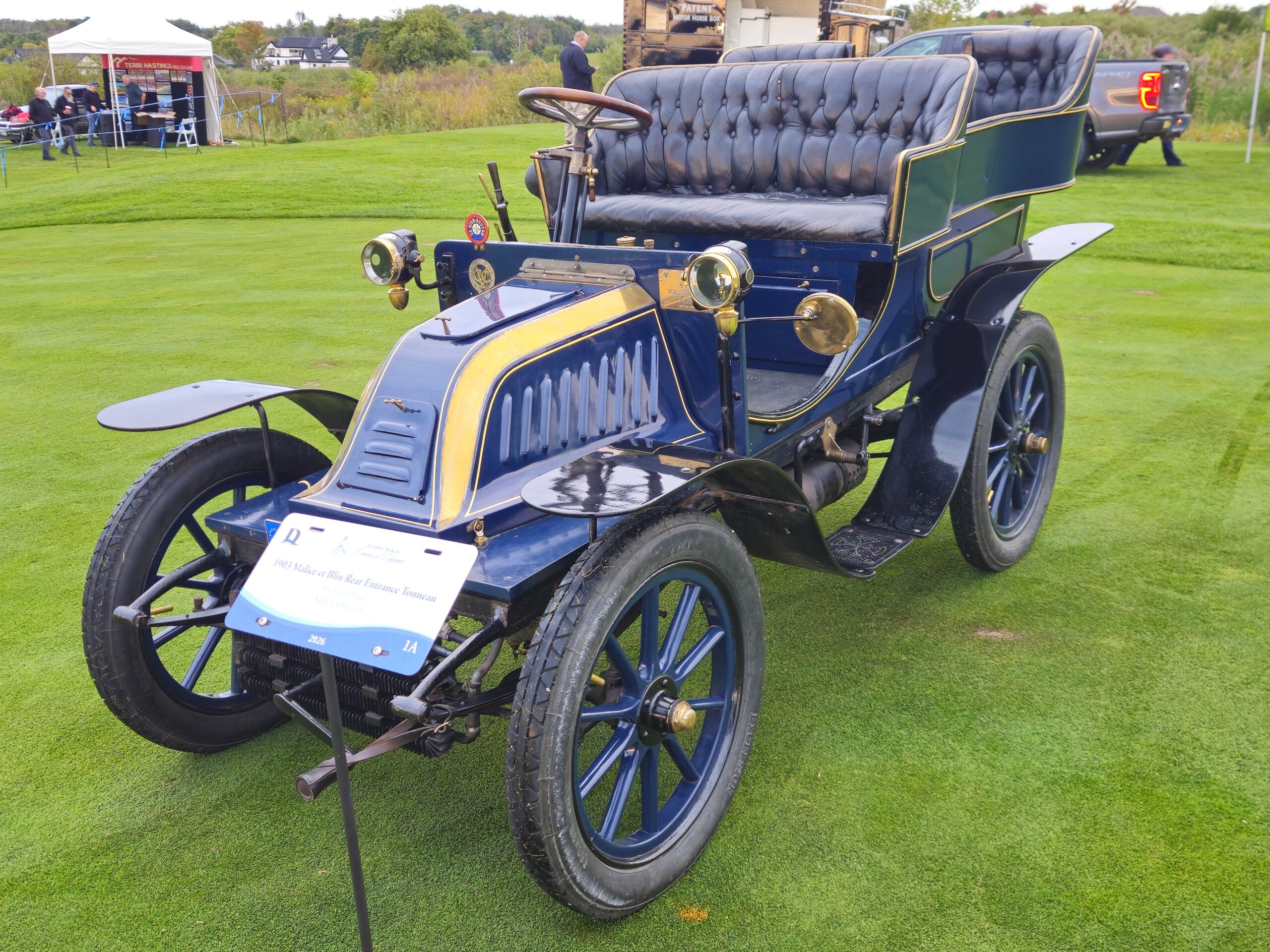
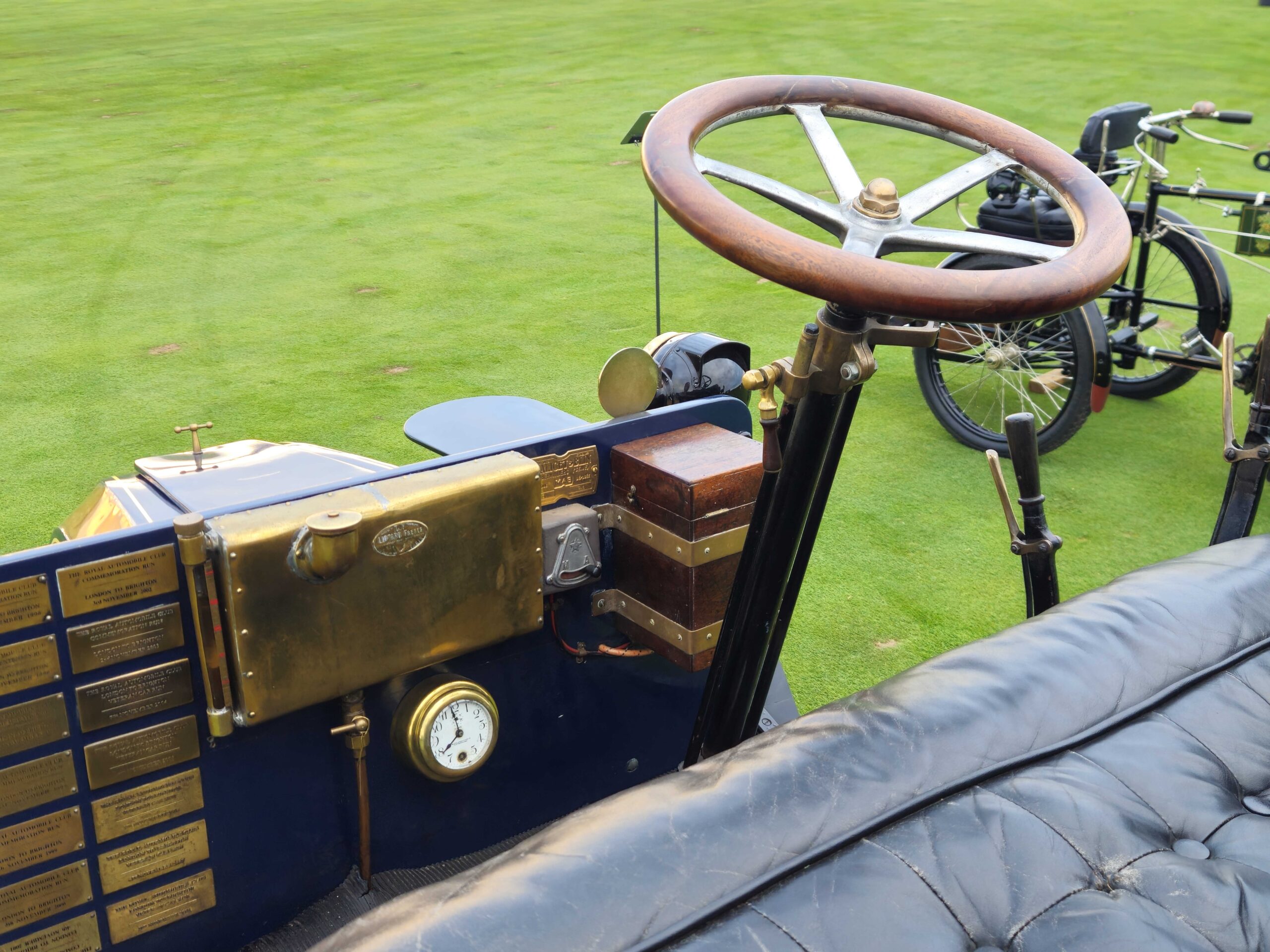
1903 Malicet et Blin Rear-Entrance Tonneau, owned by Michael Hogel of Nobel, Ontario.
Malicet et Blin was not considered a car manufacturer in France; rather, they produced parts for manufacturers. However, the company did produce vehicles of its own occasionally, powered by de Dion engines. This 1903 example and another 1897 vehicle are the only Malicet et Blin cars still in existence today. This Rear-Entrance Tonneau has participated in the London-to-Brighton Veteran Car Run over a dozen times.
1930 Rolls-Royce Phantom 1 Transformable Phaeton by Hibbard & Darrin, owned by William and Margaret Dickson of Cambridge, Ontario.
Chassis, S317KP, was built at Rolls-Royce’s factory in Springfield, Massachusetts, while the body was built by Hibbard & Darrin out of Paris, France. This transformable Phaeton was unique in many ways, from its distinctive convertible top; to its trapezoidal side windows; to its aluminum-alloy body with no wood frame. Hibbard & Darrin marketed their innovative rattle-resistant and light-weight body structure under the name “Sylentlite” (as in Silent-Light). The car has was delivered to Hollywood, California to movie director J. von Sternberg. It was then gifted to actress Marlene Dietrich after her first blockbuster film “Morrocco,” in which the car also appeared.
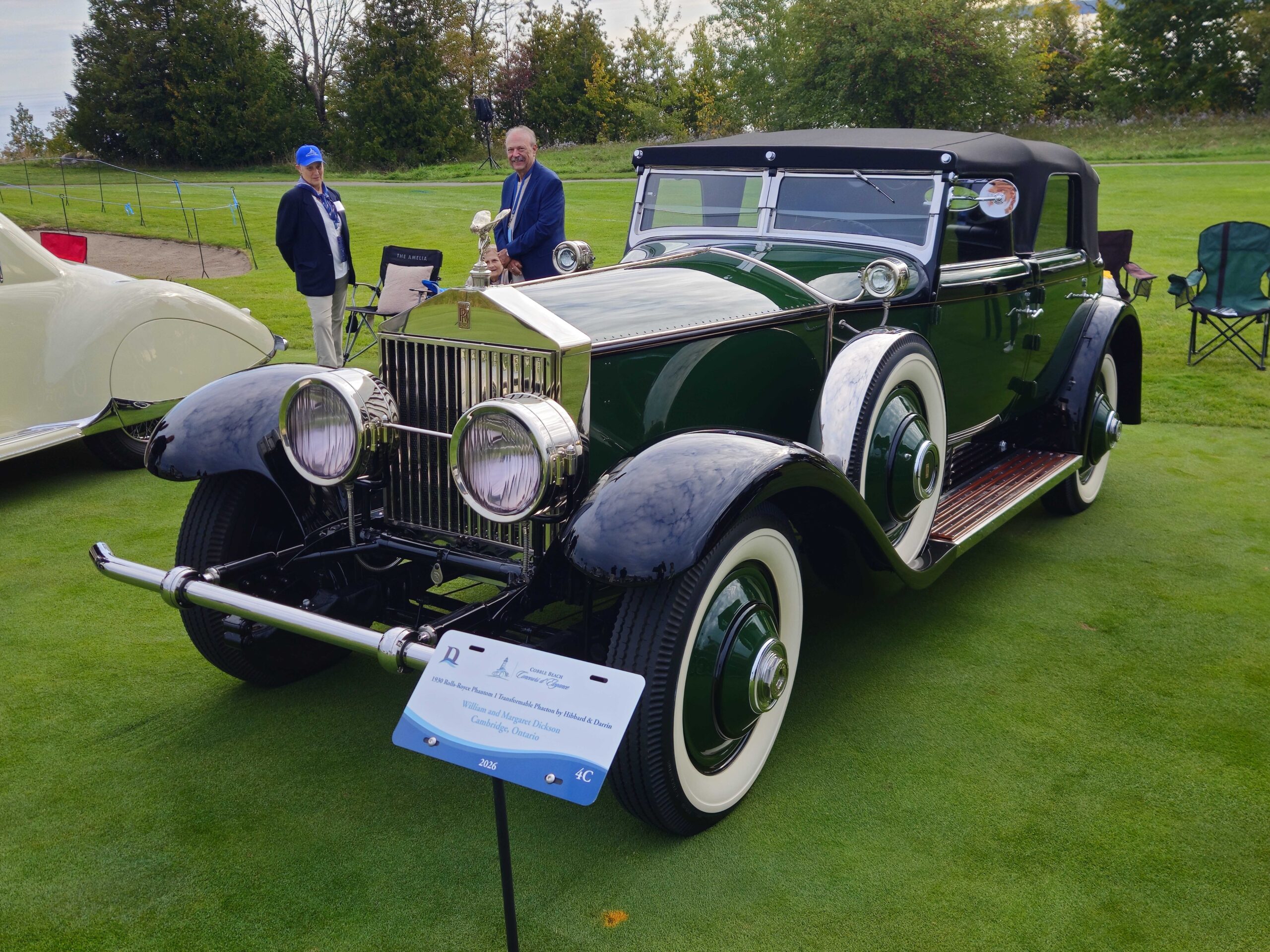
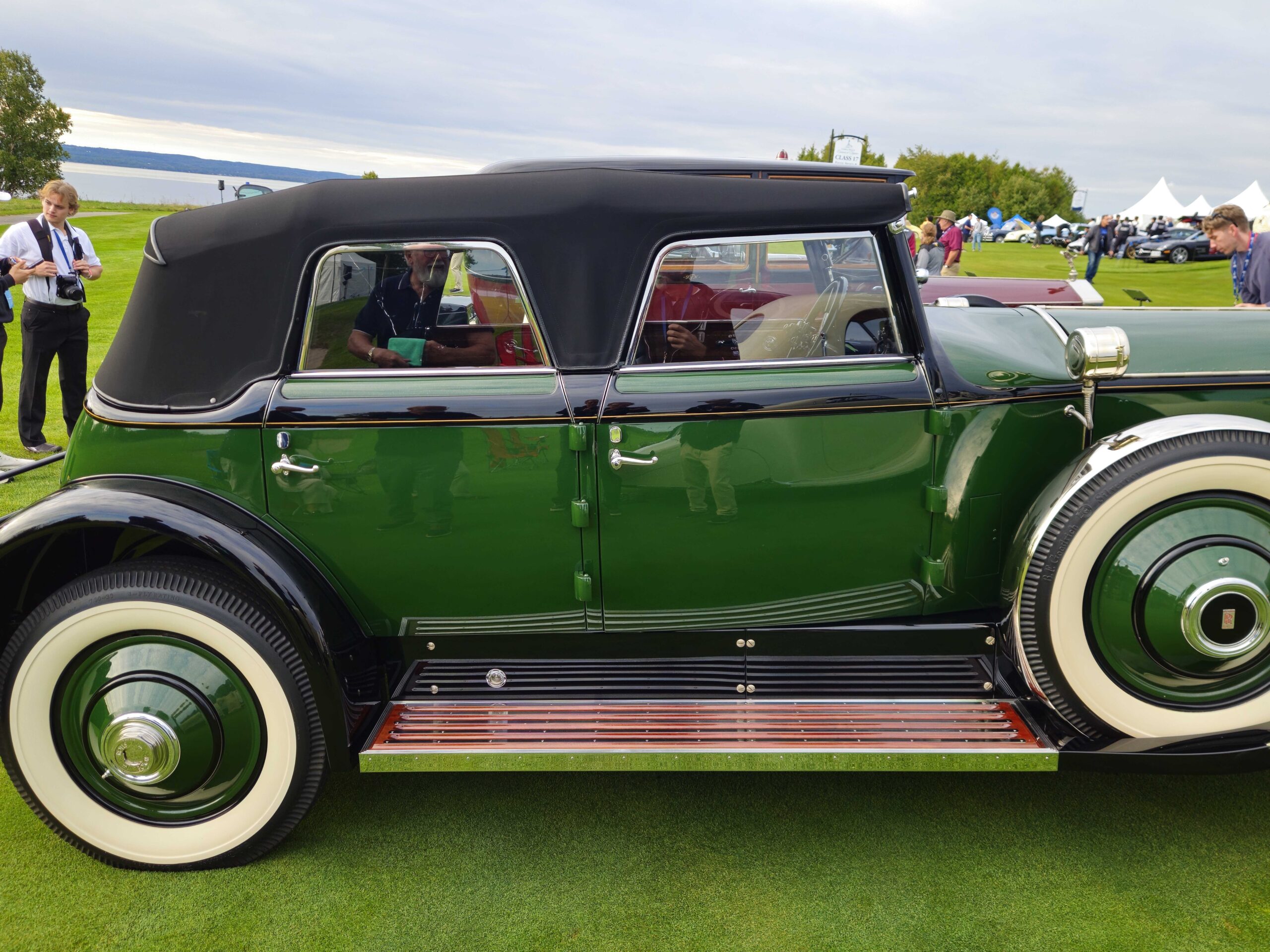
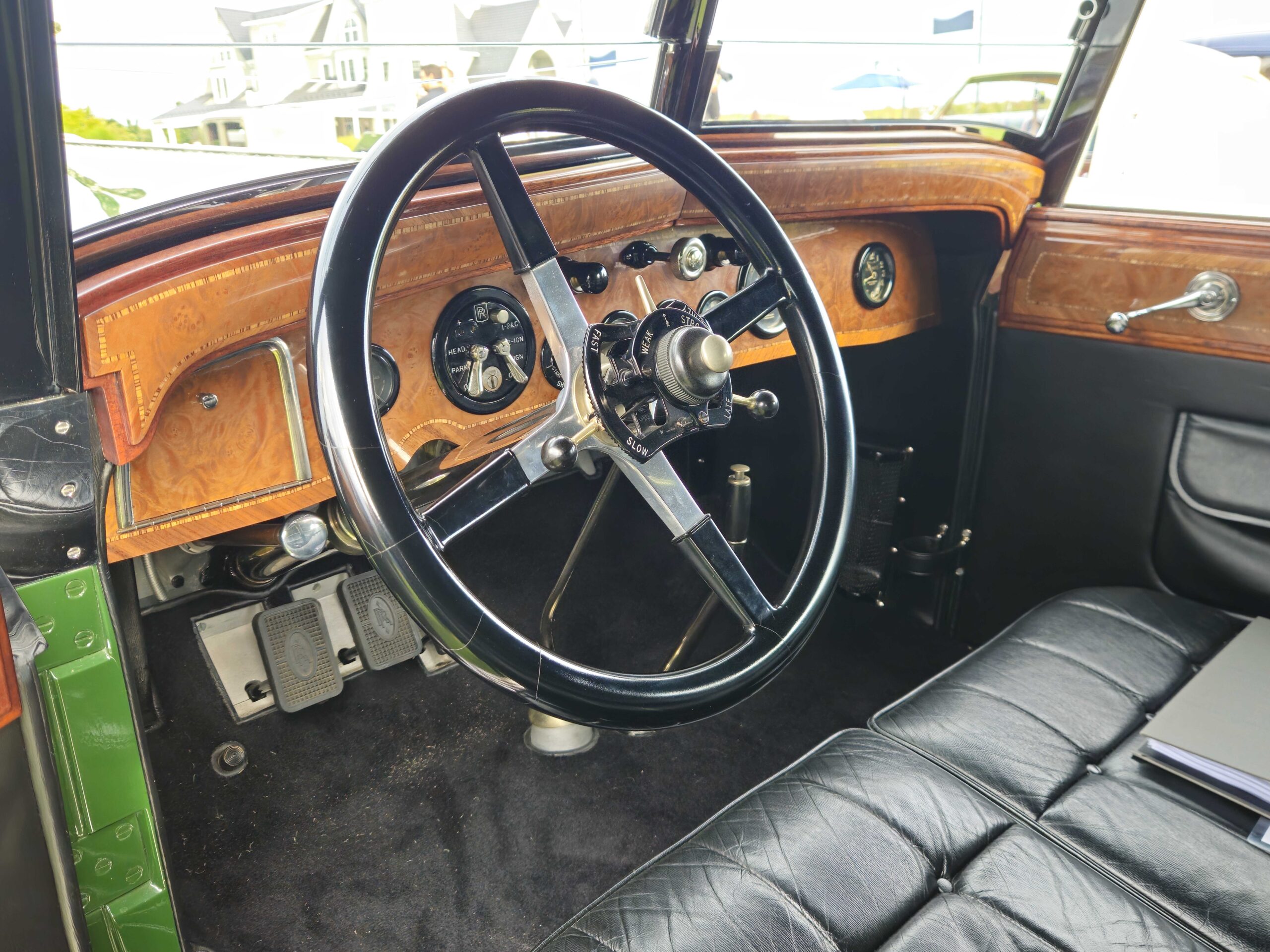
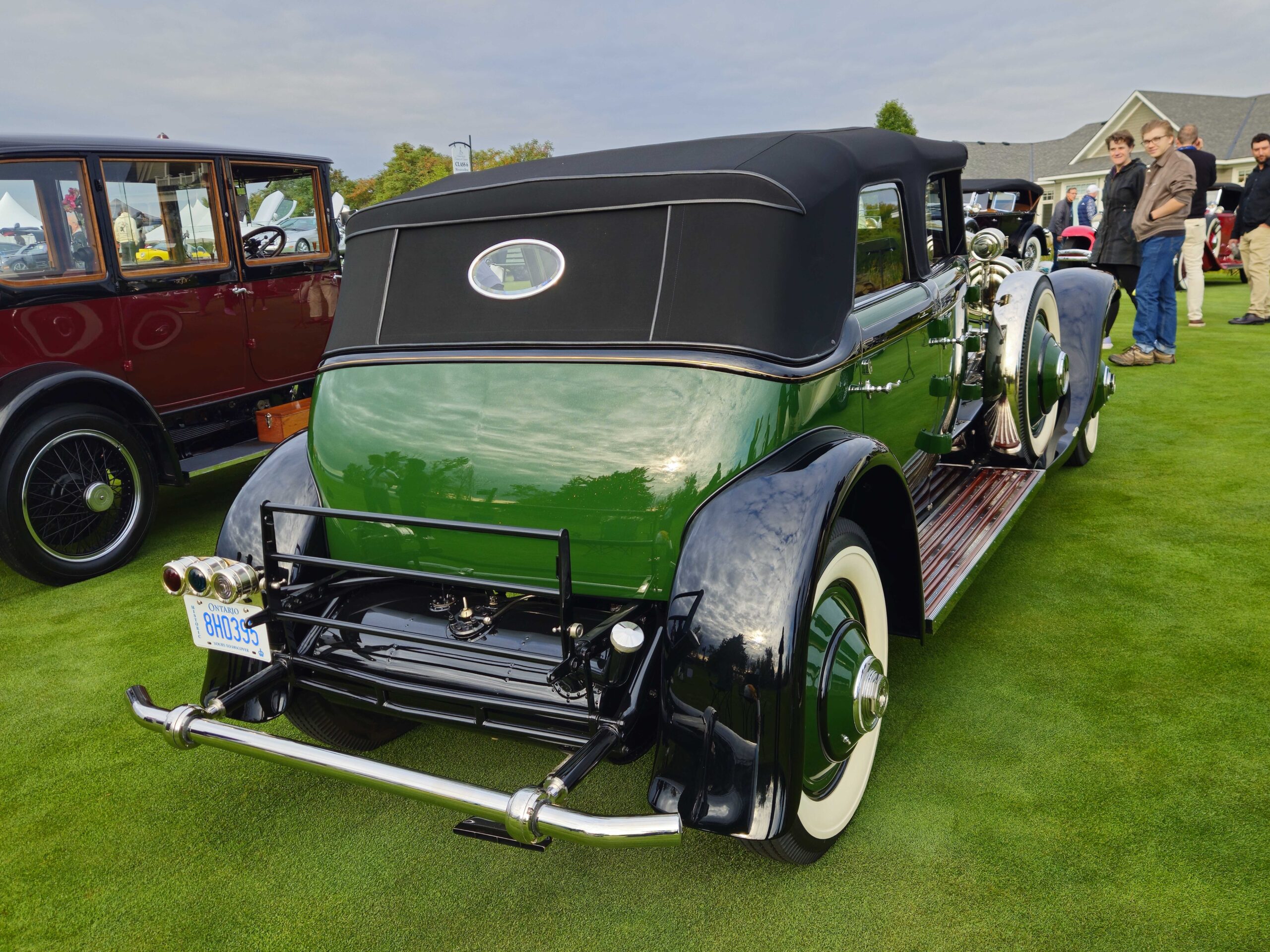
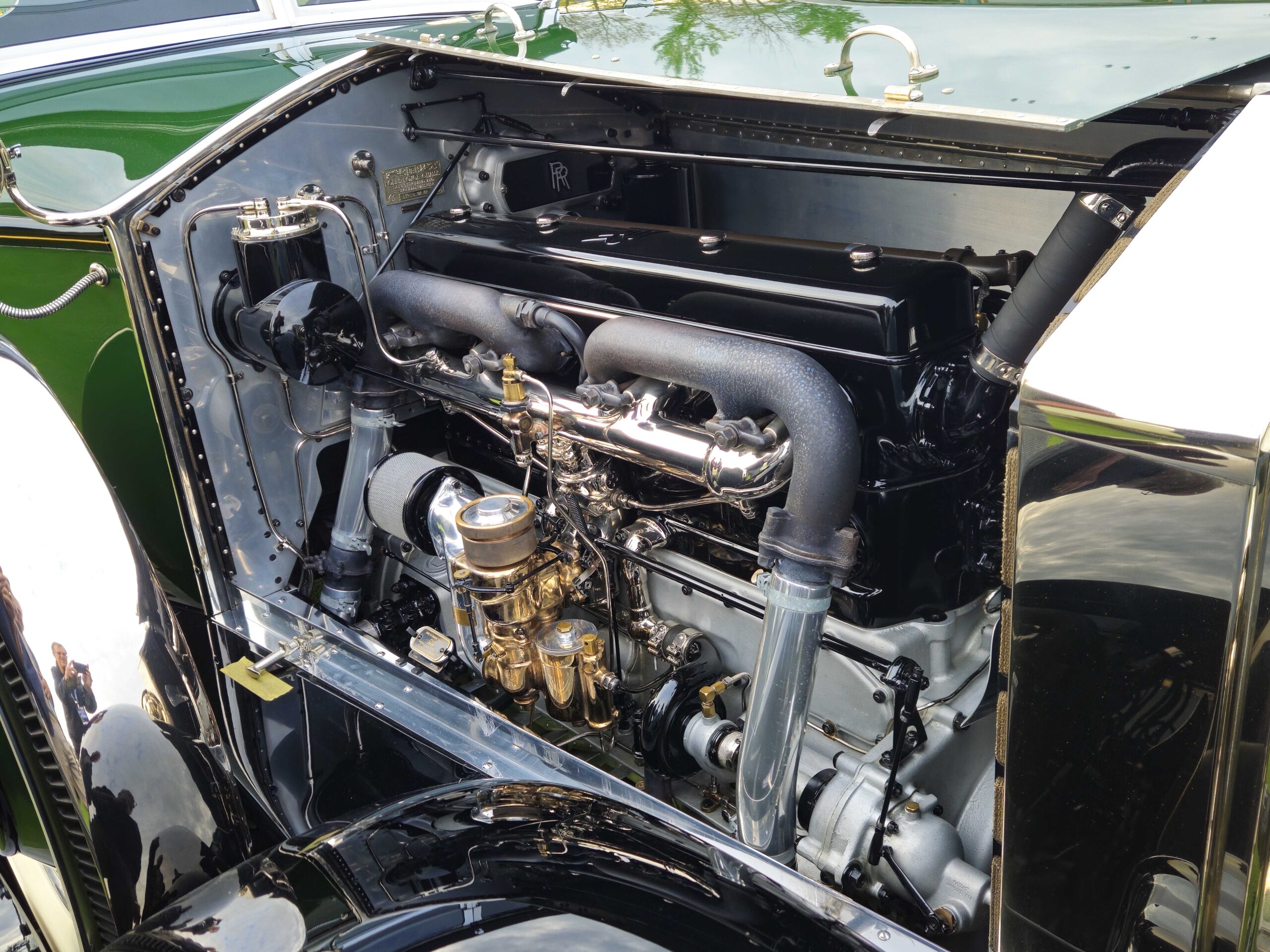
Dietrich sold the car in the mid-1940s to J.R. “Bob” Creighton, who passed it along to his daughter who then subsequently sold it in 1995. The car remained unrestored until 2007, when famed collector John O’Quinn bought it and sent it to Rick Hamlins Classic Bodyworks in Kansas along with a cheque for $500,000. It was painstakingly restored in every detail, right down to analyzing the remaining old paint to discover that the forest green finish had flakes of gold leaf in it; thus, it was restored in the matching green paint with real gold leaf.
The car was not shown until 2012, when it went on to win a number of Best in Show awards along with many First in Class awards. In 2015, it was sold to noted collector Terrance E. Adderley, who held it until 2023, at which time it went on to RM Sotheby’s, and finally its present home.
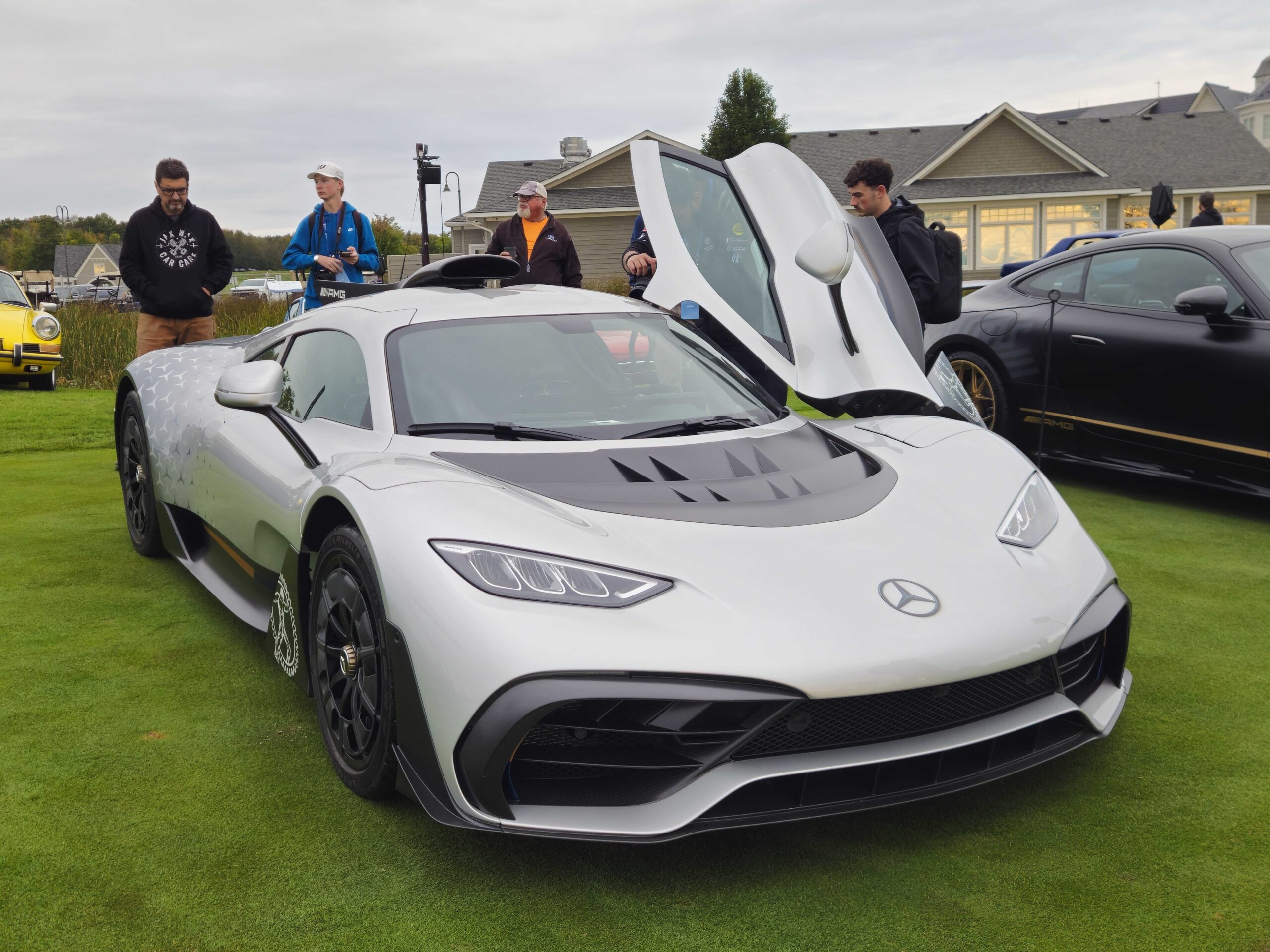
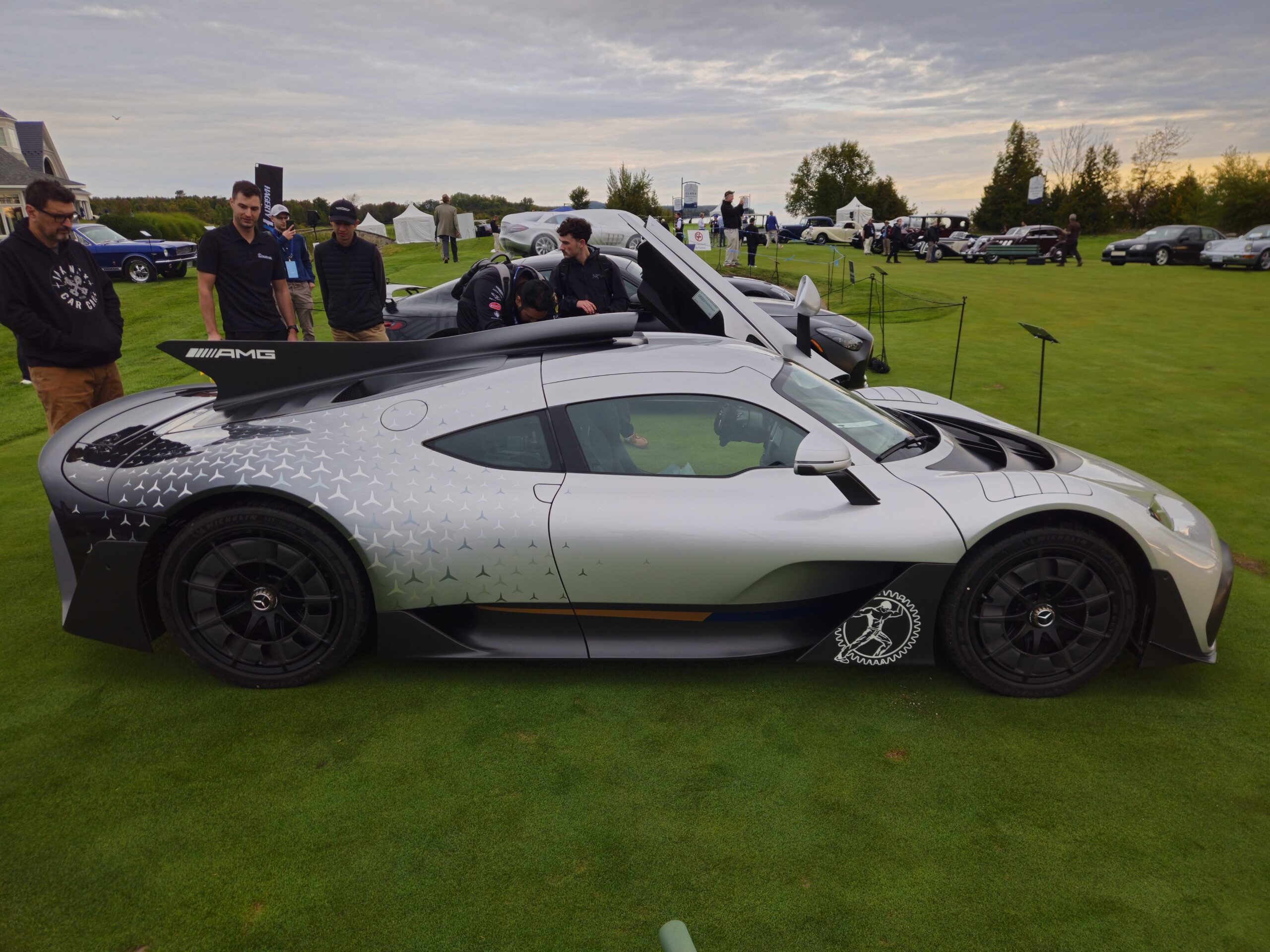
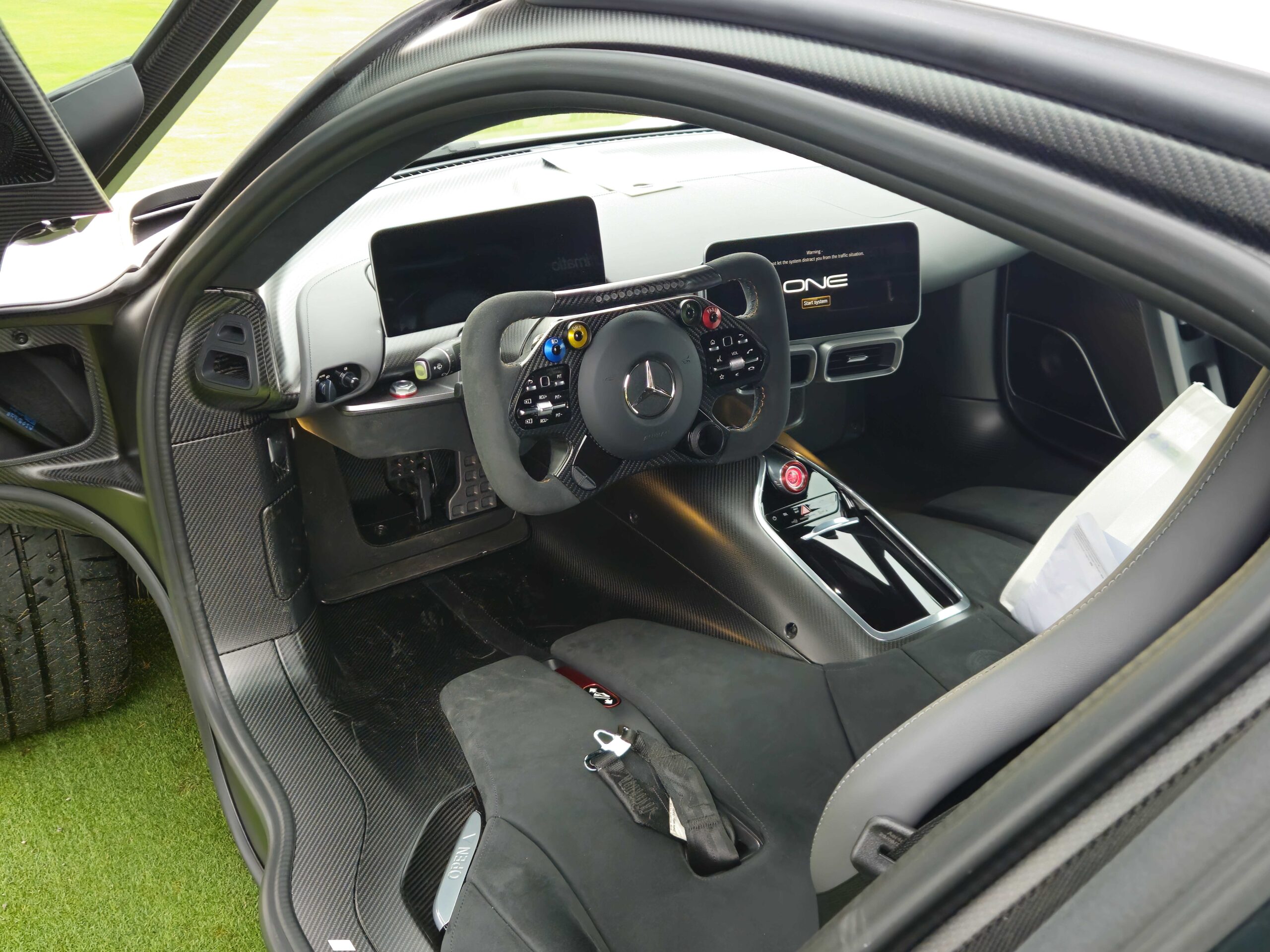
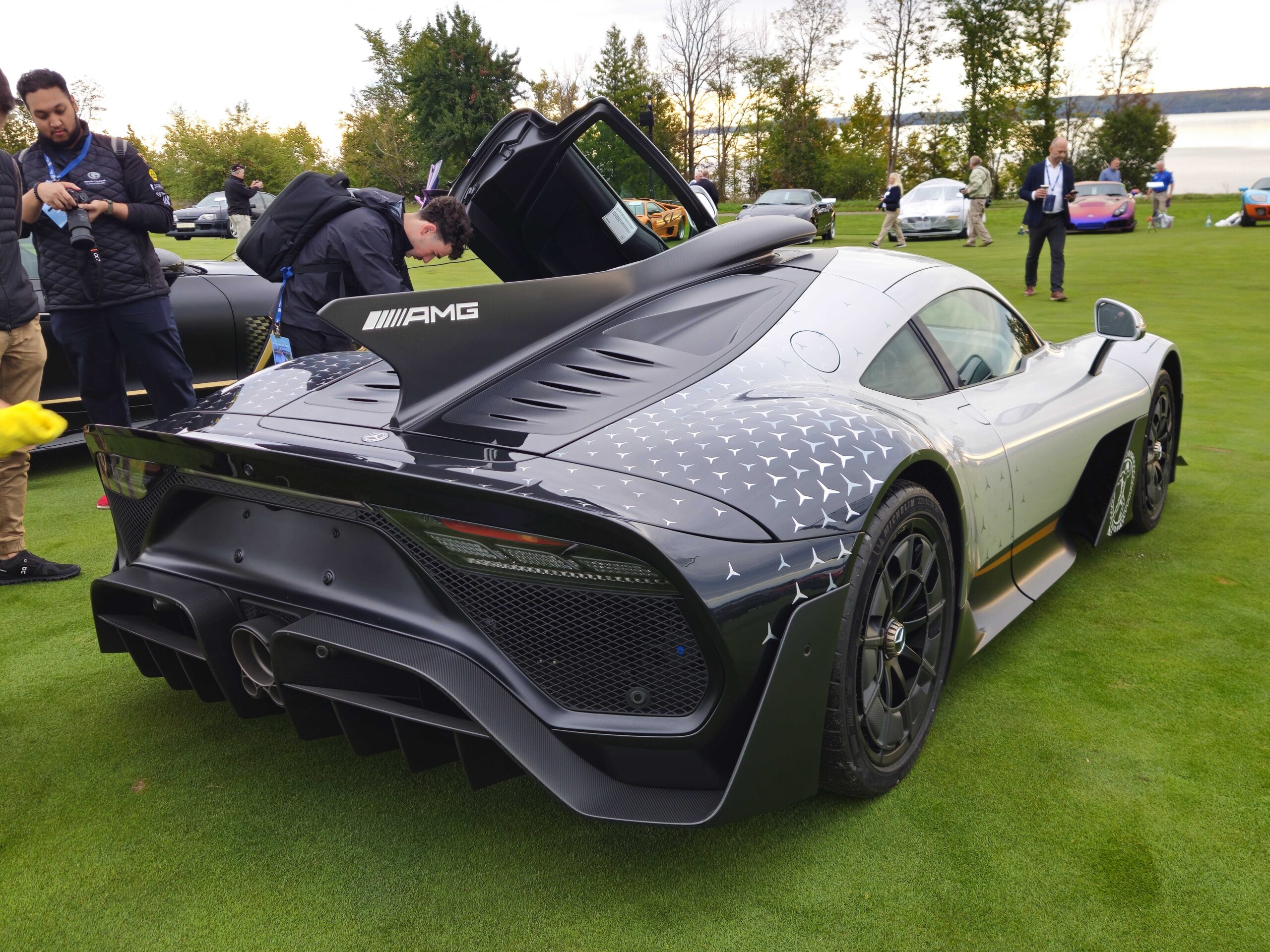
Mercedes Benz was the main sponsor of Cobble Beach Concours this year, showcasing their Maybach and a 2025 Mercedes-AMG GT 63 APXGP (Only 52 vehicles will be produced globally) along with a Mercedes-AMG ONE.
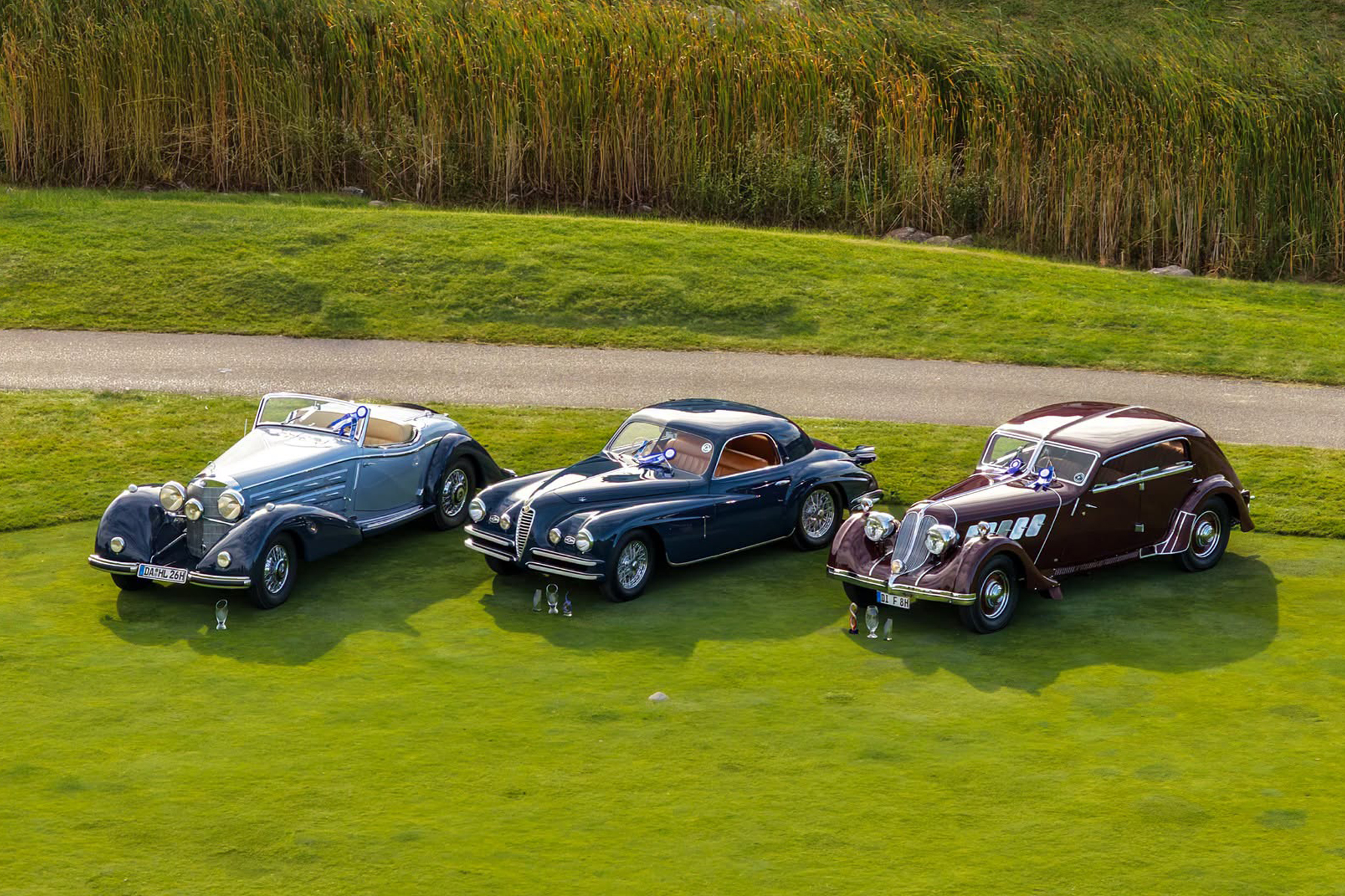
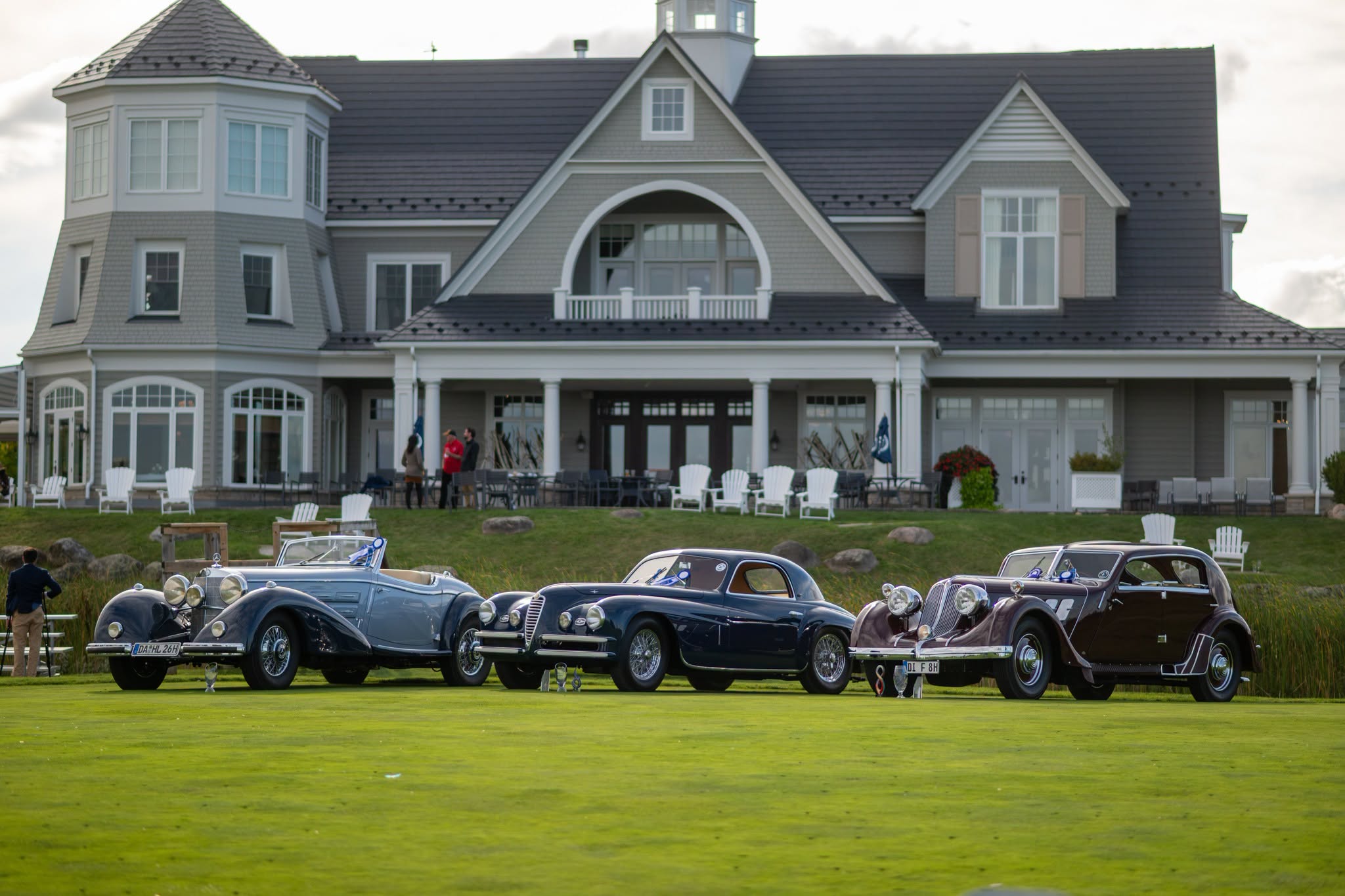
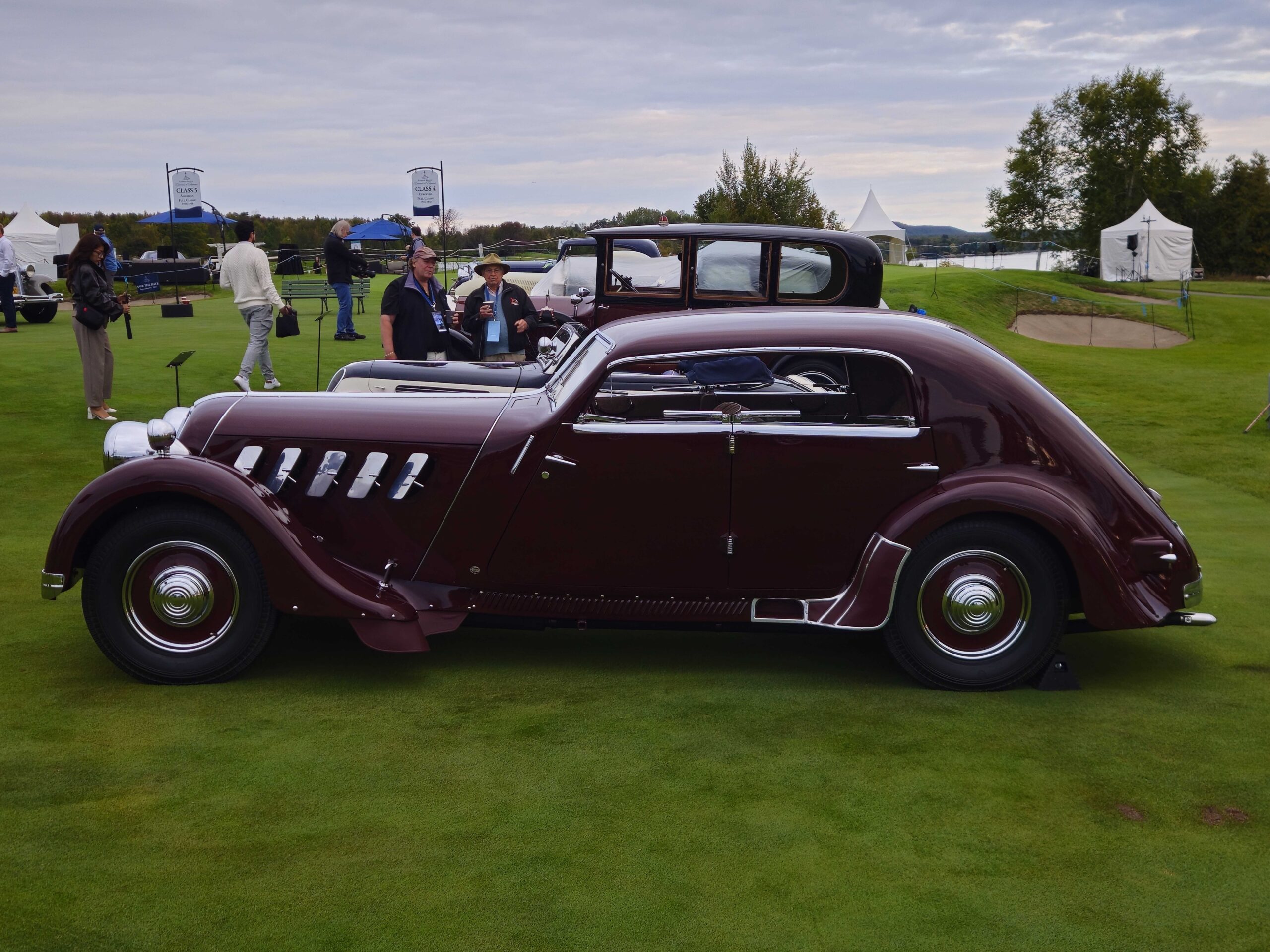
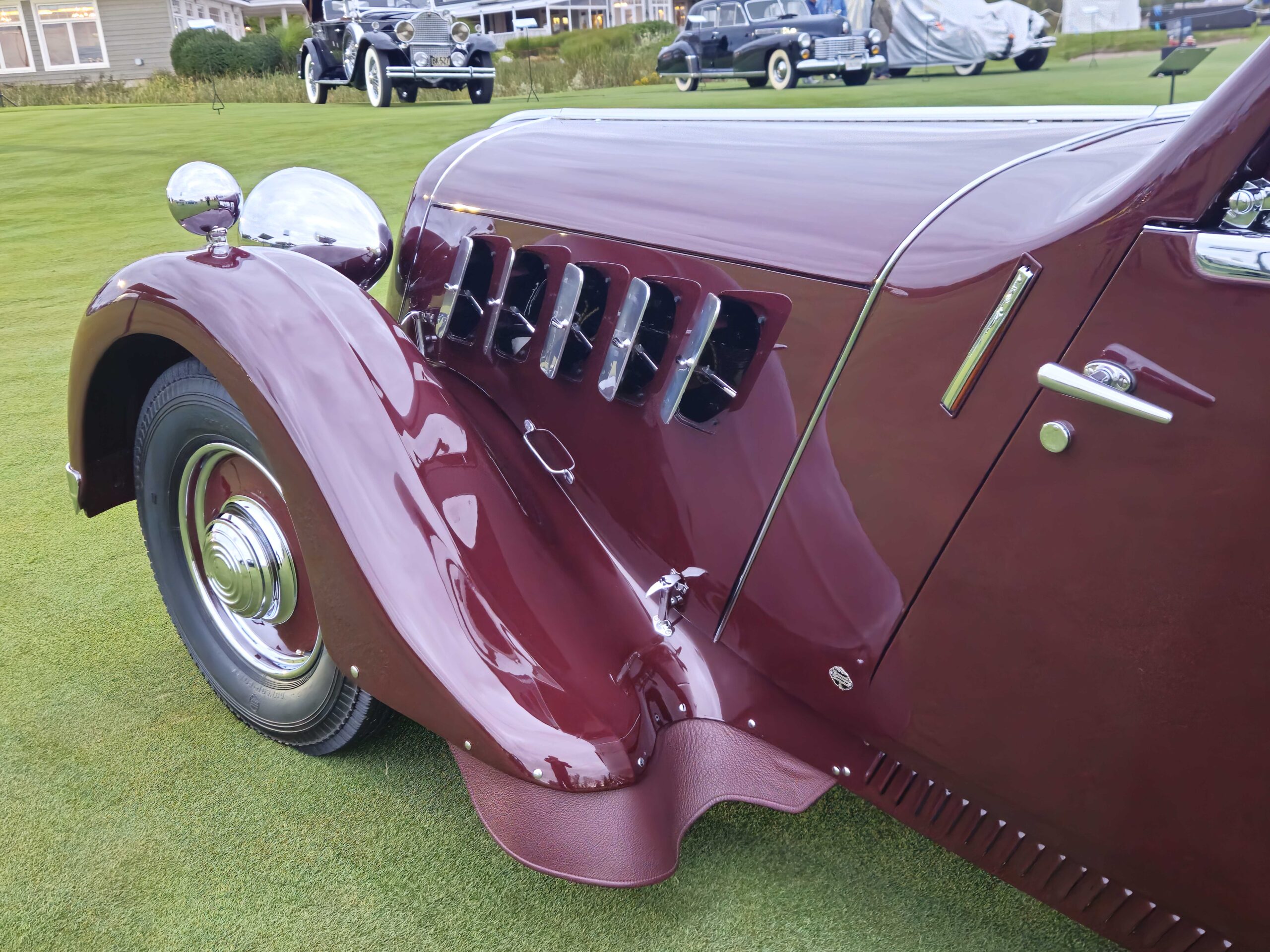
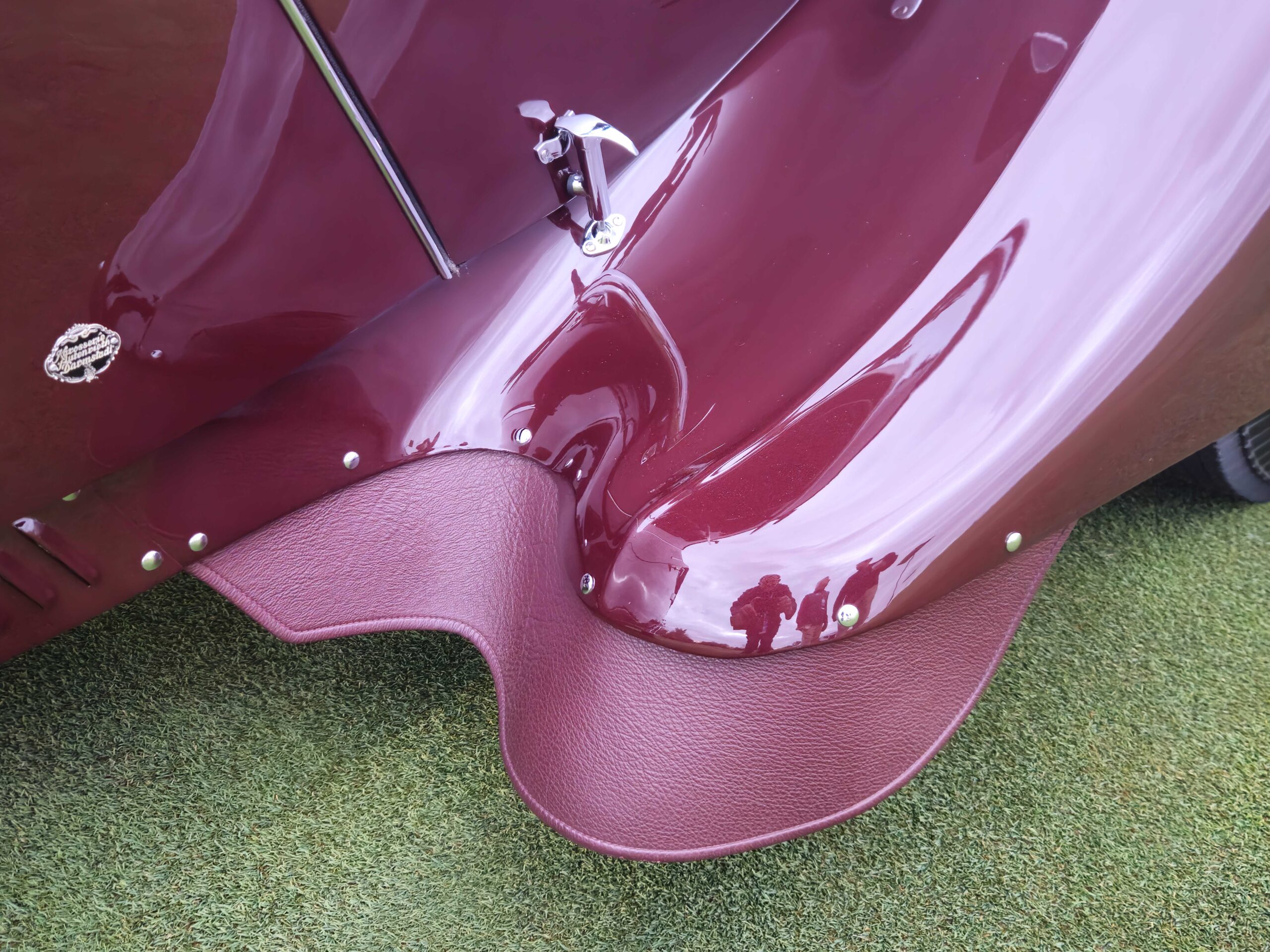
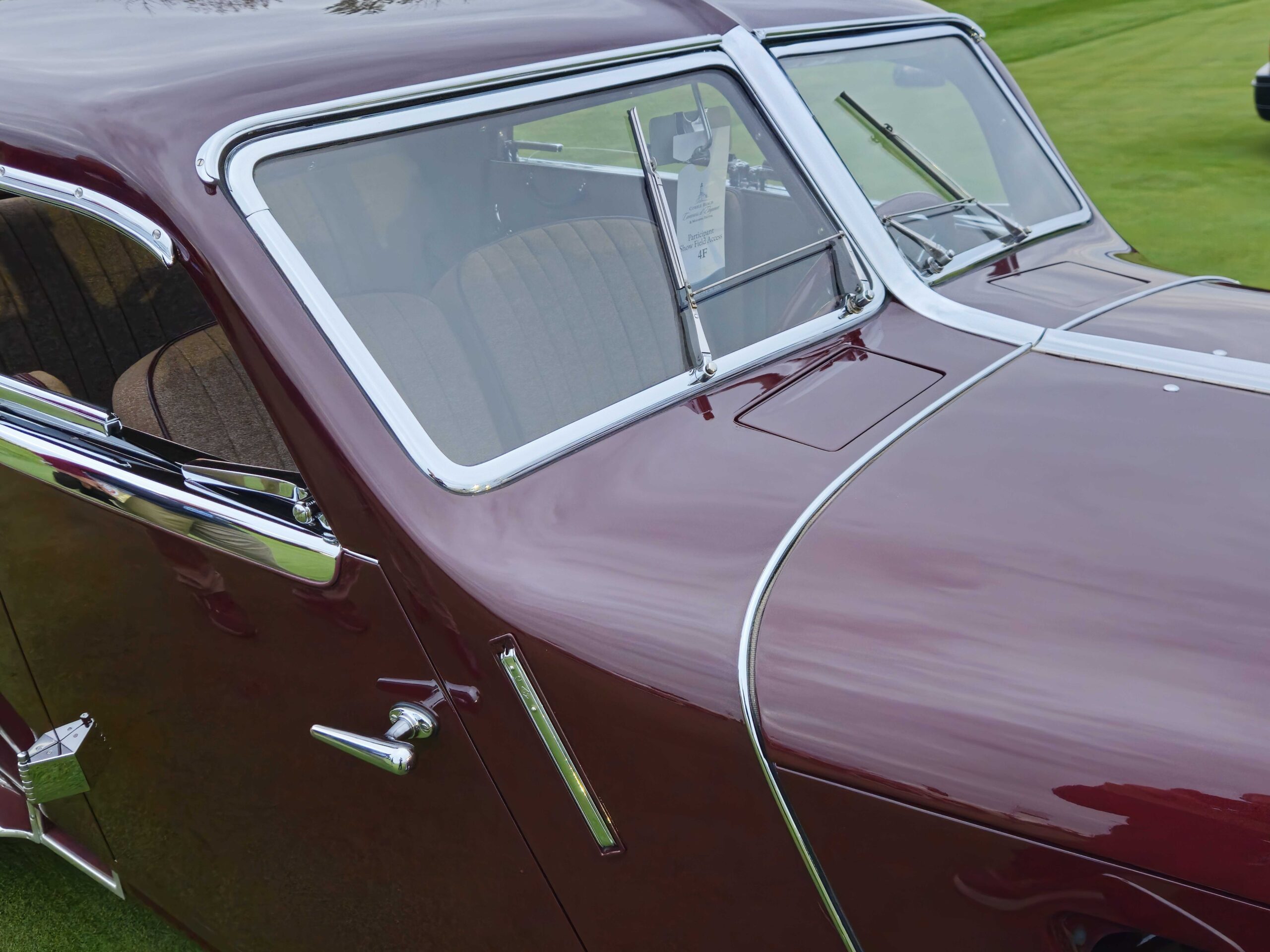
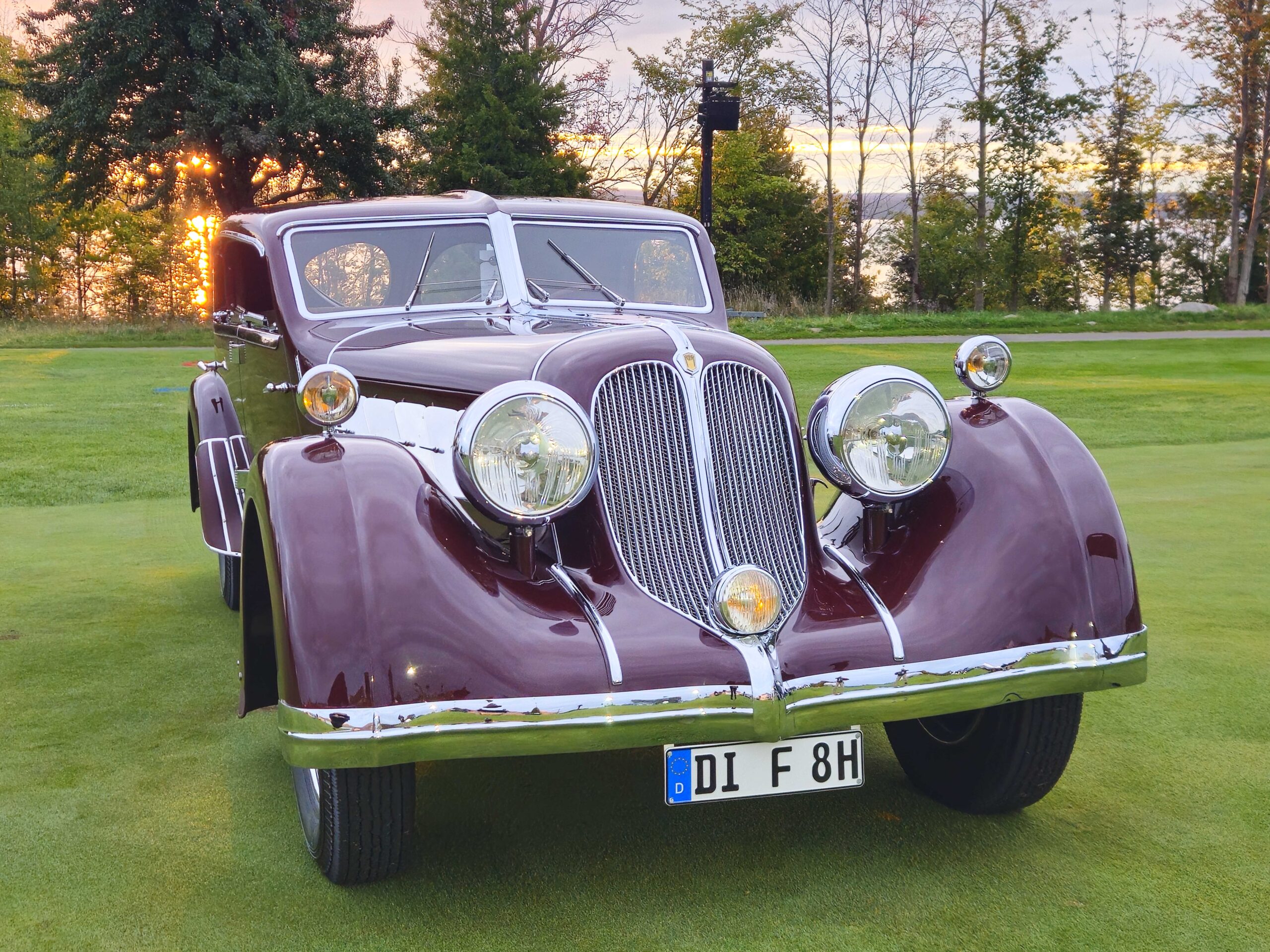
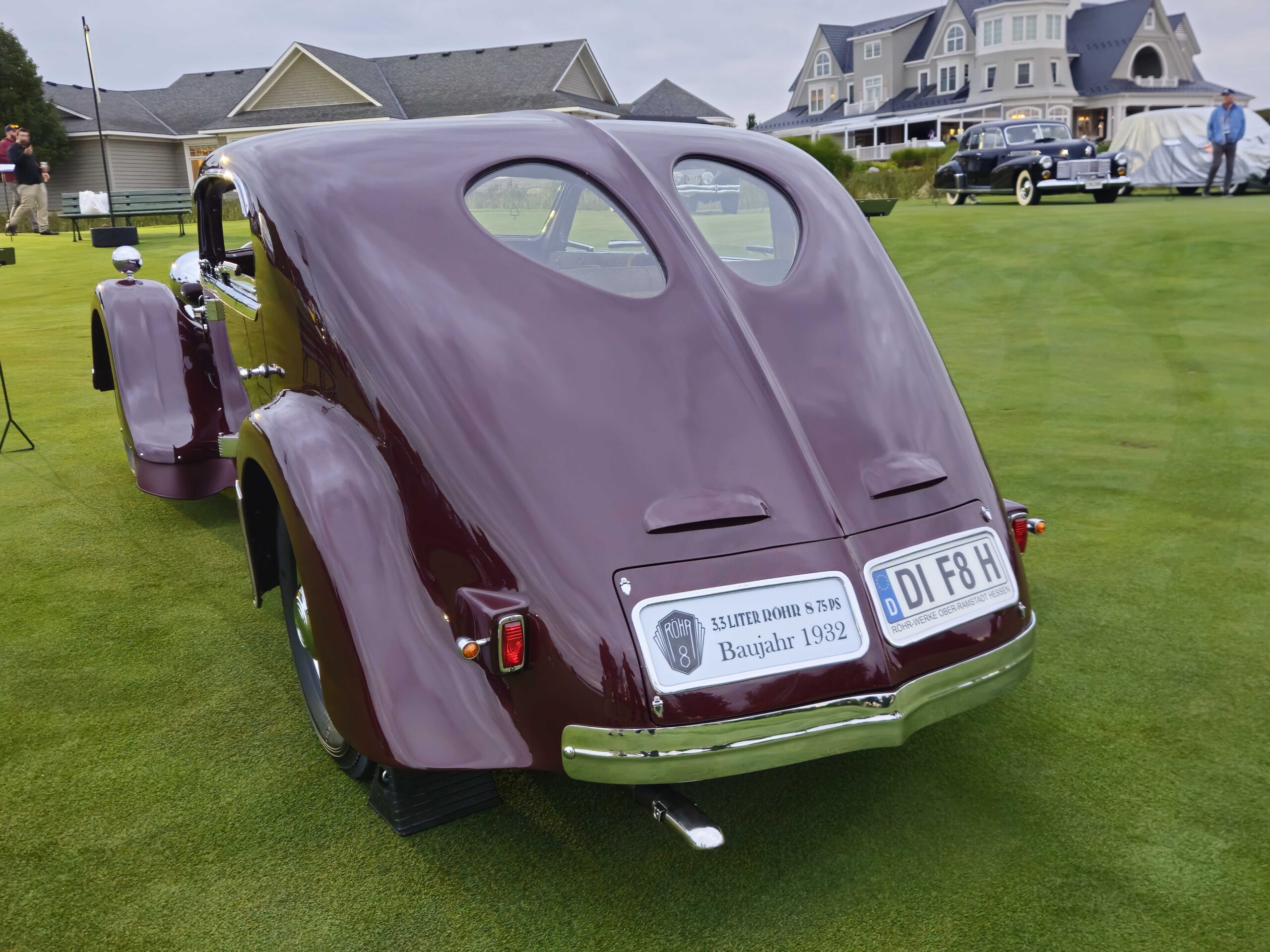
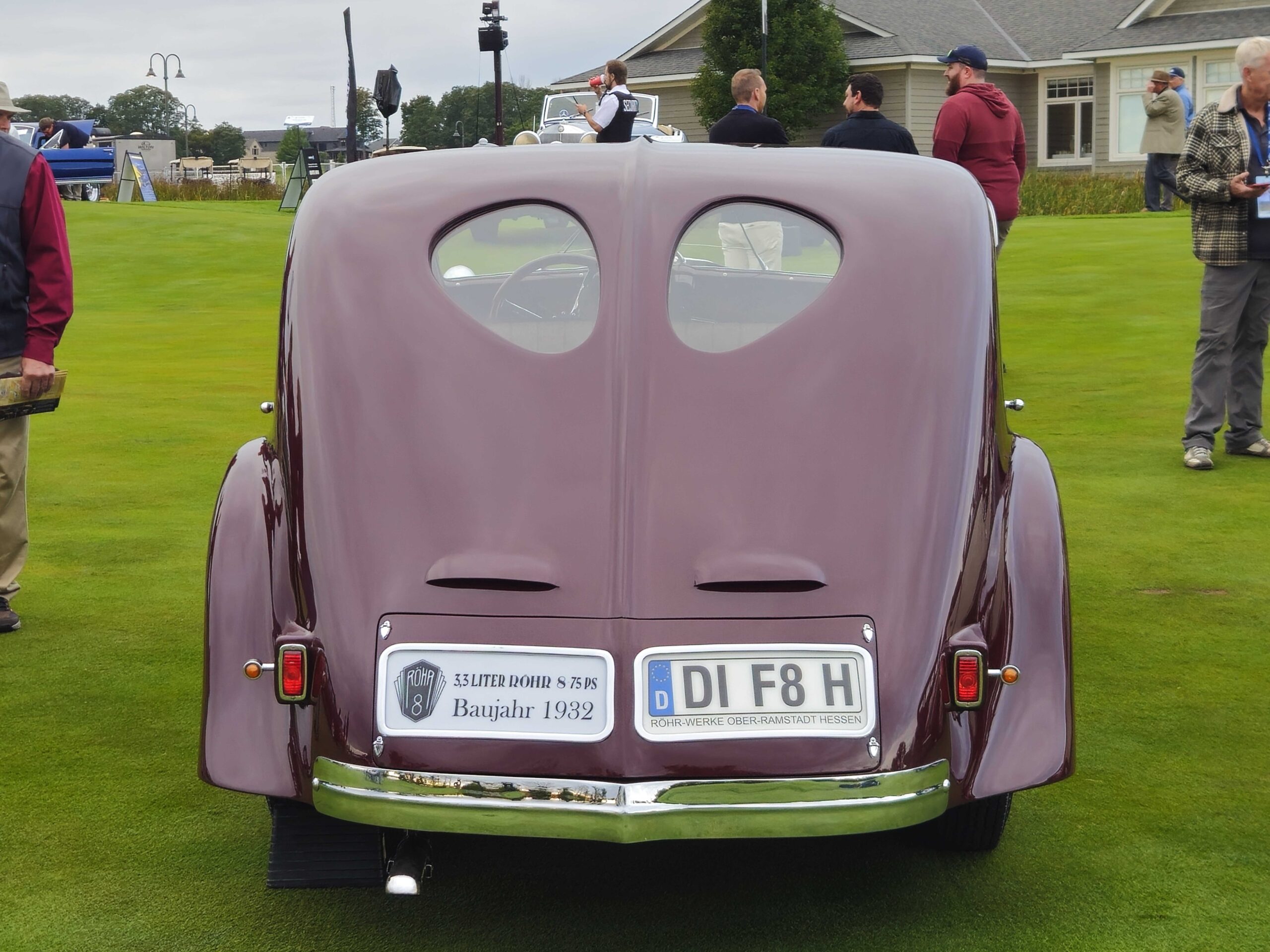
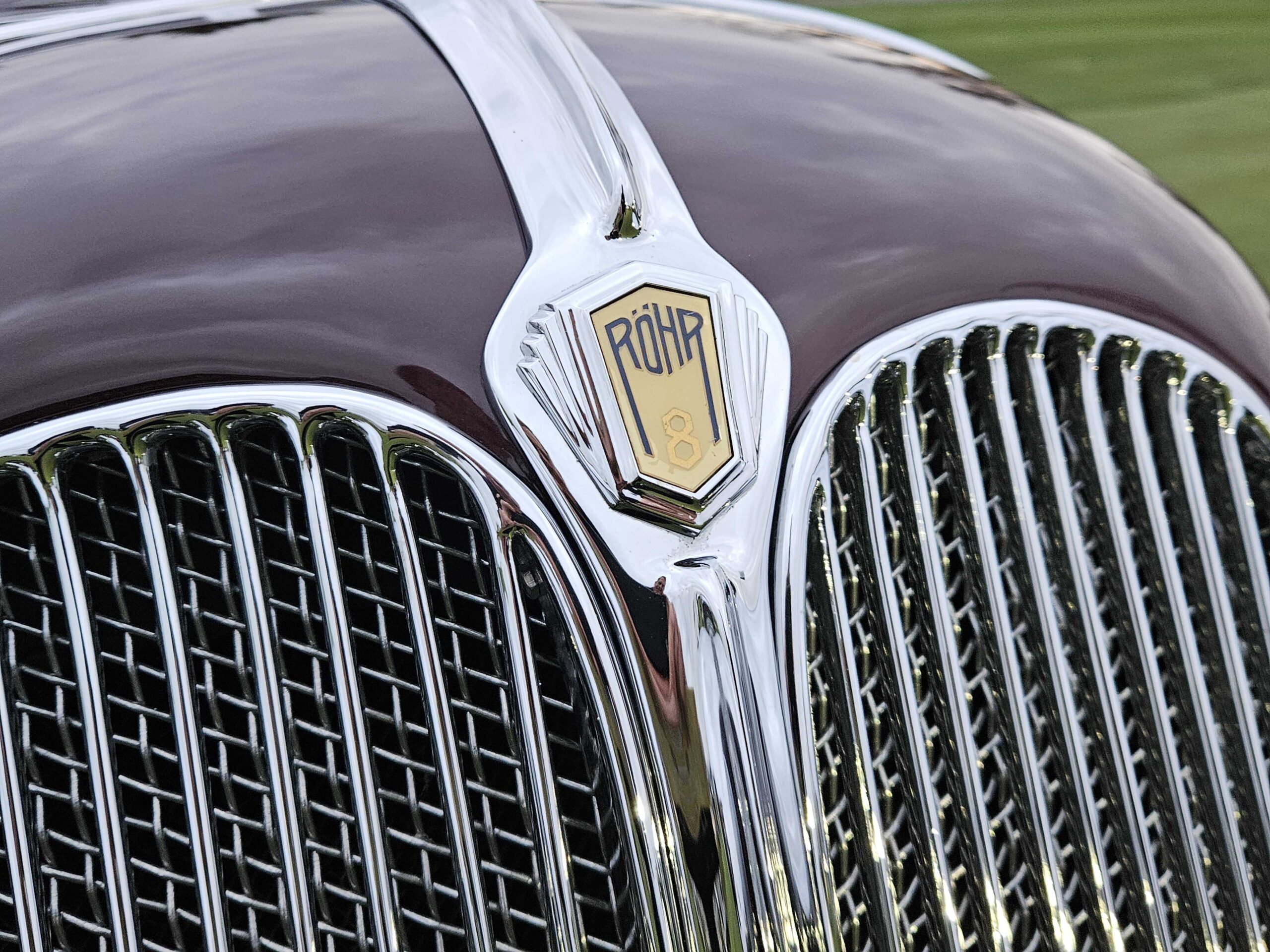
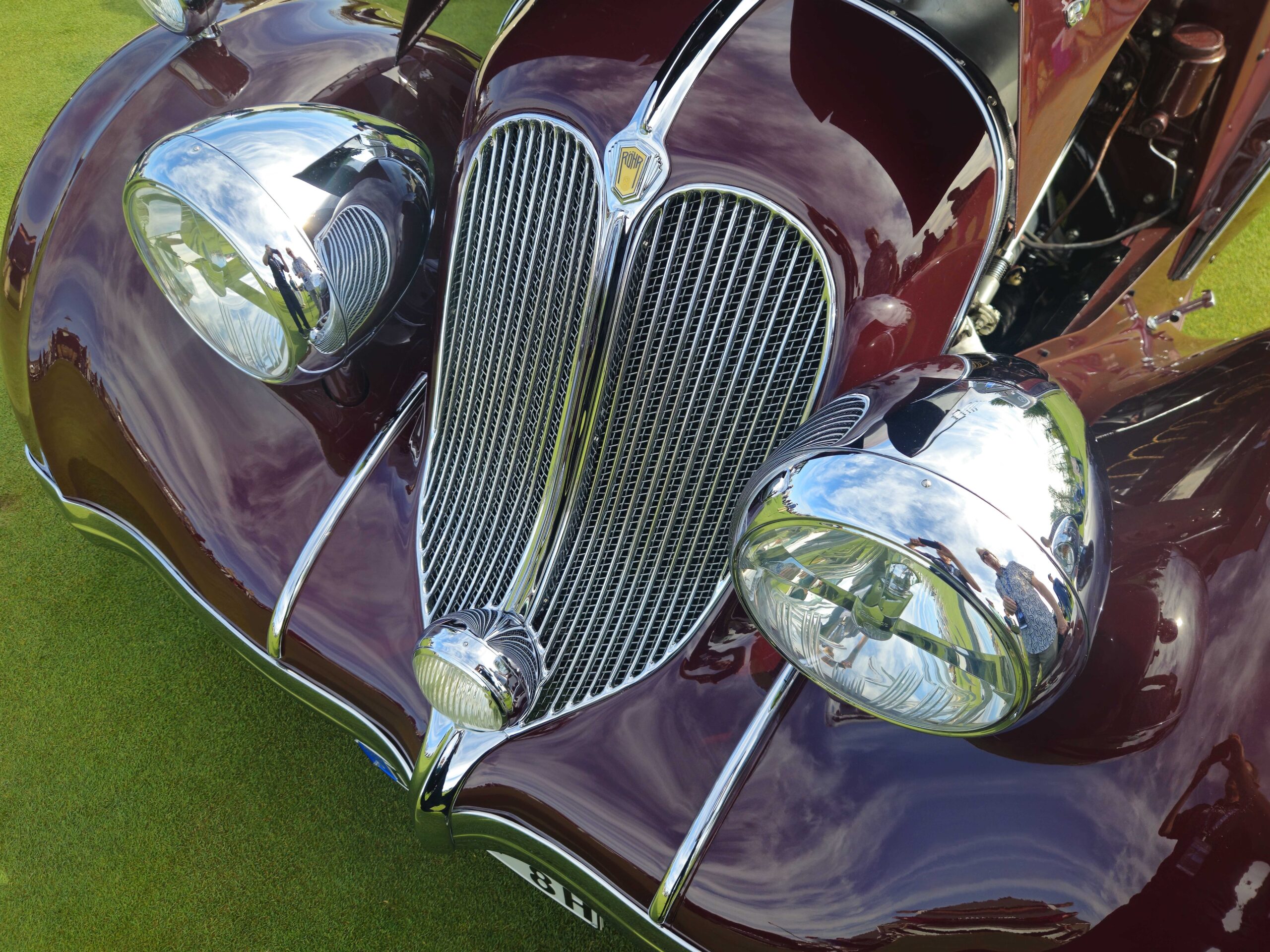
Best of Show was won by a 1932 Rohr F8 Streamliner from Stahl’s Automotive Collection in Chesterfield, MI. Owned by Mary & Ted Stahl, Chesterfield, MI.
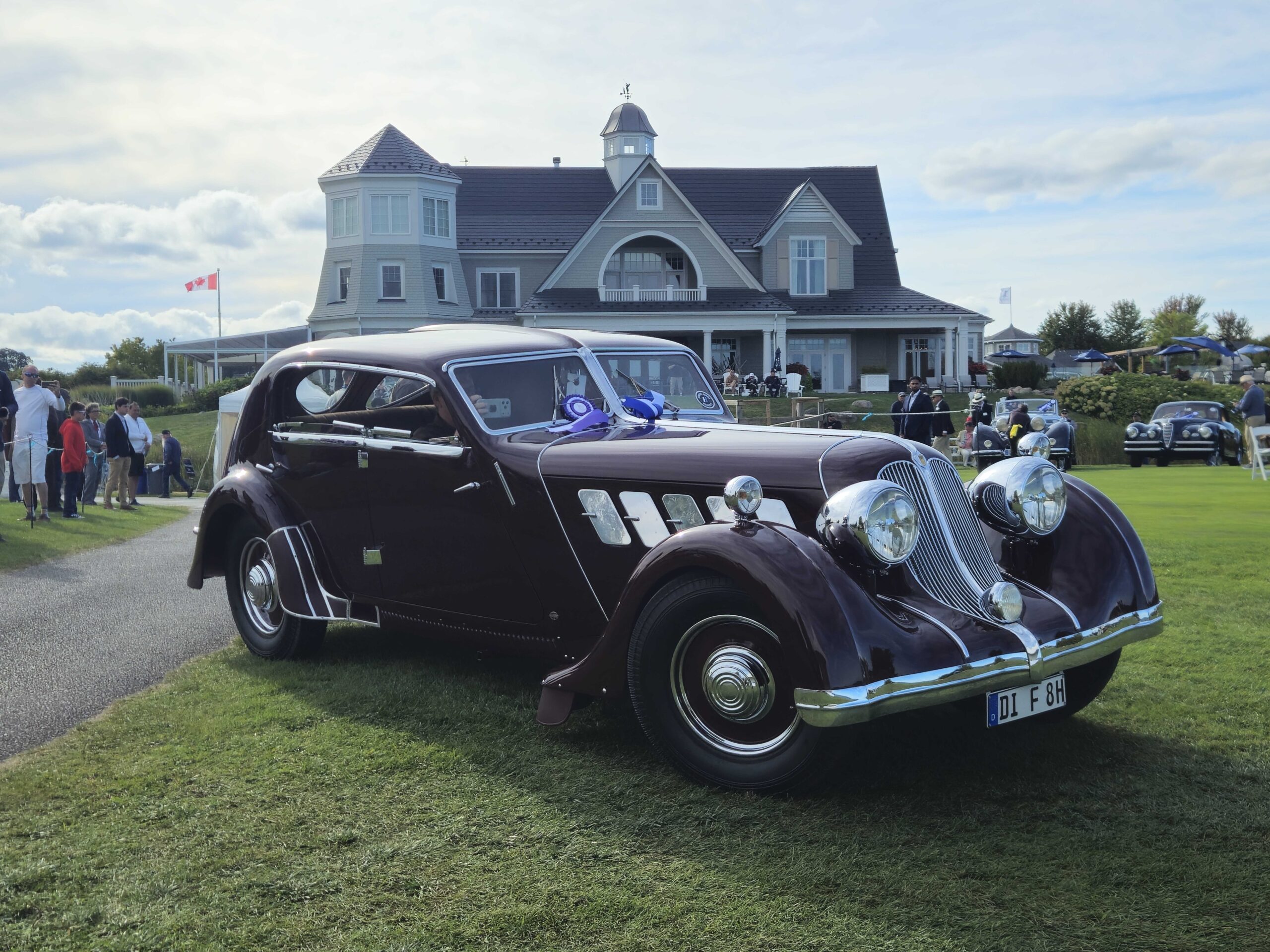
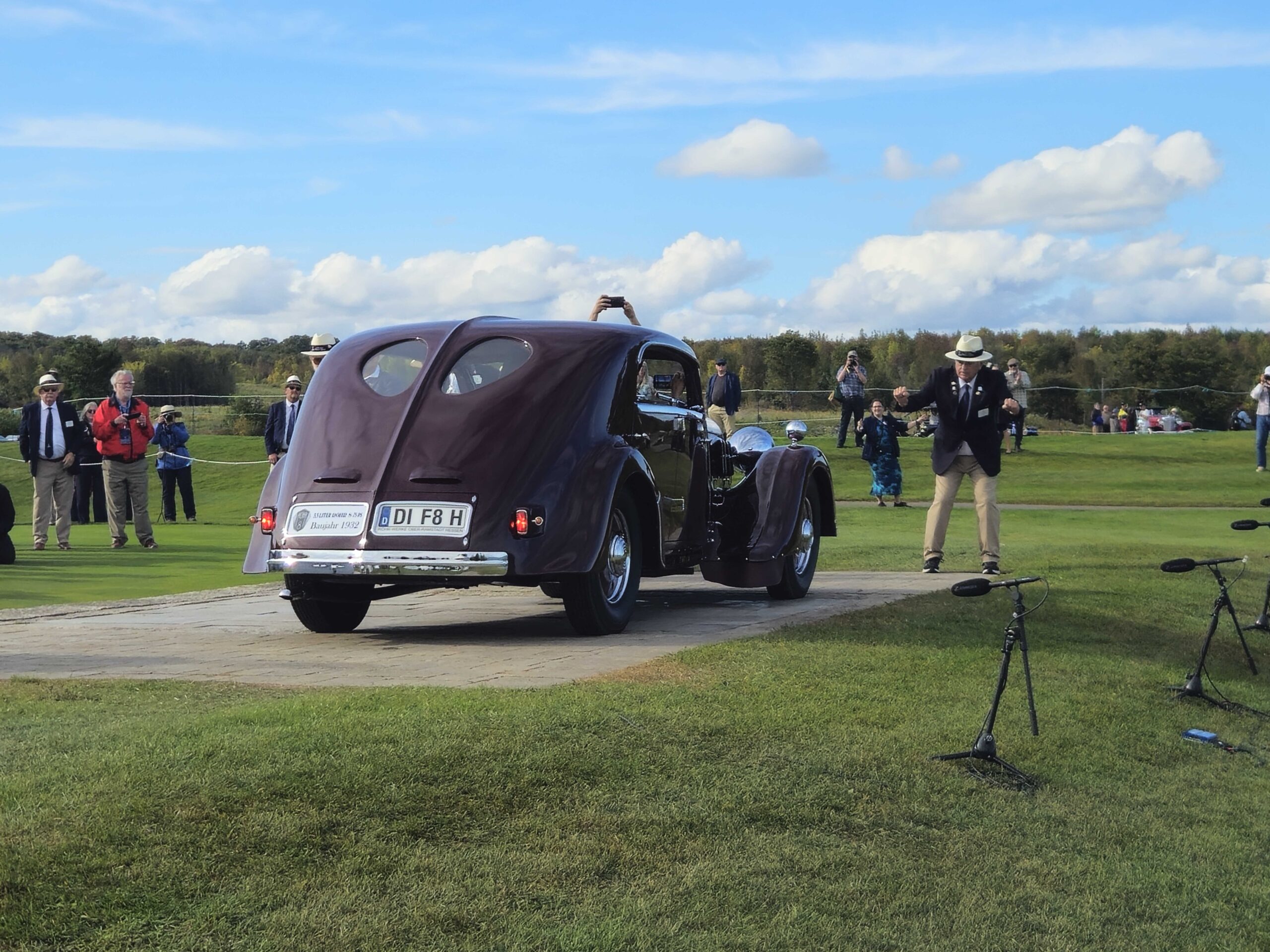
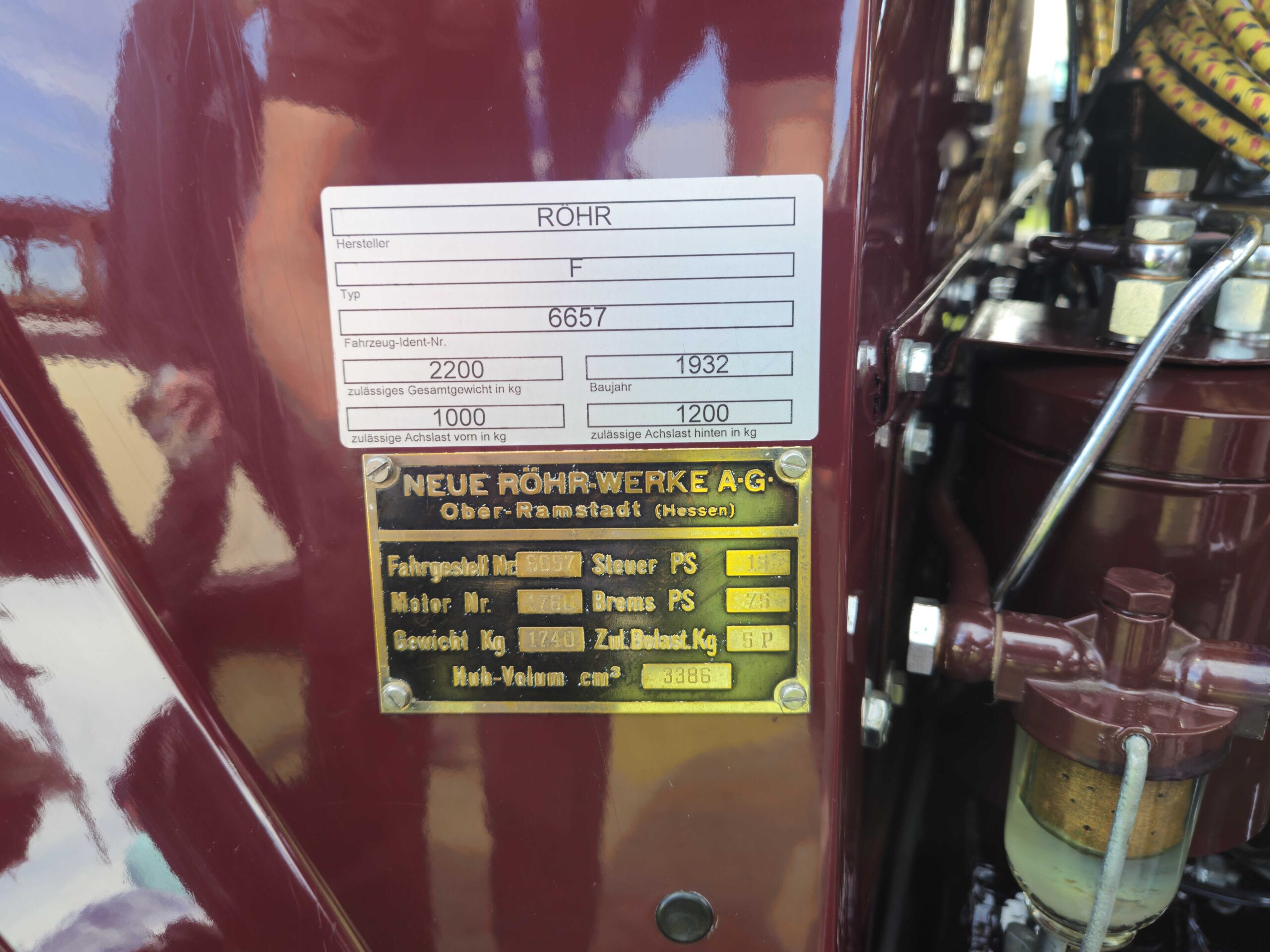
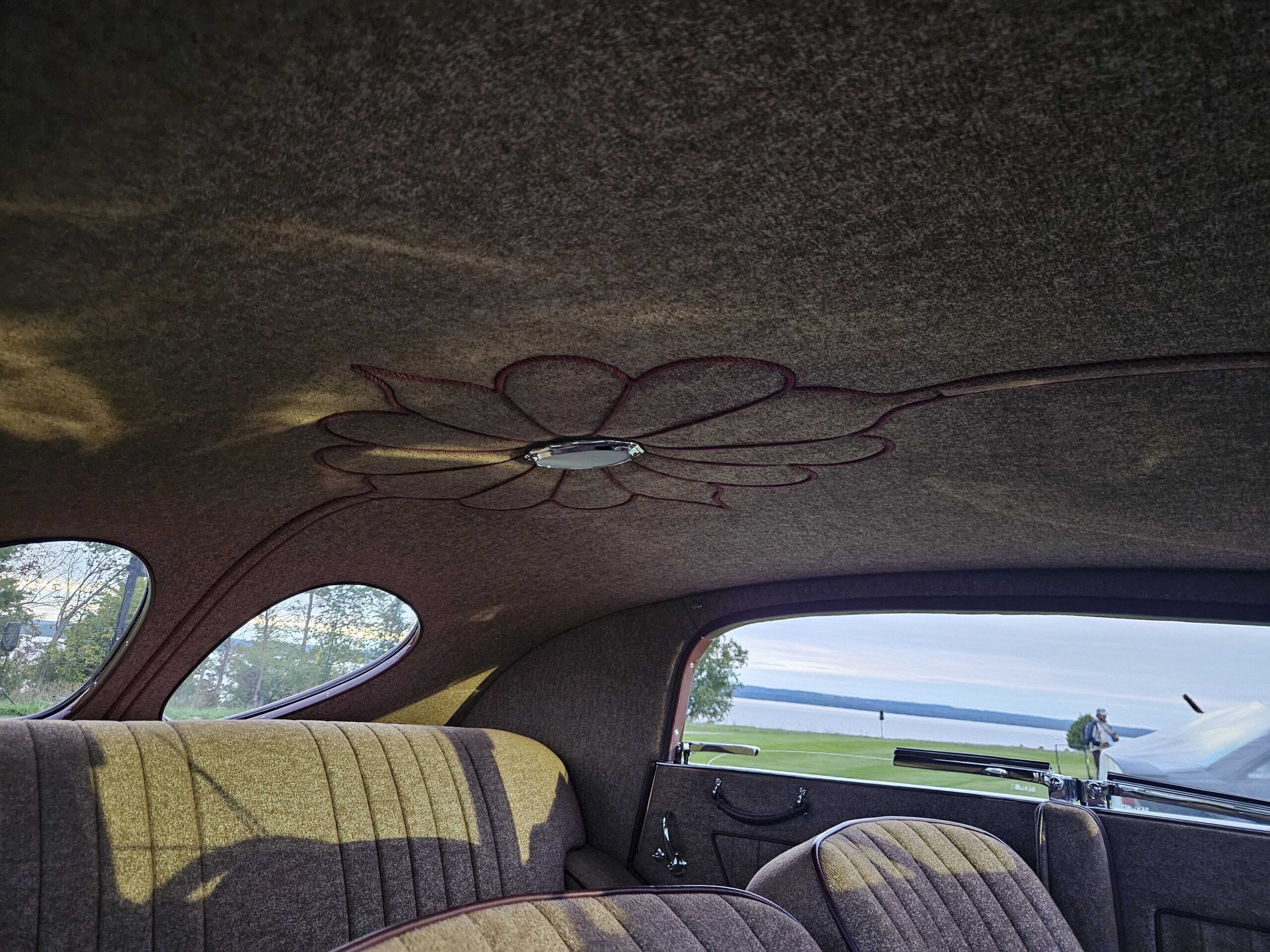
This unique sedan was acquired by Mary Stahl in 2024 The Rohr F8 was designed by Autenrieth of Darmstadt, Germany and built by Rohr Manufacturing in Oberamstadt, Germany. It was showcased at the Paris Motor Show in 1932, and subsequently at the Geneva Salon, then at the International Automobile and Motorcycle Exhibition in Berlin, Germany the following year. Following World War II, it was discovered by an American Military officer and imported to the United States. During the ‘60s it was owned by Antique Automobile Club of America president Edgar Rohr who showed it regularly at AACA events.
• Acquired by a German collector in 1999 the Rohr Streamliner was sent to Europe where it went through an extensive professional Concours restoration in Odenwald, Germany.
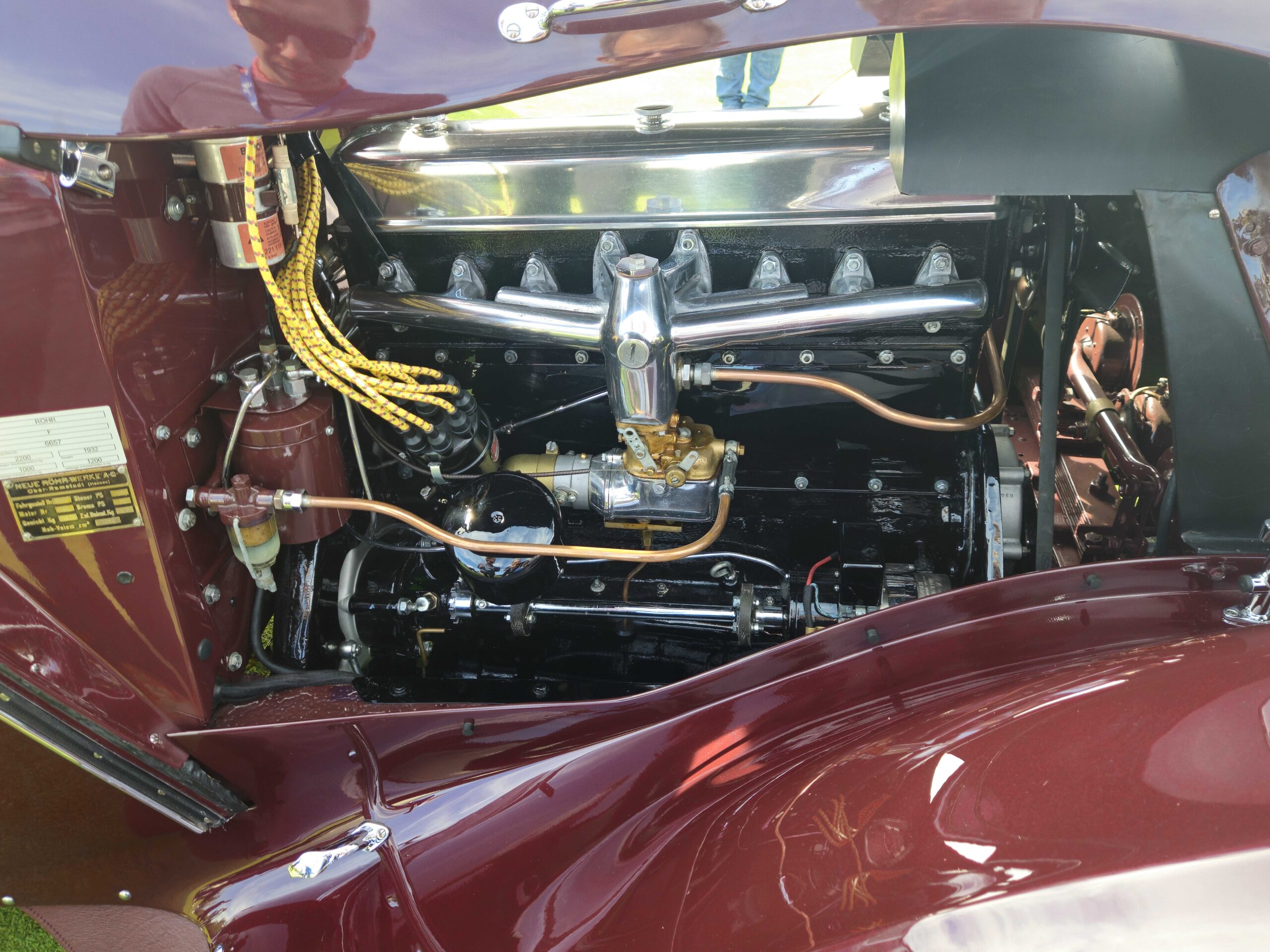
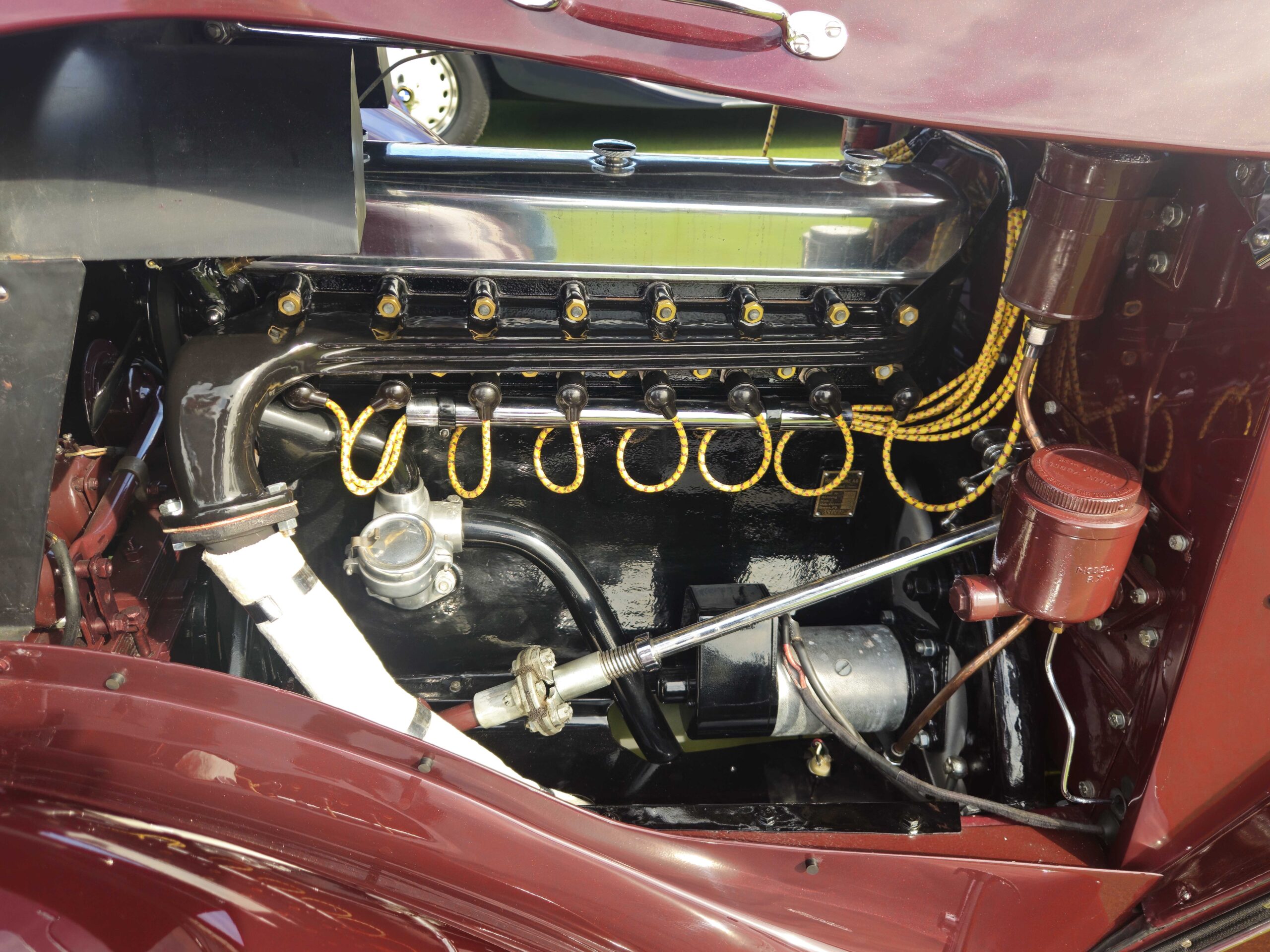
• Under the bonnet is a Ferdinand Porsche designed 3.3-litre straight-eight8 cylinder-in-line engine.
• The Rohr Streamliner has aluminum coachwork, with integrated bumpers, Spectacular features include a front grill and surrounding recessed rounded facia that is a masterpiece of metal working. The paint contains ground herring fish scales to give it a deep rich light chocolate colour, a process the Mercedes Benz was going to adopt in their production models until they realized that in doing so the quantity of herring needed would most likely make herring extinct!
•
• The interior headliner has a embroidered relief surrounding the dome light.
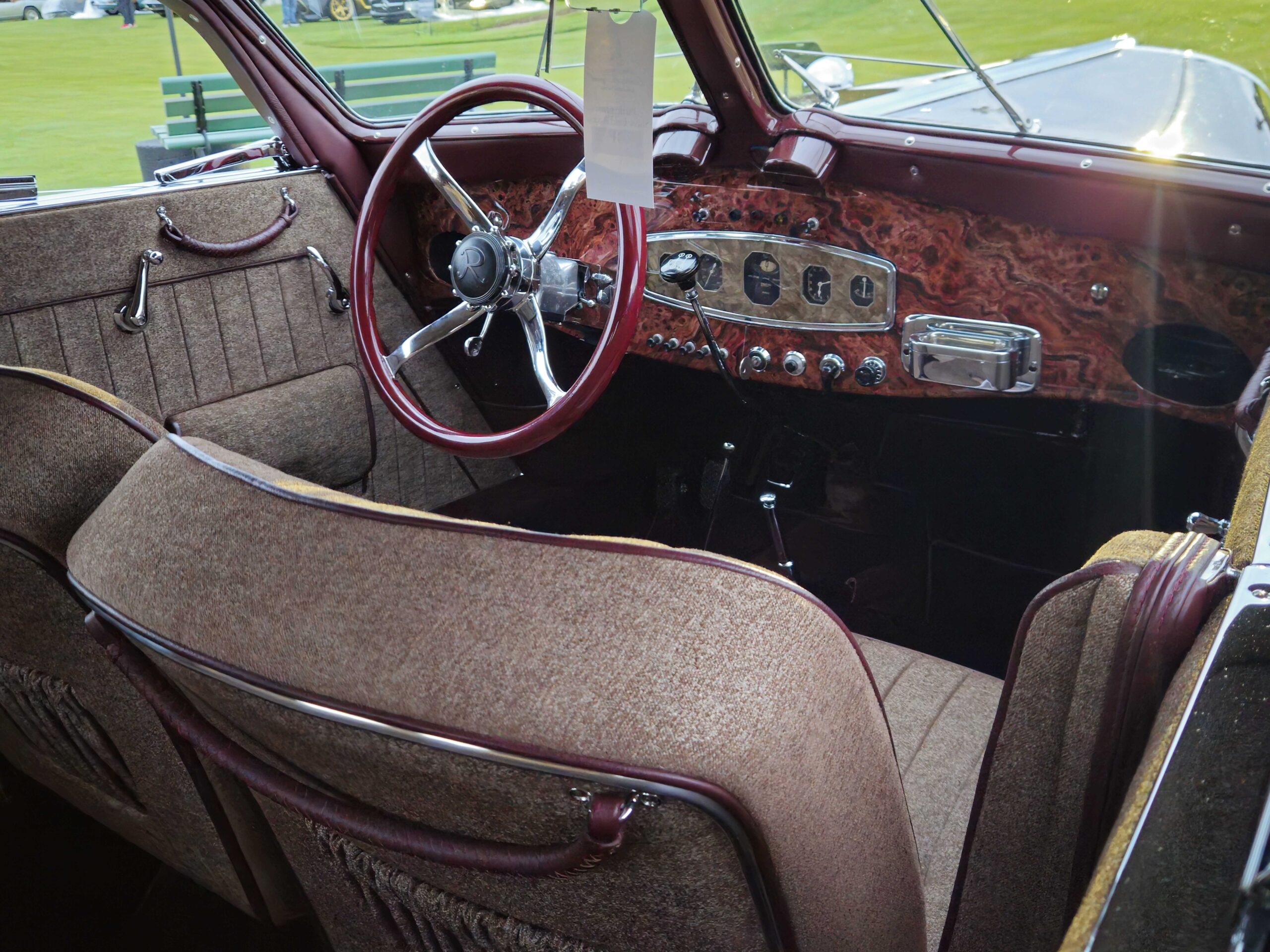
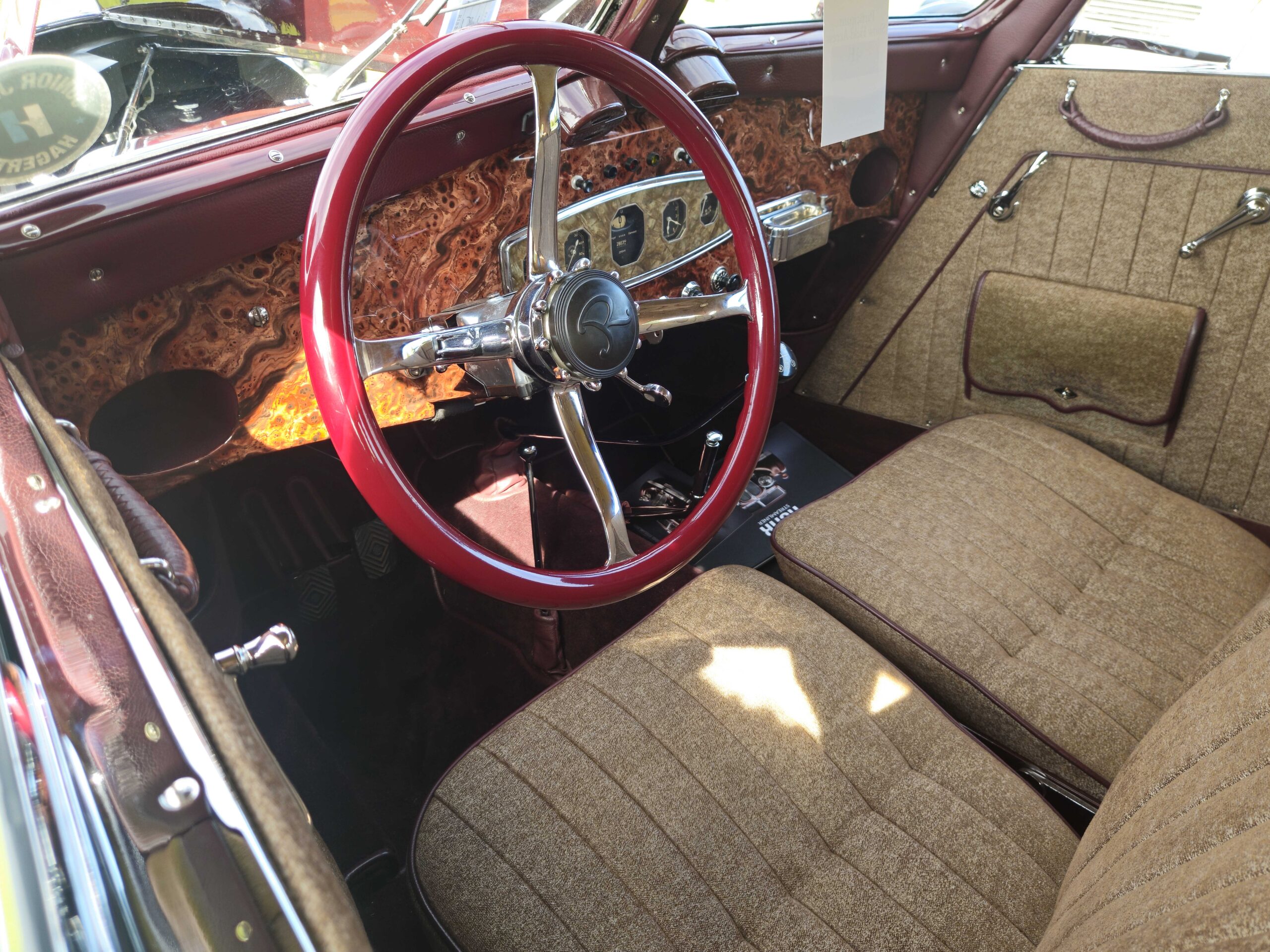
It has a multi-functional steering wheel and the dashboard is mahogany stained with stout beer then lacquered.
It is a pillar-less sedan but as the side windows wind up, channels in the window sill cleverly rise give vertical window surrounds.
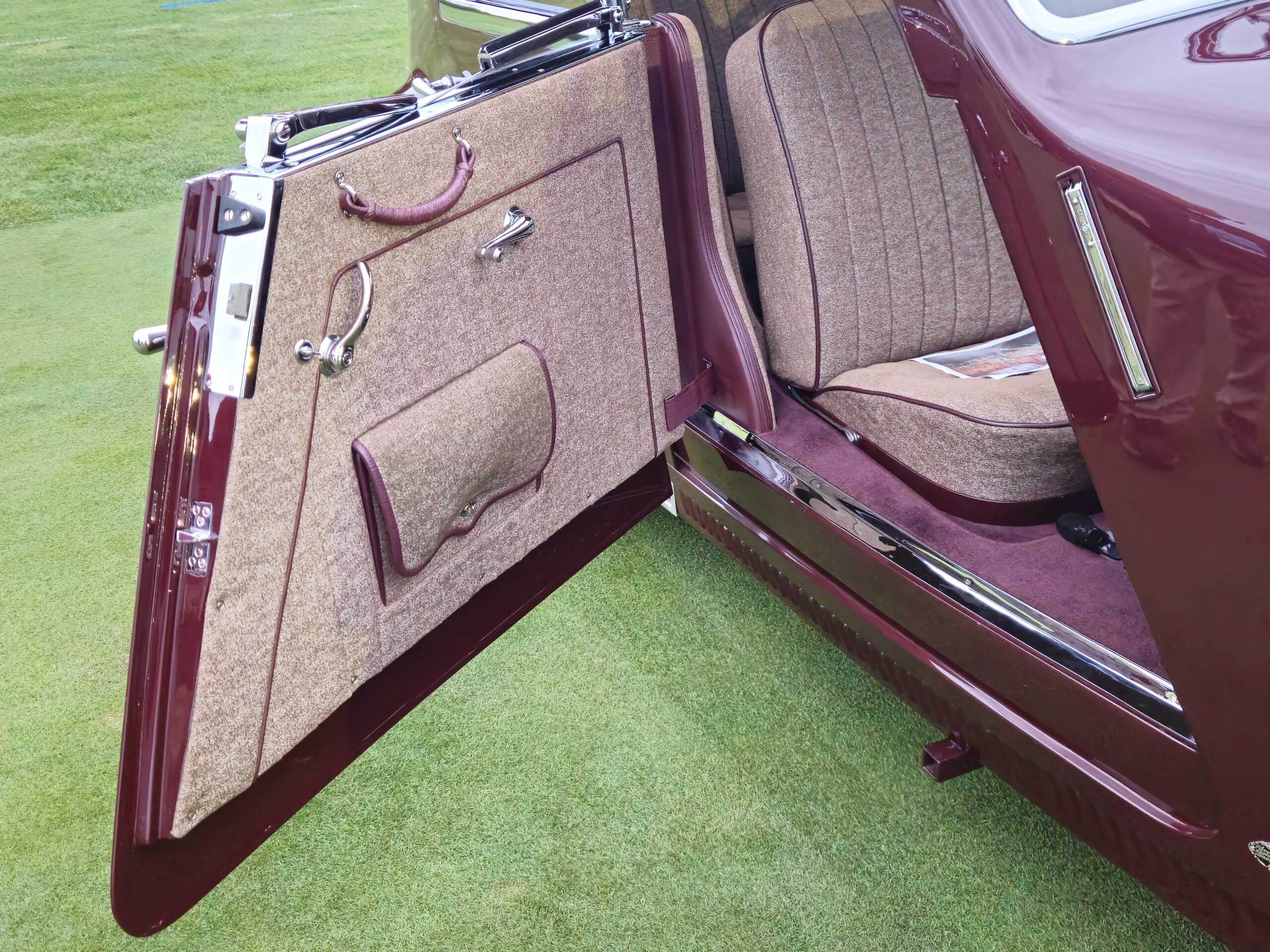
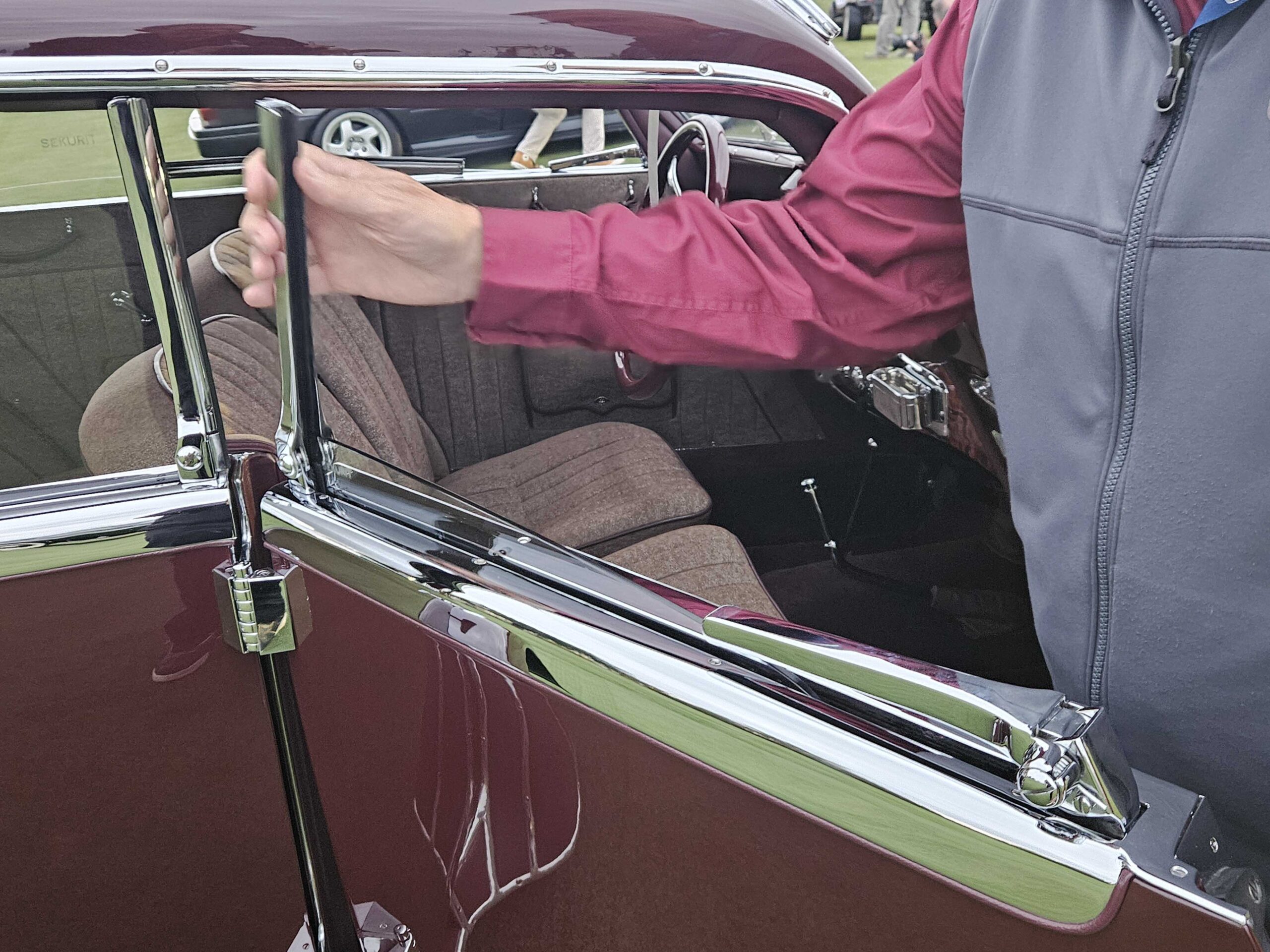
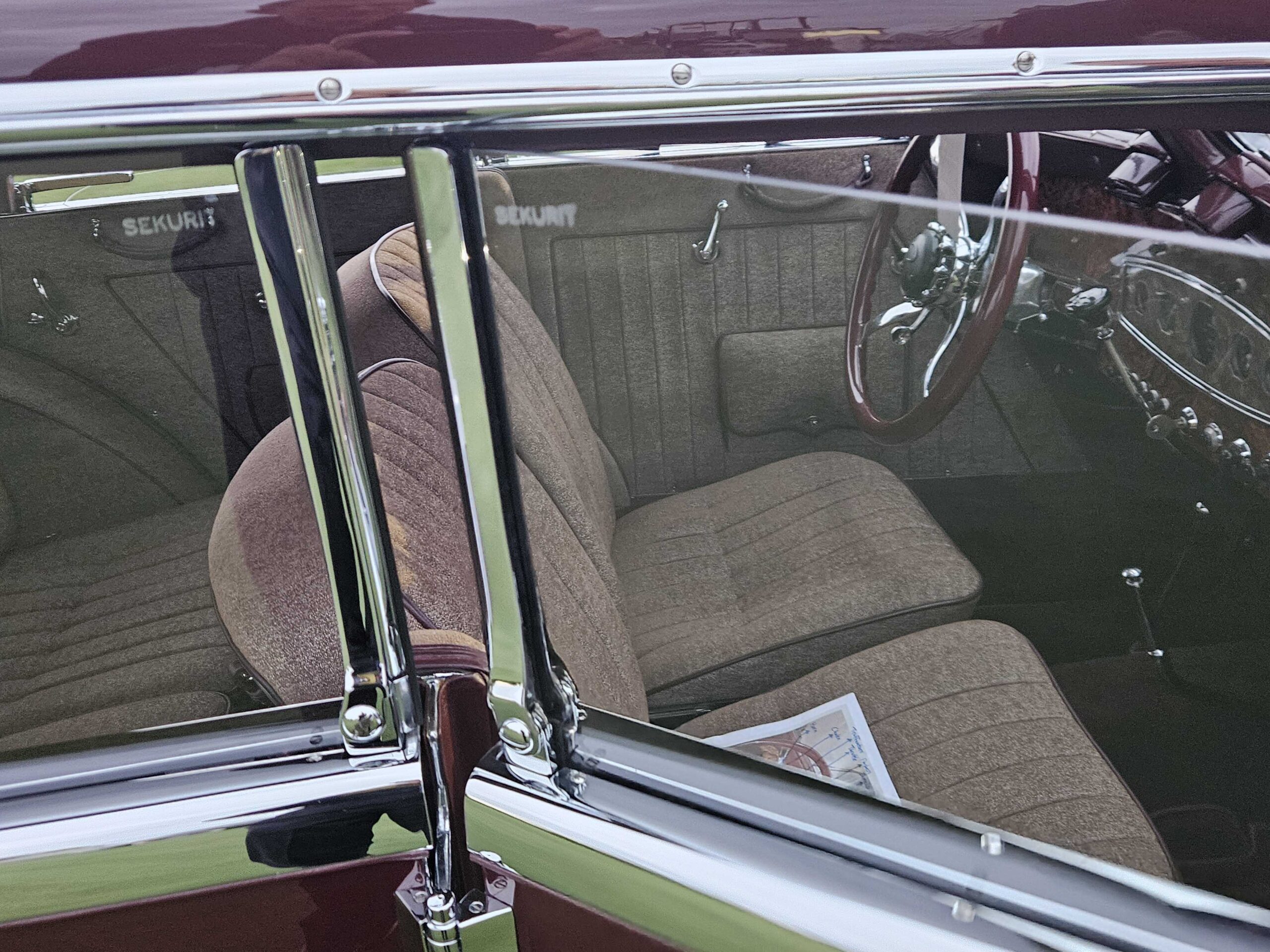
Amazingly the rear hinged front door and first hinged rear door are supported on free standing B-pillars that have zero flex. The chassis offers increased rear legroom and though the Rohr F8 is rear wheel drive, there is barely any drive shaft tunnel in the rear.
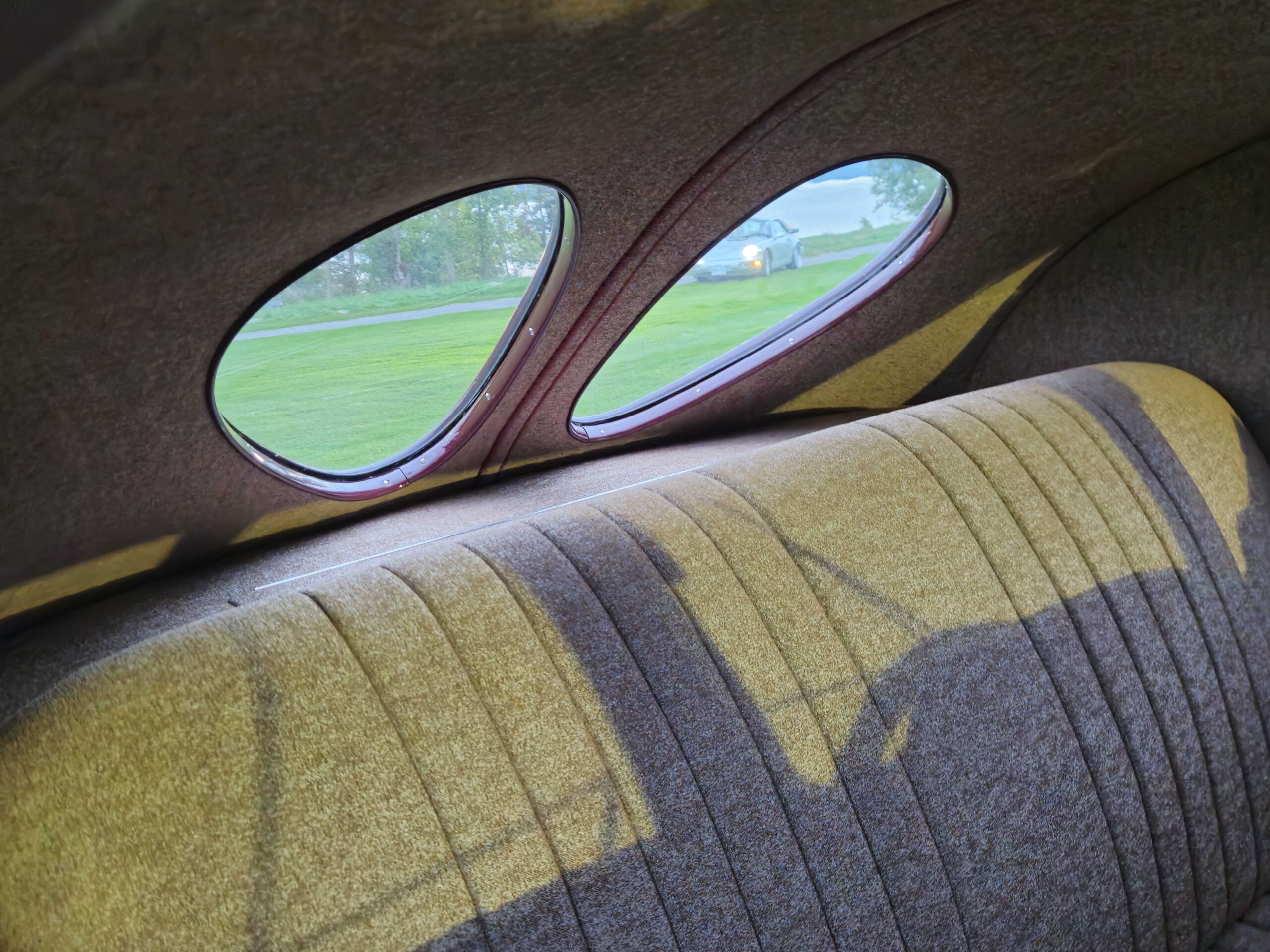
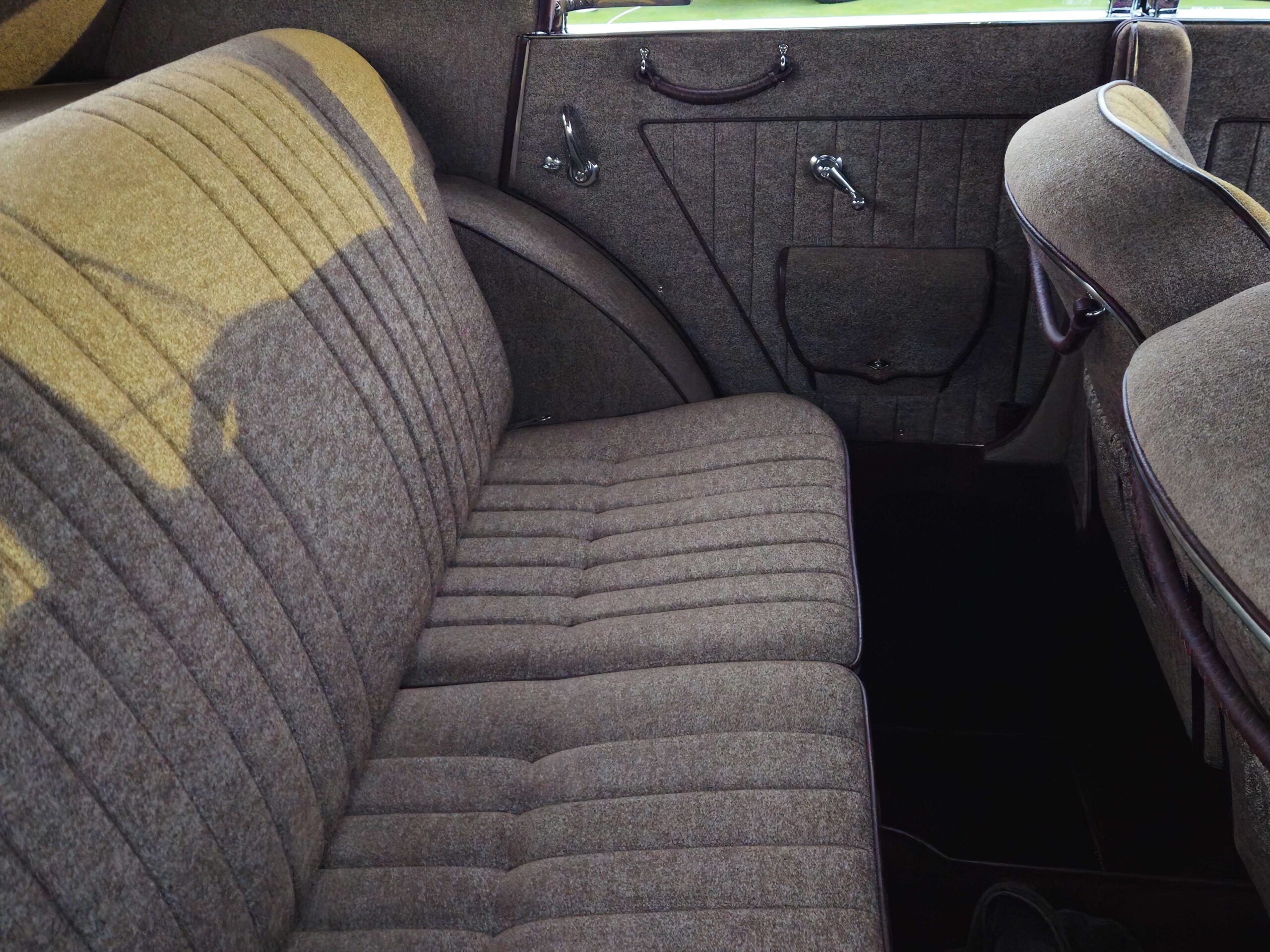
It was an obvious pick for Best of Show.
Outstanding Pre-war was awarded to a 1937 Mercedes-Benz, 540K Sport Cabriolet by Erdmann & Rossi, owned by Lee Anderson
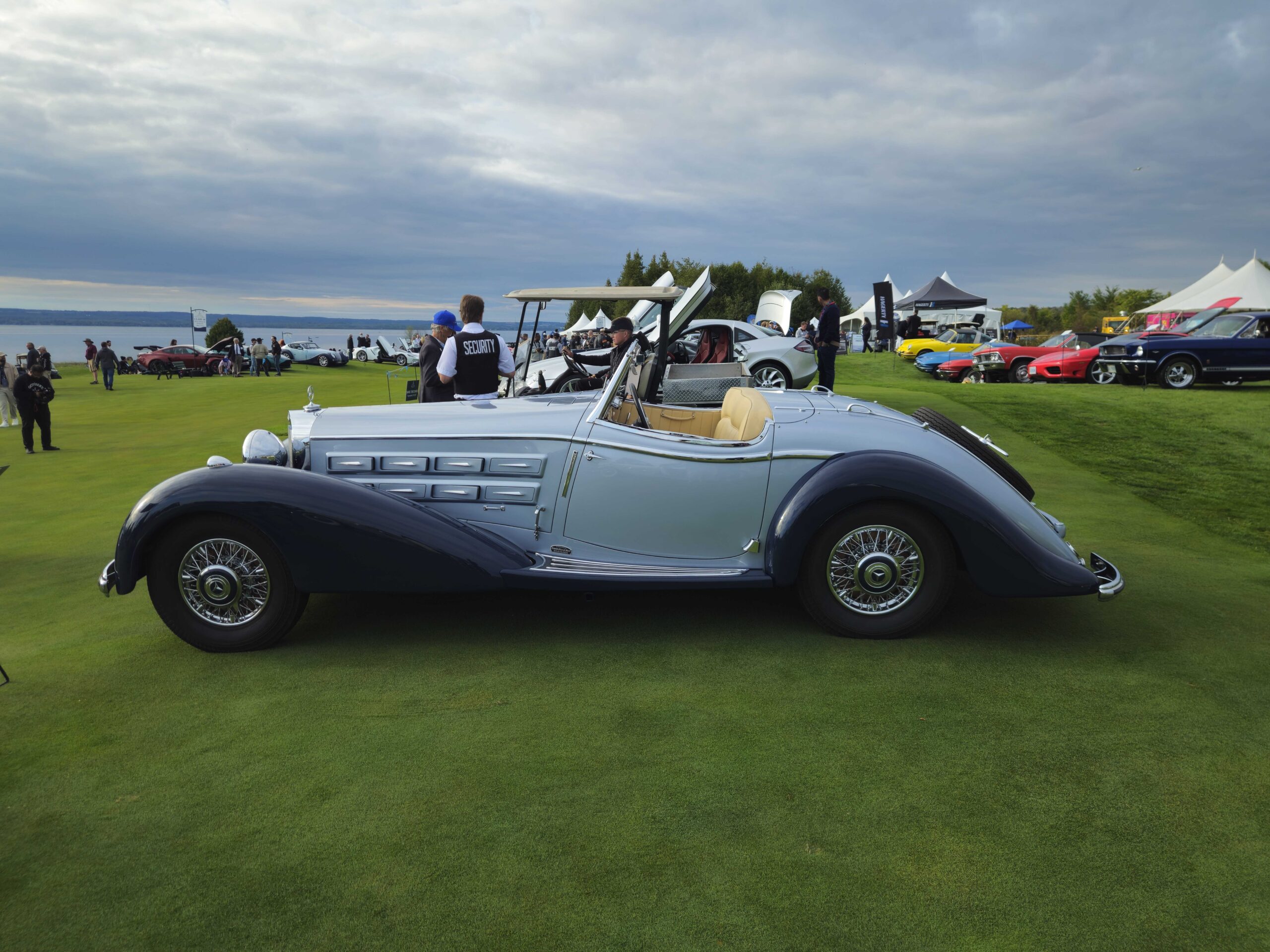
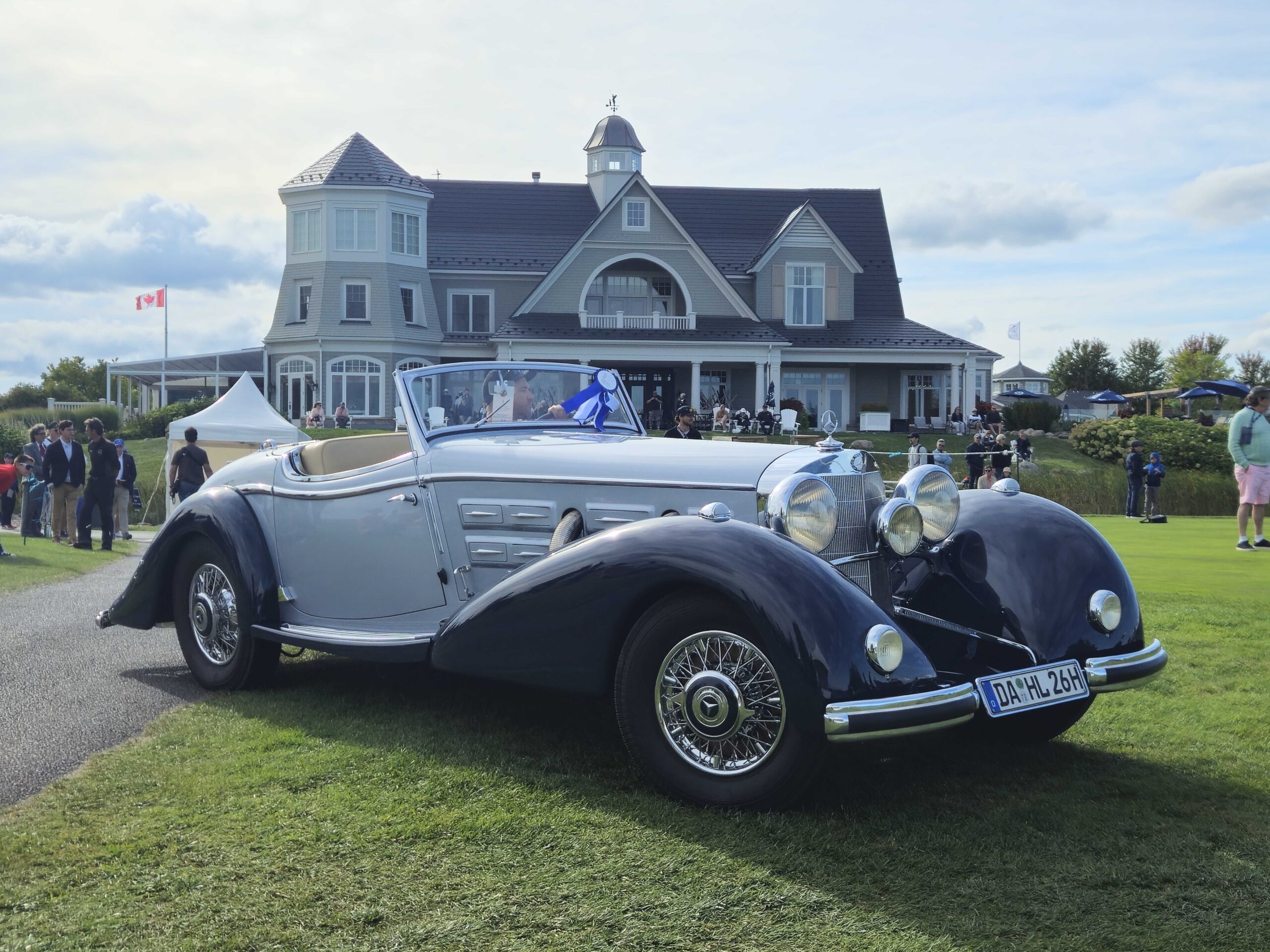
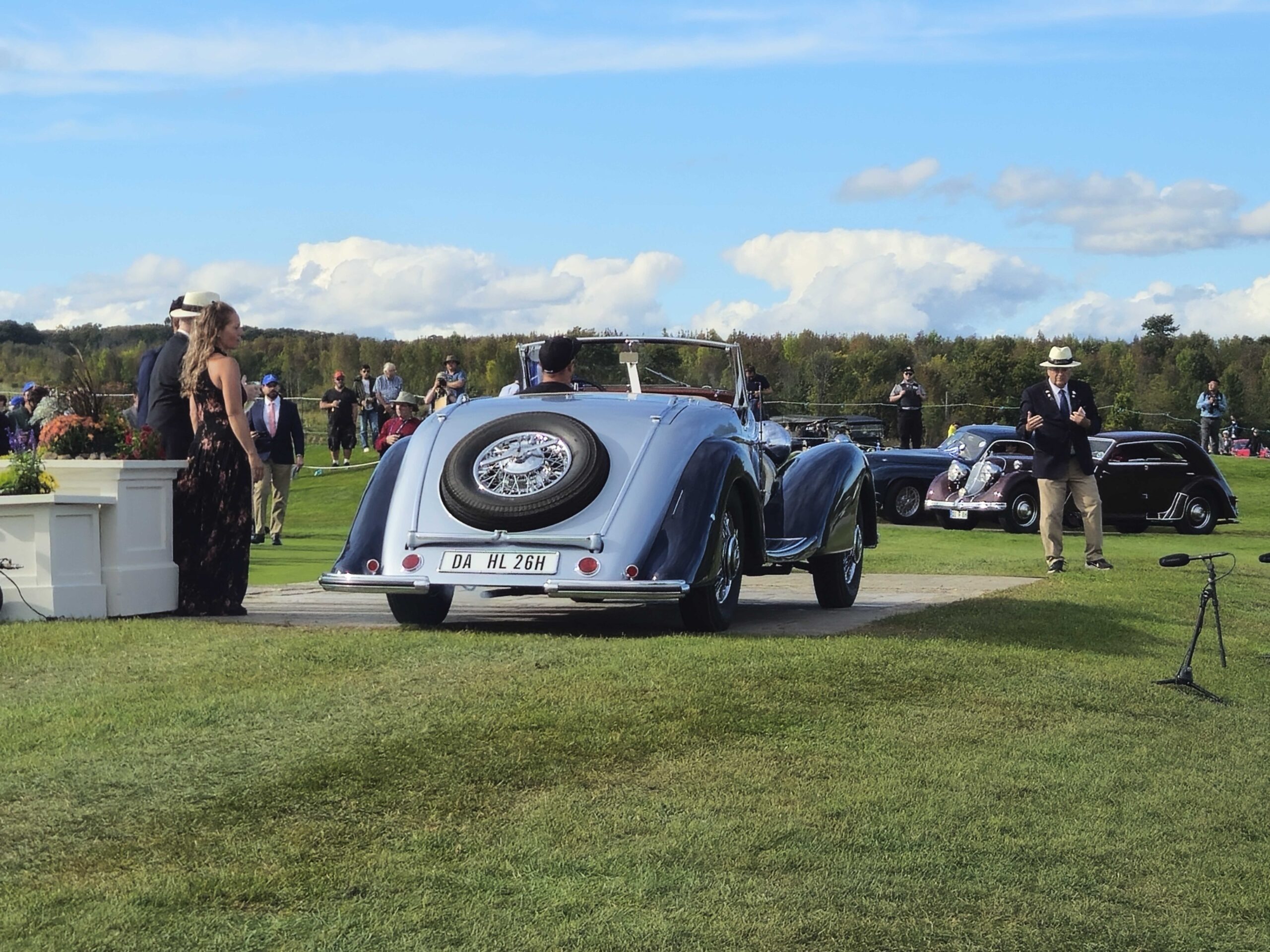
This 1937 Mercedes-Benz 540K Sport Cabriolet is a very special and unique automobile. A one- of-a-kind with hand-crafted coachwork by the outstanding German coachbuilding firm of Erdmann and Rossi. It was originally a show car for the Erdmann and Rossi firm, displayed at the 1937 Berlin Motor Show. Special design features of this striking 540K Supercharged Roadster include cut-down doors; a long-tail rear body and fender area; and a recessed rear-mounted spare wheel. This Mercedes-Benz with its desirable set-back radiator and motor retains its normal headlight-bar-mounted lighting but also displays additional driving lights mounted in the front fenders. It’s one of only a handful of Erdmann and Rossi-bodied Mercedes-Benzes so equipped. Factory-built (Singlefingen) 500K and 540K Special Roadsters and Coupes, and other body styles, did not feature extra driving lights mounted in the leading edge of the front fenders.
The first owner of this 540K Roadster was an individual named Gustav Froelich, a popular German entertainer of the period. Following the Second World War, the car was acquired by Mr. Horst Lautenschlager of Dahmstadt, Germany in unrestored condition. Mr. Lautenschlager, a devout and passionate collector of extremely rare and desirable pre-war German classics, restored the Erdmann and Rossi Roadster to top concours condition.
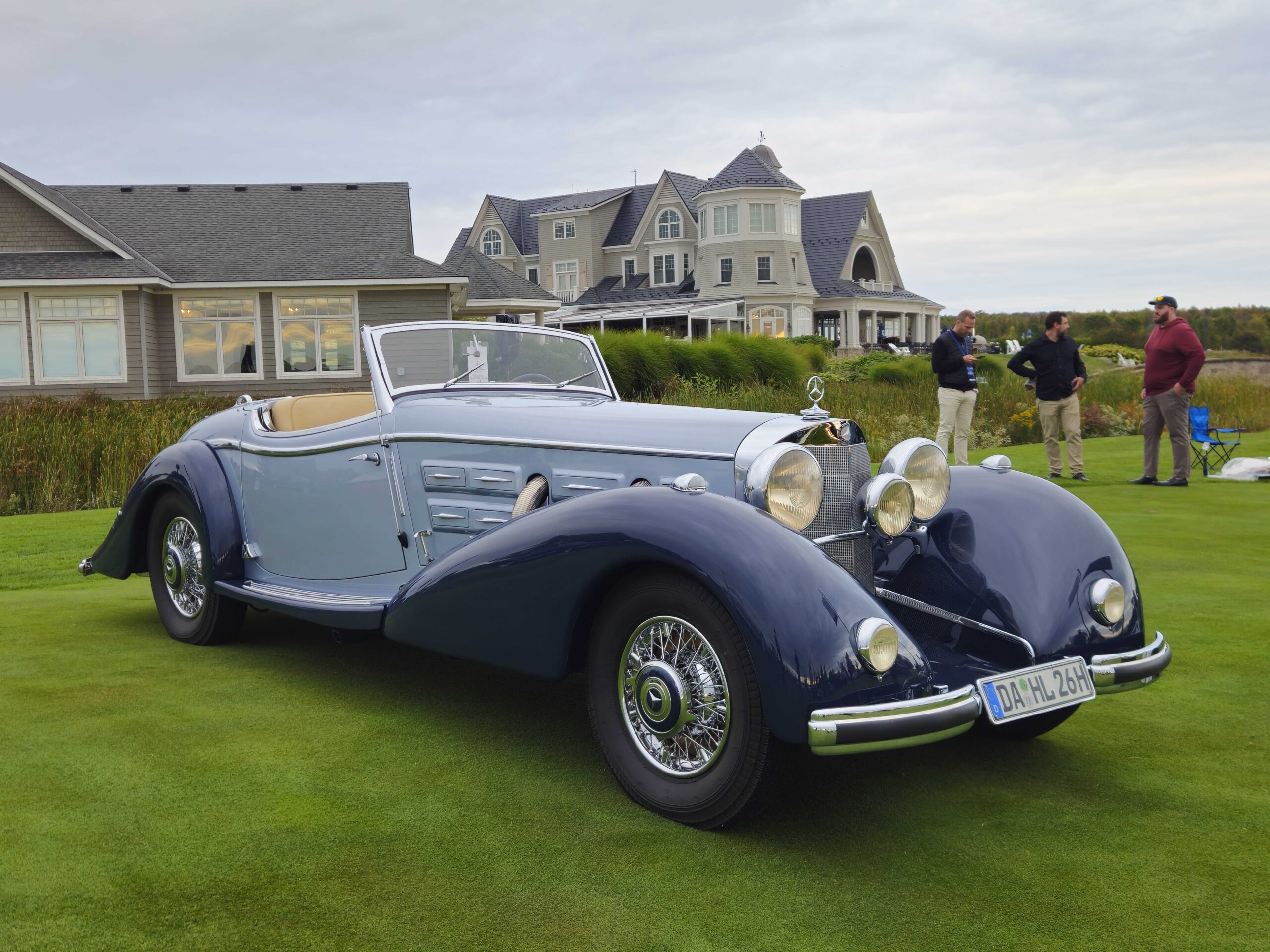
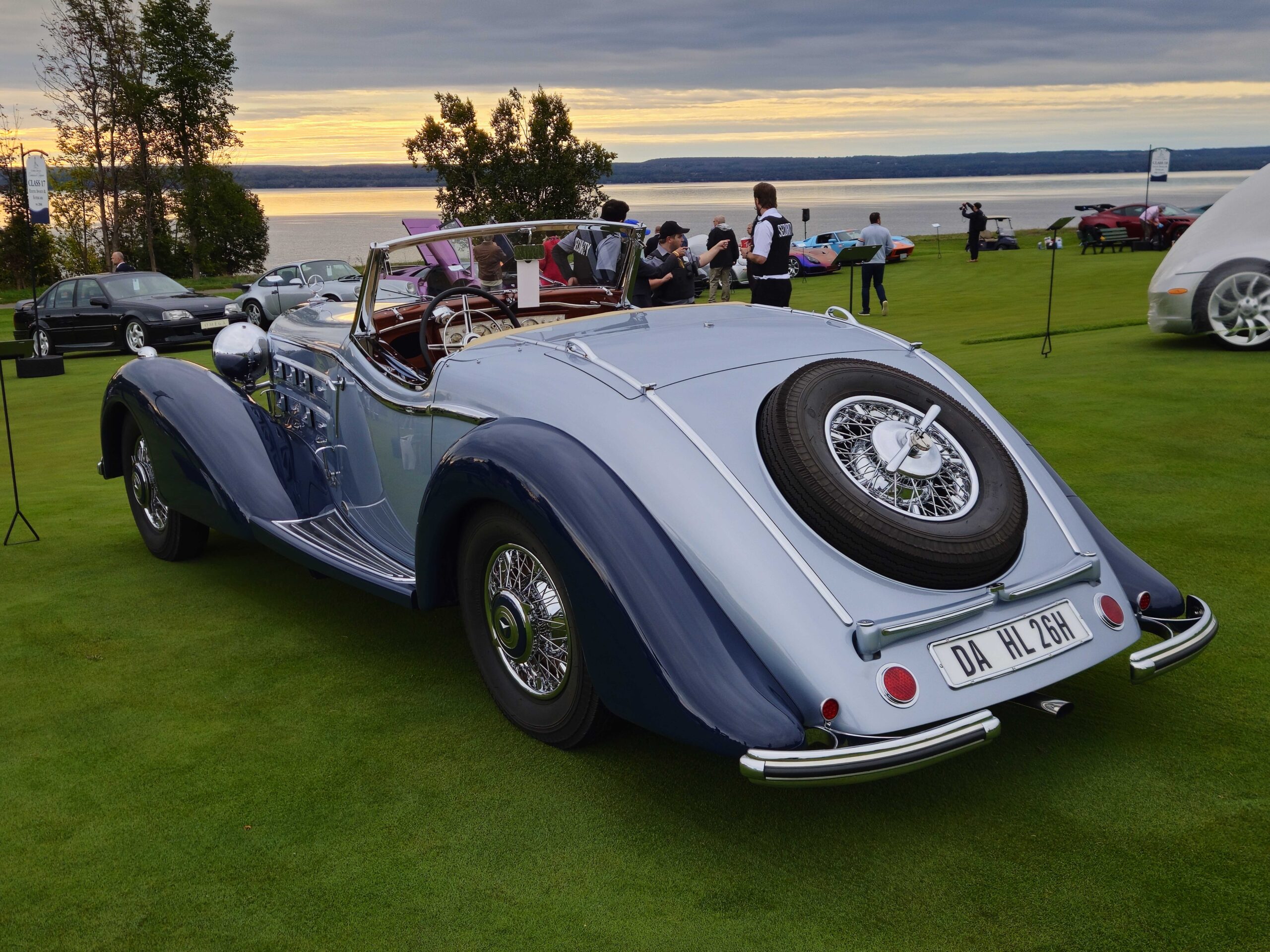
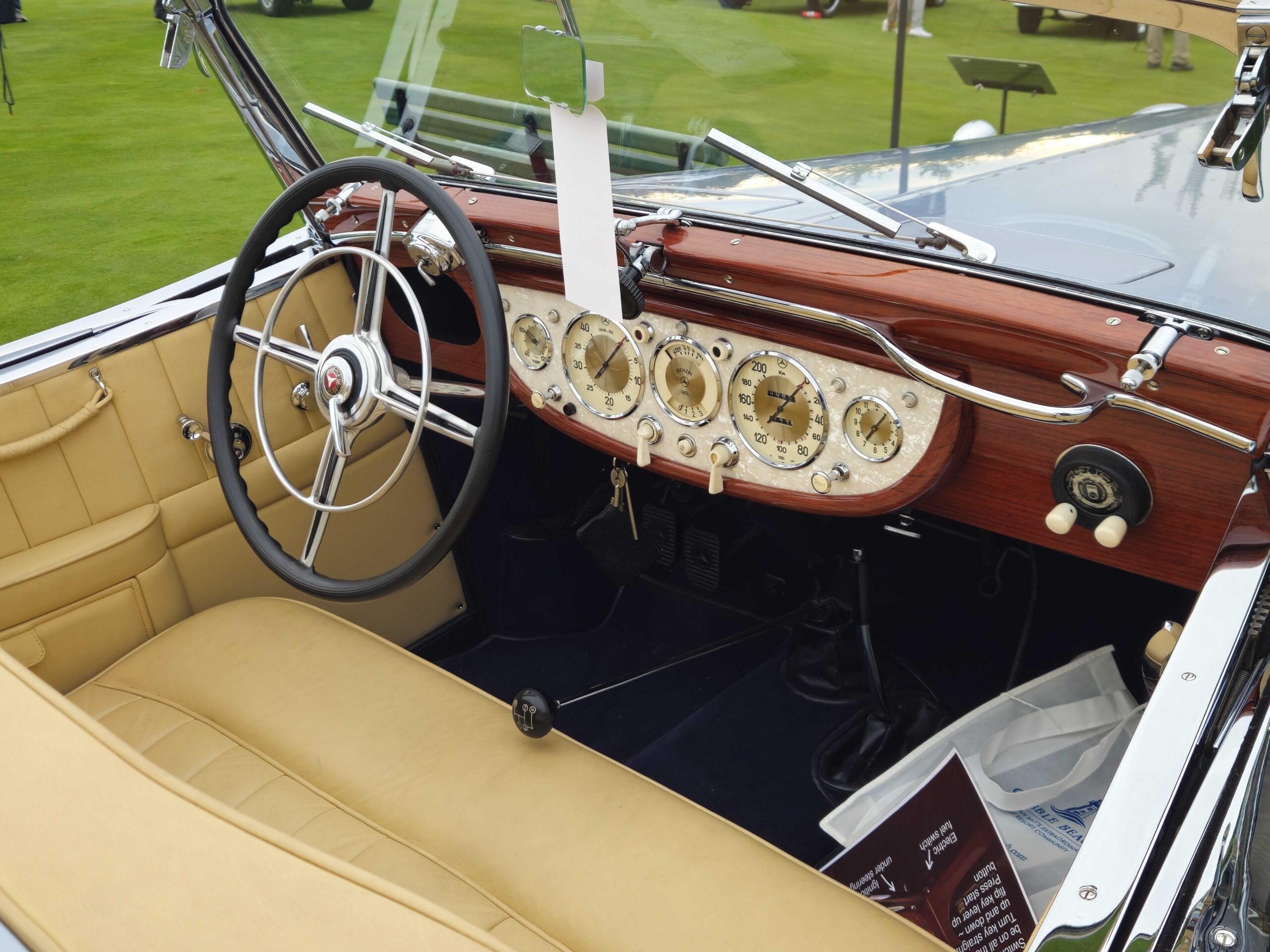
This 540K Mercedes-Benz one-of-a-kind sport roadster was the recipient of the top two awards, Best in Show and Best Restoration, at the very prestigious Concours d’Elegance Classic Gala at the Schwetzigen Palace Gardens event near Heidelberg, Germany, beating out over 300 competing vehicles. As a result, Mr. Lautenschlager’s 540K became a national classic-car celebrity and has recently come to North America.
Now owned by a very selective and discriminating collector, Mr. Lee Anderson graciously allowed his 540K Sport Roadster to be first shown in North America at the 2026 Cobble Beach Concours d’Elegance!
Outstanding Post-war was won by a 1949 Alfa Romeo, 6C 2500 SS Superleggera, owned by Frederick Fischer, Wildwood, MI.
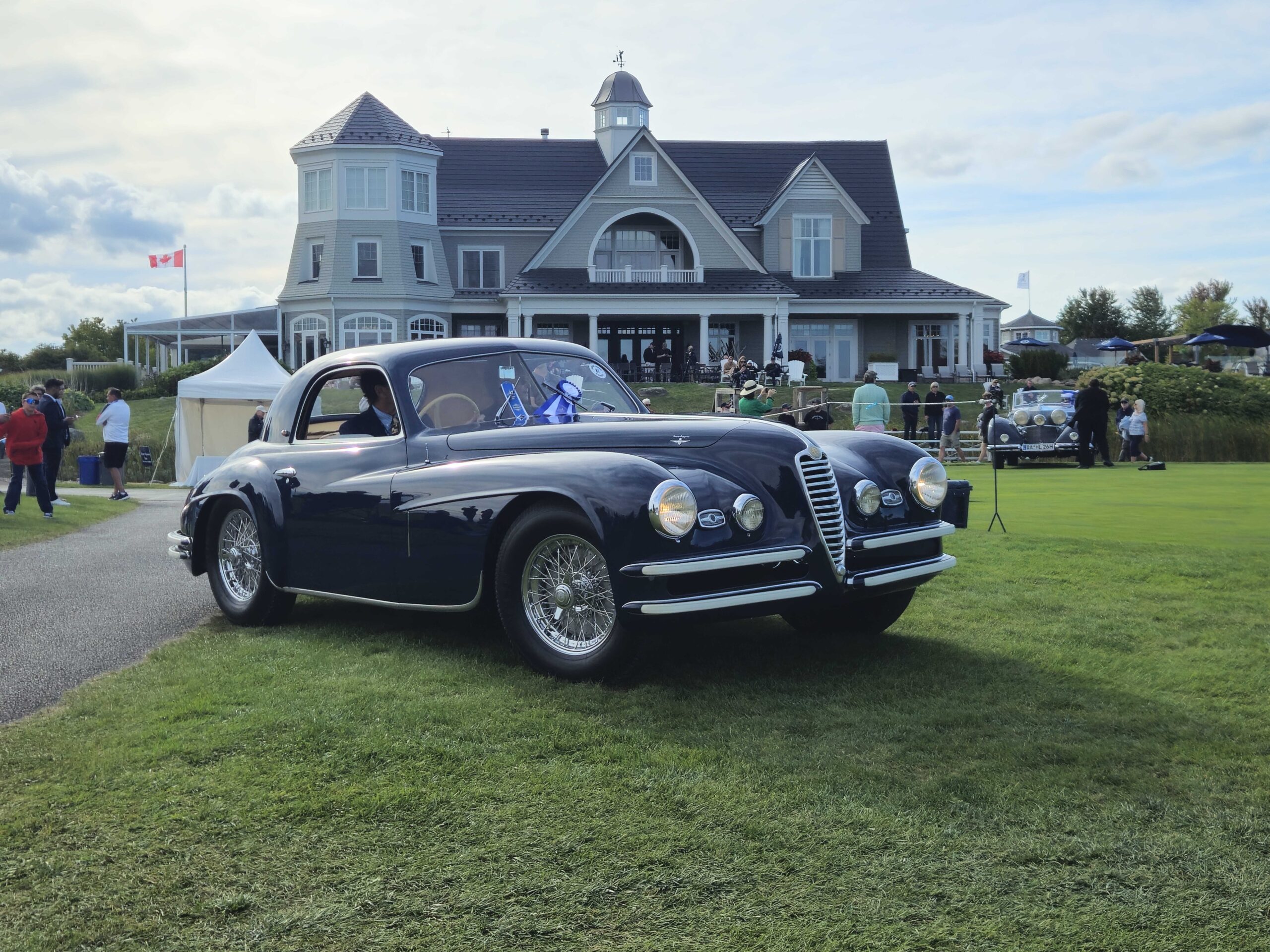
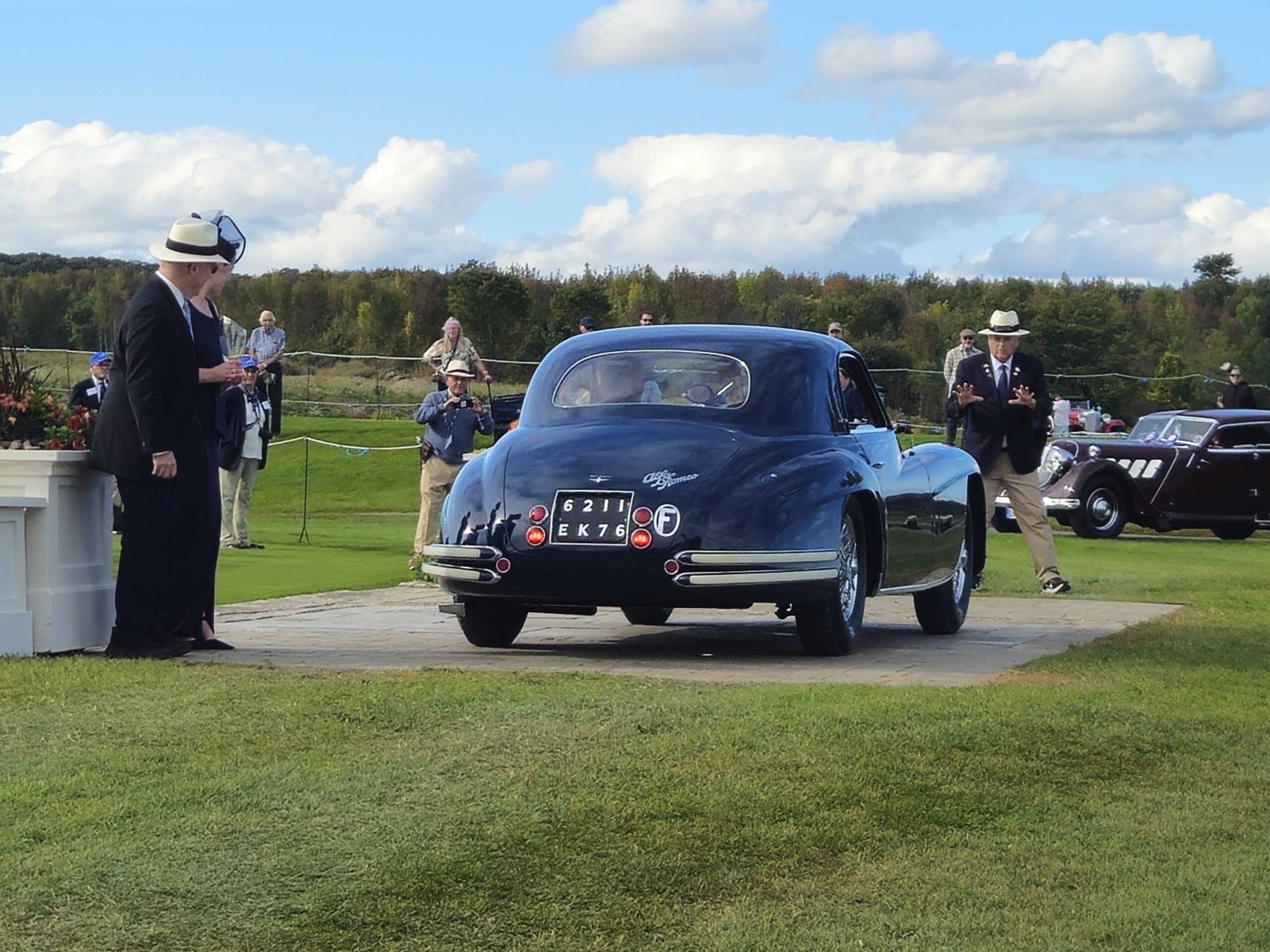
Mr. Fisher’s father purchased this Alfa Romeo in Nice France in 1964. He sold it in 1966 five years later after a bout of sellers remorse he repurchased it. Rarely used in 1971 and in 1972, it went into storage in Mr. Fisher’s grandfather’s machine shed cloaked in a nylon parachute for 15 years. It was mauled by mice and moths before being moved to St. Louis in 1987 and stored until 2018 when restoration began, finishing in 2025.
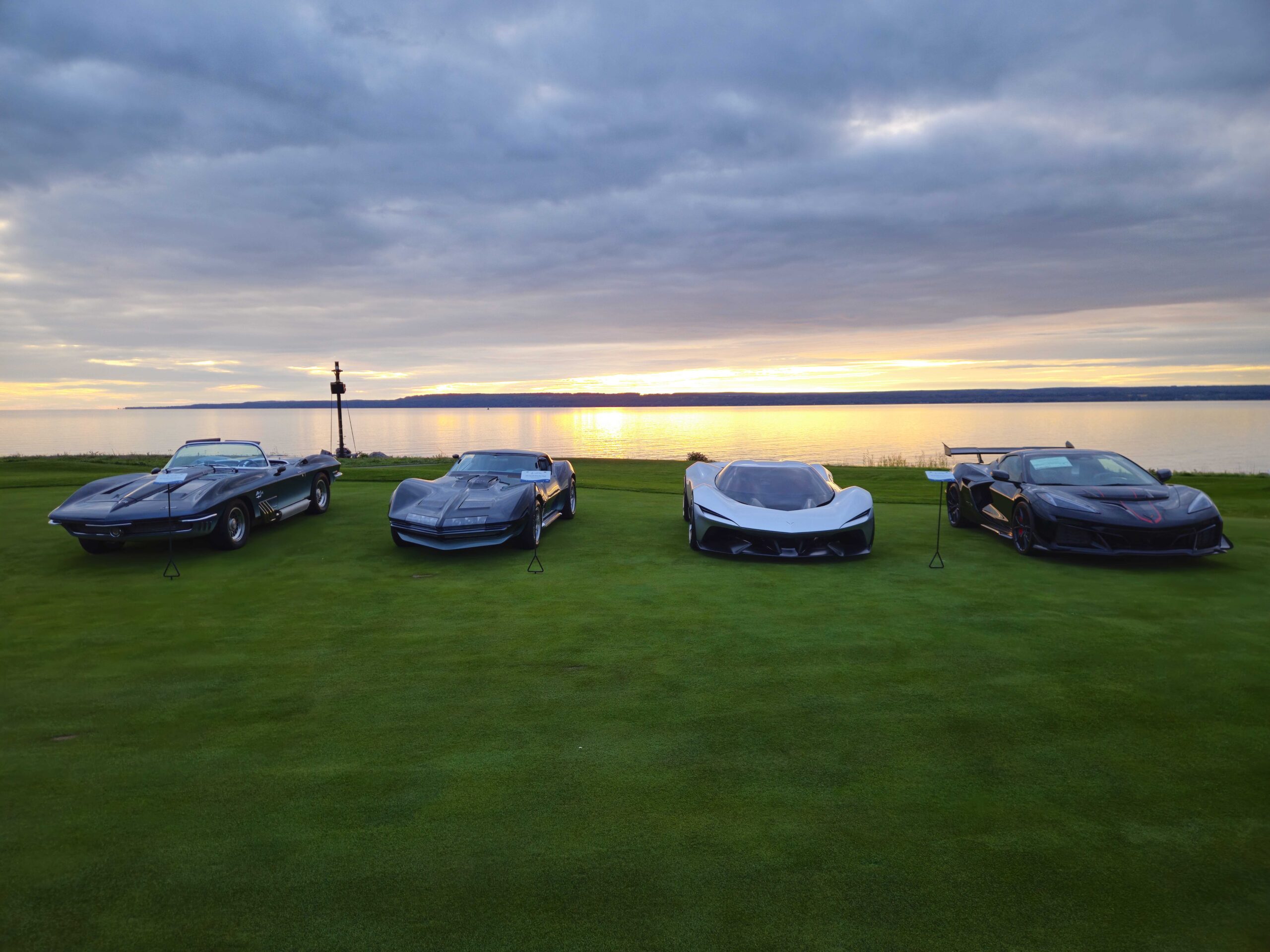
General Motors brought 4 corvettes to the show, each with an interesting history;
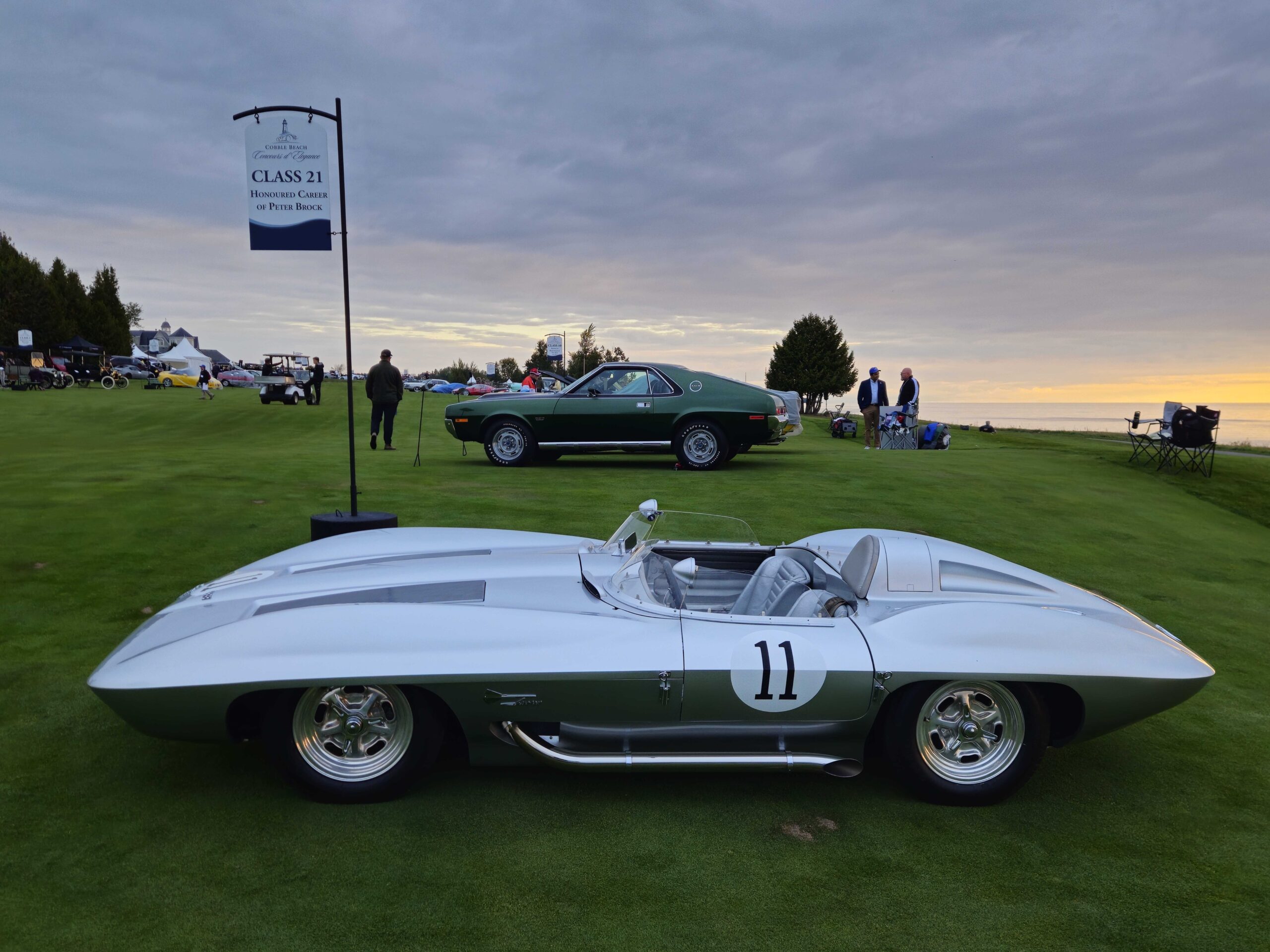
1959 Chevrolet, Corvette Stingray Racer — from GM Heritage Collection, Warren, MI
The Corvette Stingray Racer is a sports racing car and concept car that debuted in 1959. The car was developed in the styling studios at General Motors (GM) at the behest of Bill Mitchell, GM Vice President of styling. The design was based on a sketch by designer Pete Brock and was further developed by Larry Shinoda.
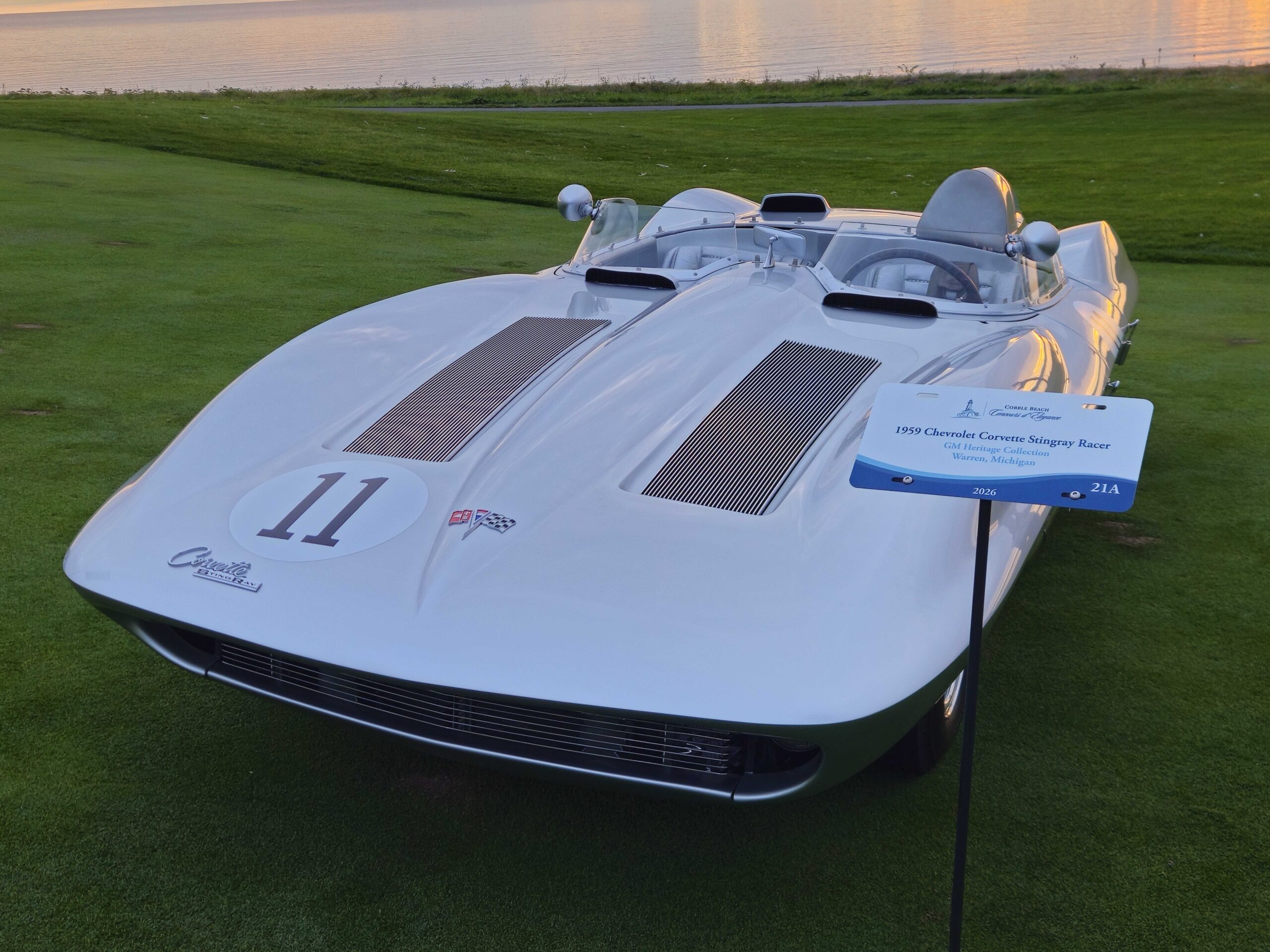
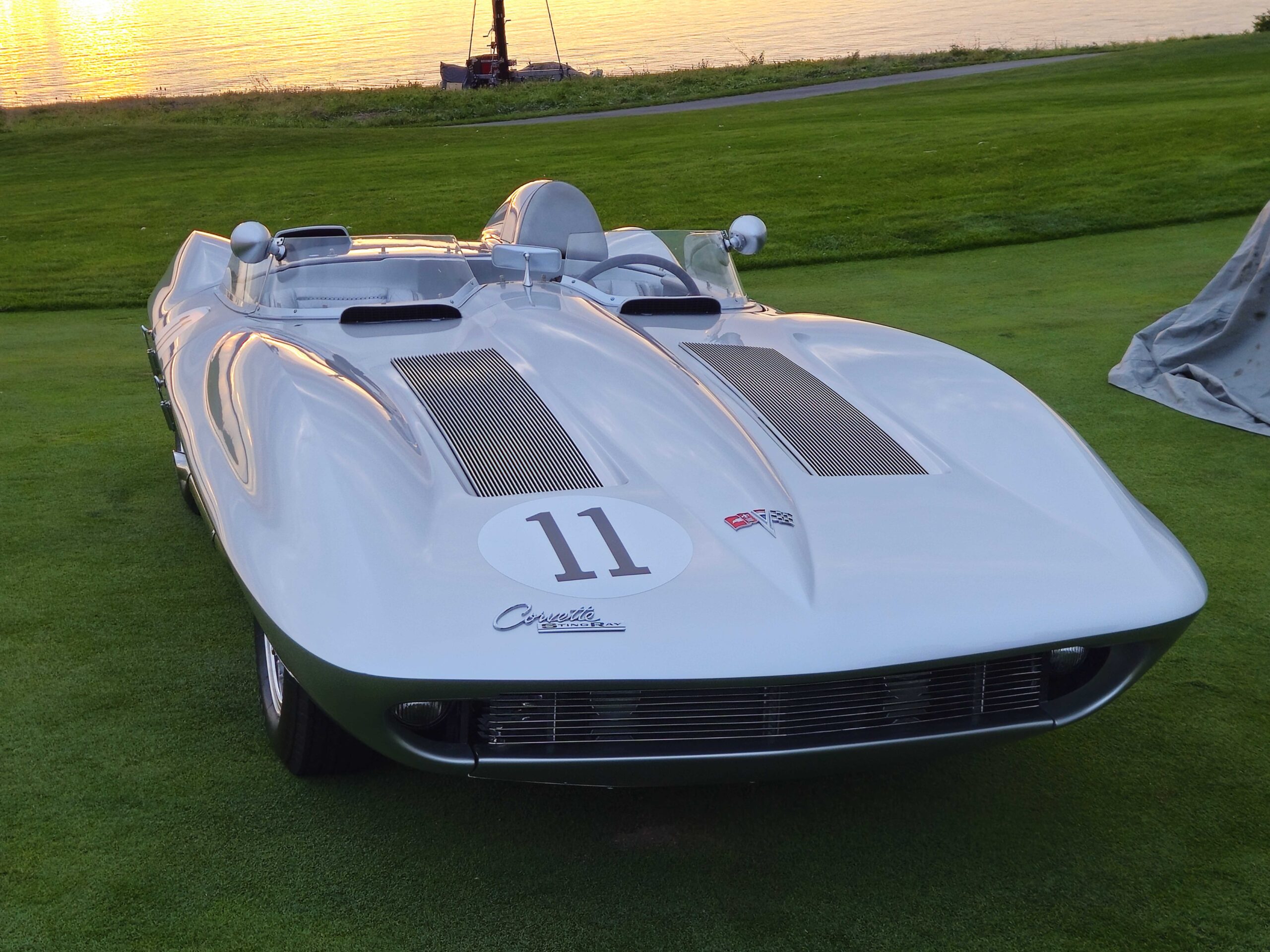
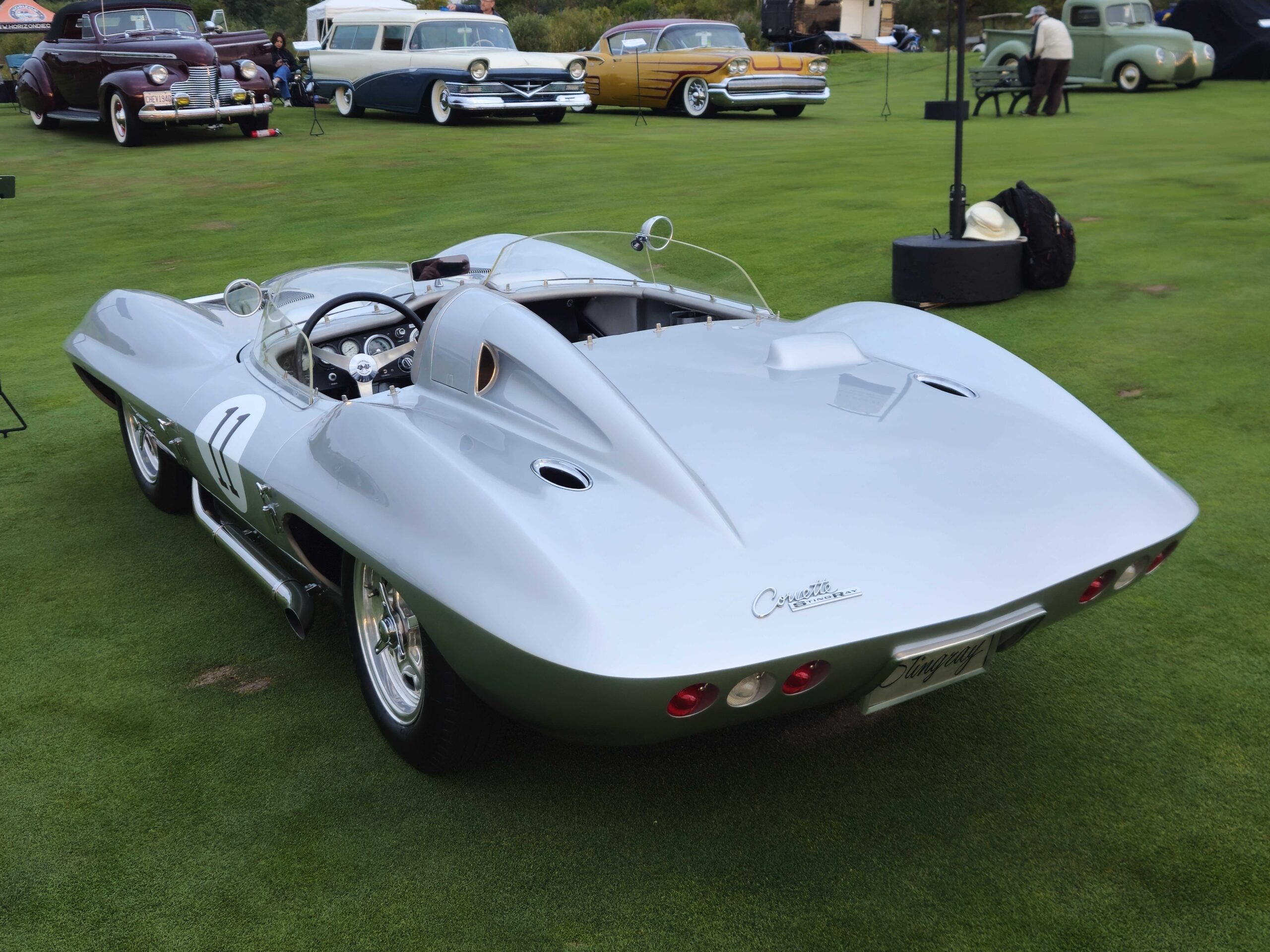
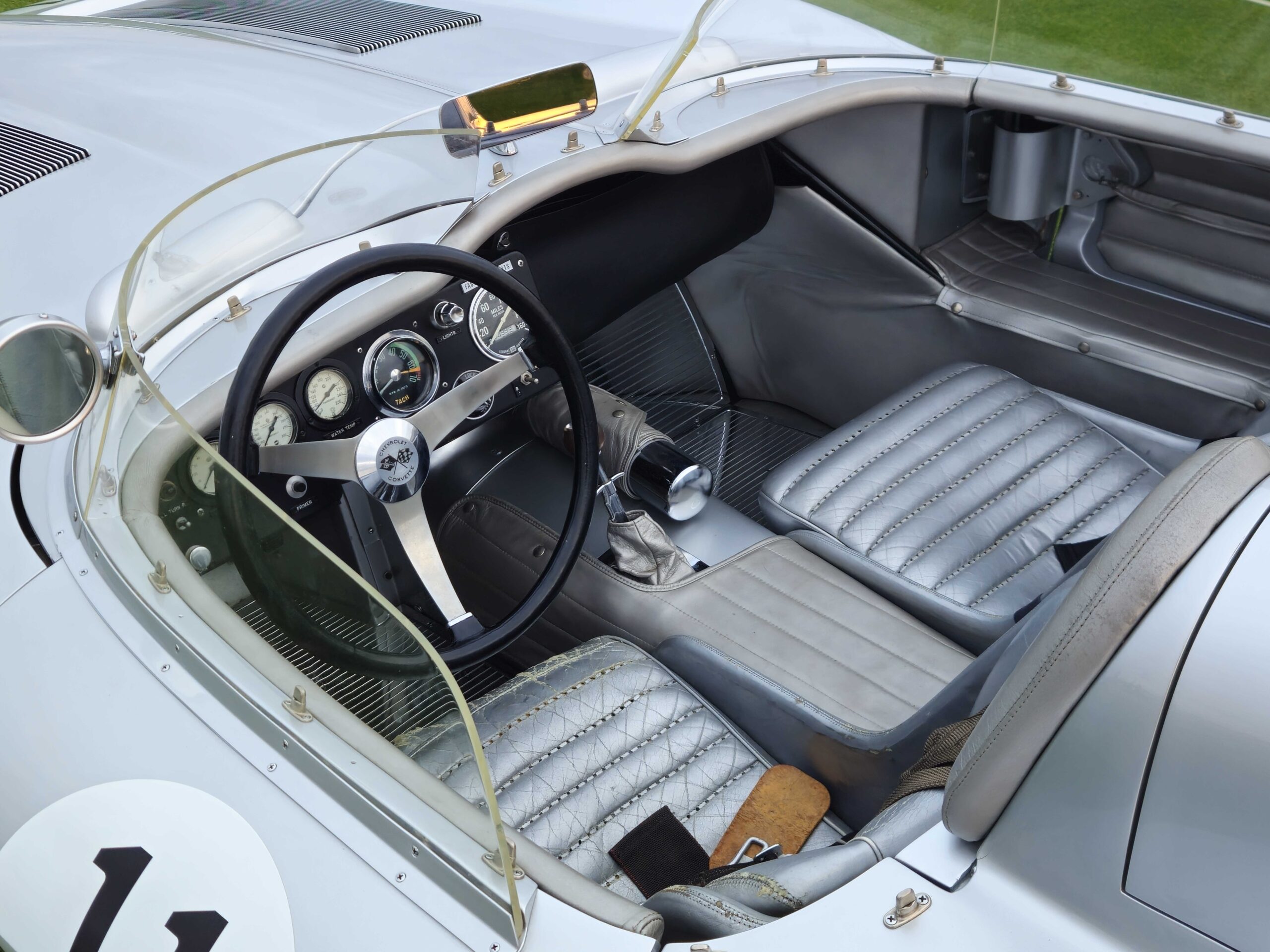
The car strongly influenced the styling of the second generation (C2) Corvette Sting Ray. In the mid- to late 1950s, Ed Cole, General Manager for Chevrolet, initiated a project called the Q-Chevrolet, a defining feature of which was to be a front-mounted engine and a rear-mounted transaxle. The Corvette development team began working on a Q-Corvette. Mitchell showed pictures of cars seen on his Italian trip to his design team, headed by Bob Veryzer, to illustrate his goals for the shape of the Q-Corvette.
The design was determined by an internal competition which was won by a sketch done by Brock. Brock was tasked with developing his sketch into a complete design for a coupe, while designer Chuck Pohlmann was given the same assignment, but for a convertible.
Brock’s coupe was assigned project number XP-84, while Pohlmann’s convertible was XP-96. While both were based on Brock’s original sketch, the designs diverged in some details in addition to their different roof lines. Full-size clay models of both were built by modeler John Bird. At this time, Larry Shinoda was brought in to refine the design, adding details that would be needed if the car went into production.
As the Q-Corvette was being readied to be presented to GM’s board of directors, Frederic Donner replaced Harlow Curtice as chairman of GM. Donner’s focus on improving profitability by cutting costs meant the end of expensive engineering projects. When the Q-Chevrolet project was cancelled, the Q-Corvette was as well.
Construction of the Stingray racer started in a small space at GM informally called the “Hammer Room.” It was later moved to a slightly larger space that had once been Harley Earl’s private file room. The car is considered the first product of Mitchell’s Studio X, a small internal design studio he used for special projects. It also introduced what came to be called the “Folded Crease” style that became a hallmark of Mitchell’s designs through the 1960s. The body was based on the Q-Corvette XP-96 convertible. Shinoda headed up the effort to revise the shape and fit it to the Corvette SS chassis with its 92-inch (2,337-mm) wheelbase.
The original body was made of 0.125-inch (3.2-mm) fibreglass, with aluminum reinforcing and bonded-in aluminum attachment hardware. Initial dry weight is reported to have been 2,154 lb (977 kg), roughly 1,000 lb (450 kg) lighter than a 1960 production car. The car was completed in early 1959. Mitchell then wanted to take the car racing but was told that he would have to do it at his own expense, and that the car could not carry any badging that associated it in any way with GM, Chevrolet, or the Corvette name.
1961 Chevrolet Corvette Mako Shark I — from GM Heritage Collection, Warren, MI
The Mako Shark show car is finished in a vari-colored paint scheme based on an iridescent blue upper surface that blends into a white side and lower body, like the natural coloring of the shark Bill Mitchell landed.
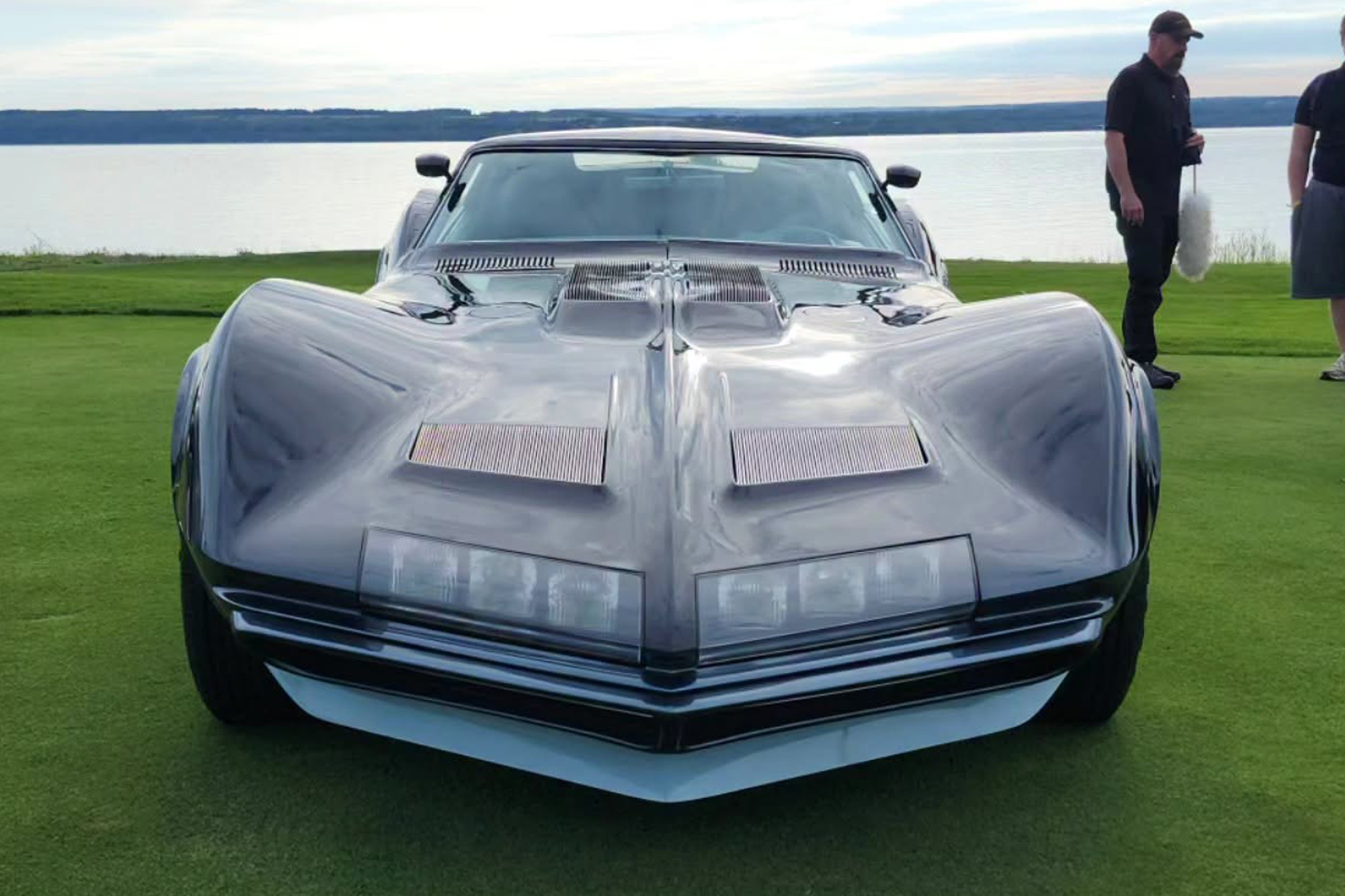
A number of experimental engines have been tested in the Mako Shark, including a supercharged engine with four side-draft carburetors; a fuel-injected engine; and a V8 engine with two four-barrel carburetors. The present engine is a production 1969 427-cubic-inch ZL-1 Chevrolet V8. This engine has an all-aluminum block, heads, and intake manifold. It is equipped with a single four-barrel carburetor that produces upwards of 425 horsepower.
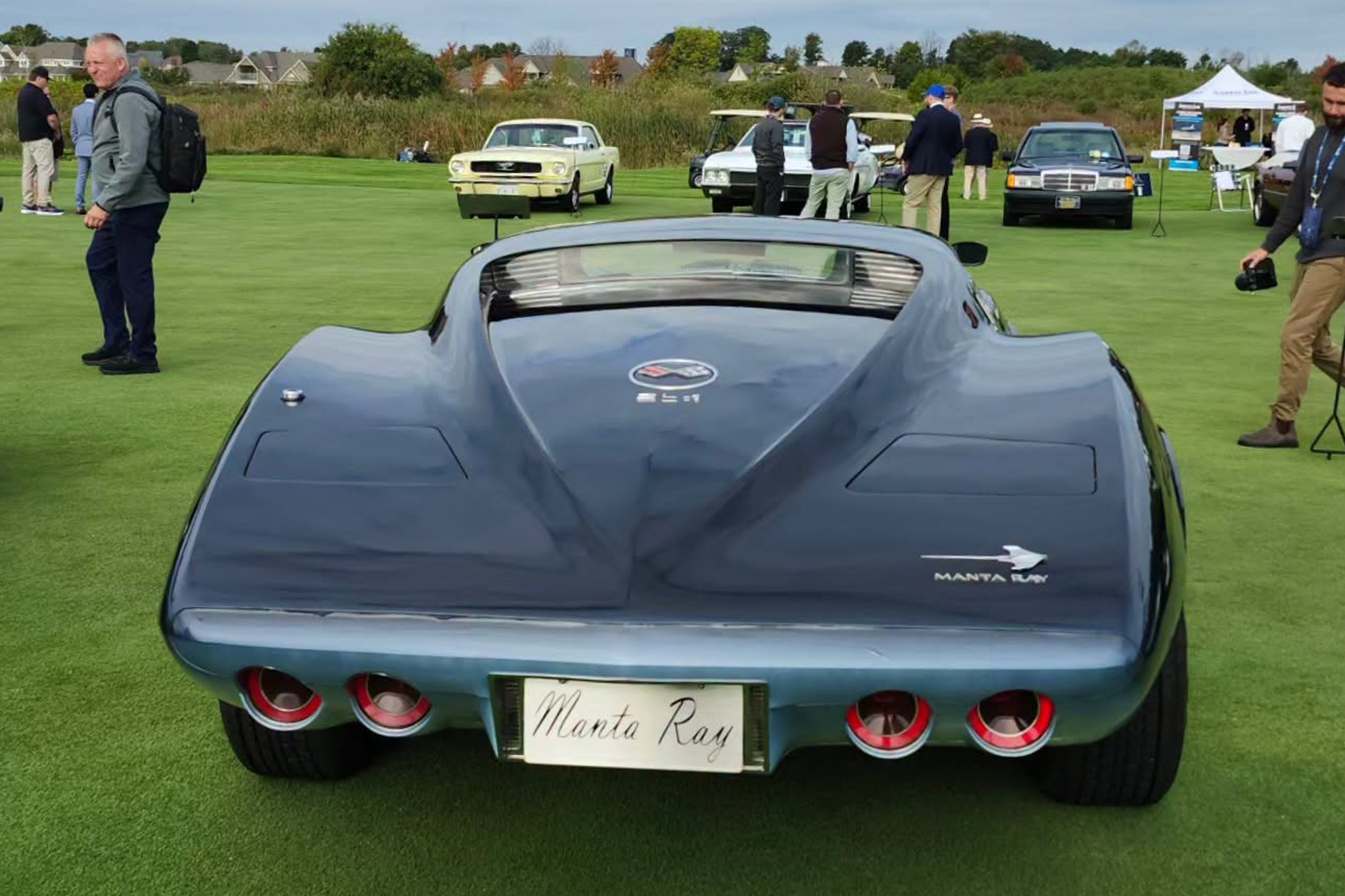
1969 Chevrolet Manta Ray Concept – from GM Heritage Collection, Warren, MI.
The 1965 Mako Shark II was sent back to the GM Design Studio for changes and was renamed the 1969 Manta Ray. William Mitchell, the head of GM Design Staff, enjoyed deep-sea fishing and had a profound love of nature. While on a fishing excursion, Mitchell was inspired by the manta ray powerfully moving through the ocean, and came up with the Corvette Mako Shark II/ and Manta Ray “Sting Ray”-styling “Dream Cars.” The Manta Ray sported more production-realistic side pipes and twin rear-deck-mounted doors that popped up during hard braking to become reflective auxiliary brake lights.
2025 Chevrolet Corvette CX Concept – from GM Heritage Collection, Warren, MI
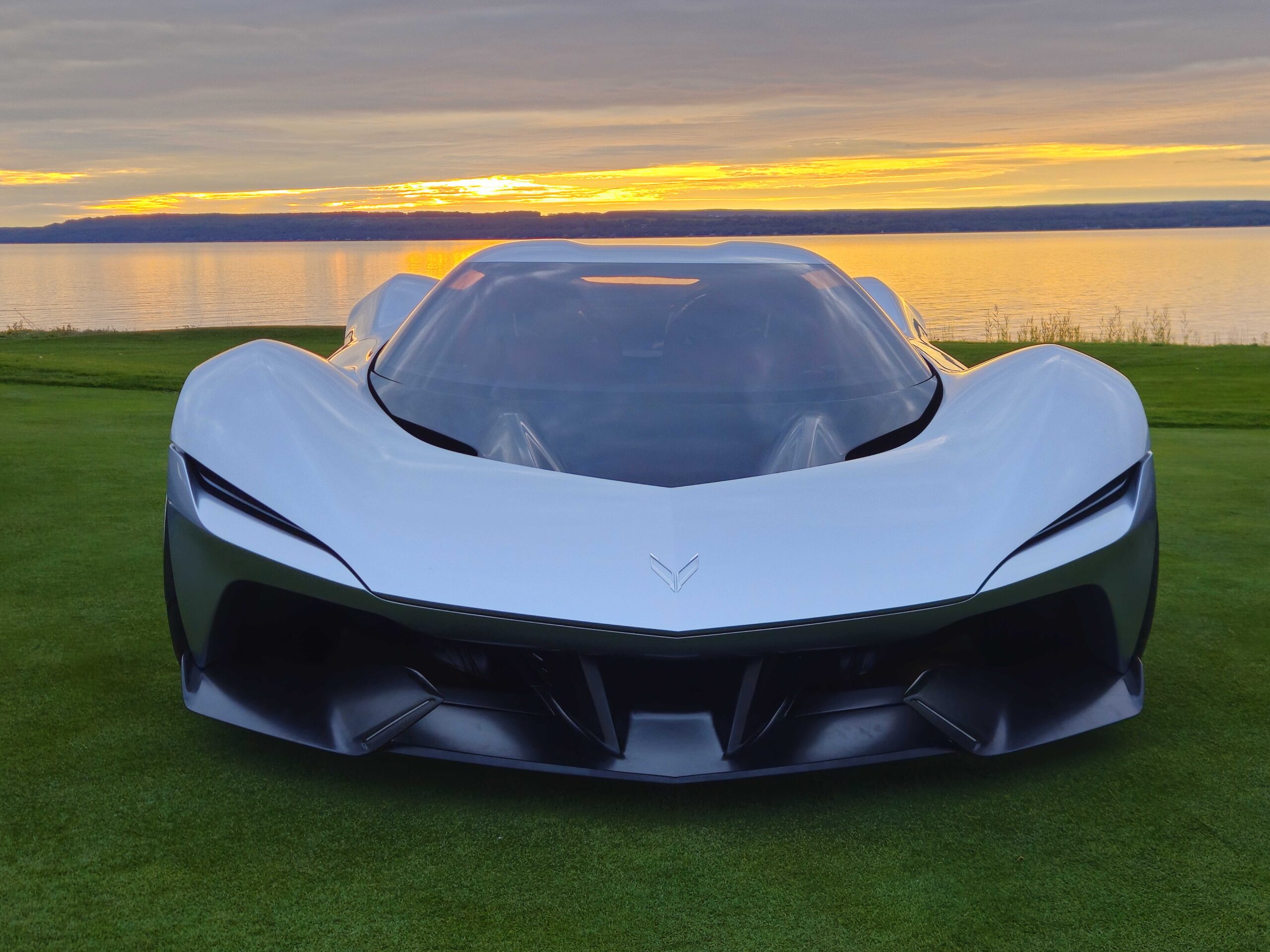
No not a Citroën CX, but perhaps the CX name and legendary shape of the sedan inspired General Motors to imagine a future Corvette designed from the ground up to provide the ultimate high-performance driving experience on the open road or the race track. This was the inspiration behind the Corvette CX concept.
The CX concept smooths the quintessential Corvette hallmarks in a body with sculpted air channels in all 4 corners encasing what looks to a Formula E core. The forward-lunging nose, the pronounced horizontal “chine” line delineating the upper and lower bodywork, and the dual-element taillights are all signature features of Corvette models past and present. The proportions are long, low, and sleek, with a roofline less than 41 inches high.
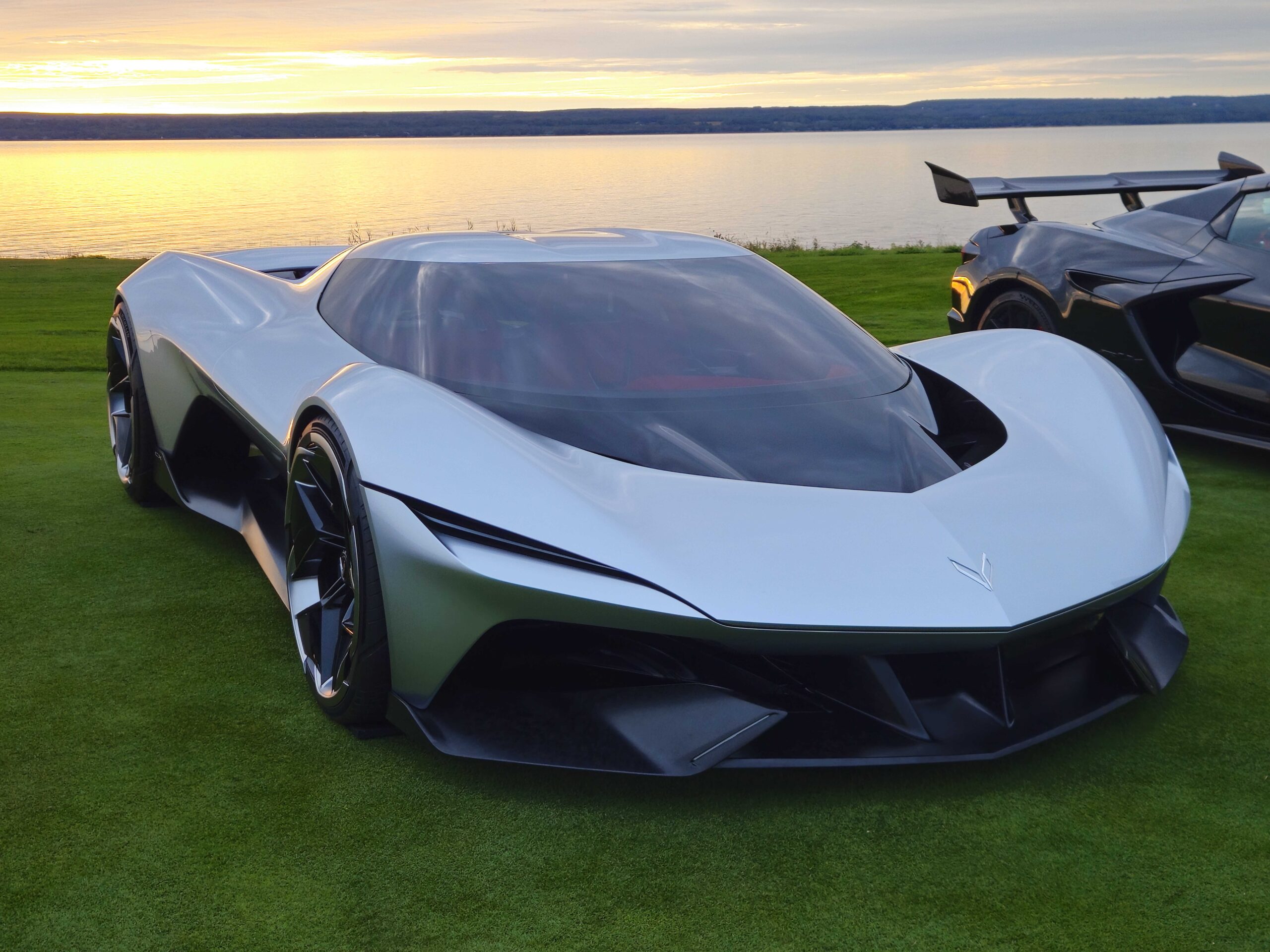
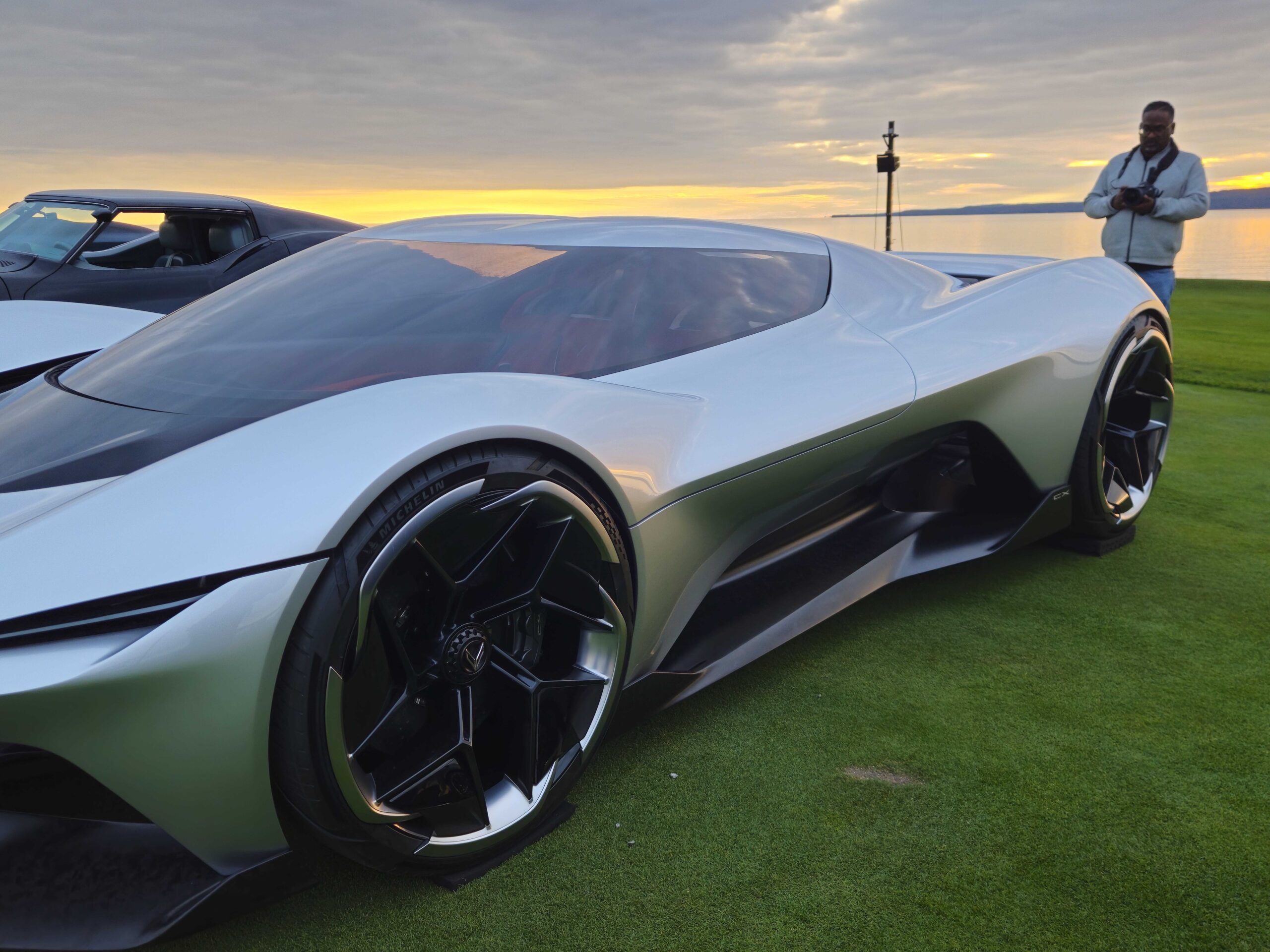
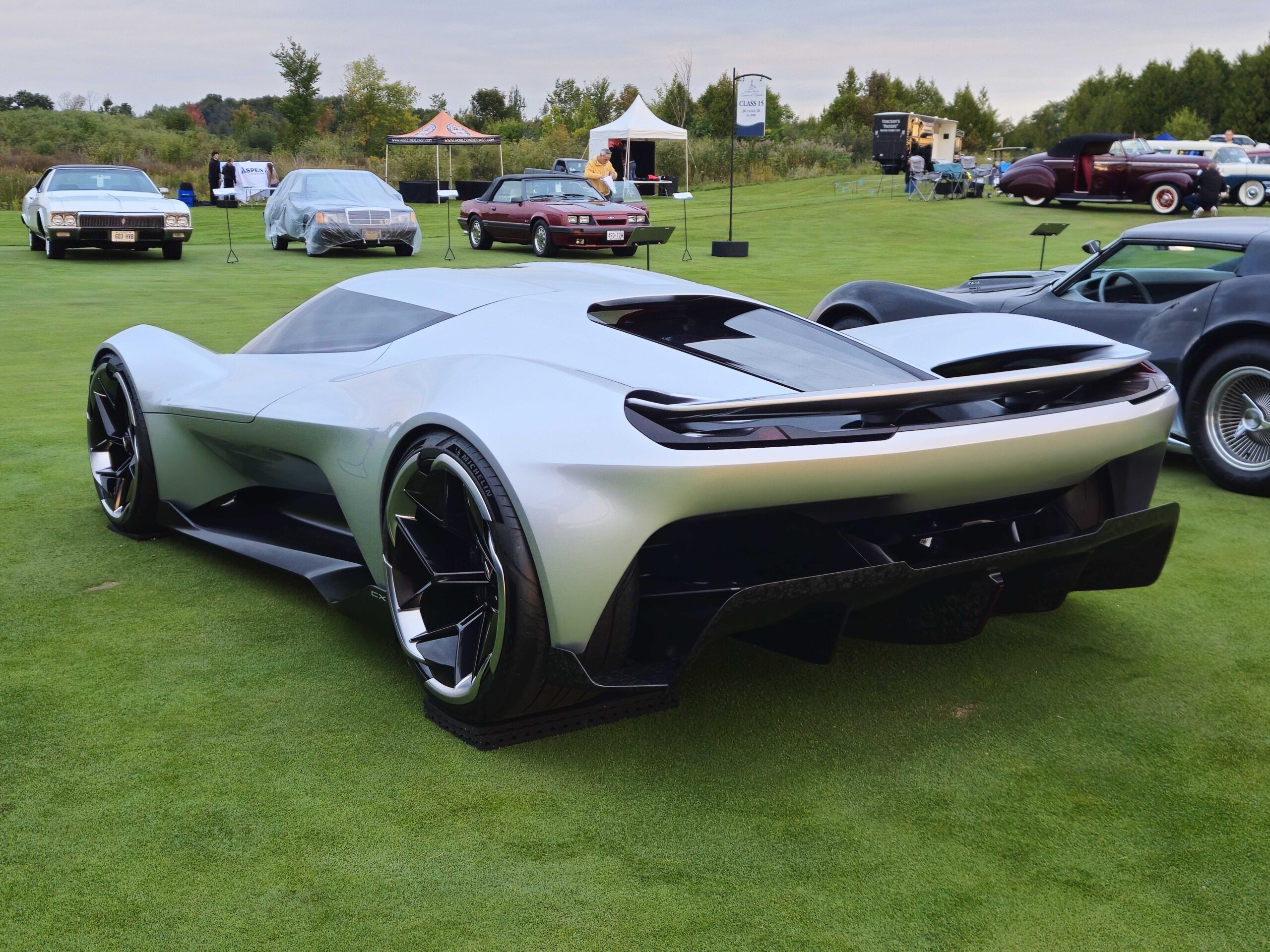
The front diffuser and rear wing are both active, adjusting automatically in response to the driver’s inputs to generate maximum grip. The integrated understructure of the CX concept is visible through the aero channels in the bodywork, and the suspension A-arms are wing-shaped to enhance airflow and reduce front-end lift. The CX concept’s propulsion system was chosen to provide maximum design freedom, plus ultimate straight-line performance to complement the corner-carving enabled by fan-driven downforce and active aero.
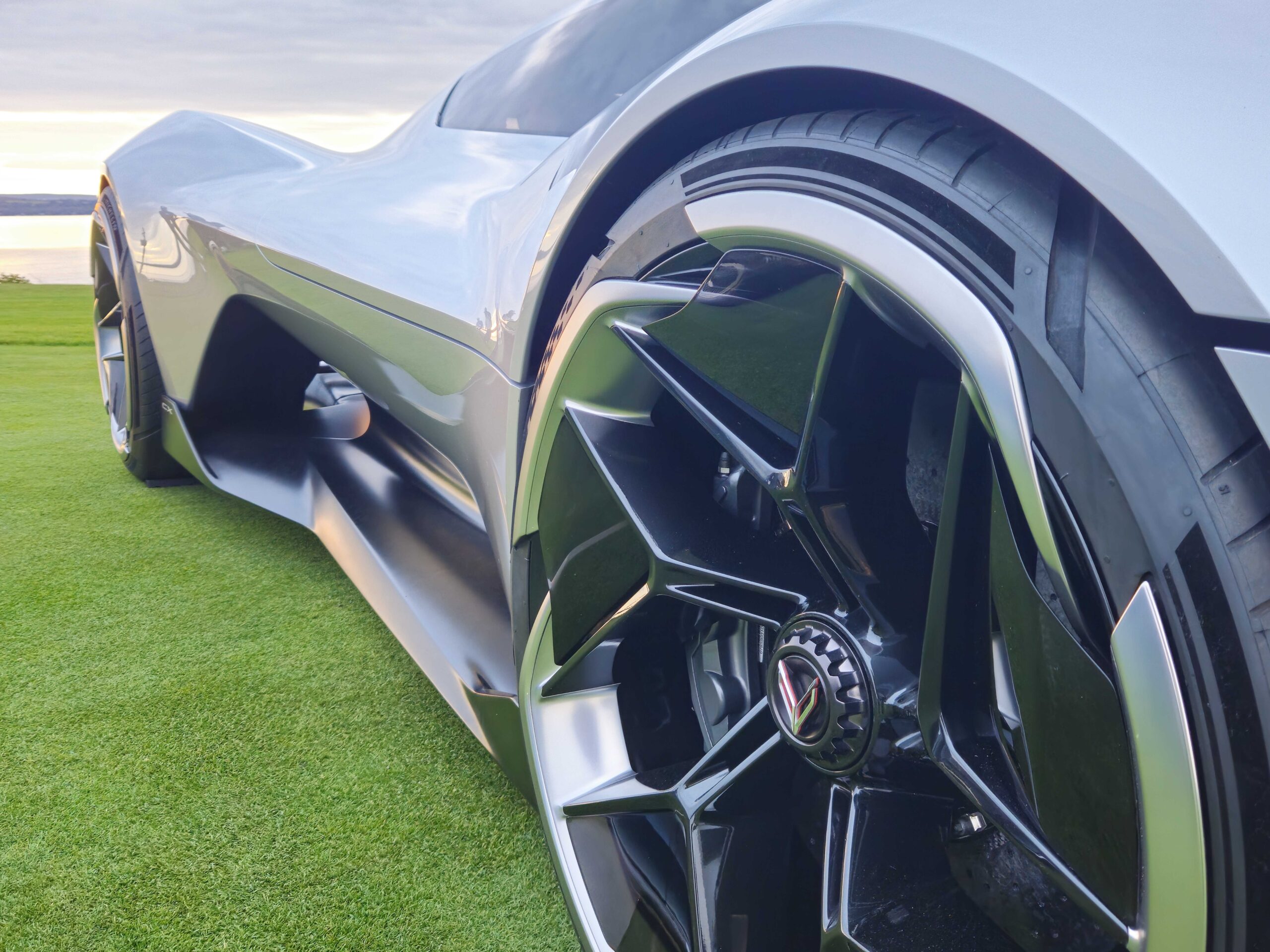
Four motors, one powering each wheel, generate more than 2,000 horsepower, with four-wheel torque-vectoring for maximum grip and cornering performance. The 90-kWh lithium-ion battery is mounted in the chassis for a low center of gravity and ideal front-rear weight distribution.
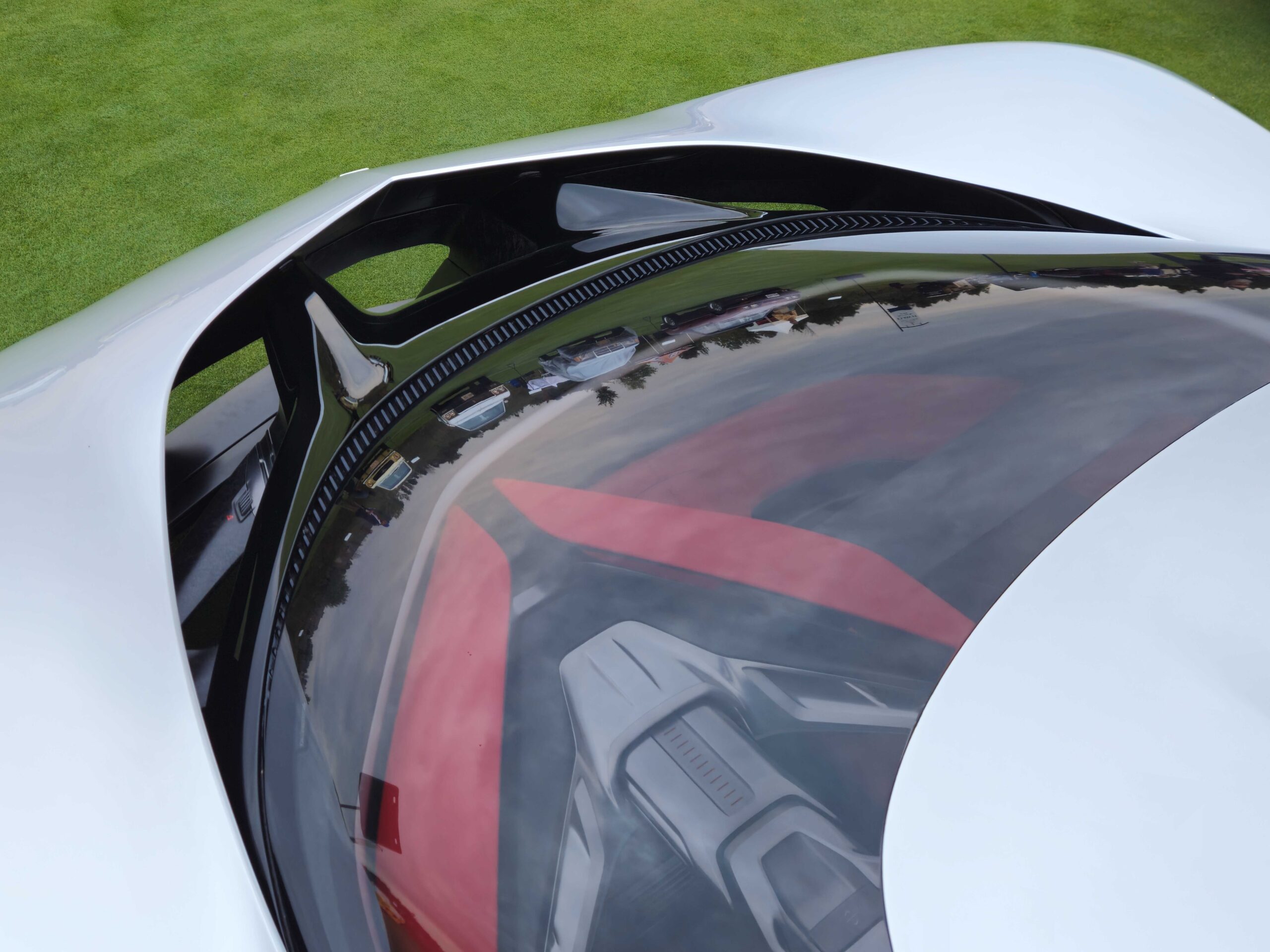
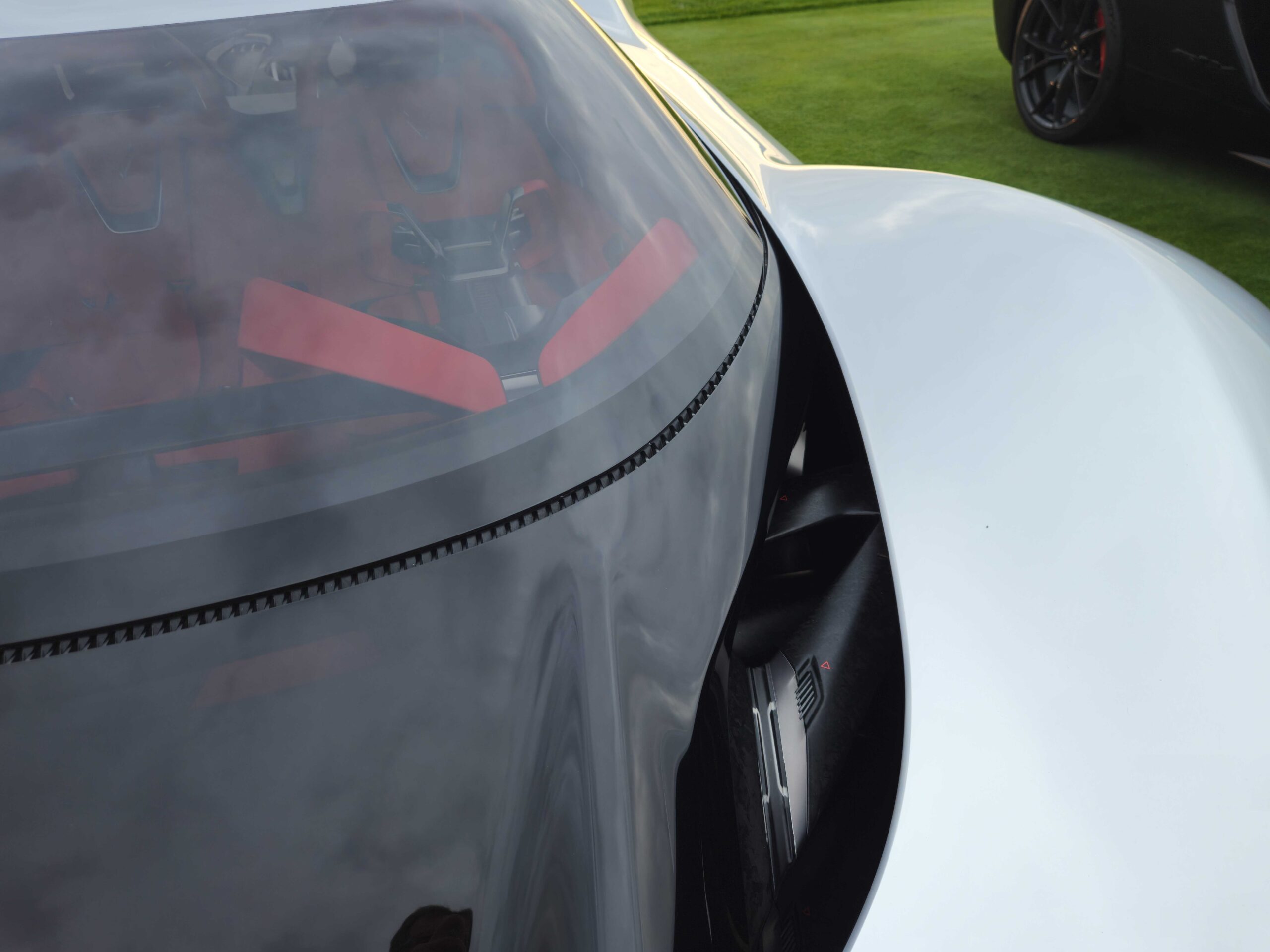
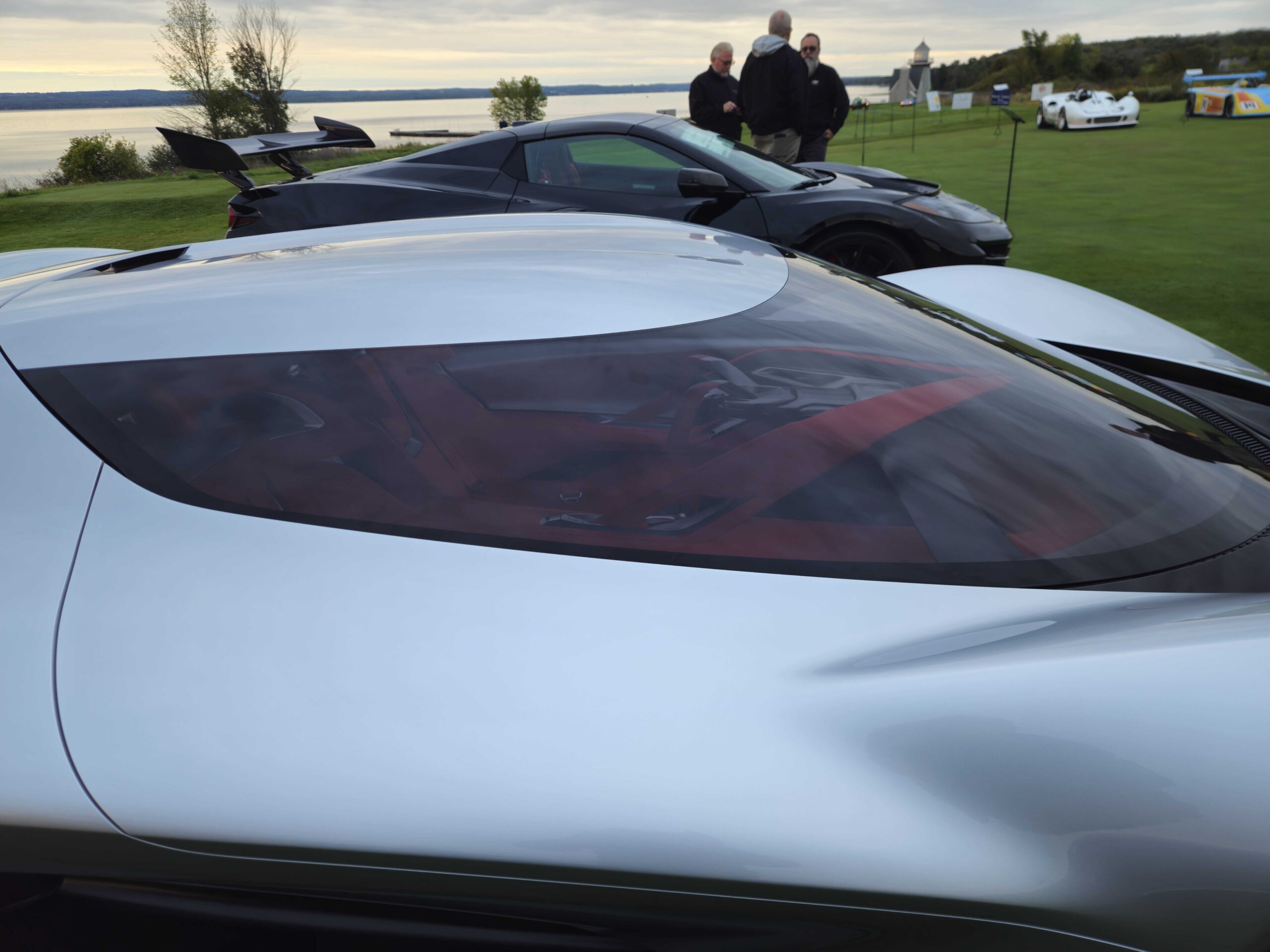
The svelte exterior design, highlighted by the fighter-jet-inspired cockpit canopy was shaped in collaboration with the GM Motorsports Aero Group. Every angle was designed with ultimate performance in mind. The innovations continue underneath the skin with the Vacuum Fan System that draws air through the open-channel bodywork.
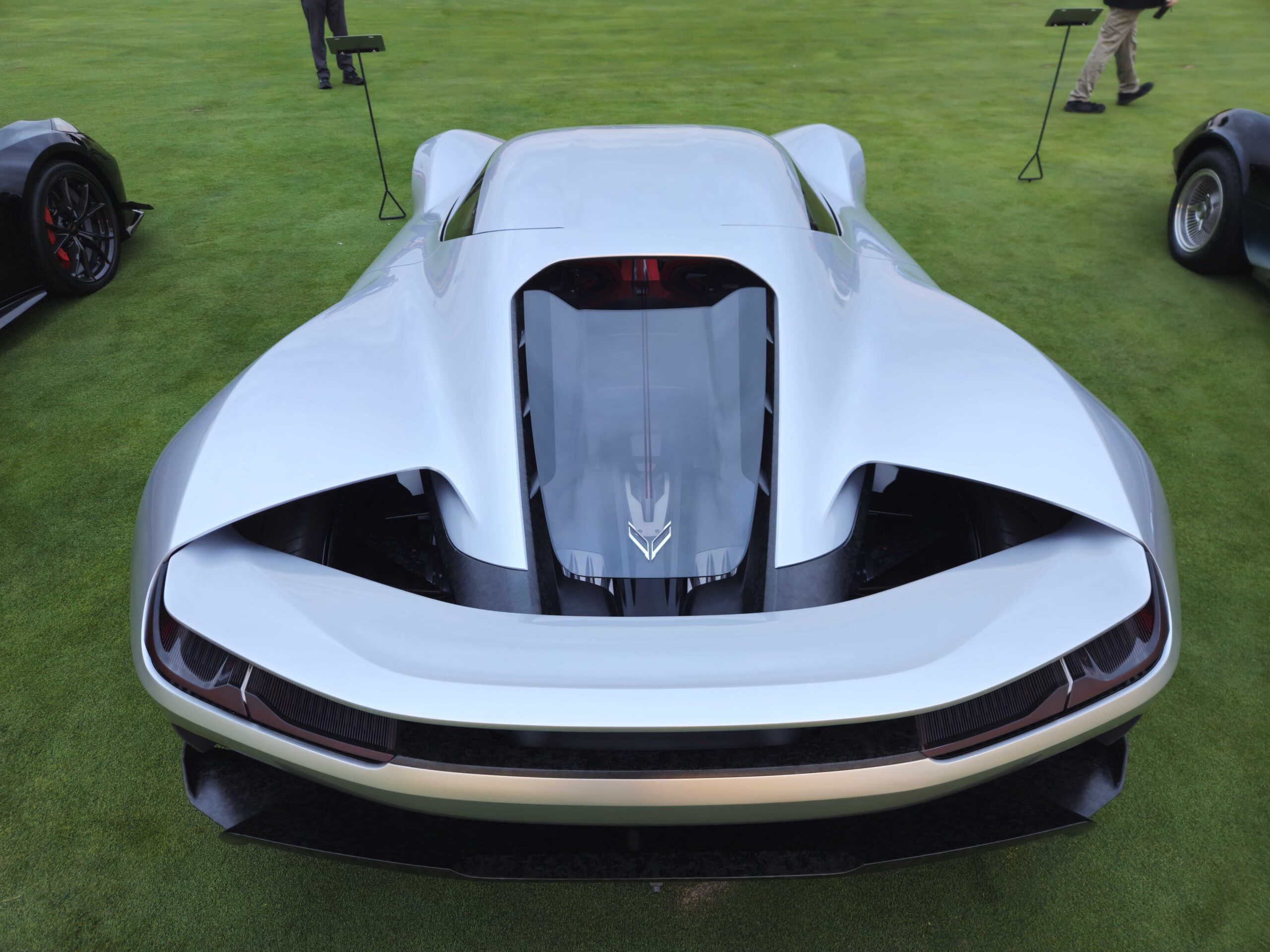
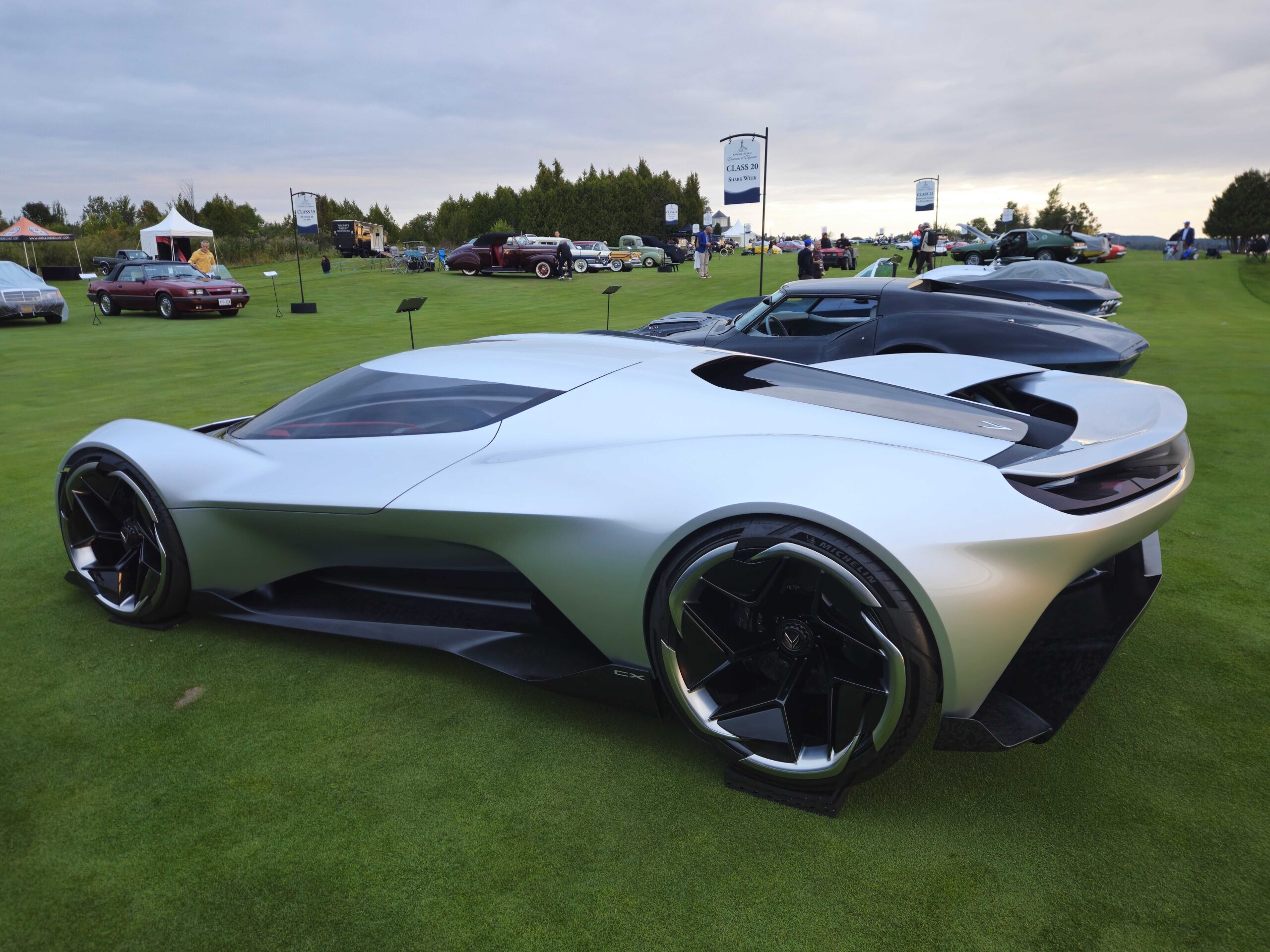
Aggressively futuristic, yet unquestionably a Corvette, the CX concept looks like it is ready to take on Koenigsegg’s latest EV super car — and win!
The forward-opening fighter-jet-style canopy automatically raises as you approach. Driver and passenger settle into seating finished in Inferno Red ballistic textile, bolstered to help hold occupants in place during high-g cornering maneuvers. Premium silicone leather, milled aluminum, and low-gloss forged carbon-fiber accents give an elevated feel while the digital windscreen transforms the windshield into an immersive surround display with real-time performance data.
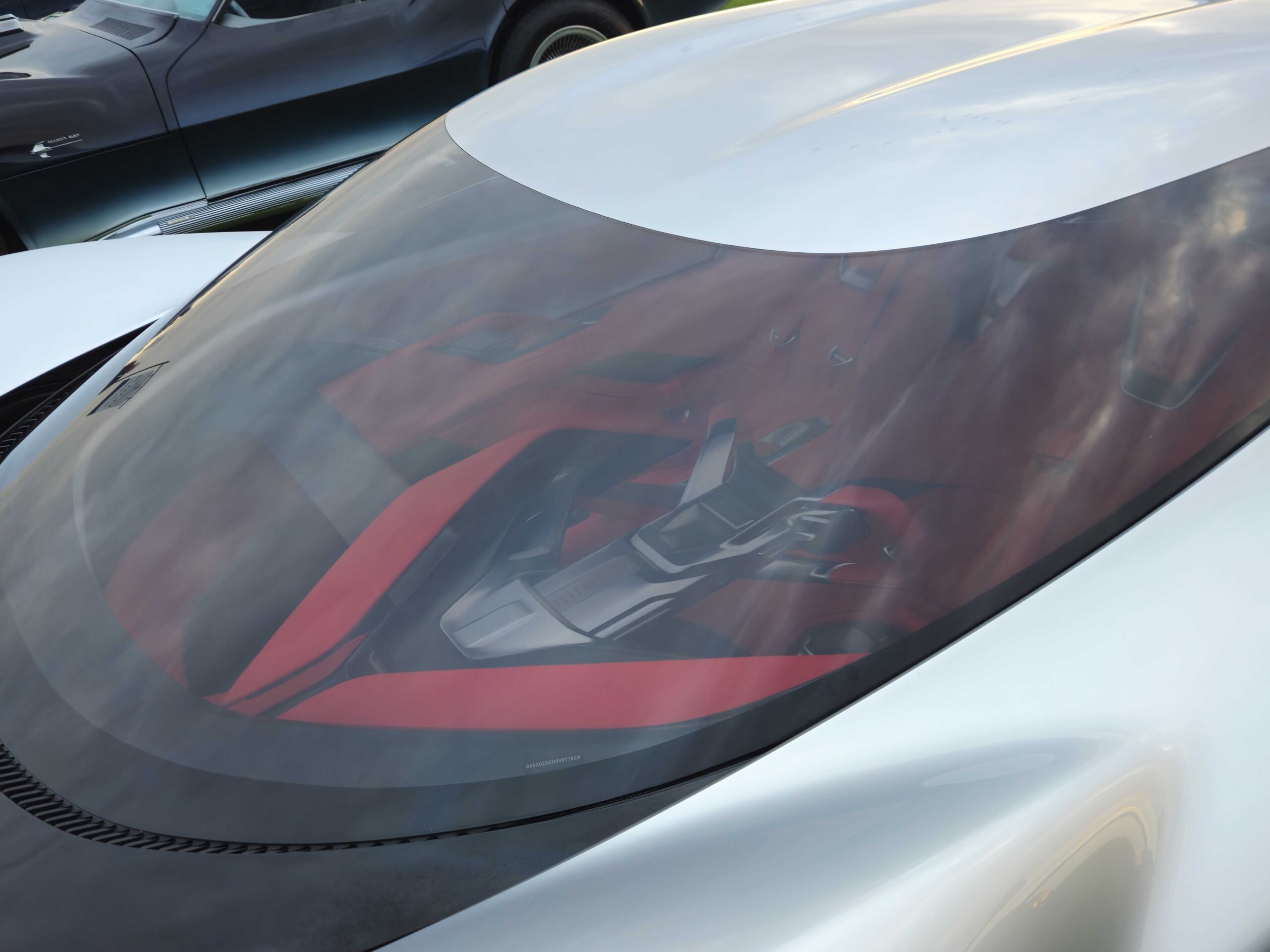
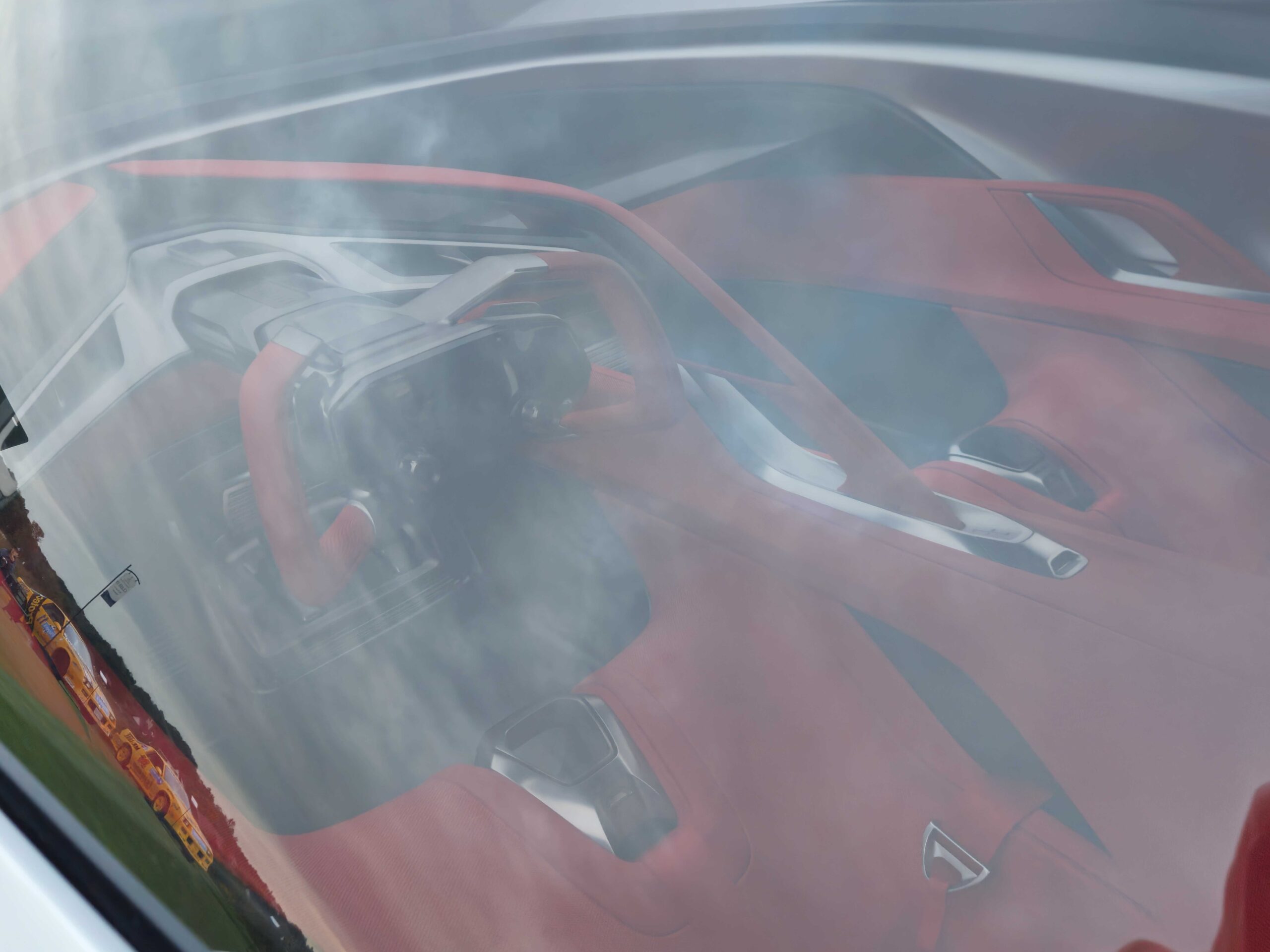
Every major control is integrated into the steering wheel, keeping the driver’s focus on the road ahead, something Citroën showed in many of its concept cars.
Other category winners this year were:
Class 1 Orphan of the Brass Era pre-1916
1. 1906 Russell, Model B, Hugo Vermeulen
2. 1903 Columbus, Electric, Peter Fawcett
3. 1903 Malice et Blin, Ŕear entrance tonneau, Michael Hoegl
Class 2 Brass Era Horseless Carriage pre-1915
1. 1911 Ford, Model T Touring, Jamie Holmes
2. 1911 Pierce-Arrow, 36-UU, Peter Fawcett
3. 1913 White, GAF 30 5-Passenger Touring, Jeff Campbell
Class 3 Domestic Production 1915-1942
1. 1915 Russell-Knight, 32-15 5-Passenger Touring, Canadian Automotive Museum
2. 1936 Packard, 120-B Convertible Coupe, Stephen Burke
3. 1928 Buick, Master Sport Roadster, Peter Steffens
Class 4 European Full Classic 1916-1948
1. 1932 Rohr, 8 Type F Streamliner, Mary and Ted Stahl
2. 1930 Rolls-Royce, Phantom 1 Transformable Phaeton by Hibbard & Darrin, William and Margaret Dickson
3. 1938 Delahaye, 135 MS Teardrop coupe, Doug Cadman
Class 5 American Full Classic 1916-1948
1. 1931 Chrysler, CG Imperial Gallery 260 Limited
2. 1931 Chrysler, Imperial Close Coupled Sedan 5P, Phillip, Mazor
3. 1933 Packard, 1001 Eight Convertible, Roger Melton
Class 6 Mercedes-Benz Icons: Celebrating 140 Years of Innovation
1. 1937 Mercedes-Benz, 540K Sport Cabriolet by Erdmann & Rossi, Lee Anderson
2. 2005 Mercedes Benz, SLR McLaren, Faisal Susiwala
3. 2011 Mercedes, SLS AMG, Joseph Melo
Class 7 European Sports Cars – 1946-1980
1. 1949 Alfa Romeo, 6C 2500 SS Superlegger, Frederick Fischer
2. 1959 Porsche, Convertible Drauz Ed, Werner
3. 1961 Maserati, 3500 GT Vignale Spyder, Dave and Lori Wathen
Class 8A Pininfarina – The Pursuit of Design Perfection
1. A 1960 Cadillac, Eldorado Brougham, Steve Plunkett
2. 1993 Cadillac, Allante, Steve Plunkett
Class 9 American Cars of the Jet Age – 1950-1969
1. 1958 Pontiac, Bonneville, Vernon Smith
2. 1960 Buick, Electra 225 Convetible, Michael Hurley
3. 1957 Ford, Fairlane 500 Convertible, Tony Rizzuto
Class 10 American Post-War Performance pre-1973
1. 1966 Shelby, GT350H, Peter Wojtowicz
2. 1967 Shelby, GT350, Joe Bantelman and 1970 Dodge, Challenger T/A, TJ Rinomato
Class 11 Traditional Hot Rods pre-1951
1. 1940 Ford , 1/2 Ton Pickup, Greg Downey
2. 1933 Ford, Coupe 5 Window, Kevin Ivory
3. 1913 Studebaker, ’24 POS, George Ross
Class 12 Traditional Customs pre-1970
1. 1958 Chevrolet, Impala Coupe, Christopher Nemeth
2. 1957 Meteor, Niagara 300 Ranch Wagon, Matthew Labutte
3. 1940 Chevrolet, Deluxe Convertible Coupe, Al Webster
Class 13 Japanese Sports Cars pre-1980
1. 1973 Datsun, 240Z, Laverne Burkhart
2. 1975 Datsun, 280Z, Jason Riley
Class 14 Japanese Sports Cars 1980-2000
1. 1997 Acura, Integra Type R, Dylan Sharpe
2. 1984 Honda, CRX, Justin Sookraj
3. 2001 Honda, S2000, Barrett Flemons
Class 15 30 under 30
1. 1966 Ford, Mustang Hardtop Coupe, Spencer Chow
2. 1987 Mercedes-Benz, 190D 2.5 Turbo, Forrest Bennett
3. 1985 Ford, Mustang GT, Christian Brocca
Class 16 Sting Ray Style: C2 Corvette (1963-1967)
1. 1965 Chevrolet, Corvette Sting Ray Roadster, Peter Steffens
2. 1967 Chevrolet, Corvette Sting Ray 427 Coupe, Sandro Brocca
3. 1967 Chevrolet, Corvette Sting Ray 427 Coupe, Tim Schell
Class 17 Exotic Sports and Supercars pre-2008
1. 1994 Lamborghini, Diablo Special Edition 30, William Halkiw
2. 1993 Porsche, RUF RCT, Jeff Watson
3. 2005 TVR, Sagaris, Mike Bozinoski
Class 18 Exotic Sports and Supercars 2008-present
1. 2018 Ford, GT, Alan Boughton
2. 2025 Ford, Mustang GTD, Lorne Heise
3. 2023 Aston Martin, V12 Vantage, Joe Maira
Fashion Award – Spectator
• Felicia Becksma (Mother & Daughter)
Fashion Award – Participant
• Lara Overmeyer – 1957 Monarch Lucerne
Recognition of Hagerty Youth Judging Winner (JR)
• 1959 Chevrolet Corvette Stingray Racer, GM Heritage Collection
Recognition of Hagerty Youth Judging Winner (SR)
• 2023 Mercedes-AMG One, Multimatic Inc.
Chairman’s Award
• 1964 Shelby Cobra Daytona Coupe, Donald Wells
Chief Judge’s Choice
• 1966 Shelby GT350, Polito Ford Lincoln
National Association of Automobile Clubs of Canada Rolling Sculpture Award
• 1938 Delahaye 135 MS Teardrop coupe, Doug Cadman
National Association of Automobile Clubs of Canada Historical Significance
• 1930 Rolls-Royce Phantom 1 Transformable Phaeton by Hibbard & Darrin, William and Margaret Dickson
AACA- Spirit of the Hobby Award
• 1911 Pierce-Arrow 36-UU, Peter Fawcett
Concours Debut Award
• 1970 AMC AMX, Kristopher Lewko
Margaret Dunning Spirit of Driving Award
• 1961 Maserati 3500 GT Vignale Spyder, Dave and Lori Wathen
The Harbour Group of RBC Dominion Securities Spirit of Excellence Award
• 1987 Ferrari Testarossa, Dennis Sheehan
Hagerty Never Stop Driving Award
• 1987 Chevrolet Camaro Z28 1LE R7U, Mike McGraw
Bruce Grey Simcoe Award
• 1922 Rolls-Royce Silver Ghost, Bob Thompson
Most Elegant Pre-war
• 1939 BMW 327/28, Bob Becker
Most Elegant Post-war
• 1949 Alfa Romeo 6C 2500 SS Superleggera, Frederick Fischer
McLaughlin Legacy Award
• 1970 Buick Riviera GS, Roger Thompson
Tom Thomson Art Gallery Timeless Design
• 1963 Chevrolet Corvette Sting Ray Coupe, Mike McGraw
Ingenuity Award
• 1898 Beeston Quadricycle, Michael Hoegl
Poetry in Motion
• 1962 Dailu Mk II, Denis Bigioni
Curator’s Award
• 1970 De Tomaso Mangusta, Chuck Loper
People’s Choice
• 1932 Rohr 8 Type F Streamliner, Mary and Ted Stahl
Outstanding Sport Car
• 1961 Chevrolet Corvette Mako Shark I, GM Heritage Collection
Net proceeds from the Cobble Beach Concours support Sunnybrook and the Brightshores Health System Owen Sound Foundations. Since its inception in 2013, Cobble Beach Concours d’Elegance has raised over $1,460,000 for its charities.
Cobble Beach Concours is a fantastic venue and if you would like attend next year, mark you calendar for September 17 – 19, 2027.