Between 2008 and 2015, Volkswagen was found to be cheating in emissions testing procedures with “defeat devices”, causing a scandal that is still impacting the perception of diesel 10 years on.
After the VW Dieselgate debacle in North America, passenger cars with diesel engines have largely fallen out of favour. In Europe, as of September 2025, a significant trial is happening involving several manufacturers, including Mercedes-Benz, Nissan, Renault, Peugeot/Citroën, and Ford. It will examine whether these companies used prohibited defeat devices in their diesel vehicles, which would have allowed them to pass emissions tests while emitting pollutants at levels far exceeding legal limits. With the push on for EVs, diesel cars that were once a very popular choice are being legislated off the roads by means that have some questioning motivation.
Case in point: Citroënvie member Geoff FitzGibbon has friends Roy and Anna in the UK, who just opted for a diesel powered Citroën. Roy made the following observation:
As a matter of interest, although I am ’neutral’ on the climate change debate, I have just bought a new 2024 model C5 Aircross 1.5 Diesel. I have been dithering about buying a new car for at least the last three years.
2024 C5 Aircross
We already have a Ford Kuga 2.0 Diesel AWD that is a great car, although now seven years old. I tried the new Kuga as a 2.5 petrol Hybrid, (same as the Escape Hybrid in Canada and the USA) but they have changed the design of the rear suspension, and in my view, as well as Annie’s, they have spoiled the ride. In any case, the spec I wanted on the Kuga to include AWD was about £45,000.
I considered a variety of cars from the new C3 Aircross Electric for about £25,000 to the Volvo XC60 or Mercedes GLC for about £65,000. The new C3 is a great little car, and if we had gone for this, it would have been the petrol hybrid auto, which is not yet available to drive.
While we were in the Citroën dealership compound looking at colours on the C3 Aircross, we came across what is now last year’s model C5 Aircross. I told the young sales chap to stick the trade plates on it so we could take it for a ‘punt round the block’ as an old colleague of ours was fond of saying. Being a Citroën, the ride was first class, the suspension ironed out the bumps, the build quality felt good, but what impressed me the most was the little diesel engine.
When I started selling diesels seriously around 1975, and we won awards, including a new Peugeot 104ZS coupe as Peugeot’s selling champions for three years running, they were a bit of a joke. I remember being at a Peugeot dealer meeting where we received one of the awards when David Salmon, the dealer from Chelmsford, stood up and said, “Well, I have to give it to the boy for selling that many, because I could not give the fucking things away!” They were noisy, harsh, dirty, top speed of about 65mph, needing pre-heating to start. We called them “Irish bank robbers’ cars”!
The latest diesels are tremendously efficient, with performance to equal the petrol alternatives, with superb low-speed torque and with very low emissions. MOT testers tell me that often when they test them for emissions, they detect nothing, and one guy said he resorts to lighting a cigarette and wafting across the detector to get it started to make sure it is working. It seems a crying shame to me that technology of this quality is being abandoned, in my opinion, for very dubious reasons.
The real winners in this scenario are, without doubt, the Chinese auto industry. They are well in control of the electric car and battery building market. The European and North American auto manufacturers are under pressure.
Why we don’t have diesel hybrids here? It would seem logical but logic rules over political posturing only rarely.
The Government of Canada says it does not want to force Canadians to buy electric vehicles but it wants “to build the cars of tomorrow.” It has provided support to electric vehicle (EV manufacturers estimated at around $31.5 billion by the Parliamentary Budget Office while the provinces have contributed a further $21.5 billion. All this while the federal government imposed a 100 per cent surtax on Chinese cars to protect the home market.
Then there is the USA where the former Biden administration invested approximately $198 billion in EV production and infrastructure with a now reversal in policy under Donald Trump who’s stance is that “the electric vehicle hoax” is the result of a conspiracy of “radical left fascists, Marxists and communists” and to rule that automakers no longer need to measure or control emissions.
EV sales globally are still rising, but that is largely because the Chinese are determined to flood the world with low cost vehicles.
In Great Britain, new research has found that diesel cars are more unpopular than ever, with the fuel type making up just one in 17 new cars, despite being one in every two just a decade ago.i
Sales forecasts suggest that the number of new diesel cars on the road could continue to fall, with data showing that diesel could have a market share of just two per cent by 2028.
Manufacturers are also taking note of the declining interest in the fuel type, with just 91 new diesel models available on the market, compared to 240 options 10 years ago.
This brings up an interesting opportunity for Citroën diesel ownership here in North America. Canadians have the advantage of being able to bring in vehicles over 15 years of age or older while in the USA the age limit is 25 years or older. Either way, as older diesel Citroëns are becoming harder to sell in Europe, low cost and availability of some well sorted examples make importation an affordable option.
Citroënvie member Ken McGuinness in Toronto, saved the importation process by recently purchasing a 2007 Citroën C6 that had been imported from Japan and offered for sale in Ontario. A a left-hand drive 2.7-liter 6-cylinder diesel with 102,000 kilometers on the odometer. Prior to Japan, it was originally sold in Italy. Everything was working on the car and the only issue was a sagging headliner. Naturally the C6 gets a lot of attention so far is proving to be reliable.
Ken McGuinness’ 2007 Citroën C6
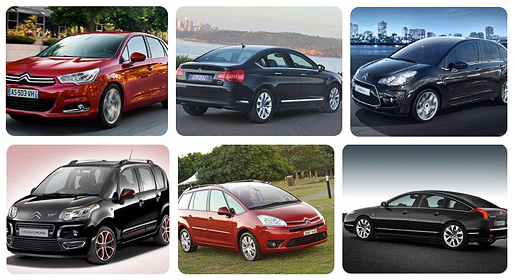
While many may not be quite so adventurous as to own and attempt to maintain a C6, there are full range of used diesel Citroën models available overseas. Now could be the time to enjoy one as a daily driver (if not a future collectable) while the North American car buying public wrestle between the choices of gas, EV or HEV (hybrid electric) vehicles. Perhaps even go to Europe, Japan or elsewhere to source one. Even with the trip expense and importation cost, you could enjoy driving a diesel Citroën for a fraction of the cost of any new car here!
2 comments
Haha, well now, this is a diesel lovers dream! Forget the noisy, smelly Irish bank robbers of yesteryear – these new diesels are practically silent ninjas on wheels! Its a crying shame, truly, that logic and technology seem to be losing out to political posturing and EV mania. While North Americans wrestle with gas, EVs, and hybrids, the rest of us could be enjoying a smooth, efficient, and probably quite affordable diesel Citroën. Bring em over from Europe, maybe Japan while youre at it! Who needs a new car when you can import a perfectly sorted, reliable classic for a fraction of the cost? Now, wheres my passport and import guide? This sounds like an adventure worth taking!
My Citroen C5 X7 Exclusive 2.0 HDI Auto of 2010 (same chassis as the C6; all options, leather, turning / adapting Xenon headlights, open roof, JBL audio, window curtains, large screen) drinks about 6 litre of diesel per 100km, it has very low CO2 emissions and is fitted with a FAP (Particle Filter) using Eolys additive (you do not want to have an “adblue” diesel engine, adblue freeze and crystallises very easily, a source of big trouble). When refuelling, the C5 autonomy range is about 1300km on the motorway, regardless of the weather being cold or warm. And, being fitted with the hydractive III+ suspension, it is supremely comfortable. Not quite as comfy wafty as a classic DS in good running order, but much quieter. The 2.0 litre 4 cylinder HDI engine from PSA is an incredibly reliable workhorse. My previous C5 X7 Exclusive 2.0 HDI Manual 6 ran without any engine issue for 350,000 km, and when I replaced it with the current C5 X7 with a lower mileage and an autobox, it was still running strong. I have known C5 X7 2.0 HDI owners with a car totalling around 600,000 km. Modern grey spheres also last very long, more than 200,000km in my experience.
To provide the best experiences, we use technologies like cookies to store and/or access device information. Consenting to these technologies will allow us to process data such as browsing behaviour or unique IDs on this site. Not consenting or withdrawing consent, may adversely affect certain features and functions.
Functional
Always active
The technical storage or access is strictly necessary for the legitimate purpose of enabling the use of a specific service explicitly requested by the subscriber or user, or for the sole purpose of carrying out the transmission of a communication over an electronic communications network.
Preferences
The technical storage or access is necessary for the legitimate purpose of storing preferences that are not requested by the subscriber or user.
Statistics
The technical storage or access that is used exclusively for statistical purposes.The technical storage or access that is used exclusively for anonymous statistical purposes. Without a subpoena, voluntary compliance on the part of your Internet Service Provider, or additional records from a third party, information stored or retrieved for this purpose alone cannot usually be used to identify you.
Marketing
The technical storage or access is required to create user profiles to send advertising, or to track the user on a website or across several websites for similar marketing purposes.



Haha, well now, this is a diesel lovers dream! Forget the noisy, smelly Irish bank robbers of yesteryear – these new diesels are practically silent ninjas on wheels! Its a crying shame, truly, that logic and technology seem to be losing out to political posturing and EV mania. While North Americans wrestle with gas, EVs, and hybrids, the rest of us could be enjoying a smooth, efficient, and probably quite affordable diesel Citroën. Bring em over from Europe, maybe Japan while youre at it! Who needs a new car when you can import a perfectly sorted, reliable classic for a fraction of the cost? Now, wheres my passport and import guide? This sounds like an adventure worth taking!
My Citroen C5 X7 Exclusive 2.0 HDI Auto of 2010 (same chassis as the C6; all options, leather, turning / adapting Xenon headlights, open roof, JBL audio, window curtains, large screen) drinks about 6 litre of diesel per 100km, it has very low CO2 emissions and is fitted with a FAP (Particle Filter) using Eolys additive (you do not want to have an “adblue” diesel engine, adblue freeze and crystallises very easily, a source of big trouble). When refuelling, the C5 autonomy range is about 1300km on the motorway, regardless of the weather being cold or warm. And, being fitted with the hydractive III+ suspension, it is supremely comfortable. Not quite as comfy wafty as a classic DS in good running order, but much quieter. The 2.0 litre 4 cylinder HDI engine from PSA is an incredibly reliable workhorse. My previous C5 X7 Exclusive 2.0 HDI Manual 6 ran without any engine issue for 350,000 km, and when I replaced it with the current C5 X7 with a lower mileage and an autobox, it was still running strong. I have known C5 X7 2.0 HDI owners with a car totalling around 600,000 km. Modern grey spheres also last very long, more than 200,000km in my experience.