
The First Six-cylinder Car from Citroën: AC6 (1928 – 1932)
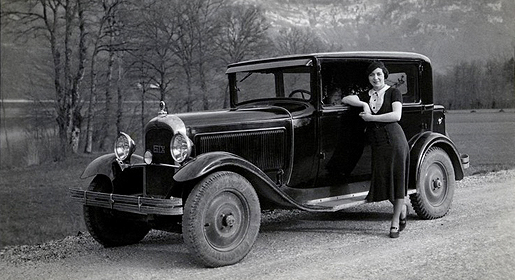
By Thomas Urban….
In 1928, Citroën had not yet celebrated its first decade; the double-chevron brand would mark its tenth anniversary the following year. However, it didn’t take long—only a few years—for Citroën to become a key player in the French automotive industry and a heavyweight in Europe. This resounding success irked several competitors, most notably Louis Renault, who would emerge as Citroën’s main rival.
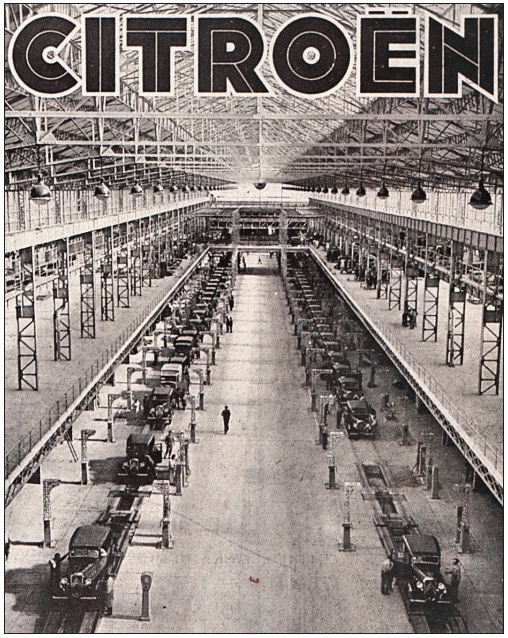
A critical factor in André Citroën’s success was his innovative implementation of assembly line production, a method pioneered after seeing Henry Ford’s factory in the United States. While some French manufacturers, including Renault, had experimented with aspects of assembly line techniques in the years leading up to the First World War, it was Citroën who first applied these methods to every stage of automobile production in Europe.
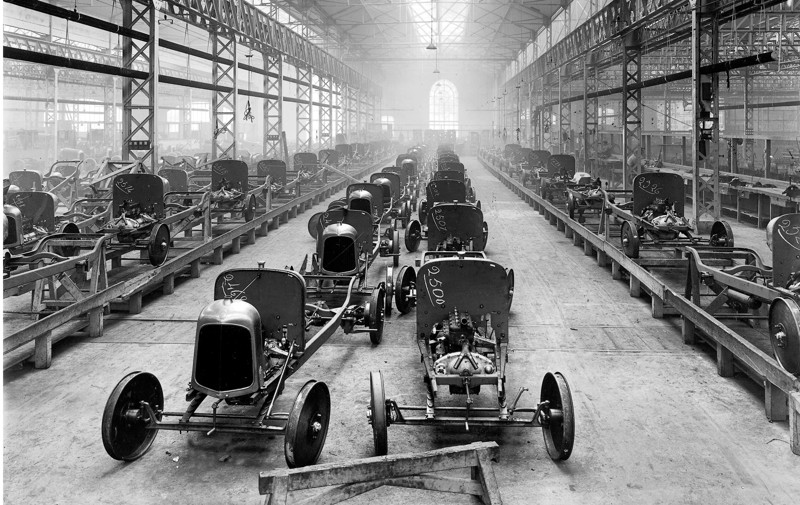
In the aftermath of the Great War, such a gamble might have seemed risky, but it quickly and decisively proved successful. The first model from the double-chevron brand, the Type A, was unveiled at the Paris Motor Show in the autumn of 1919 and notably became the least expensive model in French production at that time.
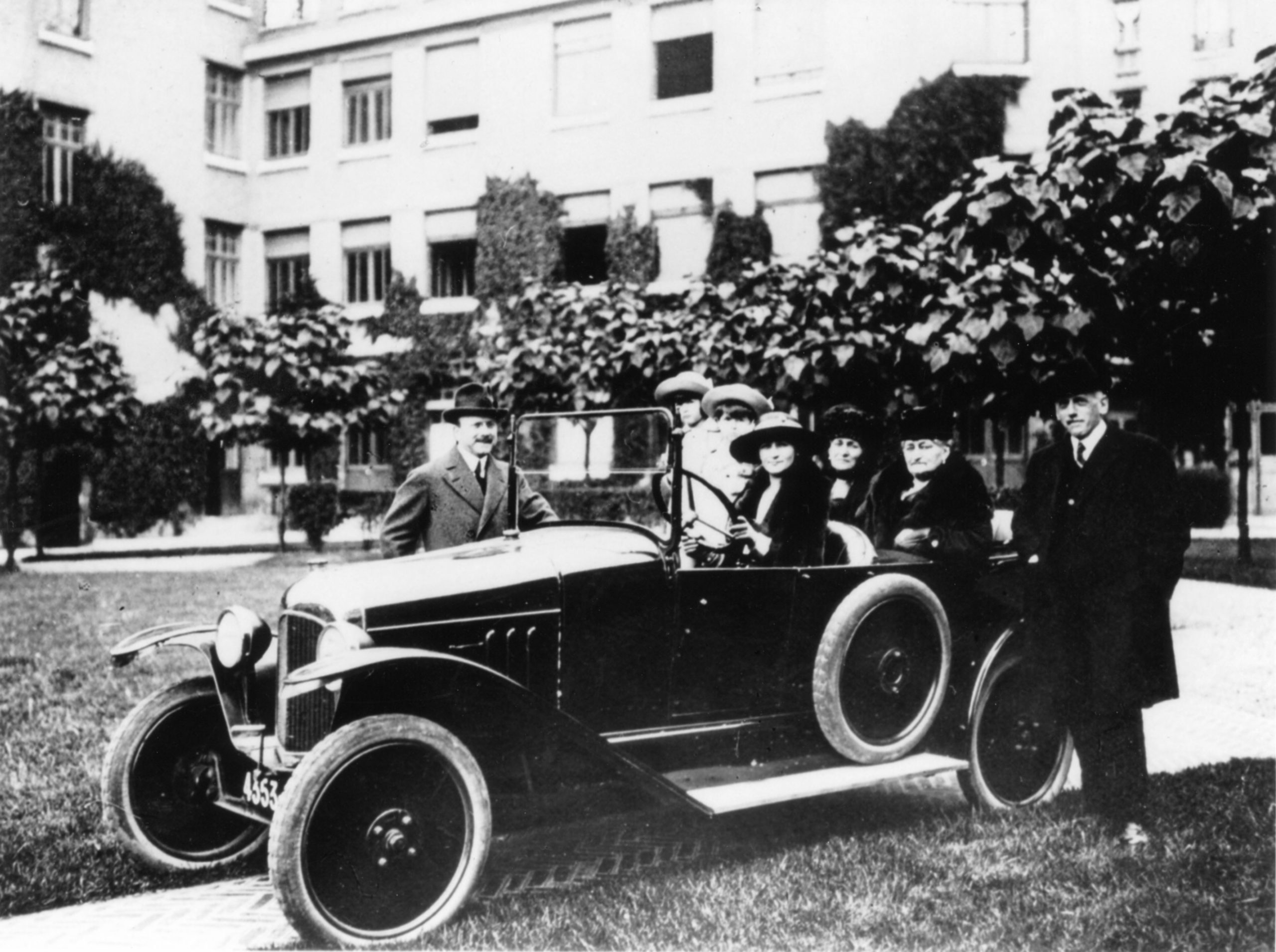
The introduction of this new vehicle, along with Citroën’s innovative production methods, meant that competitors faced significant challenges.
Many manufacturers, particularly those we would now classify as “generalists,” had relied on largely artisanal manufacturing methods until then. They soon found themselves compelled to make a choice: either shift towards mass-producing popular cars—a transition that required substantial investment in new equipment, something many manufacturers could not afford—or continue their traditional methods while focusing on producing luxury vehicles. Those who refused, or who failed to make a choice in time, soon found themselves in serious difficulty with the global economic crisis that erupted in 1929 delivering the final blow.
Returning to André Citroën and the car brand he founded in the aftermath of the First World War, the success of the Type A and its successors soon encouraged him to expand his range upward, encroaching on the territory of manufacturers like Delahaye, Hotchkiss, and even Peugeot and Renault. It’s important to remember that during this decade, nicknamed the “Roaring Twenties,” the Peugeot and Renault brands offered extensive lineups, including impressive six-cylinder models and, in Renault’s case, even eight-cylinder models from the early 1930s onward.
Thus, it is understandable—and quite logical—that André Citroën wanted to move beyond the popular market and “explore new territories.” At the Paris Motor Show, which opened in October 1928, the brand’s lineup was completely revamped with the simultaneous presentation of the C4 and the C6. The latter targeted what could be described as the “middle class,” consisting primarily of lawyers, notaries, doctors, senior civil servants, and other upper-level executives. In other words, the C6 aimed at a clientele who, while not “wealthy,” nonetheless displayed a certain degree of social success.
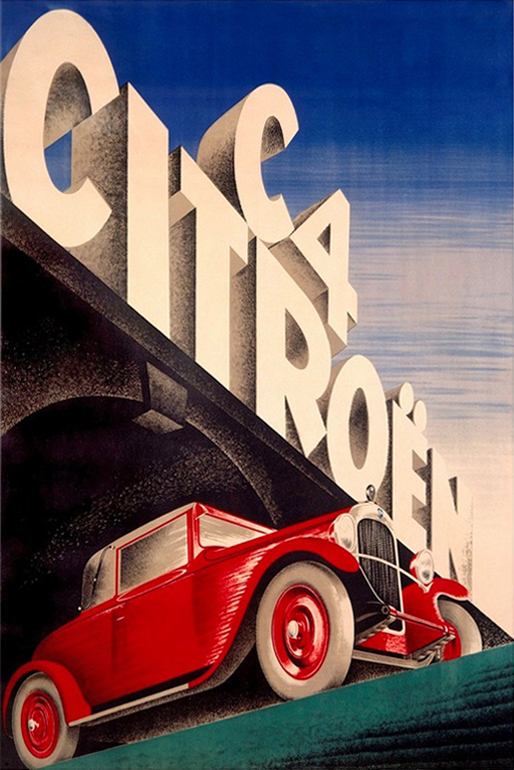
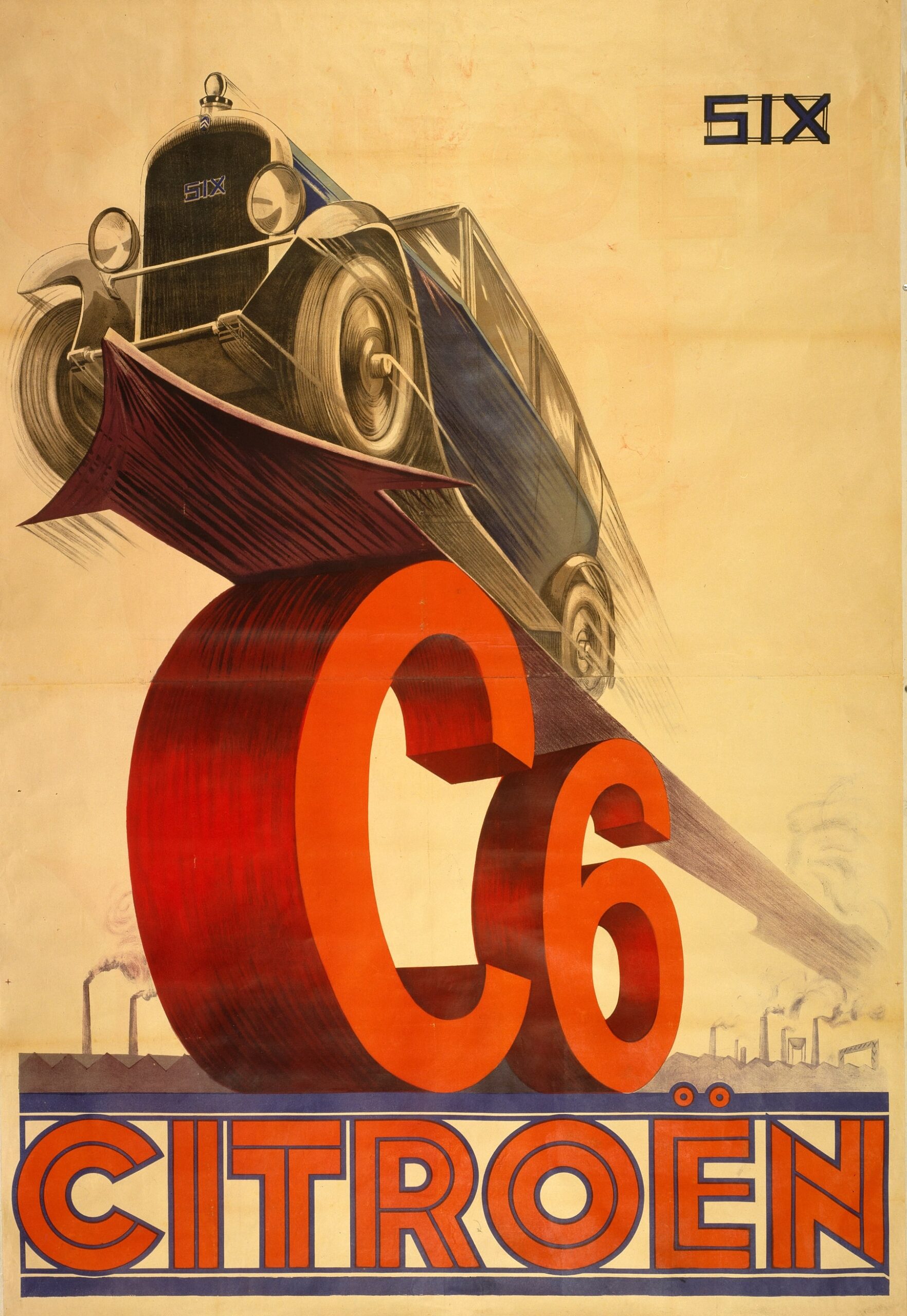
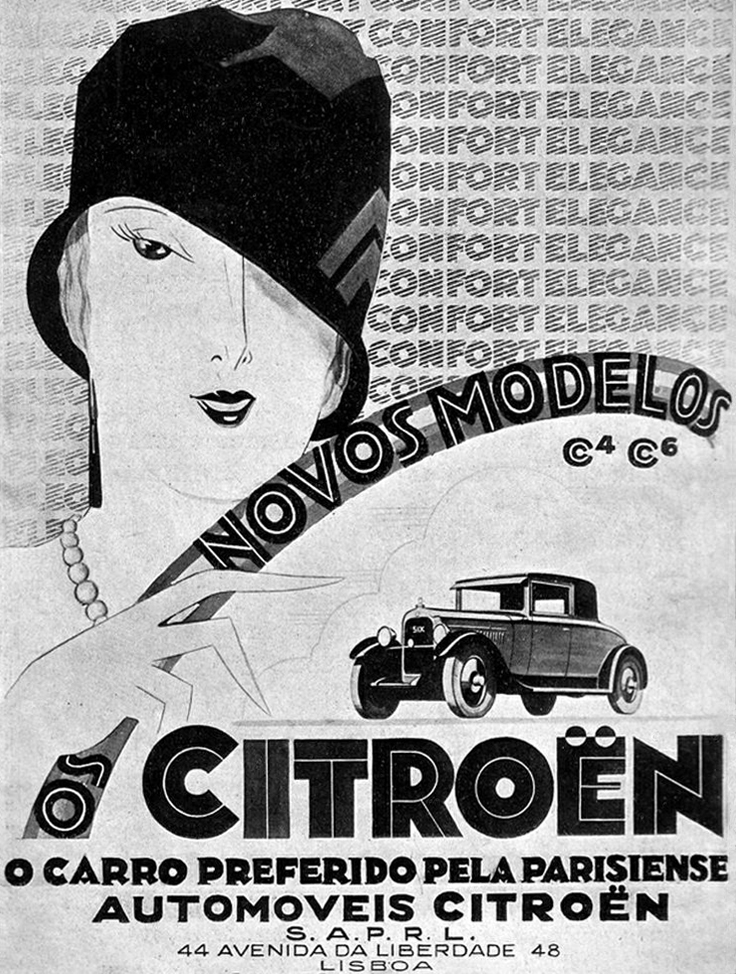
The C6 was intended for this audience, being the first Citroën equipped with a six-cylinder engine, as its name clearly indicates. Although it appeared quite luxurious for a Citroën at the time, it still positioned itself as an “intermediate” model, rated at 14 CV (tax horsepower). For comparison, the highly exclusive Hispano-Suiza H6C boasted an impressive 46 CV. Furthermore, thanks to the mass production methods that had served André Citroën so well, the new C6 range often offered prices significantly lower than those of its competitors.
One of its few flaws—albeit a notable one in a market where appearances matter—was that the new C6 resembled its more popular “cousin,” the C4, too closely. Indeed, only a slightly longer hood and the “Six” badge on the grille differentiated it from the C4 range. This similarity represented a considerable handicap in the segment where Citroën’s new flagship model was positioned. André Citroën himself quickly recognized this issue, prompting his design team to rectify the situation as soon as possible.
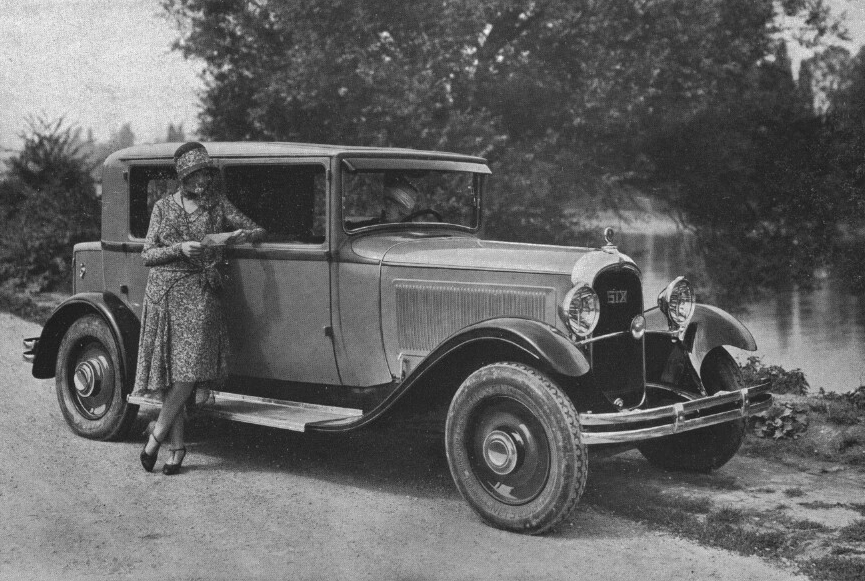
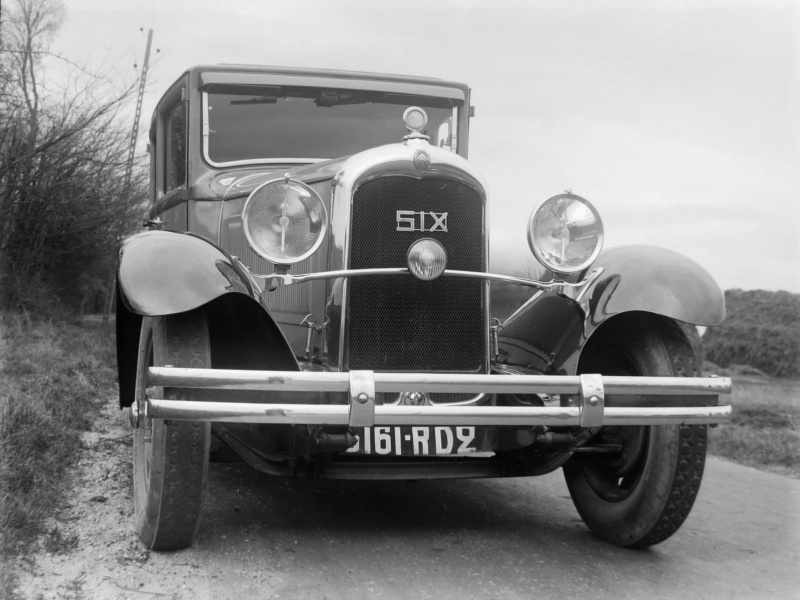
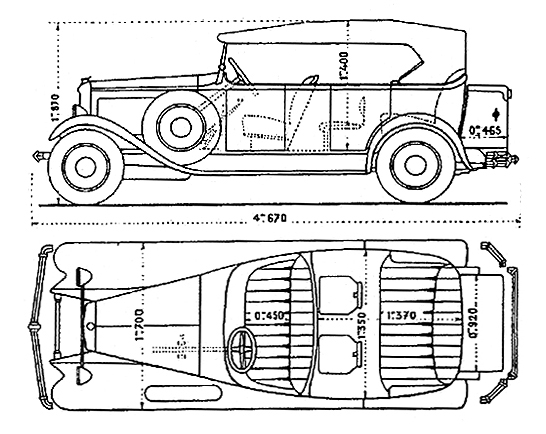
Under the hood, the inline six-cylinder engine’s displacement was increased to 2,650 cc, and its power output rose to 50 horsepower. However, this modest power increase yielded little improvement in performance, with the top speed rising only from 105 to 110 km/h. This was particularly evident in the heavier body styles, such as the six-window sedans.
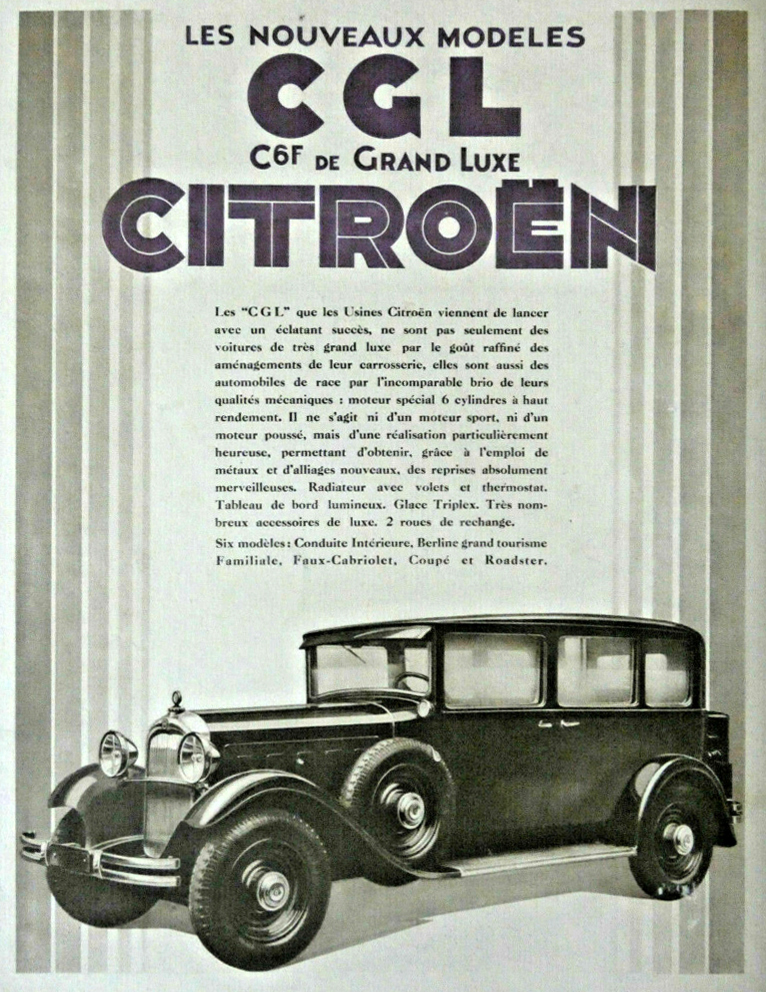
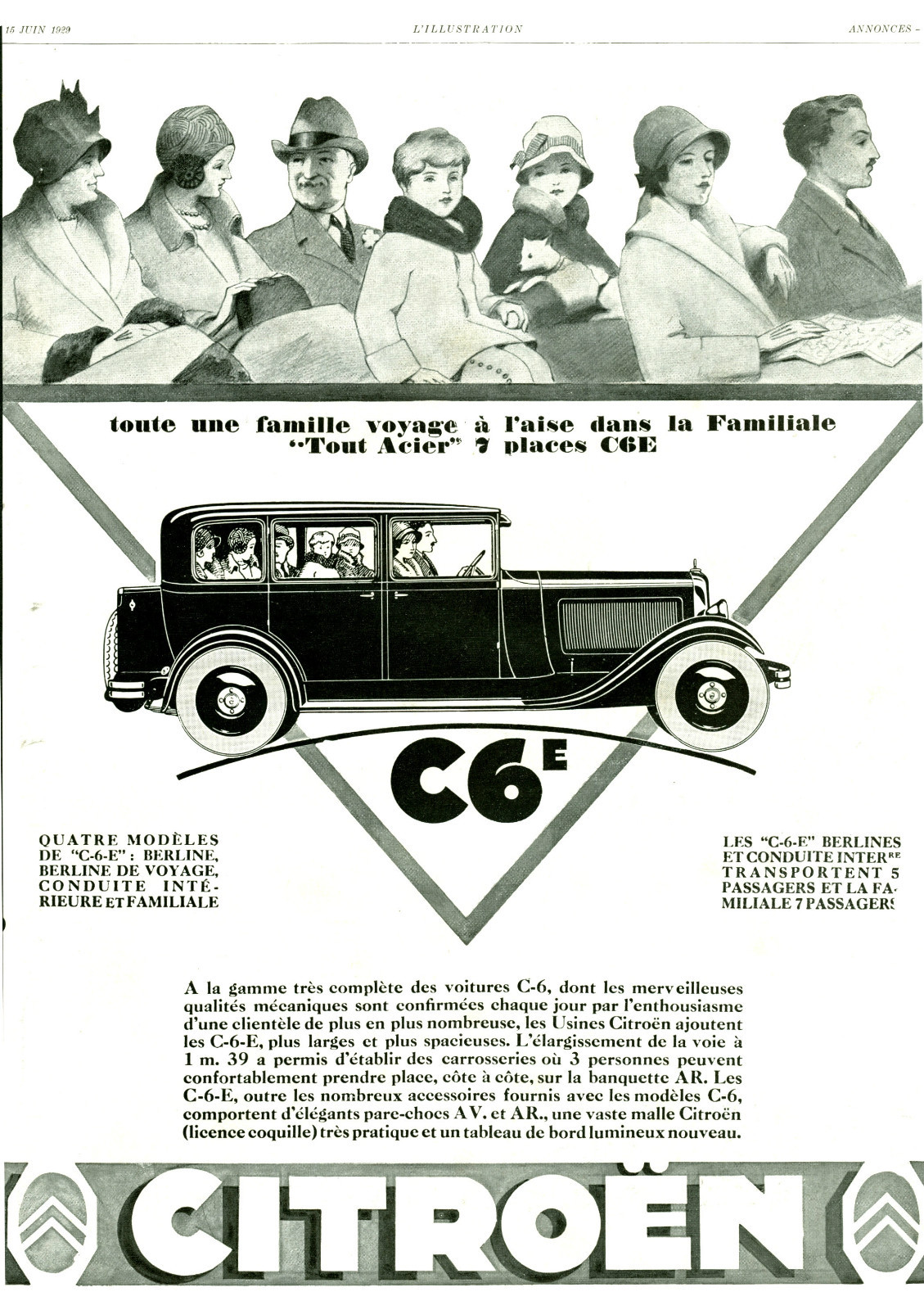
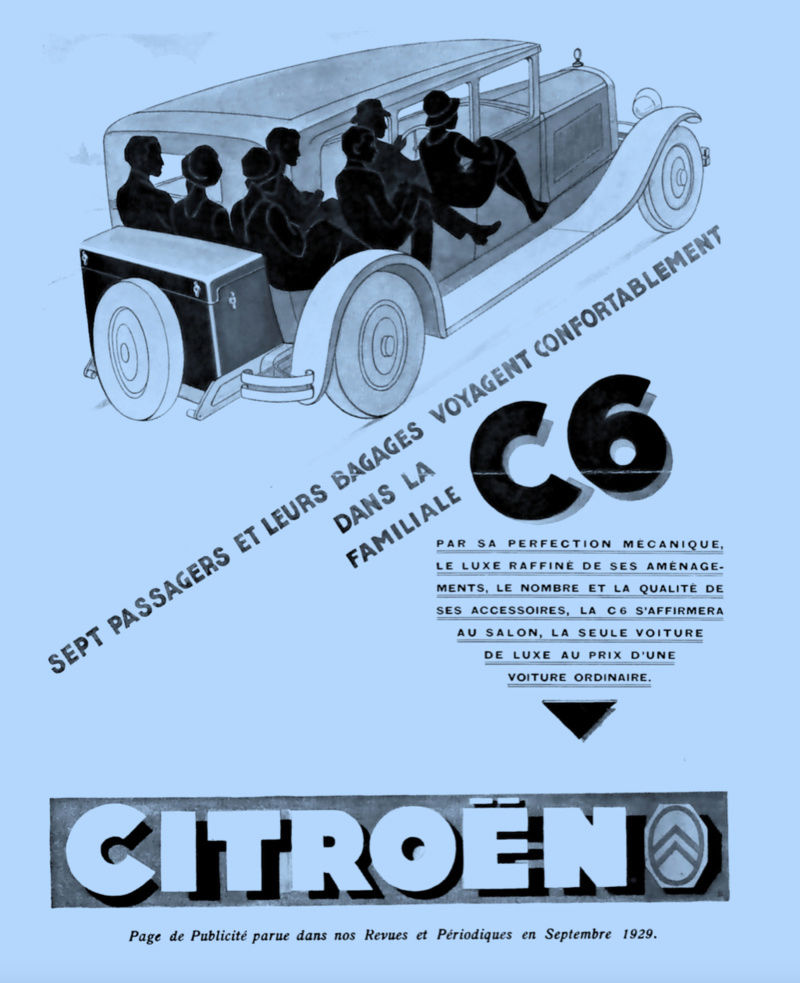
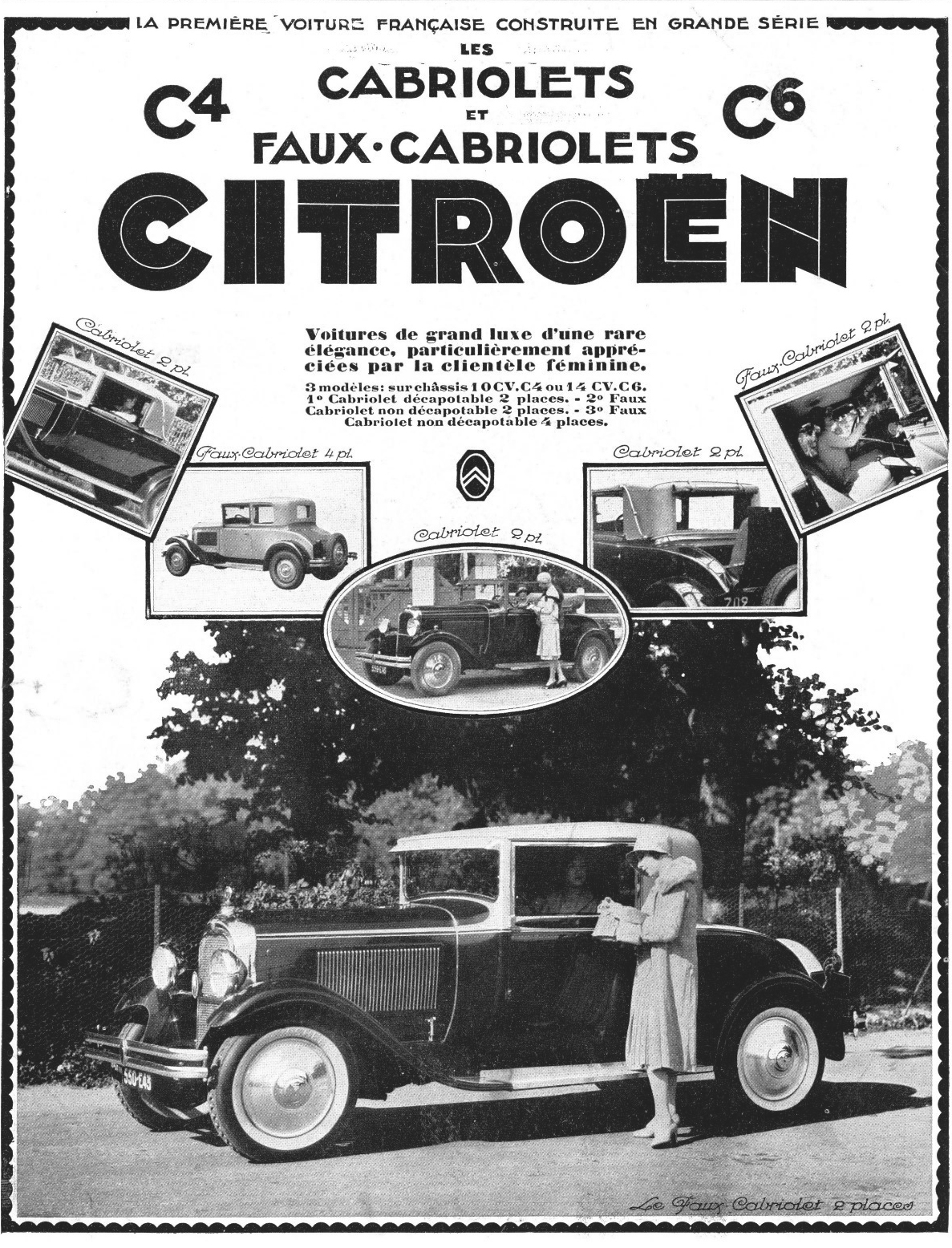
The lighter open body styles, like the roadsters and torpedoes, likely achieved a significantly higher top speed. The brand’s catalog offered customers a wealth of choices, with up to ten or eleven different body styles available.
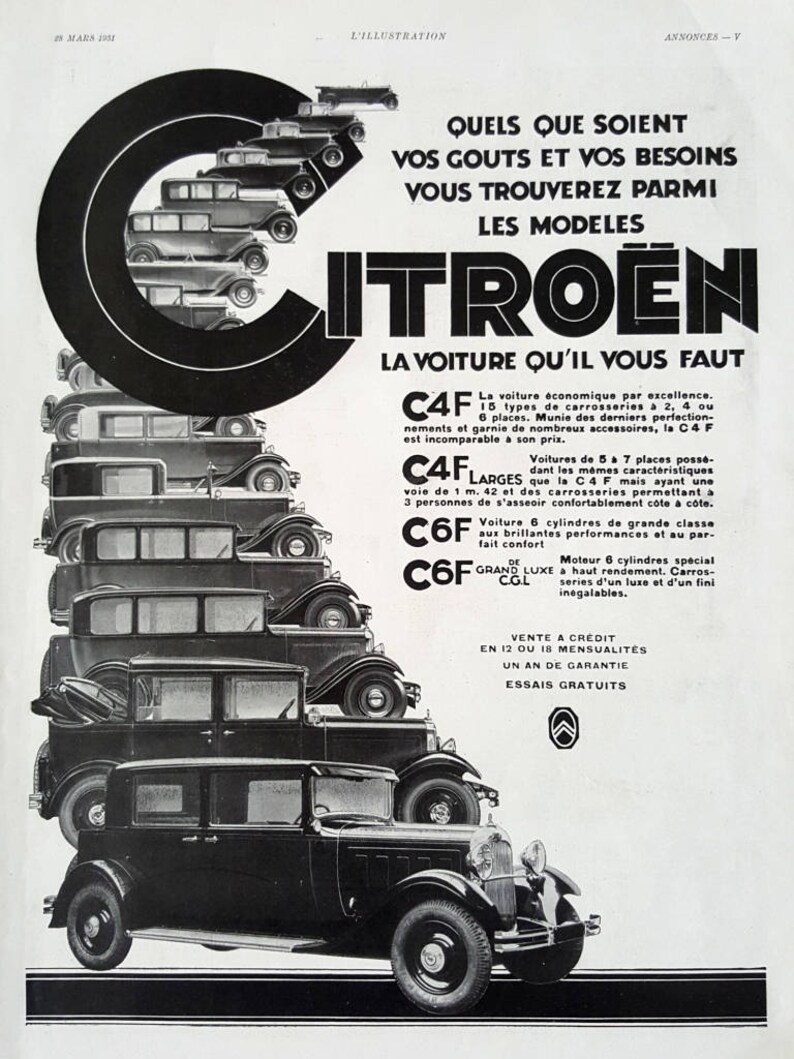
In addition to those produced at the Quai de Javel factory, Citroën also offered special-production bodies within the C6 range, handcrafted and produced in small series by independent coachbuilders such as VanVooren, Chapron, SICAL, and others.
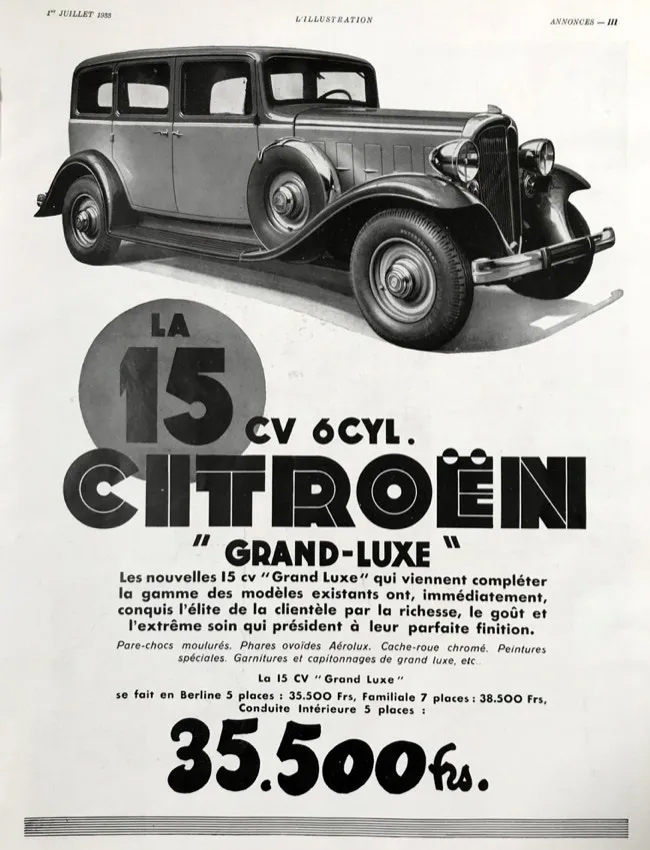
The Citroën C6’s production came to an end with the introduction of the new 15 CV at the October 1932 Motor Show, part of the generation of models that would later be called the “Rosalie.”
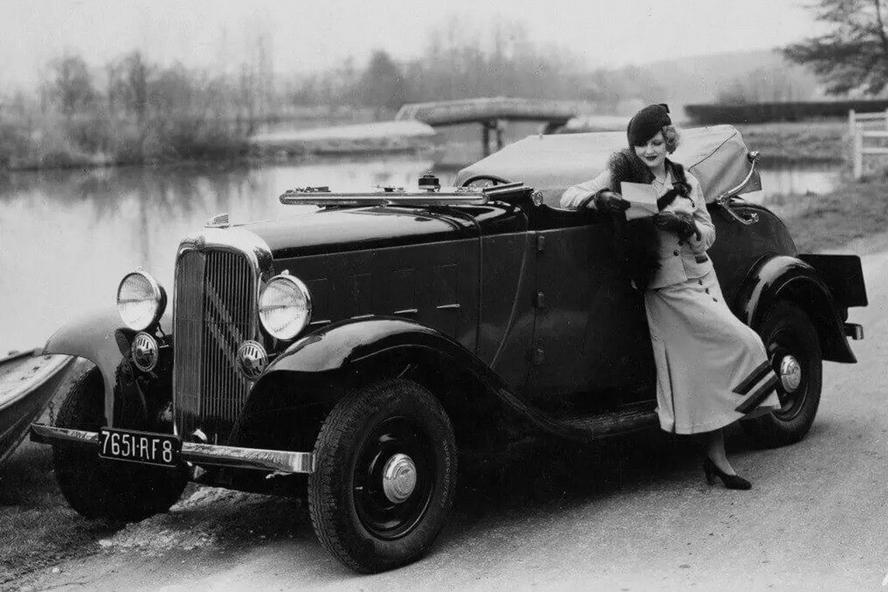
Although over 61,200 units of the C6 were produced (across all series and models), this final figure fell short of André Citroën’s expectations. The somewhat lackluster commercial performance can be attributed to the C6 being the brand’s first high-end model and lacking a true “ancestor” in the Citroën range. As a result, a significant portion of its target clientele viewed it as lacking a certain “legitimacy” in its category. Additionally, by the late 1920s and early 1930s, the C6 faced considerable competition from major French manufacturers such as Peugeot with the 12 Six and Renault with the Vivasix, as well as from smaller, more artisanal brands like Delage, Delahaye, Hotchkiss, Talbot, and others.
Given its even shorter lifespan, which ended with the launch of the new Traction Avant range in 1934, the “Rosalie” 15 CV hardly had time to establish itself in the French automotive landscape of the early 1930s.
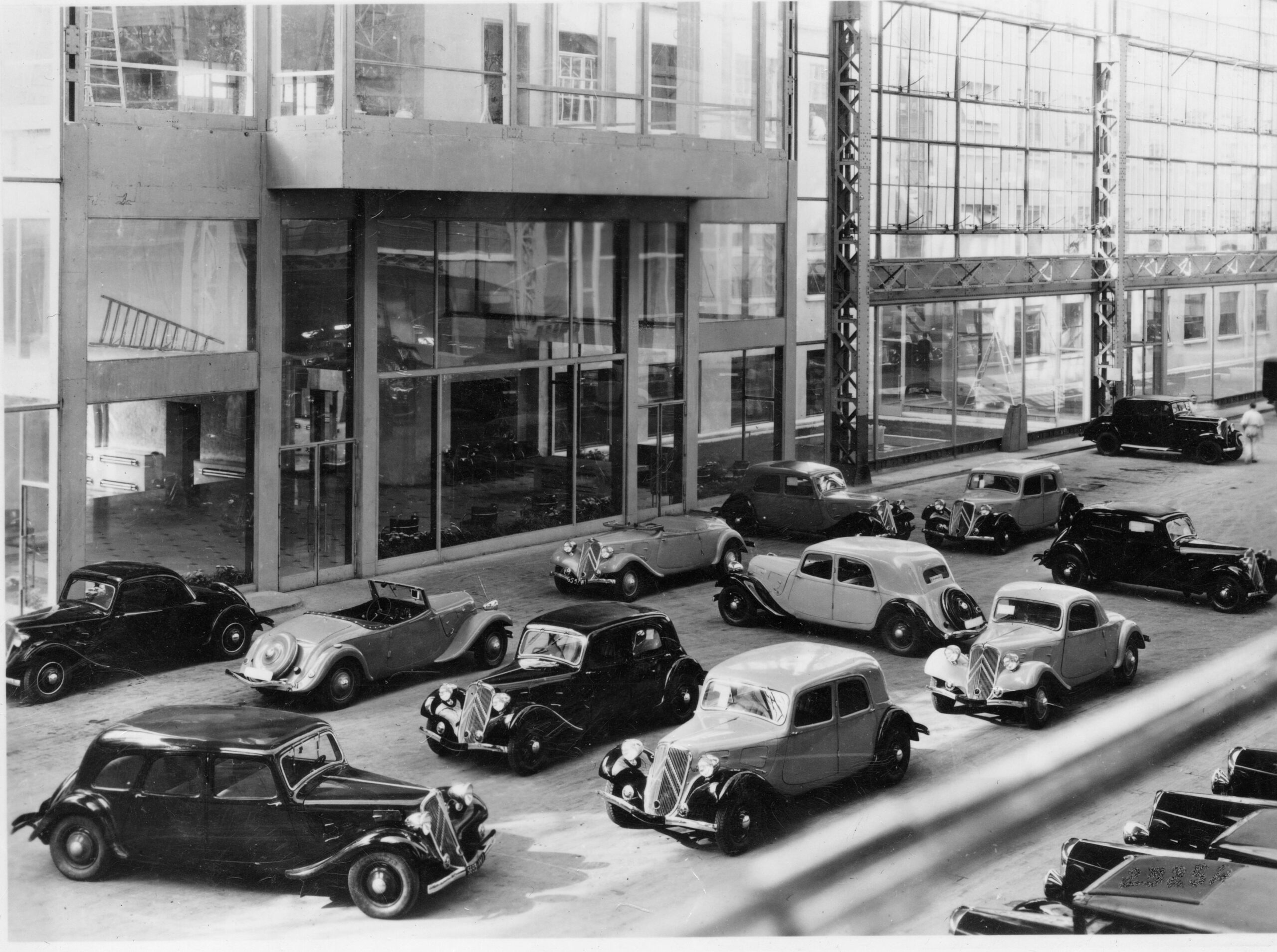
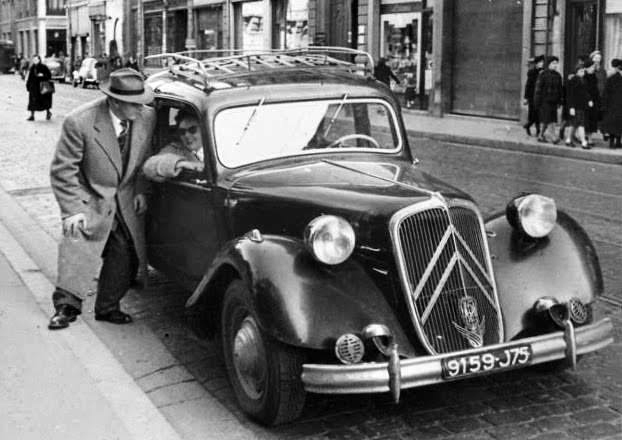
Following the upheavals faced by the manufacturer—such as the liquidation of Citroën at the end of 1934, the financial difficulties that plagued the design and early years of the Traction, and the takeover of the company by Michelin—it was not until the end of 1938 that the six-cylinder successor to the C6 and Rosalie 15 was launched: the Traction 15-Six.
1 comment