
Wankel Wannabees — Good Intentions… Unintended Consequences
By Steven Rossi….
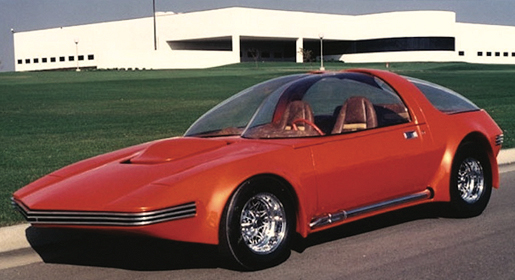
Good intentions can often lead to unintended consequences, which is exactly what happened during the 1970s when Wankel engine infatuation forced a few manufacturers to change course at the 11th hour. While it may have been a brief chapter in automotive history, it sure was a memorable one.
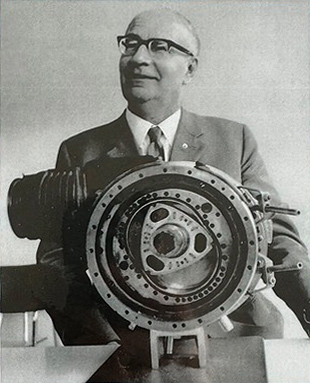
Felix Wankel (b. Aug. 13, 1902, Lahr, Ger.—d. Oct. 9, 1988, Lindau, W.Ger.) was an ingenious … though ambitiously independent and supposedly cantankerous … self-taught engineer with a background in seal and valve experimentation. From his home laboratory/machine shop in southwest Germany, Wankel’s earliest patents dated to 1929. He further believed that there was merit in “an engine that was half turbine and half reciprocating in design,” according to Motor Trend, and set out to prove it.
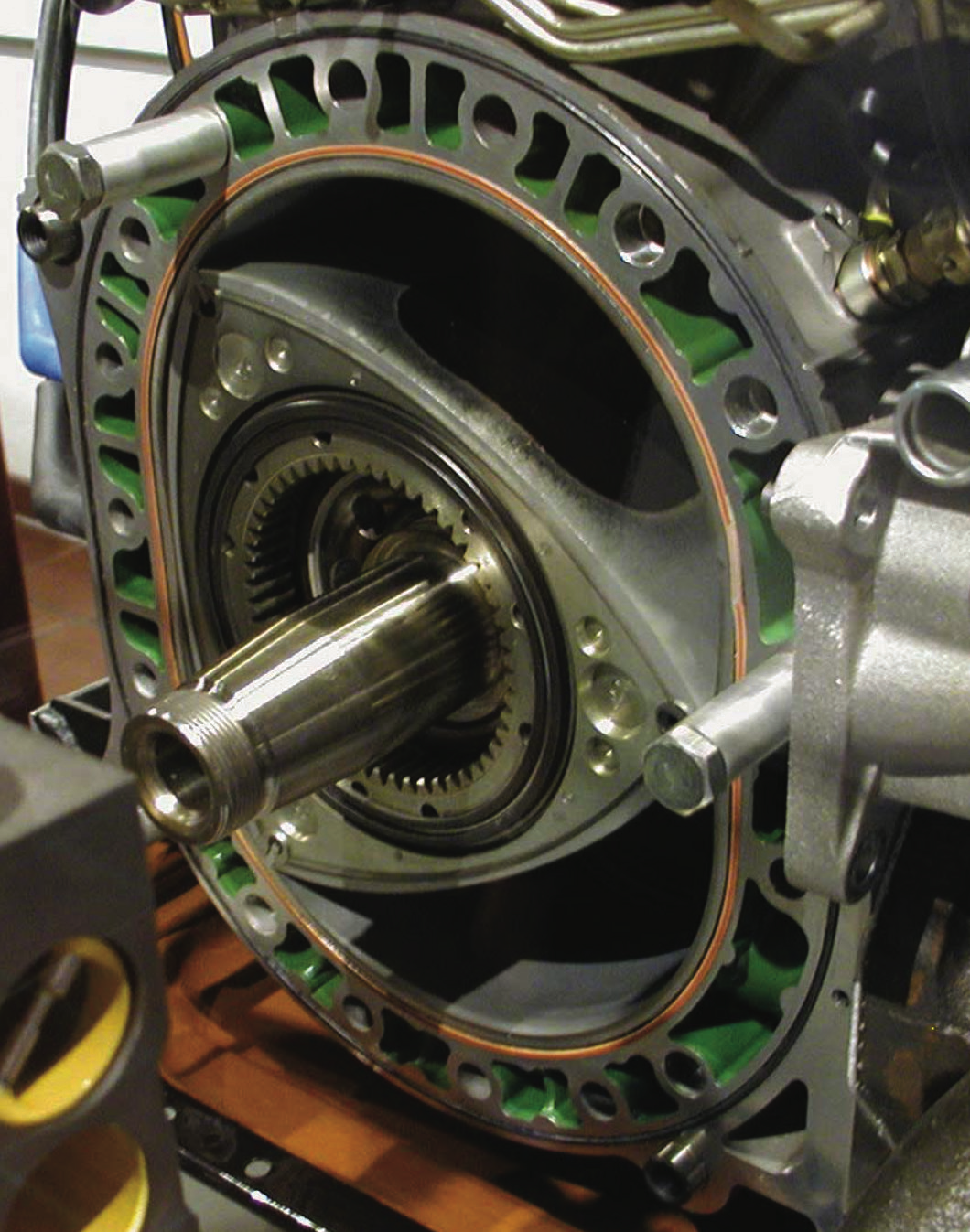
His idea relied on a triangular rotor (as opposed to a piston) that spun eccentrically (instead of reciprocated) in an epitrochoid chamber (a housing comprised of two co-joined circles, instead of a cylinder). That functioned through a four-stroke cycle. Wankel’s first actual engine patent was granted in 1954. The engine would ultimately accelerate onto the scene as a result of critical development help from NSU (which he apparently wasn’t very happy about), with the promise of an improved power-to- weight ratio and thus, an under-hood packaging advantage.
The thought was that the rotary would allow for smaller and lighter cars, while simultaneously delivering equivalent, if not better, performance and driving enjoyment. That would then miraculously lead to an improvement in overall operating and production efficiency … which was quickly becoming the engineering mantra of the time.
The good news was that the Wankel was small, light, high-revving, smooth-running, quiet (though a little raspy like a two-stroke), and offered a high power-to-weight advantage with fewer moving parts. Early on, Wankel-mania was such that Car and Driver (May 1961) described the then-prevailing mood for what was billed as “tomorrow’s engine” like this: “…Felix Wankel’s remarkable engine sent Germany’s stock market sky- high and set great corporations at each other’s throats.”
There was so much faith in the rotary engine that Wankel licensees read like a who’s who of industry stalwarts. The list included Alfa Romeo, AMC, AvtoVAZ (Lada), Citroën,
Ford, General Motors, Mazda (Toyo Kogyo), Daimler-Benz, Nissan, NSU, Porsche, Rolls-Royce, Suzuki, and Toyota. On the supplier side, Curtiss-Wright and Fichtel & Sachs signed on, along with BSA, DKW/Hercules, Kawasaki, Norton, and Yamaha motorcycles. Plus, industrial Diesel and marine manufacturers like Brunswick, Deutz, Hanomag, Ingersoll Rand, Krupp, MAN, OMC, Perkins, and Yanmar all hoped to get more from less via the Wankel.
Some of these companies raced to transform their newfound engine opportunity into production reality in the interest of creating a marketing advantage. So much so, that various cars’ structural architecture and styling was consciously reconsidered to physically accommodate, clearly communicate, and hopefully capitalize on the inclusion of the rotary marvel. Just like today, when it comes to electric vehicles (EVs) that are specifically designed to convey a futuristic, technology-driven image.
Bad news soon reared its ugly head. The Wankel engine wasn’t all it was cracked up to be. Rotor-to-chamber sealing problems and low thermal efficiency led to high oil and fuel consumption, along with excessive unburned hydrocarbon and carbon monoxide output, due to incomplete combustion. In an age when reduced exhaust emissions and improved fuel economy were becoming of utmost concern, it was unacceptable.
Rotary engine materials had to be carefully specified, critically cast, and machined with extreme accuracy due to inconsistent thermal expansion, which was further complicated by excessive exhaust gas temperatures that became necessary to quell emissions … accelerating engine wear.
Meanwhile, although it would rev, the Wankel was not very torquey, as a result of the way it converted combustion expansion into mechanical advantage (rotary rotors
vs. reciprocating pistons). In reality, emissions, fuel economy, longevity and throttle response proved to be more than just a rotary engine’s shortfall … but its downfall. Satisfying in-use service demands would go on to become a Wankel engine specialty, in itself.
Though that didn’t stop a few dedicated innovators from reaching some level of rotary series production, including Citroën (1969-71), Lada (1978-90), NSU Spider (1964-67) and Ro80 (1967-77), along with the most prolific Mazda … with a whole host of models (1967-2012). Motorcycles manufacturers added to the mix, and include Hercules (1974-77), Norton (1984-92), Suzuki (1974-76) and Van Veen (1978-81).
Along the way, there was also a mixed bag of “almost but not quite” examples that got as far as scratching the surface, but slammed on the brakes during final development and/or initial pilot production. They essentially proved to be rotary engine intenders … unlike Mazda and NSU … which actually achieved measurable factory output … with some two million and 40,000 made, respectively.
The following pages is a little look at those other four- wheeled Wankel wannabees:
AMC Pacer
Daring to be different, the idea of a purposely designed Pacer around Wankel power made perfect sense … on paper, at least.
As an industry underdog, American Motors Corporation (the result of combining Nash and Hudson in 1954) had a long history of trying to outmaneuver the Big 3. It had been well- proven that going head-to-head with GM, Ford, and Chrysler, AMC really didn’t have much of a chance. They were always on the prowl for ways to set themselves apart.
The Pacer was conceived around the premise of providing big- car accommodations (for comfort) in a small-car package (for economy and practicality) during the turbulent 1970s. “Project Amigo” would represent “a transition between what has been and what’s coming,” according to Board Chairman Roy D. Chapin Jr. It would be the industry’s first “wide small car” after reimagining what were then status quo proportions.
In keeping with AMC’s contention that “When you get a Pacer, you get a piece of tomorrow,” the hard-pressed Detroit automaker acquired a Wankel rotary license from Curtiss-Wright (NSU’s first licensee, who was trying to corner the U.S. market) in 1973 for all the right reasons: packaging, performance, and market positioning. The unconventional Amigo prototype very much capitalized on the rotary’s compact credentials. The basic body was egg- inspired with soft contours and an abundance of glass … plus delicately narrow roof pillars … while the front end was sleek and aerodynamic with taught tire-hugging fenders. The idea of front- wheel drive was considered, but to contain cost, conventional rear- wheel drive would ultimately be specified.
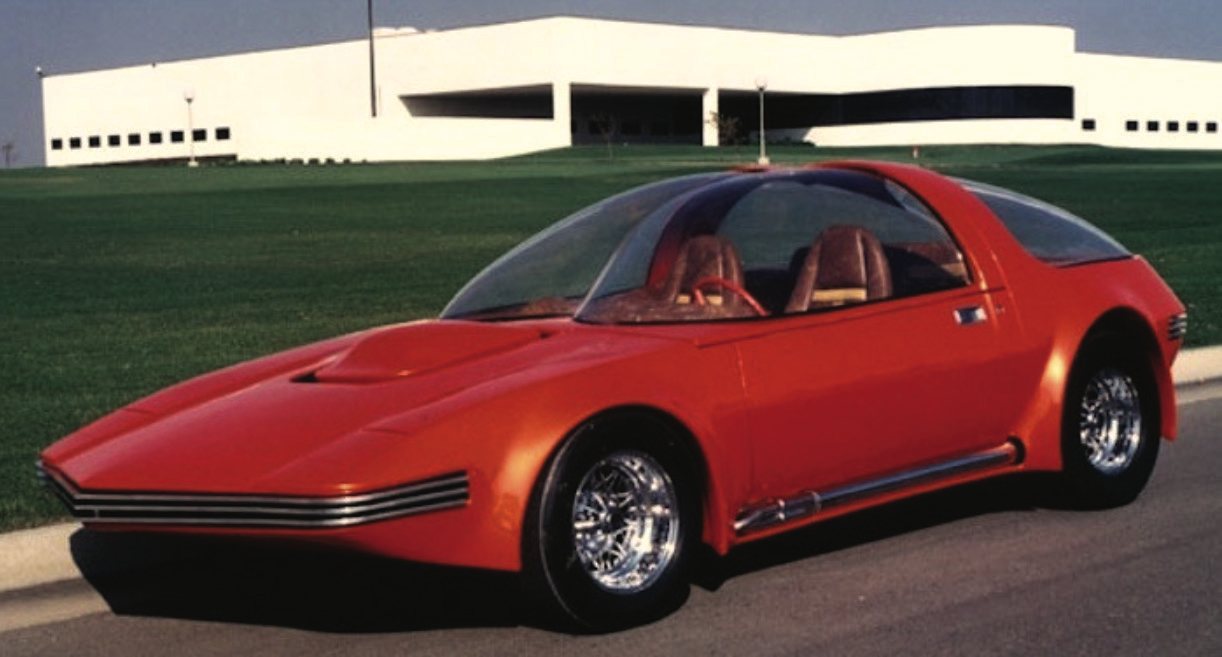
Also, in the interest of reducing investment, AMC’s intention was to source the rotary engine from a supplier with much more advanced engineering ability than it had … even though they procured their own license. That vendor would be General Motors, so while the futuristic Amigo was moving from prototype concept to production intent, GM was in the final throws of Wankel engine development. With all the corporate moving parts behind the scenes, to call the Pacer a gamble would be an understatement.
General Motors encountered significant in-use technical issues that led to the scuttling of its Wankel program, which, of course, forced AMC into damage-control mode and revert to an off-the-shelf 232/258cid inline six for the Pacer’s 1975 debut … and later, a V-8. As a result, the entire front end had to be reconfigured to accommodate piston engines, which now included an unorthodox (along with the rest of the car), bug-eyed headlight treatment. The extended-length six was shoehorned beneath the cowl, which would go on to create serviceability challenges.
Worse yet, the Pacer’s dynamics and handling were impacted, despite its rack & pinion steering (a new, key feature for AMC), because there was more mass in the nose of the car. In April 1975, Road & Track observed, “The great width and the Pacer’s huge glass area translate directly into great weight … the Pacer is neither a small nor a light car.” The magazine confirmed that it certainly retained its intended roominess … up front, at least … and it still offered good visibility and refinement from its newly developed isolated engine sub-frame.
Though compromised, the Pacer managed to find a receptive audience … particularly as an early small car in a newfound era of fuel economy uncertainty. Meeting such expectations proved to be problematic, though, because buyer anticipation was naturally high. The inline six really didn’t offer any consumption reduction after being shoved into an unintended body package as a knee-jerk reaction.
The polarizing Pacer still contributed to record-setting numbers in 1975 for AMC, as approximately 280,000 eventually were made through December 1979. After all the early adopters were satisfied, however, it became a tough sell due to its controversially compact style … down to its different door lengths on each side for improved ingress/egress. AMC persevered and went on an “It looks different on the outside because it’s different on the inside” promotional campaign. A wagon variant was added in 1977.
In the end, the Wankel-less Pacer demonstrated that “Good intentions can lead to unintended consequences.” Unfortunately.
Chevrolet Corvette XP-897 GT and XP-882
An optimal power-to-weight ratio with optimized packaging is clearly a serious enthusiast’s sweet spot, so the thought of enhancing America’s star-spangled sports car with a Wankel engine was the stuff of legend. In doing so through exotic mid- engine architecture would lift Chevrolet’s domestic leadership to world domination. Or so the mythos went.
A pair of Corvette prototypes were conceived in 1972 and 1973 to help promote GM’s commitment to the rotary cause. As became tradition at the General Motors Design Center, Chevrolet would explore new technologies through what became a long line of “idea cars,” such as its XP experimental prototypes. What better way to communicate its commitment to the then-embryonic rotary idea than with an exotic Corvette concept car … or two.
The XP-897 GT was initiated to specifically pursue and promote the Wankel. Simultaneously, GM wanted to explore the concept of mid-engine architecture. Not having an existing platform of its own to base it on, Chevrolet procured a Porsche 914 and took advantage of its underpinnings, which was shortened with further modifications as appropriate. While GM supervised the design, the XP-897 GT was actually built by Pininfarina. According to Corvette magazine, “… because of the compact size [a mere 43.3-inches high] and light weight of the rotary, designers could build a smaller car that had more room inside. When they were done, the sleek lines of the resulting red hatchback coupe were stunning. Innovations began with futuristic quad [rectangular] headlights never before seen on a U.S.-production automobile.
They were unique, featuring standard high and low beams along with a ‘pencil beam’ designed for highway use. Concealed windshield wipers and doors that covered the A-pillars helped optimize aerodynamics and minimize wind noise. On the safety front, both bumpers used energy-absorbing polypropylene. Inside, the rigid seats were equipped with seat belts, along with an adjustable [steering] wheel and pedals. A modest 8.1 cubic feet of storage was available in the rear luggage compartment.”
But the big “idea,” of course, was the Wankel engine. It was a two-rotor design with 180hp. The XP-897 GT debuted at the 1973 Frankfurt Auto Show in Germany, but was dubbed the “Two-Rotor Corvette,” because its experimental moniker was such a mouthful. Some, like Motor Trend, say it was really designated XP-987 GT, not 897. A year later, its P.R. role had run its course and GM was now seriously struggling with Wankel development, so the car was mothballed. At the company’s Vauxhall Design Center in England, of all places … though its rotary engine had been removed. After rediscovery and restoration in 1997, it now sports a Mazda Wankel engine.
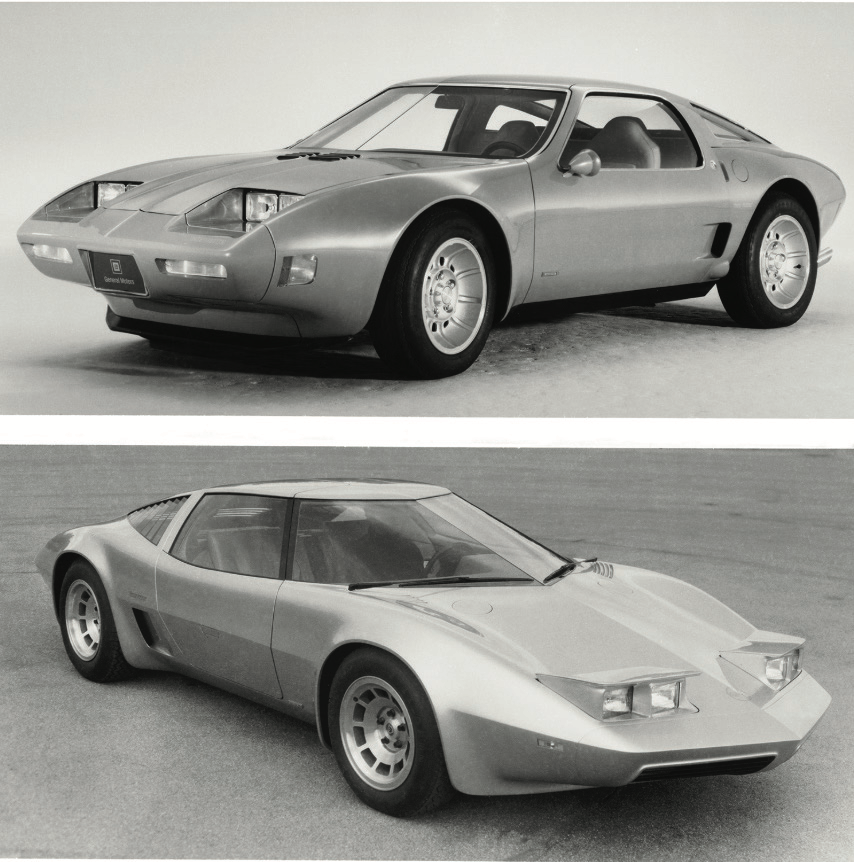
Of course, if two Wankel rotors are good, then four must be better. Enter the XP-882, which was conceived a year later but as an experimental prototype with a lower XP number. The reason for the lower number is that, like an old race car, 882 was re-purposed after its 1970 showing at the New York Auto Show (demonstrating the feasibility of aluminum construction). At that point, it was V-8 powered (“coincidentally,” Ford was in the middle of its Pantera project.
Ed Cole pirated one of the two XP-882 show cars and grafted two GM two-rotor test engines (destined for the Chevrolet Vega) and assigned Zora Arkus-Duntov to what was now project XP-895. “The layout consisted of two separate Wankel engines, one on each side of a shaft that ran back to the bevels at the transmission output. Each engine was 90 degrees out of phase to smooth out the performance. A toothed and grooved cog belt ran the ignition, alternator, and fuel pump, while a V-belt controlled the air-conditioning, power steering, and water pump. The combined size of the two engines was [the equivalent of] 585 cubic inches and was rated at 350 to 370 horsepower.” From Motor Trend, July 2019. It, too, went on the 1973-1974 Show circuit and, no surprise, was exhibited as the “Four-Rotor Corvette.”
During 1975, XP-882 morphed into the mid-engine AeroVette for the 1976 show season, revised with a transverse 400cid V-8. It remains within the GM Heritage Collection. The Corvette mid-engine production milestone would ultimately be achieved in 2020 with the arrival of the piston-powered C8. Not a Wankel, obviously.
Chevrolet Vega
But back to the beginning: In 1970, General Motors spent $50 million for its initial Wankel rotary engine license, which it planned to put into production with a newfound sense of urgency. At the time, the 1971 Chevrolet Vega was being ready to be unveiled. It was intended to revolutionize GM carline management practices by accelerating engineering development and advancing manufacturing methods down to a mere two-year turnaround for a new model.
The Vega was considered to be a shining star within the automaker’s corporate universe, and was therefore named after the brightest element within the constellation Lyra. The car would be built through an unprecedented level of automation and robot assembly in Lordstown, Ohio.
In addition, the Vega itself was conceived to bring new product technologies to the table through a sleeveless aluminum engine block, an expedited body coating/rust protection process, and a Vert-a-Pac rail shipping system that allowed more cars to get packed on a freight car, by loading them nose down. It’s no surprise that GM targeted the already-existing Vega as the first production recipient for what it thought would be a judicious, rotary retrofit.
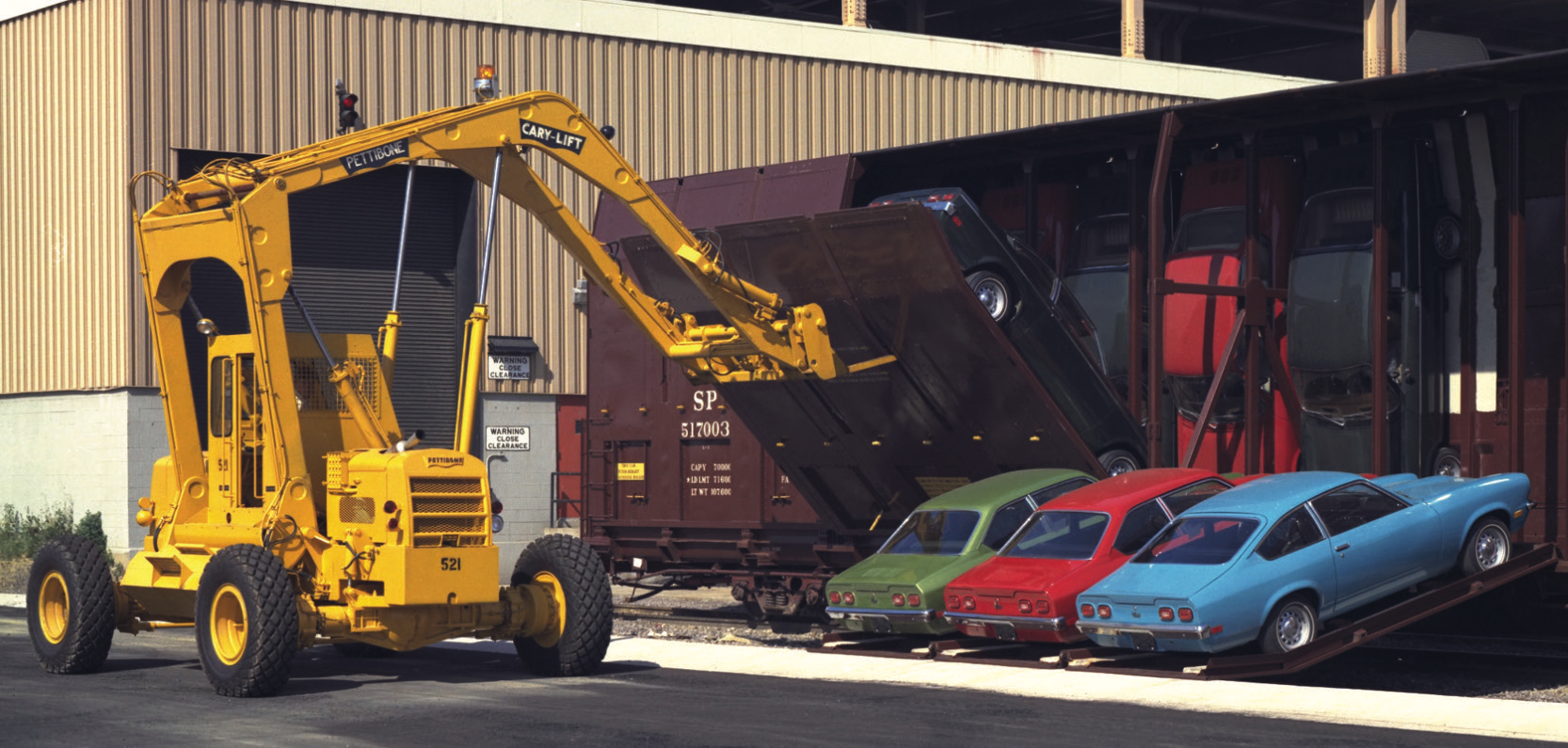
The idea was to include a Wankel option for the 1974 Vega. It would be part of an upgrade package with sportier wheels, better tires, and zippier graphics. Chevrolet was so confident that it proudly went public with the plan. Too bad Felix Wankel’s brainchild wouldn’t cooperate.
As an economy car, good gas mileage was of paramount importance to Chevrolet’s Vega vision. GM worked hard to squeeze as much thermal efficiency as possible out of the rotary. As a result, internal operating temperatures spiked, which led to durability challenges. On the other side of the coin, emissions compliance just barely squeaked by … which was certainly not encouraging, because it was well known that future regulations would only get more stringent. Fuel prices were rising with tightening supply … and then, what about California compliance?
The New York Times reported that “The corporation said that although it had improved the engine in some respects, it did not demonstrate the potential for low emissions levels and fuel economy equal to those of current reciprocating piston engines.” Not to mention, demonstrated durability issues, according to primary Wankel proponent and GM President Ed Cole. What was now a vague Vega would continue with just an inline four-cylinder engine through 1977 … and no Wankels. Its star was certainly tarnished.
The sleeveless aluminum engine block suffered serious quality problems due to distortion that resulted in excessive oil consumption. The expedient undercoating process failed to reach all of the Vega’s hidden nooks and crannies, which resulted in horrid rust concerns. Routine recalls became part and parcel with the ownership experience. Instead of reaching for the heavens, some two-million Chevrolet subcompacts hit rock bottom and would be remembered as “rust-bucket prone” with “melting engines,” according to Motor Trend.
Meanwhile ….
Chevrolet Monza
…. As another sign of the tumultuous times at the same time, Motor Trend announced that “Chevrolet’s 2+2 Monza V-8 emerged as 1975’s Car of the Year from a long, tight, and difficult contest that involved the opinions of scores ofpeople, nearly impossible logistical problems, and a selection process unprecedented in the 25-year history of the award. Delayed release dates, strikes, shortages of cars, and the inherent difficulty of getting so many cars to so many people all over the country made this stage of the process a very complicated one.”
That simply described the shenanigans that were forced upon the magazine to come up with the industry award. Imagine what was going on behind the scenes at GM’s Lordstown plant, which was hellbent on getting the new stylish entry out the door and over the curb in time for the 1975 sales season! Not to mention having to overcome the suffering from the previous subcompact quality catastrophe. See “Vega.”
The Monza episode was truly a soap opera in itself. It was intended to be an “Italian Vega,” because its styling was said to have been influenced by the European GT fraternity … which included the Ferrari 365 GTC/4 … although the new model was based on plebeian Chevrolet underpinnings. The Monza 2 + 2 was an early American attempt to transition sporty style into not only a downsized envelope (its Vega-derived architecture rode on the same 97-inch wheelbase, compared to a Camaro’s
108), but an economical one. It was also an effort to compete against Ford’s Mustang II.
The Monza was originally conceived … and specifically styled … around the Wankel engine. Structurally, it also included a deeper rotary-required driveshaft tunnel, said Motor Trend … unlike the previous Vega rotary development, which was going on in parallel and relying on an existing carryover body structure. The 2+2 was billed by Chevrolet as “The Small Car of Tomorrow” with “a shape that is smoother” and “a body that could be in foreign movies. Monza Mia!” With a Wankel engine, it should have been an Autostrada scorcher.
The Monza’s slippery hatchback design was intended to match its anticipated under-hood substance, from a packaging, performance, and weight point of view. However, its gestation came to a screeching halt on (a rather late) September 24, 1974, when GM announced that its rotary experiment … which included the Vega … was just too thirsty and dirty. Road & Track responded by calling the Wankel-conceived Monza “a misfit among American muscle cars.”
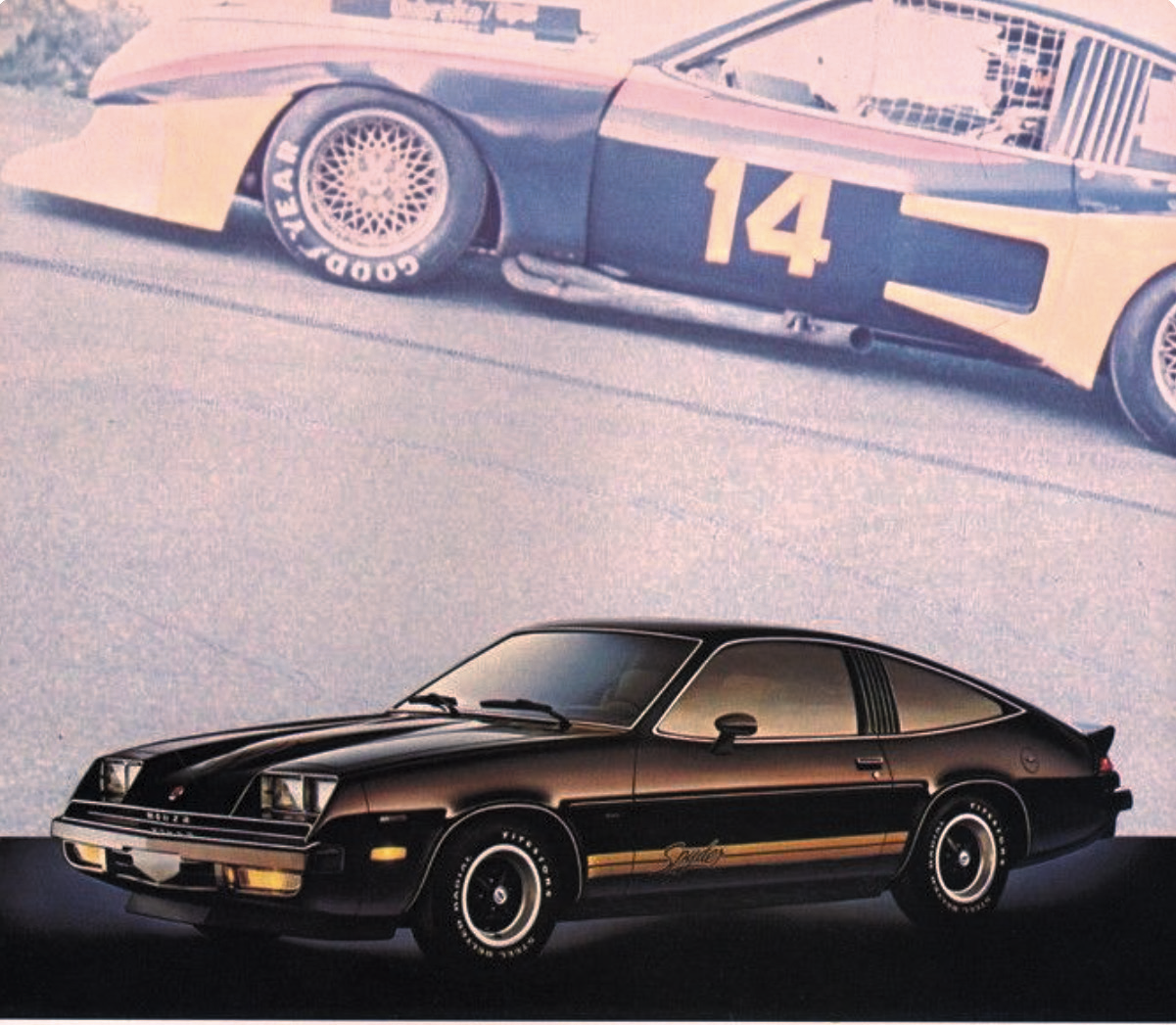
Instead, like the Vega, Chevrolet fell back on the anemic78hp/2.3-liter four-cylinder, but added a diminutive110hp/4.3-liter V-8 (GM’s smallest ever) that was stuffed behind its “great … expensive European-looking” and low, rectangular headlights and sharp, polyurethane “Way Ahead” front end (both inspired by the XR-897 GT prototype). Karl Ludvigsen contends that like the Vega, the Wankel was only supposed to be a Monza option (“GM’s Wankel: The $700 Million Miscalculation,” Motor Trend March 1975). In this case, the teensy V-8 alternative replaced it. Obviously, the initial rotary investment had skyrocketed with added R&D … particularly after all the difficulties ensued.
Production ran from 1975 through 1980, with more than 730,000 “H-bodies” sold. V-6s and bigger (even tighter-fitting) V-8s were added along the way to its cramped rotary- envisioned engine bay. Rear spark plug replacement became a definite V-8 challenge.
The Monza’s svelte silhouette was, however, put to further good use, despite its rotary resignation. The quite contemporary bark-is-worse-than-its-bite aesthetic was used as a basis for Chevrolet’s 1976-1977 IMSA Camel GT effort with Al Holbert behind the wheel. In a tube-frame chassis, with a thundering 350 (5.7-liter, ~600hp) V-8 beneath the hood that was simultaneously festooned with extensive aero aids and humongous wheel flares. The “unheralded grocery-getter,” as Road & Track put it, was transformed into “a championship- winning racer.” Likewise, without a Wankel.
Despite so much early angst, and then rolling with the inevitable punches that followed, the re-imagined rotary-to-piston powered Chevy Monza demonstrated that, in fact … when it comes to automotive history … all’s well that ends well … that is, if some 120,000-plus units a year is any indication.
Citroën M35
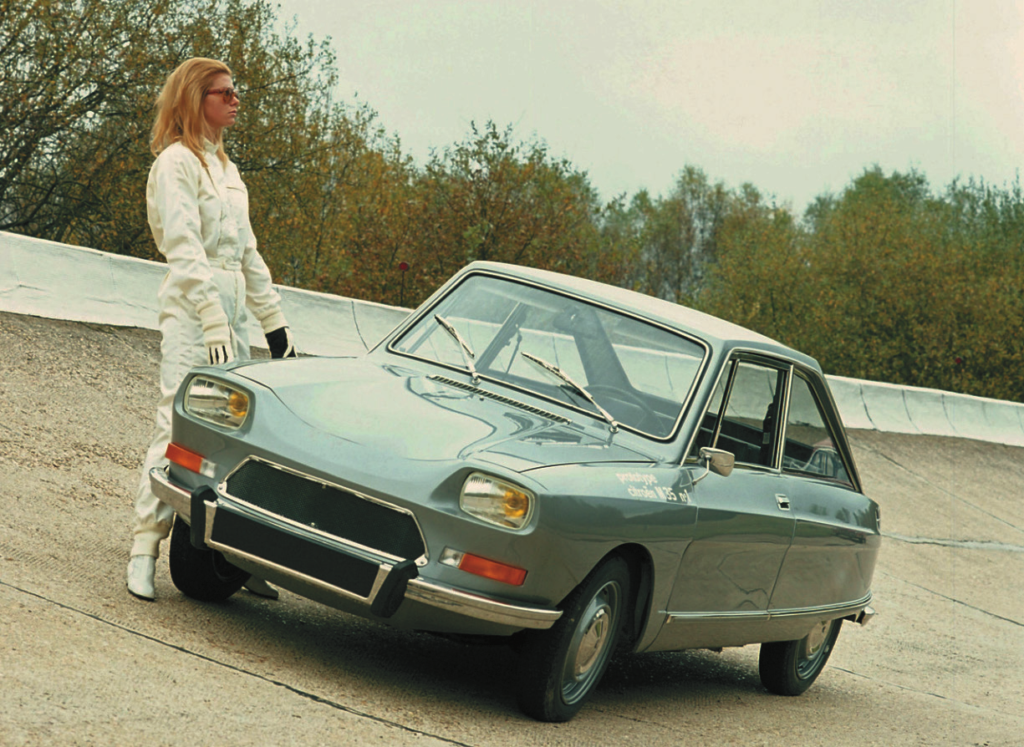
Like GM/Chevrolet, Citroën jumped into the deep end of Wankel waters, but took a more cautious approach. Together with NSU, the French manufacturer formed a joint-venture in 1967 called Comotor to produce the engine. It followed in the footsteps of a previous … and rather ambiguous … affiliation between the two called Comobil, which supposedly focused on some sort of general engine development.
The small and light—yet powerful—rotary engine was right up Citroën’s alley. “While the use of advanced techniques such as front-wheel drive and hydropneumatics had been enough to put Citroën at the forefront of automotive technology during the preceding 30 years, it was felt that something new was required if the company were to maintain its reputation. That something was the Wankel rotary engine….” From Citroenet.org
The initial objective was to package the Wankel within a new line of mid-range Citroëns as the segment’s most upscale cutting-edge alternative … which would include the hydropneumatic suspension in its smallest entry ever. To serve as rolling testbeds, Heuliez carrosserie was commissioned to produce a run of rotary-powered coupes that were derived from the Ami-8 four-door sedan … ahead of the A-pillars, at least, so the M35 front end image would seem familiar to the Citro-nista. The remainder of the M35 was unique with longer doors and shorter rear fenders than the Ami service wagon, which apparently inspired them. The projet (project) “M” designation was the in-house code for the Ami range that referred to milieu de gamme (mid-range).
A total of 267 single-rotor M35s (500 were planned) reached the streets between 1969 and 1971, though technically they weren’t sold. They were put in the hands of dedicated long-distance-driving Citroën owners for in-use validation purposes. This, unfortunately, affirmed the fact that the Wankel engine wasn’t ready for prime time. In an attempt to forestall the inevitable, an enlarged fuel tank was added for greater operating range, to keep the test mules in motion.
As a result of what became common rotary shortfall during the OPEC Era, the majority of gas swilling M35 test mules would be put out to pasture and scrapped. A handful escaped the knacker’s yard.
Citroën GS Birotor
Like the Chevy Vega vs. Monza example, Citroën was also pursuing a parallel development path in hopes of finding a rotary road to market. It was achieved (barely) by the GS Birotor in 1973, because lessons learned from the M35 were put to good use.
First and foremost, more power was deemed necessary for the four-door fastback (which was originally launched in 1970), so a second Wankel rotor was specified … thus, the Birotor designation. The thought of a two-rotor rotary engine combined with supple hydropneumatic suspension was certainly compelling, and still is.
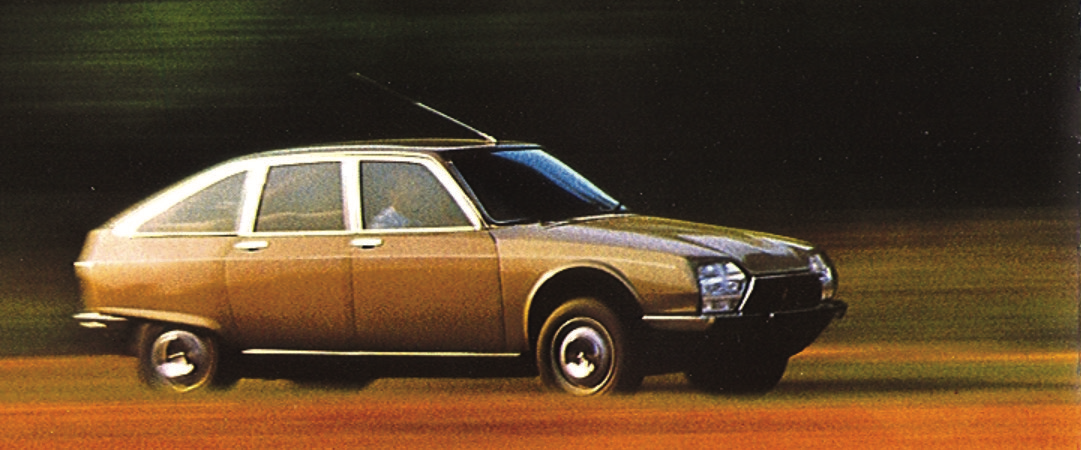
The Birotor had unique front-end underpinnings compared to the then-standard GS, and its front disc brakes were moved from inboard to outboard. Rear discs were also included, while the family fastback rode on beefier five-lug wheels, instead of the basic three. With more pronounced wheel arch lips. A three-speed semi-automatic C-Matic transmission was included, and the interior was appropriately trimmed in keeping with its high- line role as the flagship of the GS fleet. According to Citroën aficionado and former Birotor owner Gert Larsen, the Birotor was the French automaker’s first transverse engine application.
“The Birotor was an intriguing mixture of rotary-engined smoothness and advanced front-drive sedan. However, it proved a blind alley … it was expensive to build and expensive to run.” From Cutting Edge Collector Cards. In fact, when it debuted at the 1973 Frankfurt Motor Show, it was marketed as a new “environmentally friendly alternative,” because it included air-injection, says Larsen.
If the in-use Wankel engine foibles weren’t enough, the GS Birotor cost almost as much as Citroën’s prestigious DS. Only 847 Birotors were built when production ceased in 1975. The company tried to buy back as many as possible to avoid maintaining a spare parts supply and honoring warranty claims.
According to Classic & Sports Car, “Citroën thought the rotary engine was a new dawn, Alas not ….” More conventional … if that word can be applied to Citroën … four-cylinder horizontally opposed air-cooled GS production ran through 1986.
Citroën CX
But wait, there’s more. Since the Robert Opron-designed GS proved to be such an accommodating haven for Citroën’s rotary adventure, it’s no surprise that his also hydropneumatically sprung … and even more futuristic … CX that followed would be as well. As a bigger, more luxurious alternative, the French executive express was slated to receive a three-rotor Comotor Wankel.
Obviously, foisting a more-powerful but even thirstier CX on a world that was in the middle of what was a global oil crisis was ill-timed, ill-advised, and therefore, clearly illogical. The GS Birotor demonstrated that the Wankel engine was fascinating but flawed, which put a nail into the potential CX rotary coffin. Even though its oh-so-modern architecture would have graciously accommodated it.
Before we sign off on the Citroën story, a brief run of 38 Van Veen motorcycles were built in the Netherlands off the Comotor concept, with 10 more supposedly completed after the fact, from parts.
DeLorean
Former GM executive John Z. DeLorean had a dream: To create an ethically responsible, sustainable sports car that would be safe, economical, and environmentally friendly, with compelling style and cutting-edge technology. The premise was that the DeLorean should “have lasting appeal, that it be practical and functional, that it meet all U.S. safety standards, that the drag coefficient be around 0.33, and that the car could be mass produced.” From DeLorean: Stainless Steel Illusion. With “an engine in back” for optimal weight distribution and packaging efficiency, it’s no surprise that the compact yet powerful Wankel engine would find its way within the DeLorean engineering crosshairs.
Ital Design was commissioned to create the initial DeLorean design architecture around an already-established cockpit seating buck, that would be better than a Corvette and accommodate John Z.’s lanky 6’4” frame.
Gullwing doors and tall/wide structural side sills were already a given, so particular attention was paid to ingress, egress, and overall roominess (which would later allow it to carry a Flux Capacitor … ha ha), at the expense of under-hatch engine- compartment real estate. Truth be told, Ital Design was given no actual … nor even projected … dimensions for the powertrain package … because there were none. Not yet, anyway.
When DeLorean was at General Motors, he became quite intrigued … if not, infatuated … with the rotary engine experiments that were going on with the Corvette XP concept
cars. So much so, that when he struck out on his own, he tried to buy the Chevrolet design brief to serve as a springboard for his startup sportscar (ad)venture. Obviously, GM wasn’t about to have any of that, particularly, from a controversial maverick that had previously been under its employ. Instead, DeLorean’s engineering team knocked on the door of Comotor in search of a Wankel engine alternative, but quickly found that the French/German rotary was not long for the mass-market. Mazda was then approached, but serious talks were never realized.
With no means of manufacturing on their own … or even access to a Wankel license … DeLorean was forced to revert to a more conventional engine approach by sourcing through an established piston-engine supplier … even though the sports car’s basic design parameters were already set … which included a compact mid-chassis engine compartment.
After experimenting with a Ford V-6, there was a brief foray with Citroën and its complete … yet also compact … CX 2000 four-cylinder engine/transmission combination. With a mere 102hp, though. It was, at least, able to fit within the then already-existing mid-engine confines.
As the De Lorean went from prototype to production, Lotus took over from where Ital Design left off to finalize a specification that would be feasible to actually manufacture. Numerous structural elements were upgraded with more equipment included, adding weight and consumed space. It made what had originally been envisioned as a lithe Wankel-powered sports car into more of a grand touring cruiser.
With more power required, the DeLorean resorted to a 2.7-liter PRV (Peugeot, Renault, Volvo) V-6 when assembly began in 1981. It ultimately had to be slung out back, turning the mid-engine “stainless steel illusion” into a rear-engined GT instead of amidships … with still only 130hp on tap. Sorry.
Over promising and under delivering became part and parcel with the DeLorean mystique … among other inconsistencies. Though you have to wonder; Had the Wankel engine been able to truly achieve its expectations, could DeLorean have as well? And what about those conceptual Corvette experiments that first fueled John Z.’s preliminary thinking? Where would they have led?
Per headquarters decree, on October 25, 1982, a DMC inter- office memo to all department heads read, “At approximately 3:15pm today, DeLorean Motor Company filed, in Detroit, a petition under Chapter 11 of the Federal Bankruptcy Act.”
Lada
In typical Russian secrecy, there was an attempt to harness rotary power beneath the hood of a Lada. If you’re unfamiliar, it’s a car that was the result of cooperation with comrade Fiat, based on its 124 platform.
In addition to the Lada sedan, a small quantity of rotary Lada Samara hatchbacks were built for police and municipal duty, since the AvtoVAZ parent company was state owned. It’s said that in the late 1970s, Lada acquired samples of existing Wankel engines (NSU and/or Mazda), through underground means, and reverse engineered them. The idea was to use what was hoped to be a better-performing Lada for pursuit purposes. A unique feature included antifreeze injection, to help starting during extreme cold conditions (from driventowrite.com).
VAZ continued to tinker with the Wankel (one-, two-, and even three-rotor versions) until the early 1990s, with only 300 or 400 actually produced. Due to a disappointingly demonstrated 12,000-mile service life. Of course, Lada passenger cars and utility vehicles would soldier on with piston power.
Mercedes-Benz C111
Some people had hoped the C111 would lead to a successor of the 300SL, though it was never the intention. The C111 was a rolling test bed that allowed Mercedes-Benz to primarily experiment with the Wankel engine … along with other developing technologies … such as gullwing doors (thus the 300SL association), retractable headlights, integrated roll-bar construction, 60-liter side saddle fuel tanks in the sills, turbocharging, anti-dive/anti-squat front and rear multi-link suspensions (some with torsion bars), and aerodynamics, of course.
The C111 debuted at the 1969 Frankfurt Motor Show and the flat-surfaced wedge-shaped wonder was made of fiber-reinforced plastic, on a sheet-steel monocoque chassis. It was clearly a Mercedes-Benz from a styling point of view, since the Stuttgart firm’s leading design impresario, Bruno Sacco, lent a pen to it. The memorable horizontal four-spoke Mercedes steering wheel first appeared in the futuristic streamliner, which was commonly emblazoned in metallic orange “Weissherbst” paint. It was complemented with Mercedes tartan fabric upholstery.
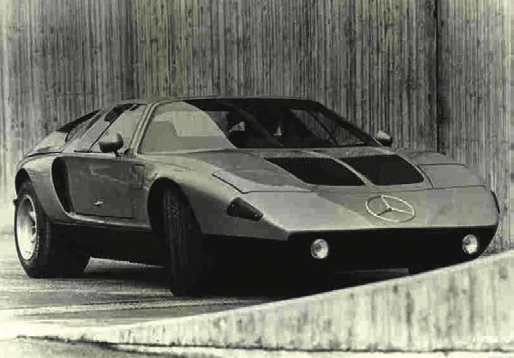
Originally specified as a three-rotor rotary engine, a four-rotor variant followed. Both were mid-mounted. Unfortunately, the Three-Pointed Star’s rotary exoticar would essentially be stillborn. The timing was such that Wankel emissions and fuel economy disappointment (along with what was then a declining sports car presence) would result in a quick design deviation to five-cylinder turbodiesel power, and then a V-8, with revised front air inlet/management treatment and an enlarged windshield, accordingly. Between 1969 and 1978, 16 (maybe 17) were made in total.
Mercedes-Benz proudly featured the C111 in period sales literature, but was careful to point out that it was “a research and development car.” Although the 1970s’ engineering study was said to have been “better built and more resolved than [Ferrari] Berlinetta Boxers did as production cars” and could have “easily outshone the De Tomaso Pantera, had it been destined for the mass market.”
Meanwhile, Mercedes used it to set diesel and V-8 speed records at the Nardo test track in southern Italy, since the earlier Wankel versions had already been mothballed.
The C111 was supposed to be called the C101, but Peugeot had a lock on designations that featured a central “0” (the same problem Porsche had, which turned its 901 into the 911). Either way, the final thought of a Mercedes supercar seeing the light of day was still zero. Unfortunately.
Nissan Sunny-Silvia/Datsun 200SX
Although secure in their position as the Japanese Big 3, Toyota, Nissan, and Honda were very much keeping their finger on the pulse of Mazda in the interest of monitoring their Wankel lifeline, and they weren’t ashamed to mention it. Obviously, small-fry Mazda would have to work hard to set itself apart … competitively … and Mazda believed that the revolutionary engine would be their salvation.
The Datsun Nissan news department issued the following press release on October 6, 1970: “Nissan Motor Company concluded a license agreement with Audi-NSU Auto Union AG and Wankel GmbH of West Germany for the manufacture and sales of the rotary-piston Wankel engine. The agreement has enabled Nissan to become another Japanese firm to acquire the right to manufacture of the rotary engine, along with Toyo Kogyo [Mazda] which builds rotary-powered vehicles under similar arrangements with NSU.”
According to Wheels magazine, February 1973: “As we predicted in mid-72, Nissan’s new Datsun Rotary was displayed at the [1972] Tokyo Show. [The] Nissan Rotary
fits [the] Datsun 1200 [Nissan Sunny] engine compartment with space to spare.” Which was to be expected, since the existing econobox was simply used as a test car for evaluation purposes. There’d be more in store from Nissan/Datsun.
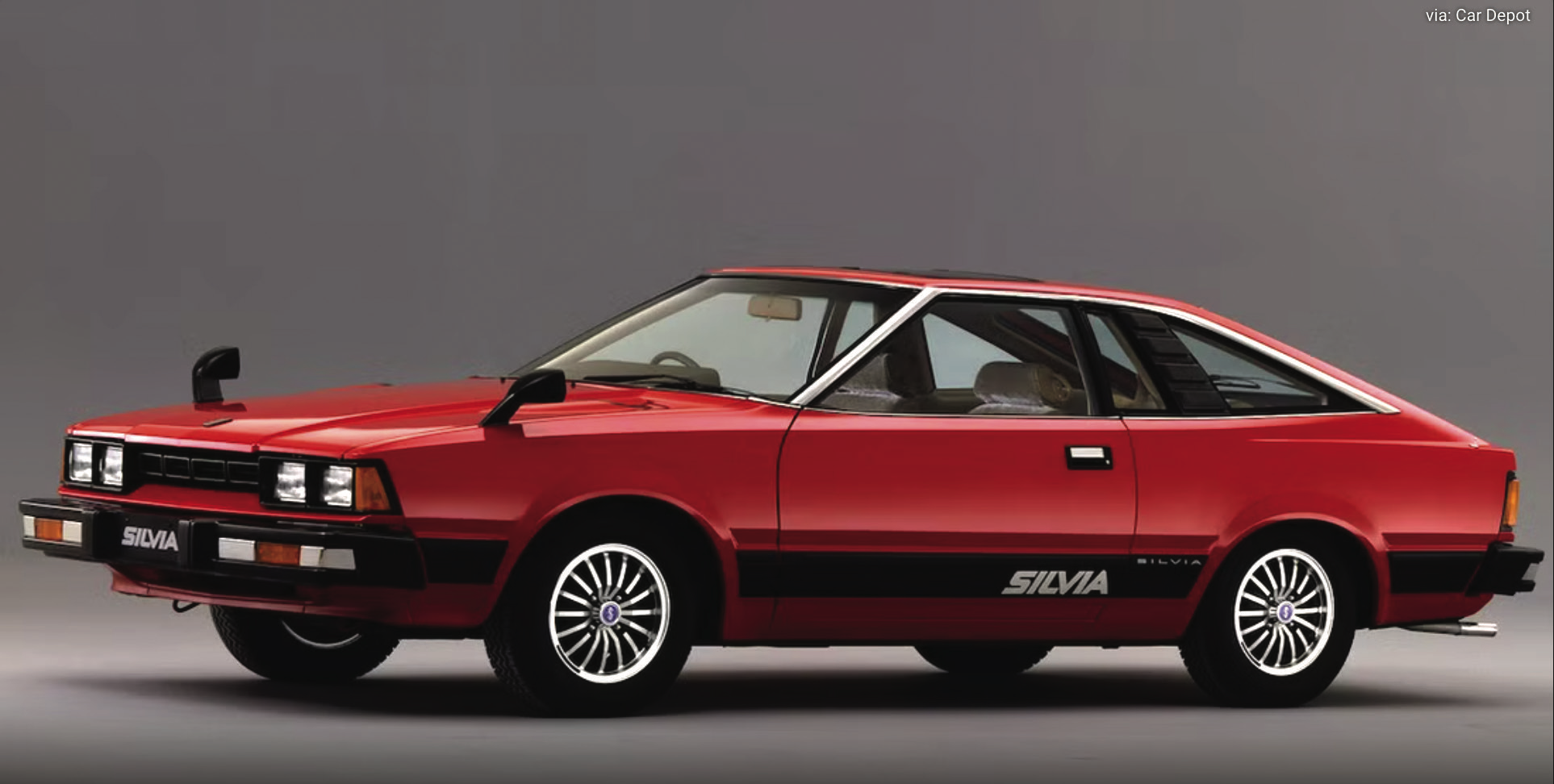
Nissan’s rotary engine (RE) included two rotors, which netted 120hp (good for another 25mph) than the then-standard … and heavier … 1200cc four-banger. JapaneseNostalgicCar.com contends that “Nissan was setting up production facilities with the intention of producing 3,000 rotary vehicles per month, with either five-speed manual or three-speed auto ….” transmissions. They planned to do so with the sporty/space aged “…Silvia S110 (sold in U.S. and Canada as the Datsun 200SX…)” which “was originally intended to feature a rotary engine.” Unfortunately, demonstrated Wankel deficiencies (emissions and fuel economy), yet again, derailed another ambitious effort at the eleventh hour.
With all due Wankel intention, the first generation 200SX was specifically styled and advertised with “SX Appeal … to light your fire.” Even though this “SX-iest” Datsun would be forced to come to market with an old-school reciprocating 2.0-liter (200) four-cylinder engine instead of a rotary. Critics concluded that “… the 200SX was strange looking. The odd design language … looked like a cross between a Citroen SM and an AMC Matador….” From WordPress.com.
In the end, it was the memorable Mazda rotary sales slogan that not only summarized the outcome of the 200SX saga, but the entire quizzical Wankel engine affair. “A piston engine goes boing, boing, boing, boing, but a Mazda [Wankel rotary] goes Hmmmm….”
Hmmm, indeed.
This article appeared in the September/October issue of the Antique Automobile Club of America (AACA) magazine. The AACA and author Steven Rossi have kindly granted Citroënvie permission to republish it.
You can read more about the Citroën M35 and the GS Birotor at these links: