The Original Ami — A Crucial Bridge in Citroën Generations
By Thomas Urban….
At the dawn of the 1960s, the double-chevron brand recognized the need for a larger, more modern model than the 2CV (at least aesthetically).
Faced with the new Renault 4 and 8 and the Simca 1000, Citroën needed to refresh its lineup and partly fill the significant gap between the Deux Chevaux and the ID (the lower-cost version of the DS).
Despite its already somewhat outdated appearance at the start of the 1960s — an appearance that would later be embraced as “chic” in the 1970s and 1980s while remaining essentially unchanged until its retirement nearly thirty years later — the 2CV was beginning to show its age in terms of comfort and equipment. Since its launch in 1948, much had changed, particularly the standard of living, which had risen significantly for many French people. Increasingly, families and young singles in the working class, however modest their means, could afford to be more demanding and desired a more modern-looking car with these two essential features.
Citroën’s management had already appreciated this by the mid-1950s, when the M project was initiated following the costly launch of the DS. With engineers and dealers preoccupied by the DS’s teething troubles (notably the famous hydraulic suspension), it was decided to reuse as many 2CV components as possible — specifically the platform, suspension, and engine. The idea of installing the 850 cc Panhard twin-cylinder engine (Citroën had become Panhard’s main shareholder) was considered for a time but ultimately abandoned.
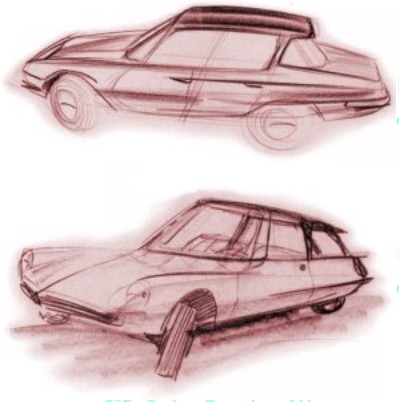
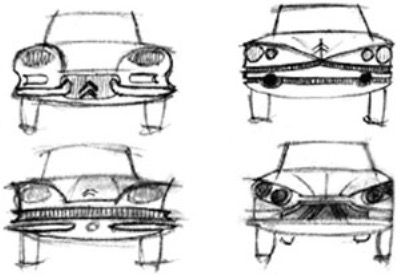
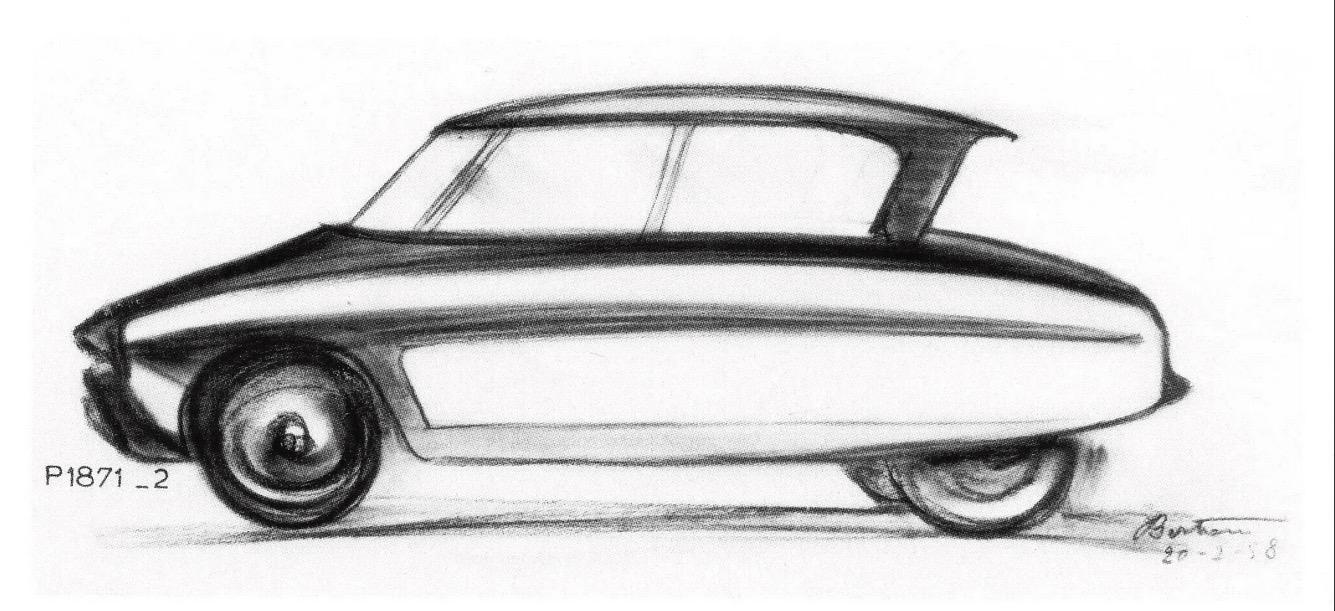
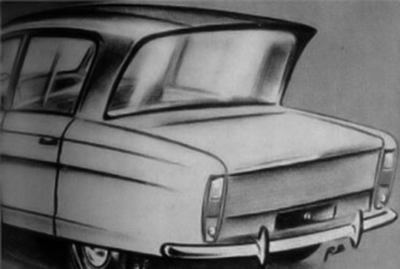
Pierre Bercot, who had presided over Citroën’s fortunes since 1958, wanted the new model to distance itself from the 2CV’s overall silhouette. The newcomer needed to look “typically Citroën” so it could clearly differentiate itself from the competition, but he insisted on a classic three-box body style. The two-box silhouette and, above all, the hatchback of the Renault 4 struck him as too utilitarian. For that same reason, the hatchback would later be rejected for the GS and the CX.

Bertoni’s Legacy
The design of the new Citroën was entrusted to Flaminio Bertoni, who — as with the Traction Avant, 2CV, and DS — created an iconic shape that would once again distinguish the marque.

One key feature of the new design was an inverted rear window. Bertoni did not choose this purely for “artistic audacity” but for practical reasons: the solution separated the luggage compartment from the passenger compartment while maximizing rear passenger space, and it offered the significant advantage of improved rear visibility. Only two other manufacturers had adopted such a solution before: Lincoln with the Continental in 1958, and Ford’s British subsidiary with the Anglia and the Consul 315 the following year.
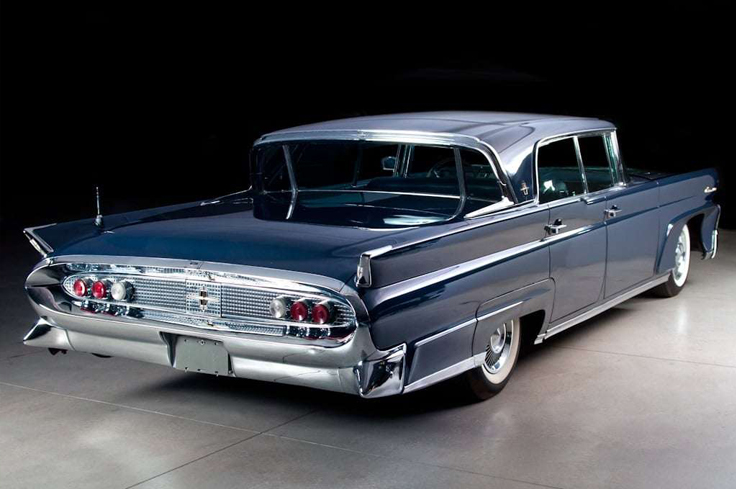
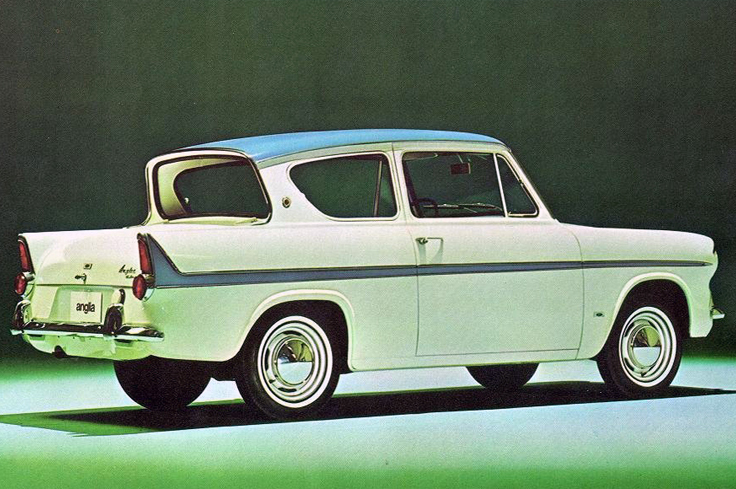
After the presentation of what would become the Ami 6, few manufacturers adopted the inverted rear window; the only notable exceptions were certain Mercury models of 1963–1964 and, in Japan, the Mazda Carol.
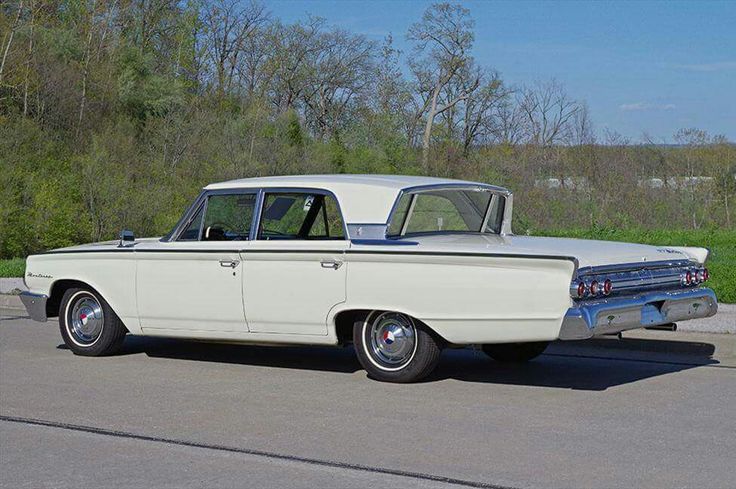
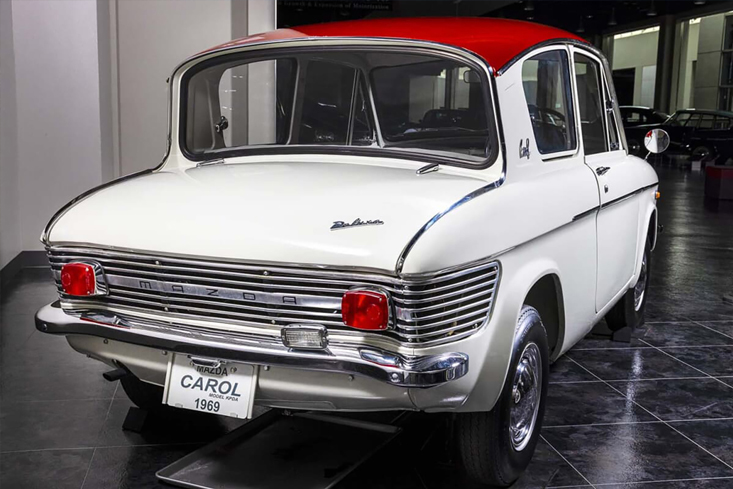
Up front, the Ami 6 eschewed convention with a hood that appeared draped like fondant, the center of the hood actually recessed.
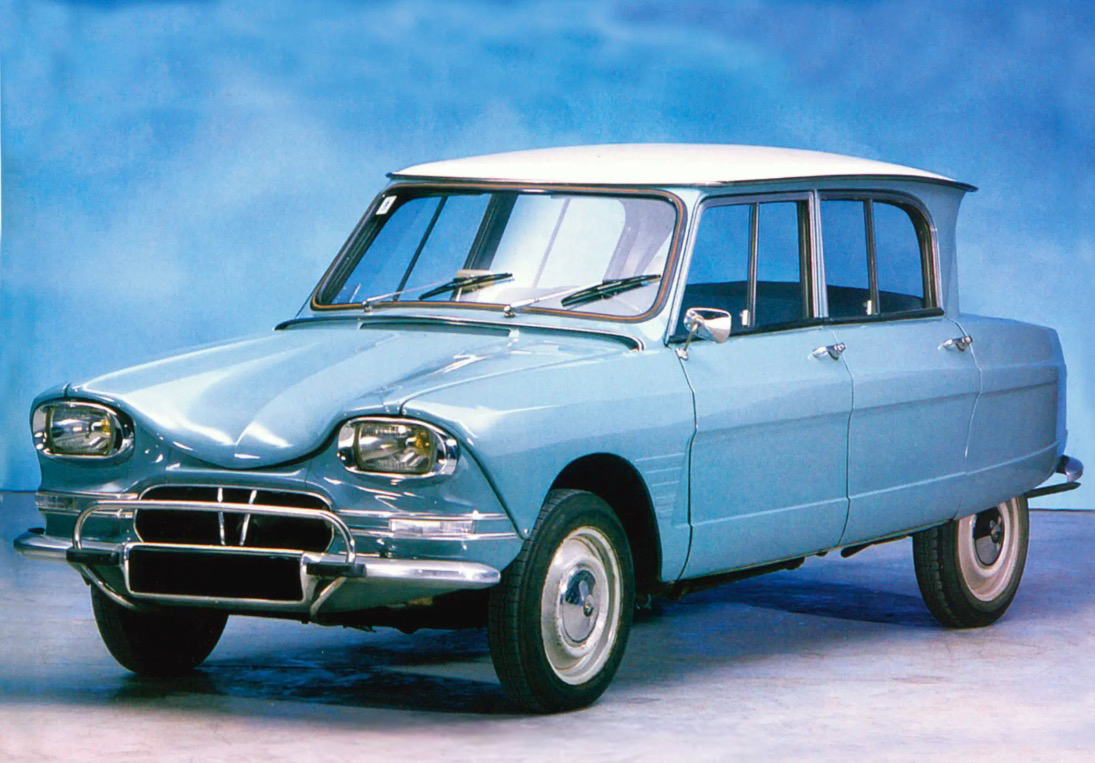
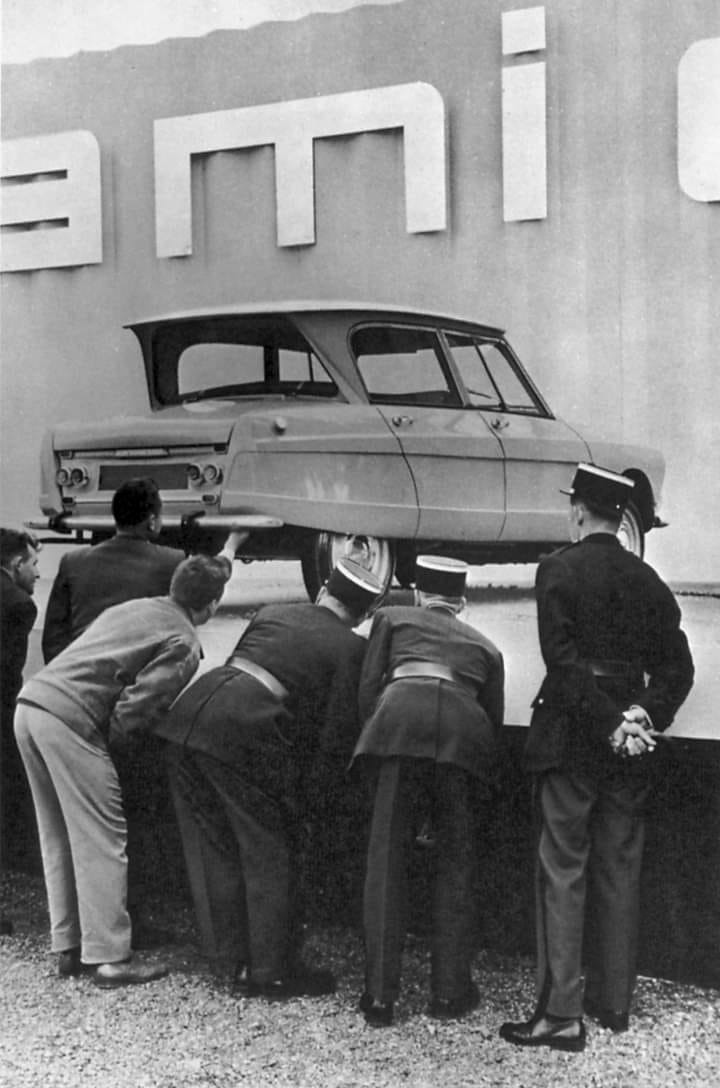
As expected, a significant portion of the public — including some loyal customers — were initially bewildered by these unusual styling elements when the Ami 6 debuted on April 25, 1961, four months before the widely anticipated Renault 4. It was the first Citroën since World War II not to be unveiled at a motor show. Citroën had originally planned to introduce it at the Paris Motor Show in October 1960, but production was to take place not at the historic Javel site in Paris but at the new factory in Rennes, causing delays. The Ami 6 was not shown at the Geneva Motor Show in March of the following year, although the first photos were released to the automotive press that month.
Journalists who test-drove the first models inevitably compared them to their illustrious predecessor. Fortunately, most comparisons were favourable, citing improved comfort, more responsive performance, and quieter running.
The Ami 6’s 602 cc engine placed it in the 3 CV tax bracket (the 2CV still had only the 425 cc engine at the time).
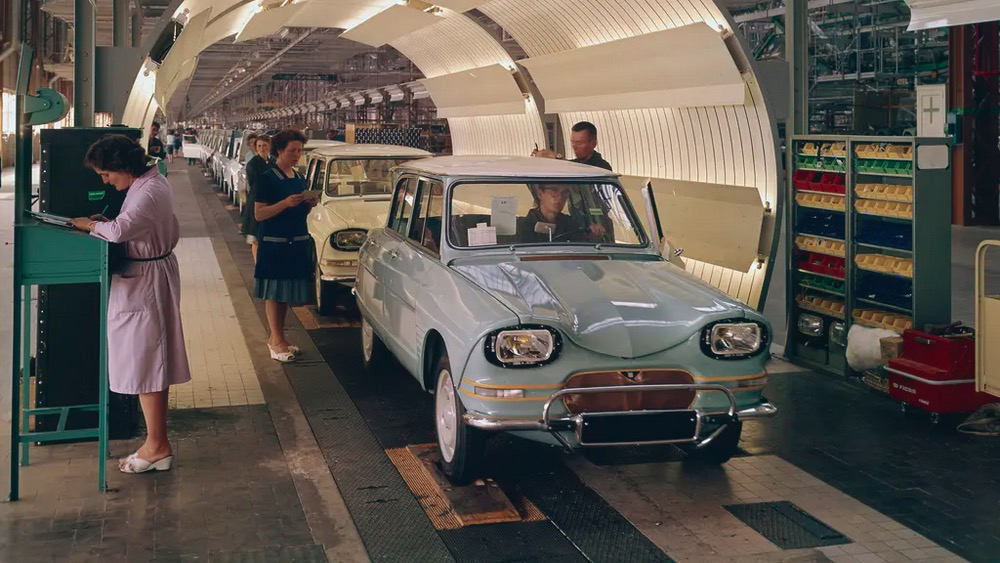
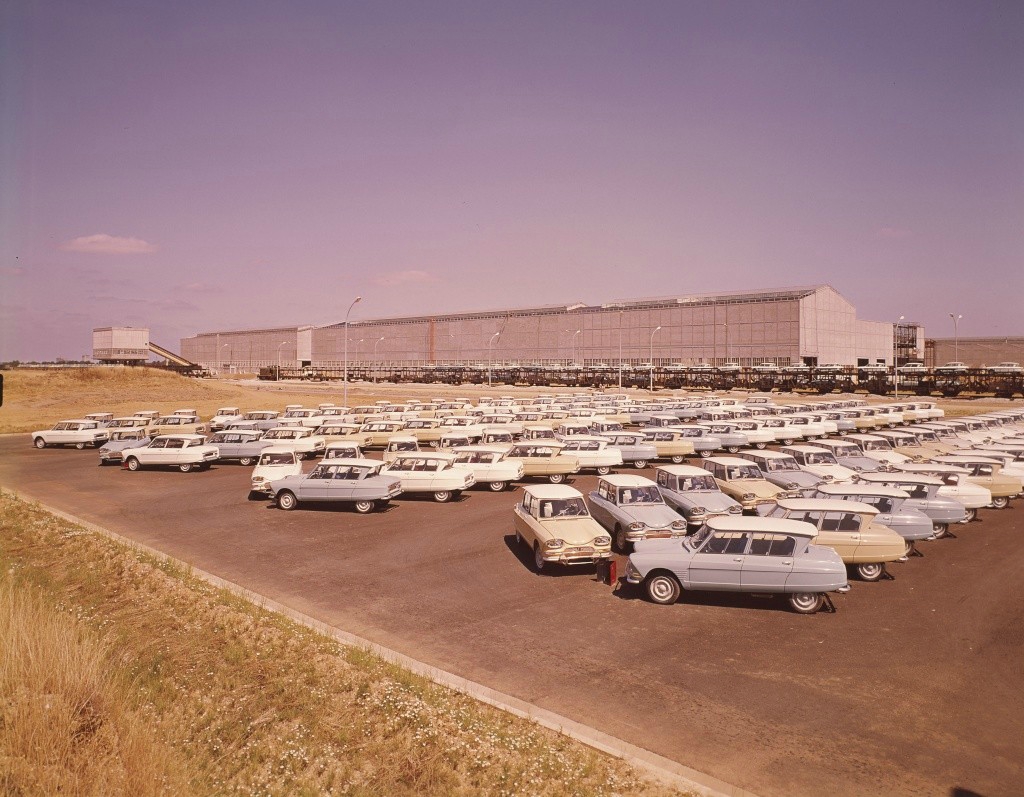
Priced at 6,550 francs, the Ami 6 was considered somewhat expensive for its class: its cost was similar to the Renault Ondine (a Dauphine variant) and the Panhard PL17, both in the 5 CV category, and equal to the Simca Étoile, classified as a 6 CV. With the 2CV selling for just over 4,900 francs, some felt Citroën was charging too much for the new model.
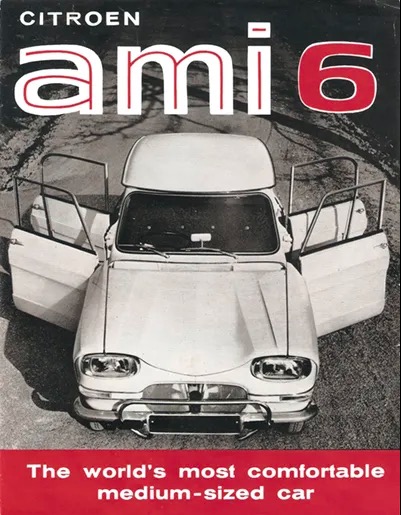
Technically, the Ami 6 could be seen as an upgraded 2CV, both mechanically and aesthetically. That perception was reinforced by shortcomings on early examples: fixed rear windows, a trunk lid without an external opening or a stay to hold it open during loading, and thinner door panels than fenders (with corresponding insulation and soundproofing drawbacks). Fortunately, these teething problems were quickly corrected.
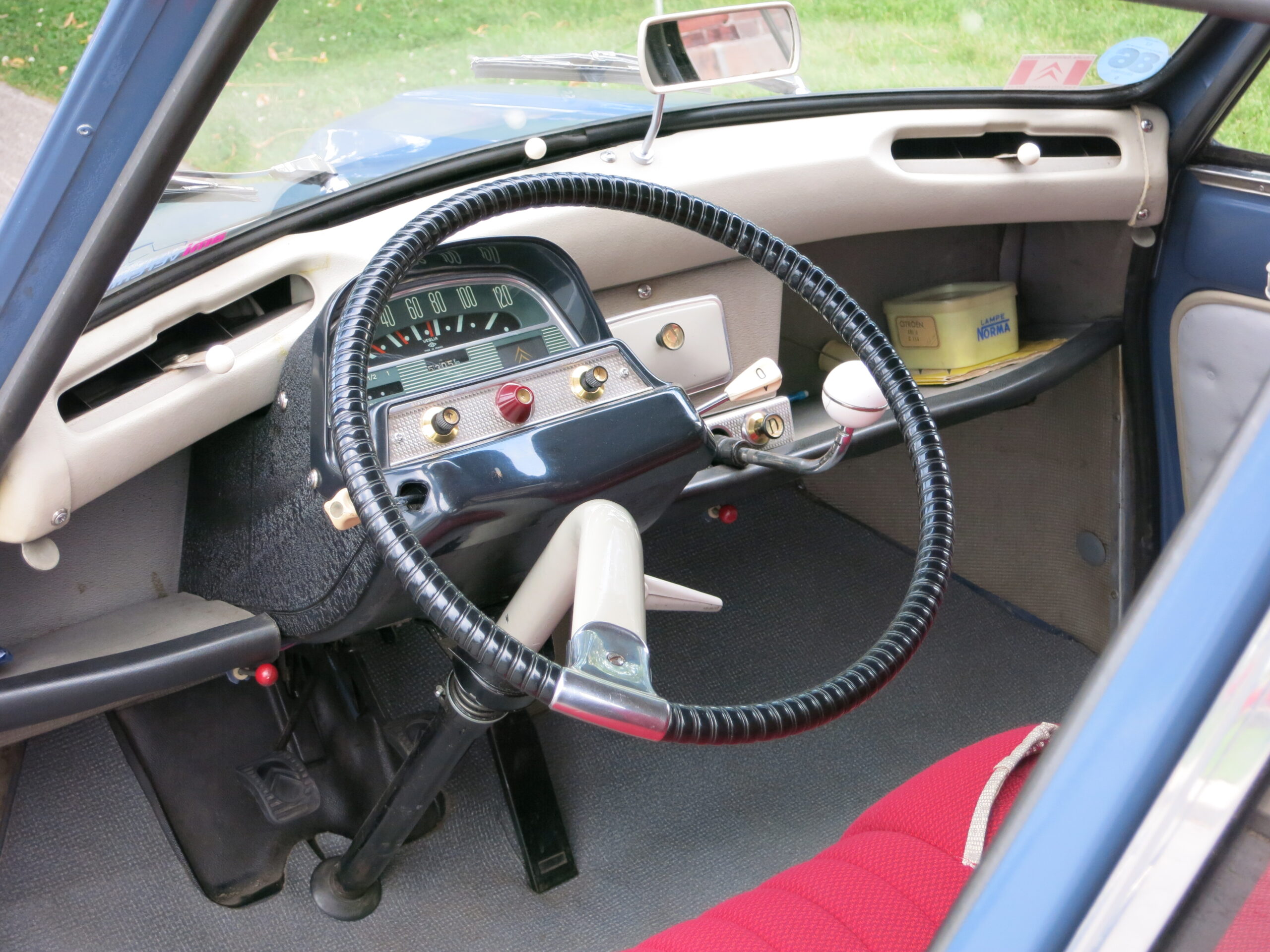
At launch, the color palette was conservative: Carrara White, Lebanon Grey, April Blue, and Absinthe Green. Upholstery featured a “holly leaf” pattern on a red, hazelnut, blue, or olive background; more unusual offerings included lavender blue, an extravagant “old rose,” and a “lost time” grey — names that likely amused the marketing department.
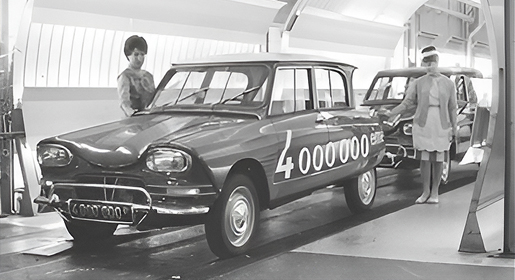
Despite a style that many did not immediately admire, the Ami 6 found its audience. Delivery times lengthened rapidly, and customers often waited several months to receive their cars — still better than the one- to two-year waits at the 2CV’s launch. The Ami 6 became a commercial success and was France’s best-selling car in 1966, with over 180,000 units sold (including the station-wagon version).
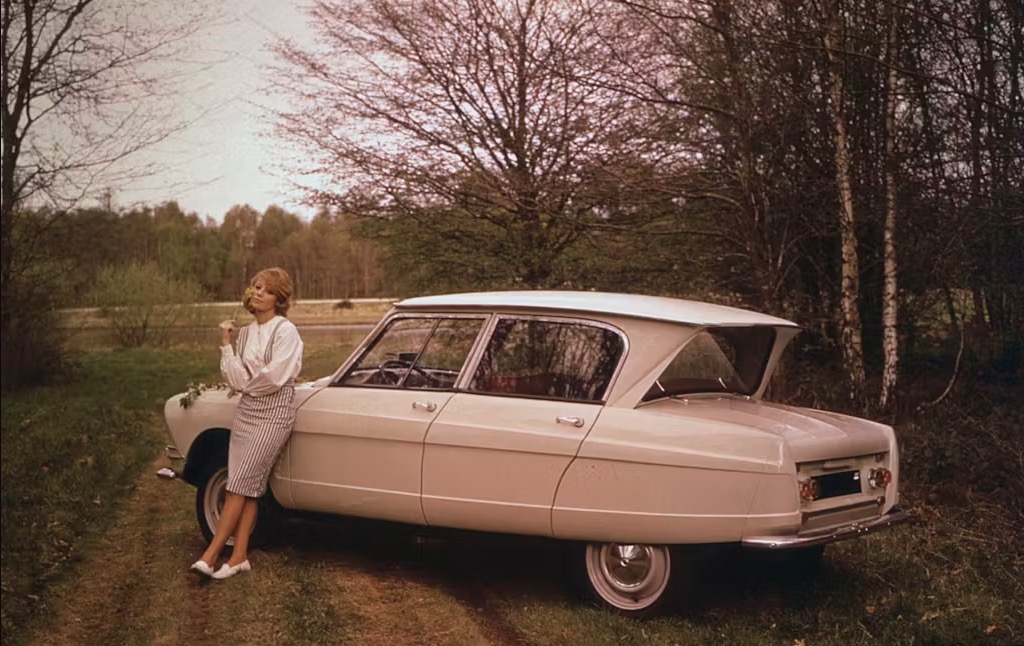
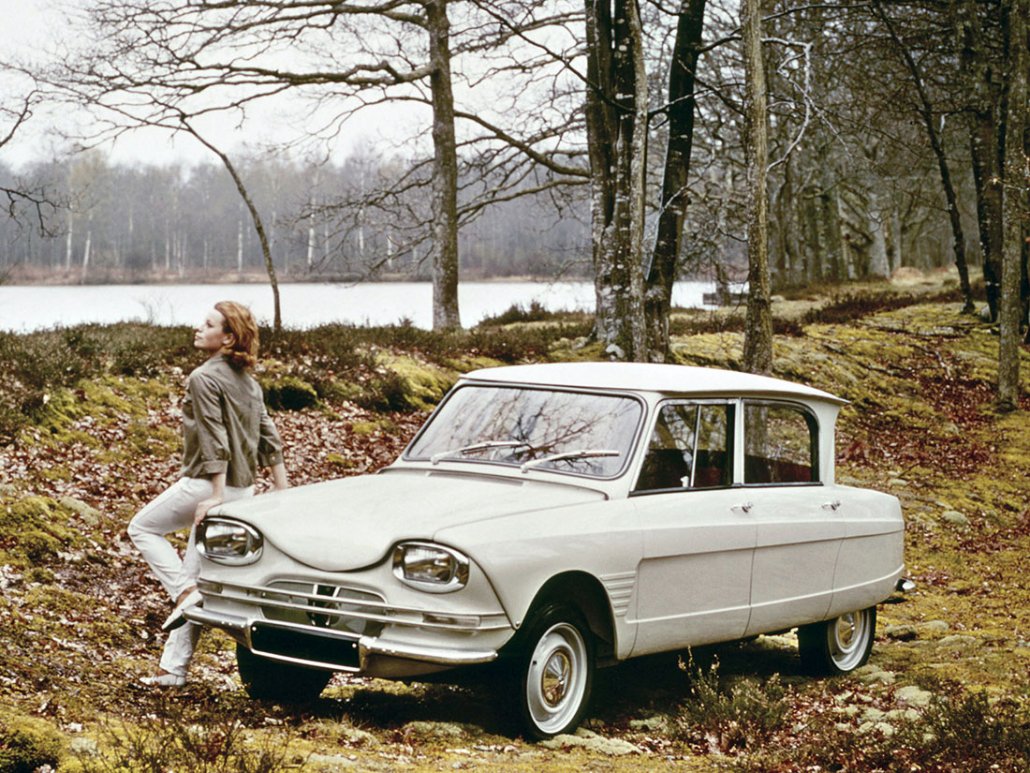
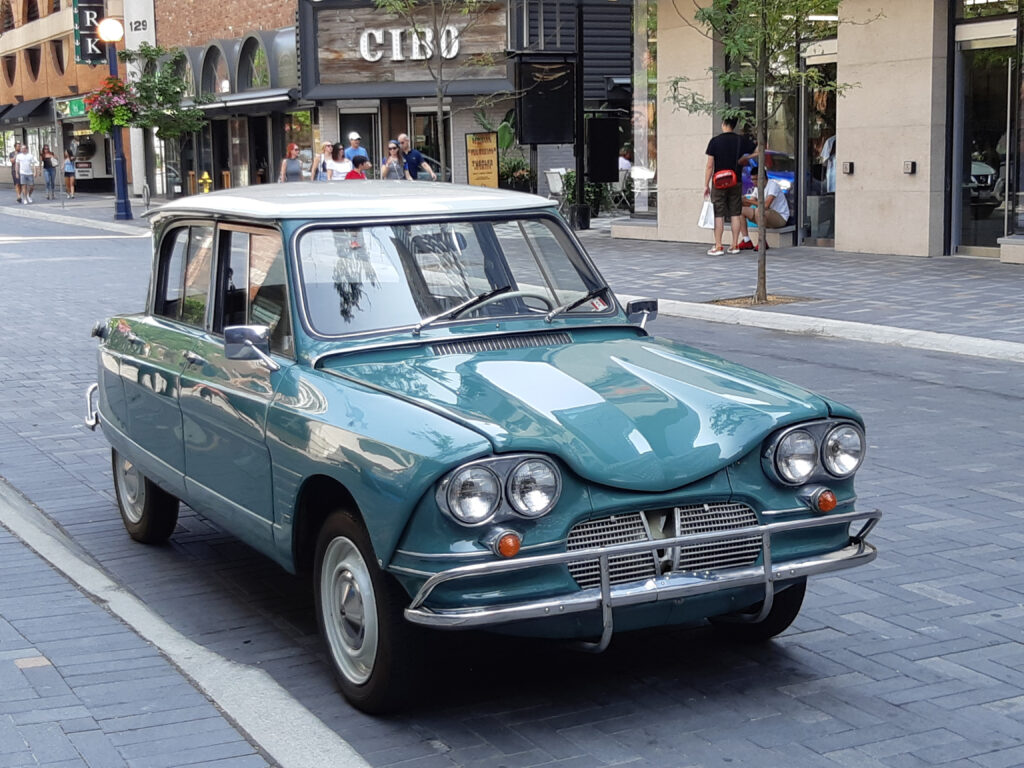
Beginning in 1963, Citroën exported the Ami 6 sedan to the United States featuring twin round headlights, round front turn-signal pods, additional chrome bumpers, horizontal grille trim strips, and a stainless-steel license-plate holder in front.
Although management initially refused to follow Renault’s hatchback/fifth-door approach, many dealers soon demanded it. The R4’s success had shown strong customer appetite for small “hybrid” cars that combined passenger-car comfort with light-commercial practicality. Bertoni had explored such a project, but Pierre Bercot initially vetoed it. Several coachbuilders later produced five-door Ami 6 variants in small series. Heuliez — already a key Citroën partner for commercial bodies — worked on a station-wagon body intending to show it at the Paris Motor Show in October 1962, but Citroën management opposed it after approving an in-house design.
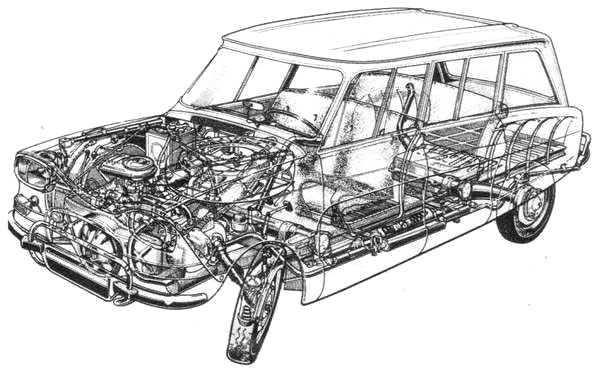
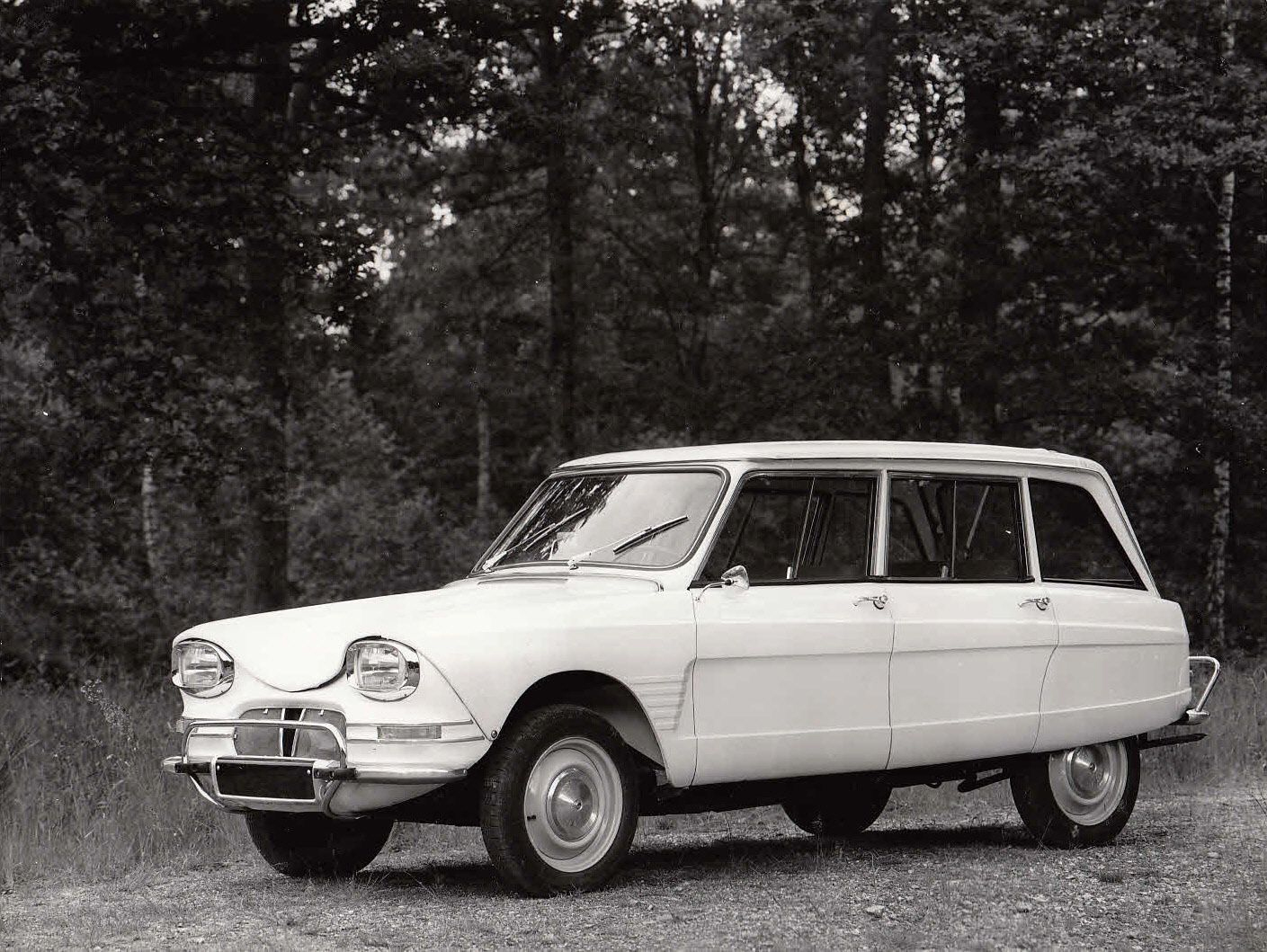
Based on some of Bertoni’s final work and completed by his successor, the Ami 6 station wagon was unveiled for the 1964 model year. It was offered in two trim levels, Tourisme and Confort, and in several interior configurations: 4 or 5 seats for the Tourisme, and a Commerciale utility version.
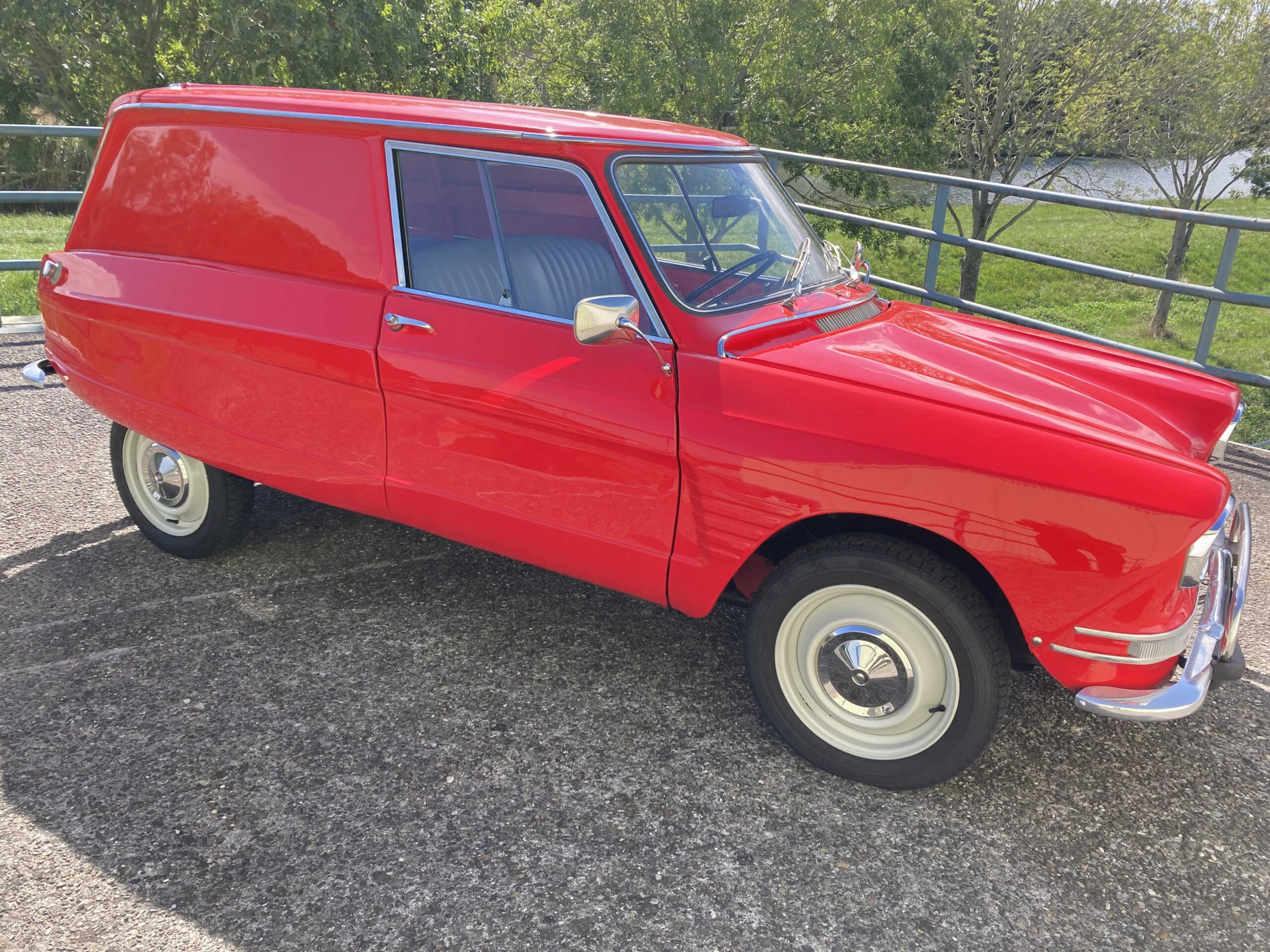
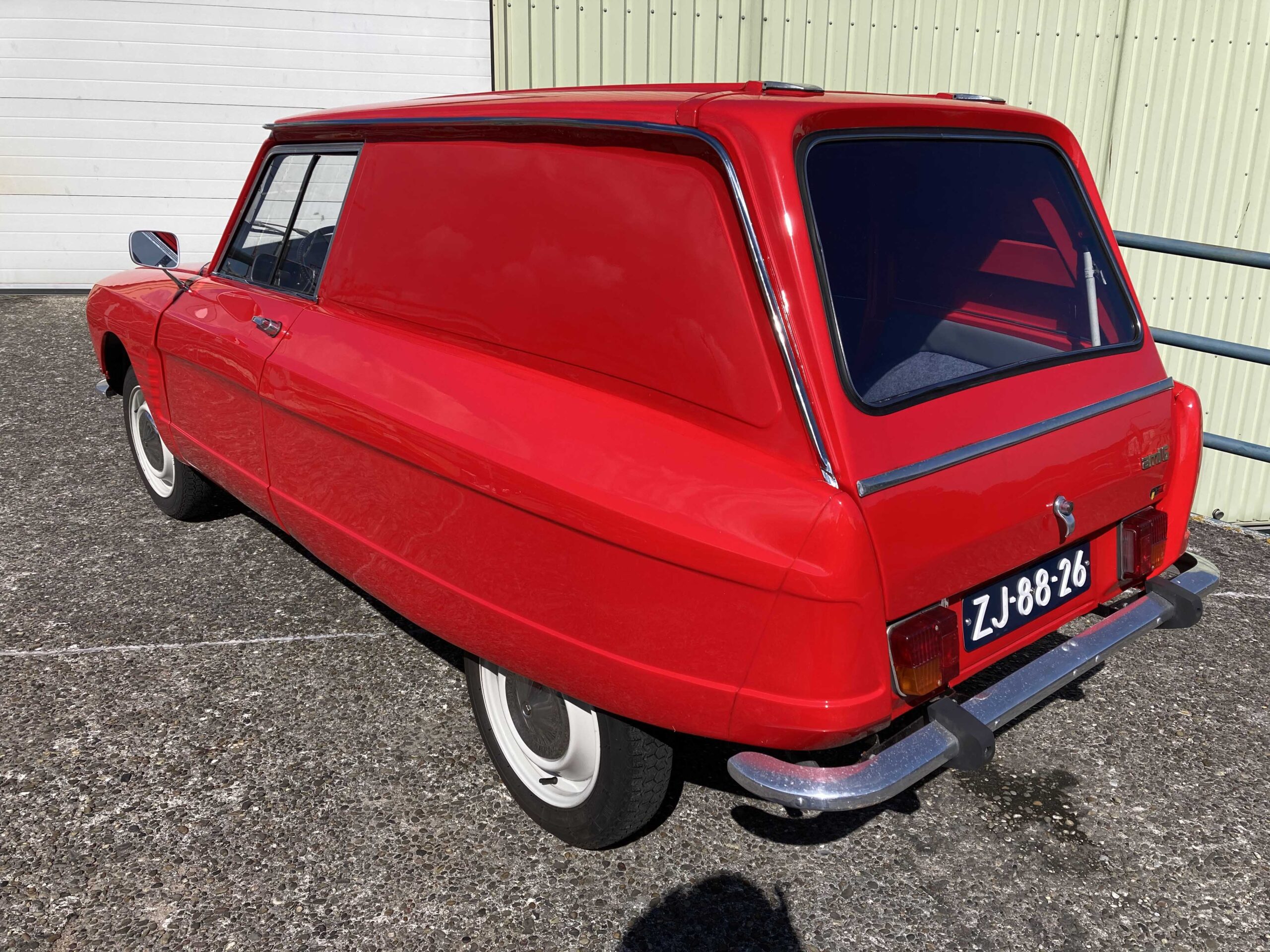
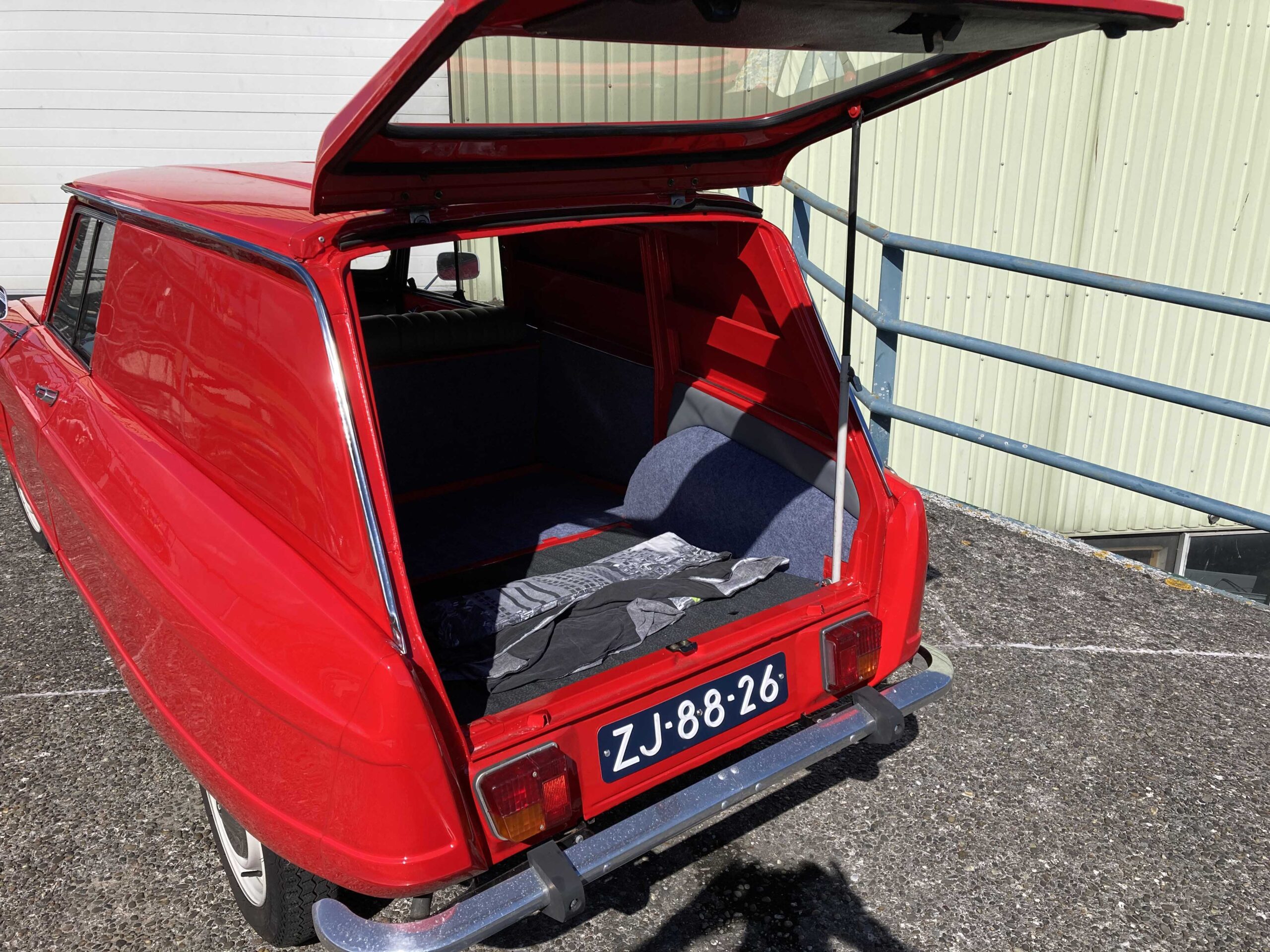
The 5-seater Confort, often ordered with a folding rear seat and removable rear floor, quickly became the most popular. Technically, the Ami 6 station wagon differed from the sedan by reinforced rear suspension to cope with greater load.
In early summer 1963, both sedan and wagon abandoned the 2CV-style cylindrical dampers at each wheel in favour of horizontally mounted hydraulic shock absorbers. That autumn, the twin-cylinder engine received a modest power increase from 22 to 25.5 hp thanks to a larger carburetor. In May 1966 the electrical system was upgraded from 6 to 12 volts, improving electrical performance.
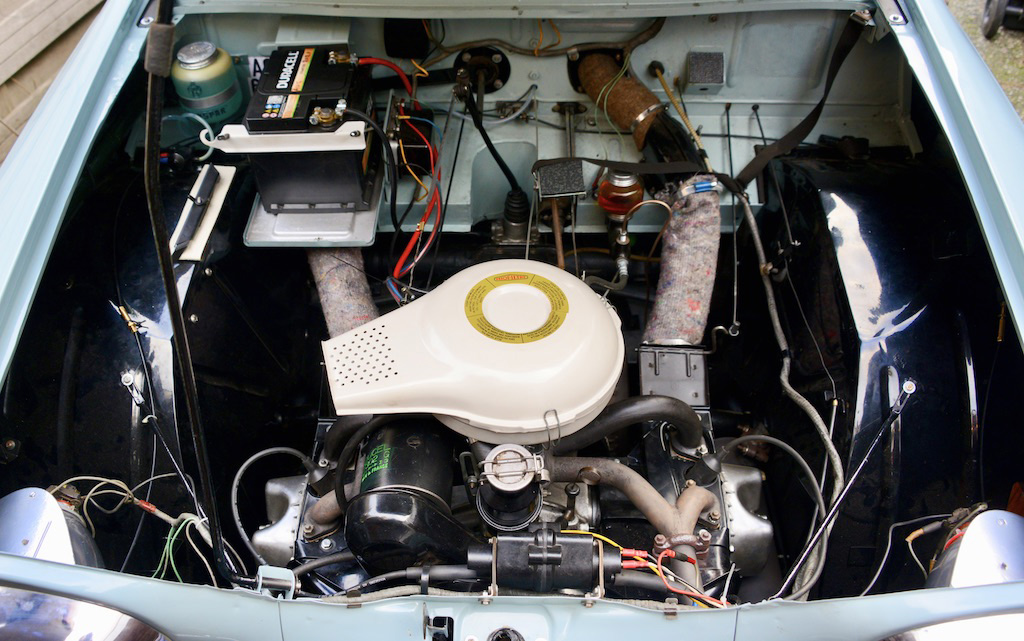
As the brand’s first station wagon in this category, Citroën had not expected demand to surpass that of the sedan, yet the wagon ultimately represented about three-quarters of Ami 6 production. Its practicality was the main reason for success, and its rear styling was, to many, more conventional than the sedan’s.
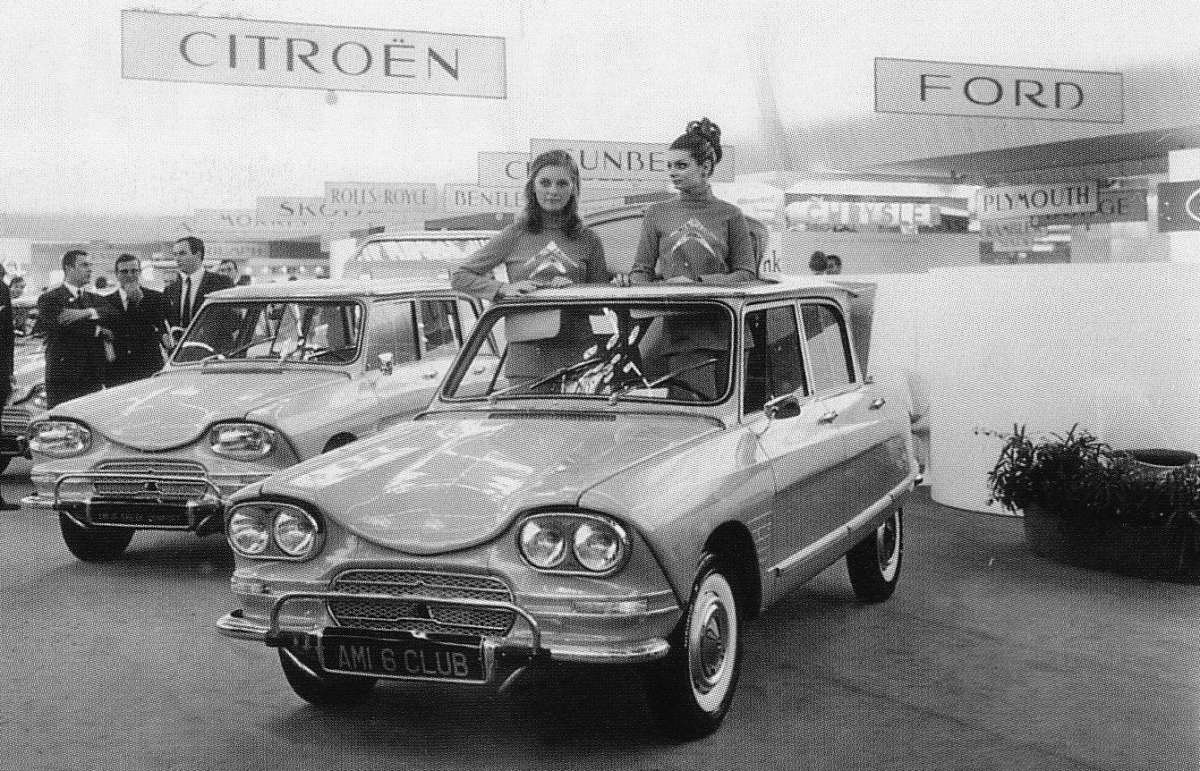
Bertoni did not live to see the Ami 6’s success. He regarded the Ami 6 as his masterpiece, more than the Traction Avant or the DS. He died of fulminant hepatitis on February 7, 1964, aged 61, and was succeeded as head of Citroën’s design department by Robert Opron.

The AM model, the original Ami 6 (sold only with Confort trim), was discontinued in April 1968 and replaced by the AM2. Although the AM2 retained the same displacement, its output rose markedly to 35 hp, largely due to a Solex 40 PCIS carburetor (compared with about 30 hp on early Ami 6 models). Interestingly, the final AM examples produced in early 1968 reached 28 hp while using the same carburetor as the successor. These upgrades improved top speed: early Ami 6 models barely exceeded 100 km/h (about 105 km/h, later 114 km/h), while the AM2 could reach approximately 123 km/h.
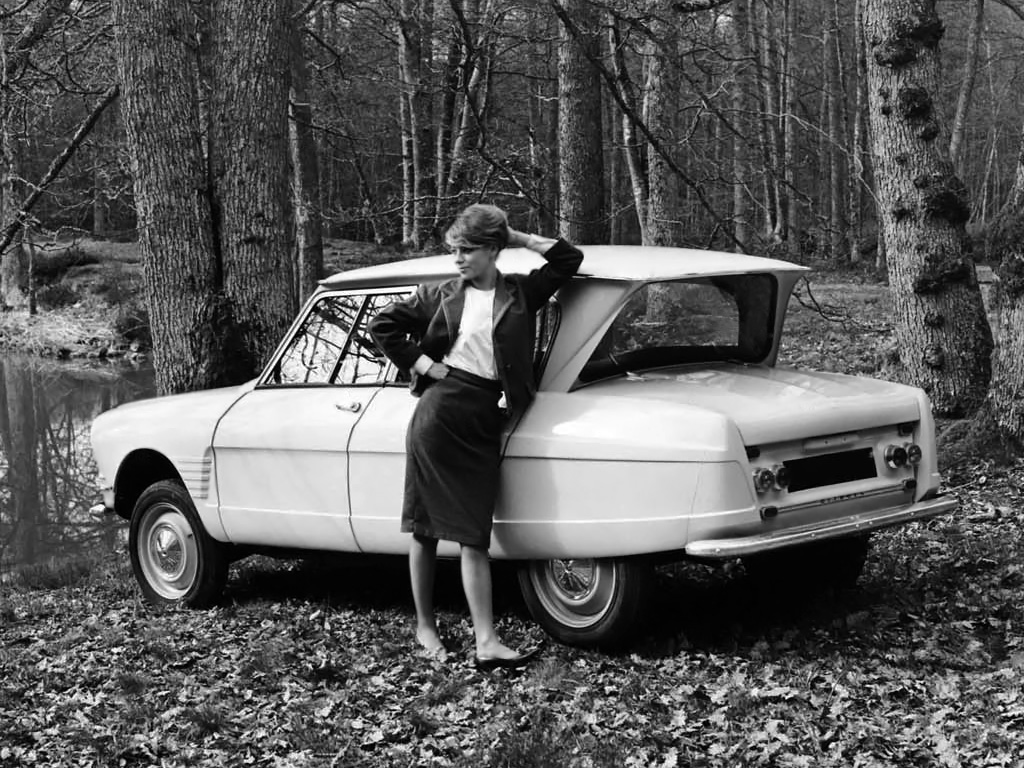
Robert Opron’s Contribution
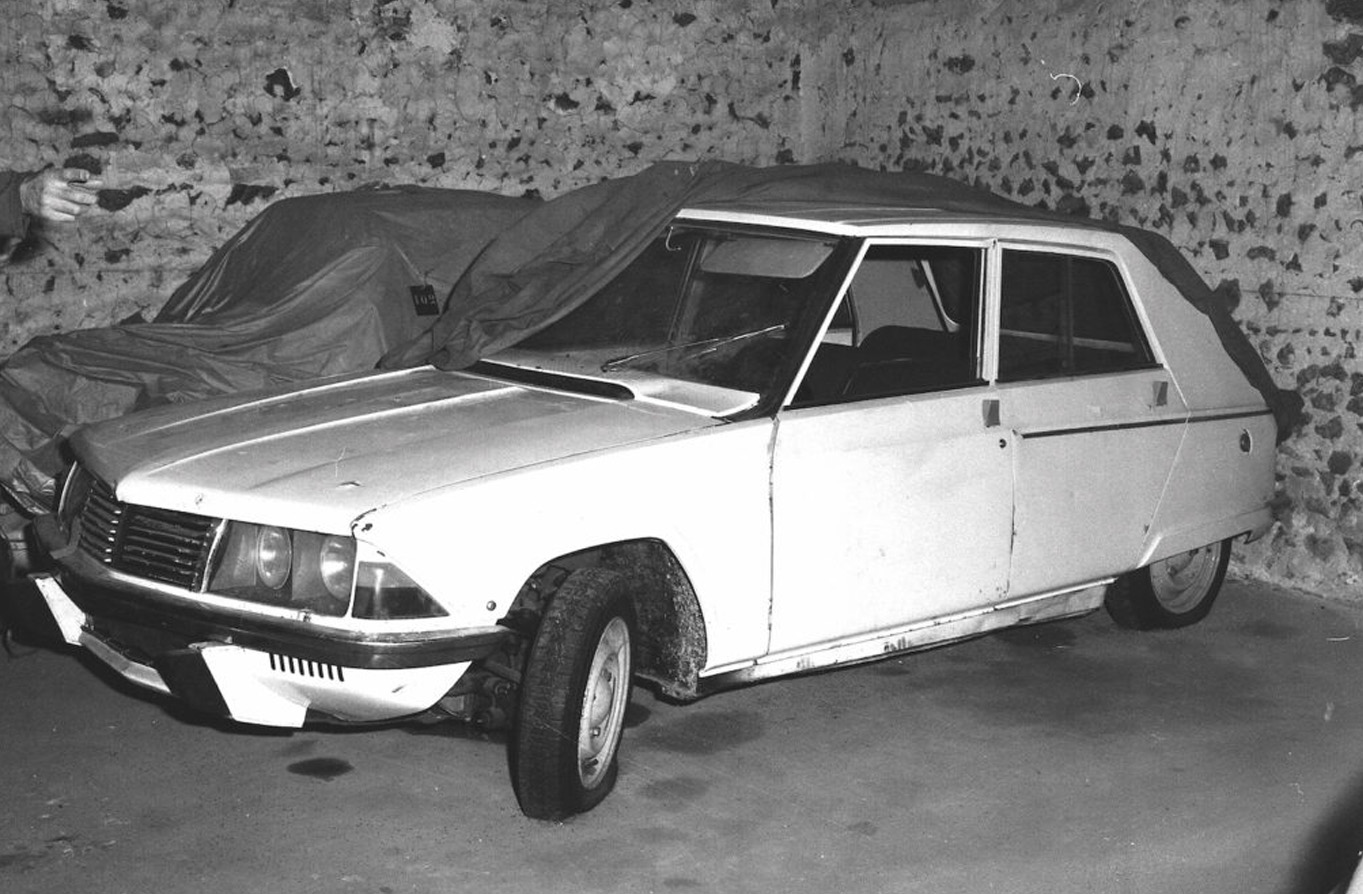
Chosen to succeed Bertoni, Robert Opron inherited several projects: rejuvenating the DS’s lines (including a new front end with four directional headlights); attempting to bring the ill-fated Project F (a mid-size program begun by Citroën in the 1960s) to fruition — a program canceled in 1967 amid controversy over similarities with the Renault 16; and developing a new, similar model (Project G), which would appear as the GS in 1970. Opron was also tasked with designing a “sport competition” version of the DS, which eventually became the SM, introduced in 1970.
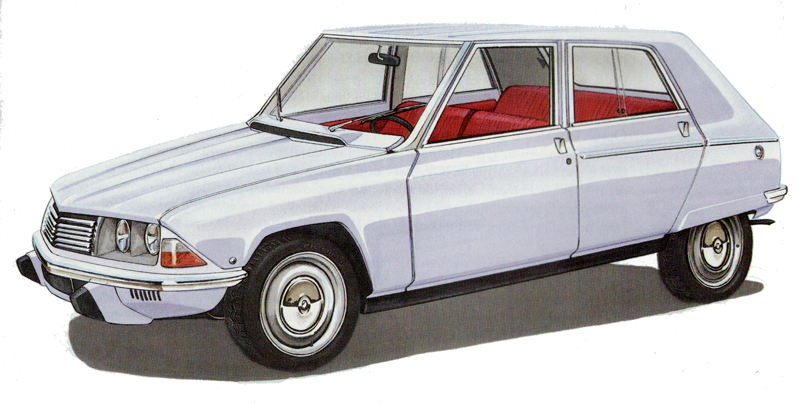
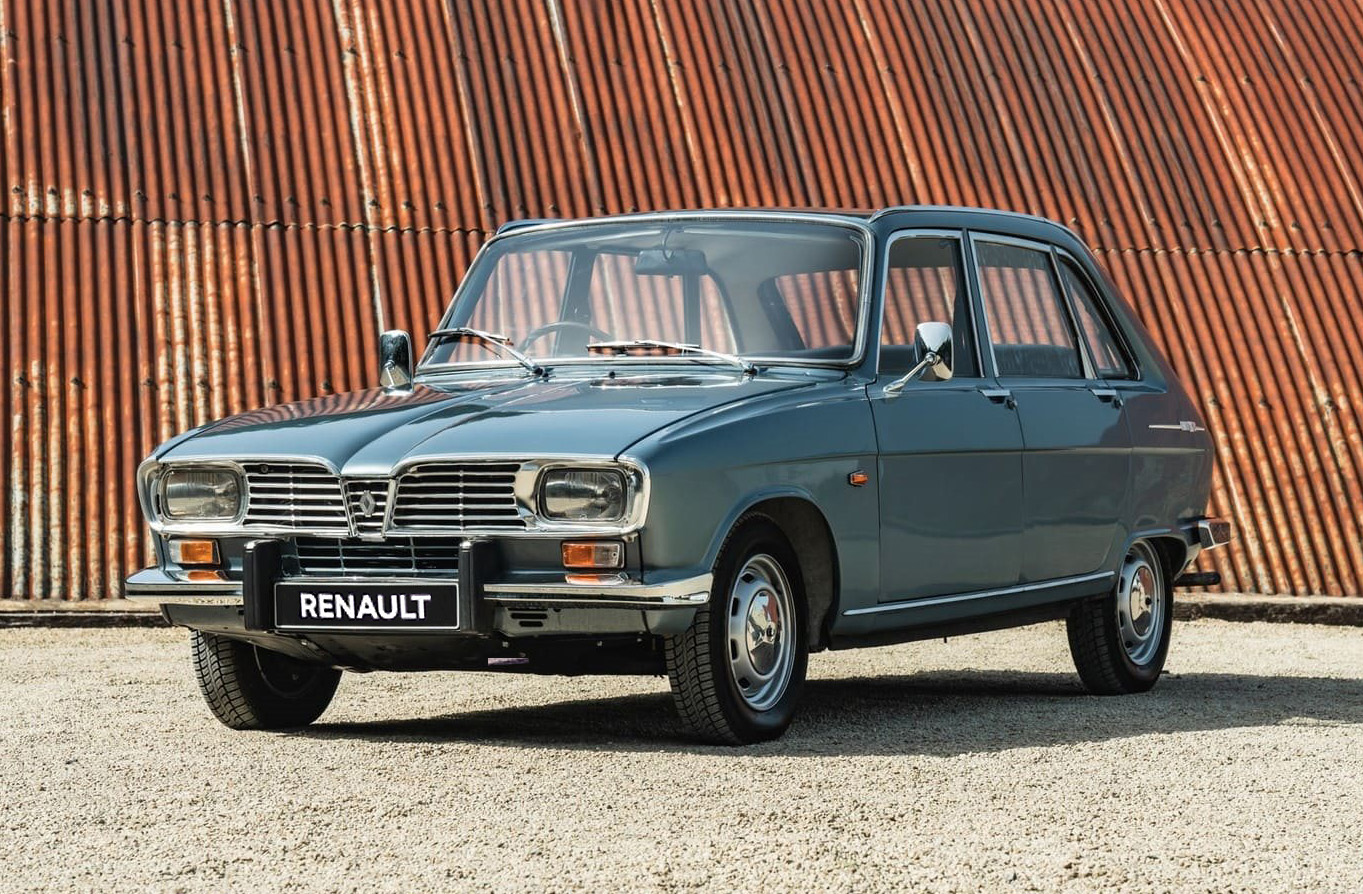
Meanwhile, although the Ami 6 had achieved sales success in France by asserting its difference, it struggled for acceptance abroad. Its styling seemed too unconventional to many buyers, who preferred the more conservative lines of the Renault 4 or the Simca 1000.
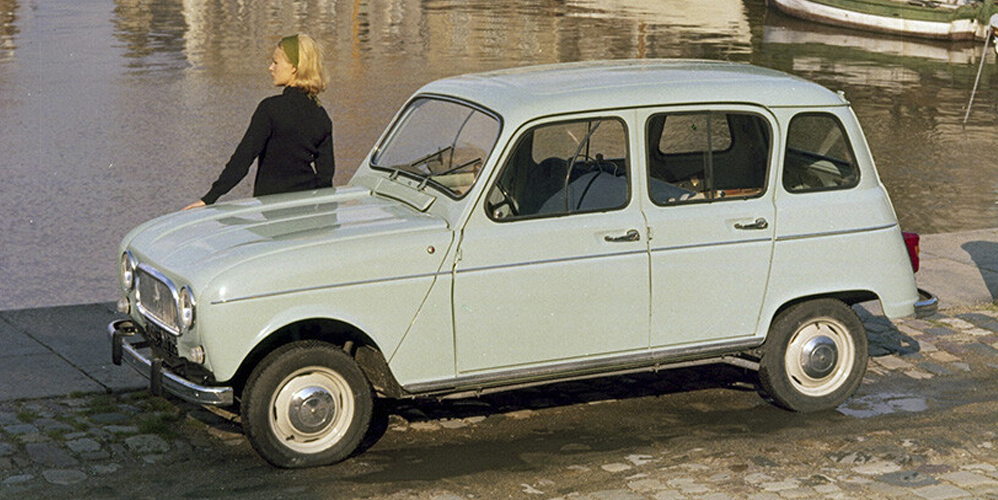
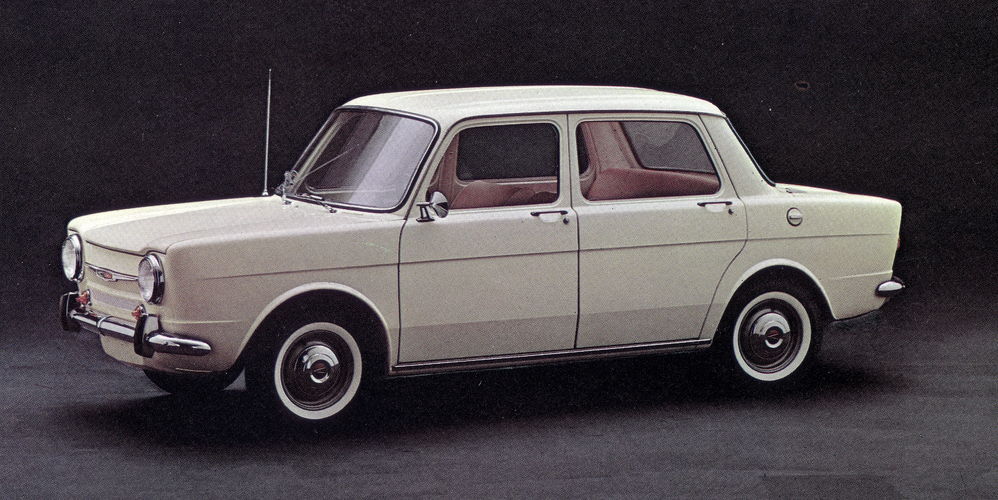
Citroën’s management concluded that a facelift could improve the Ami’s appeal in foreign markets and strengthen its position at home.
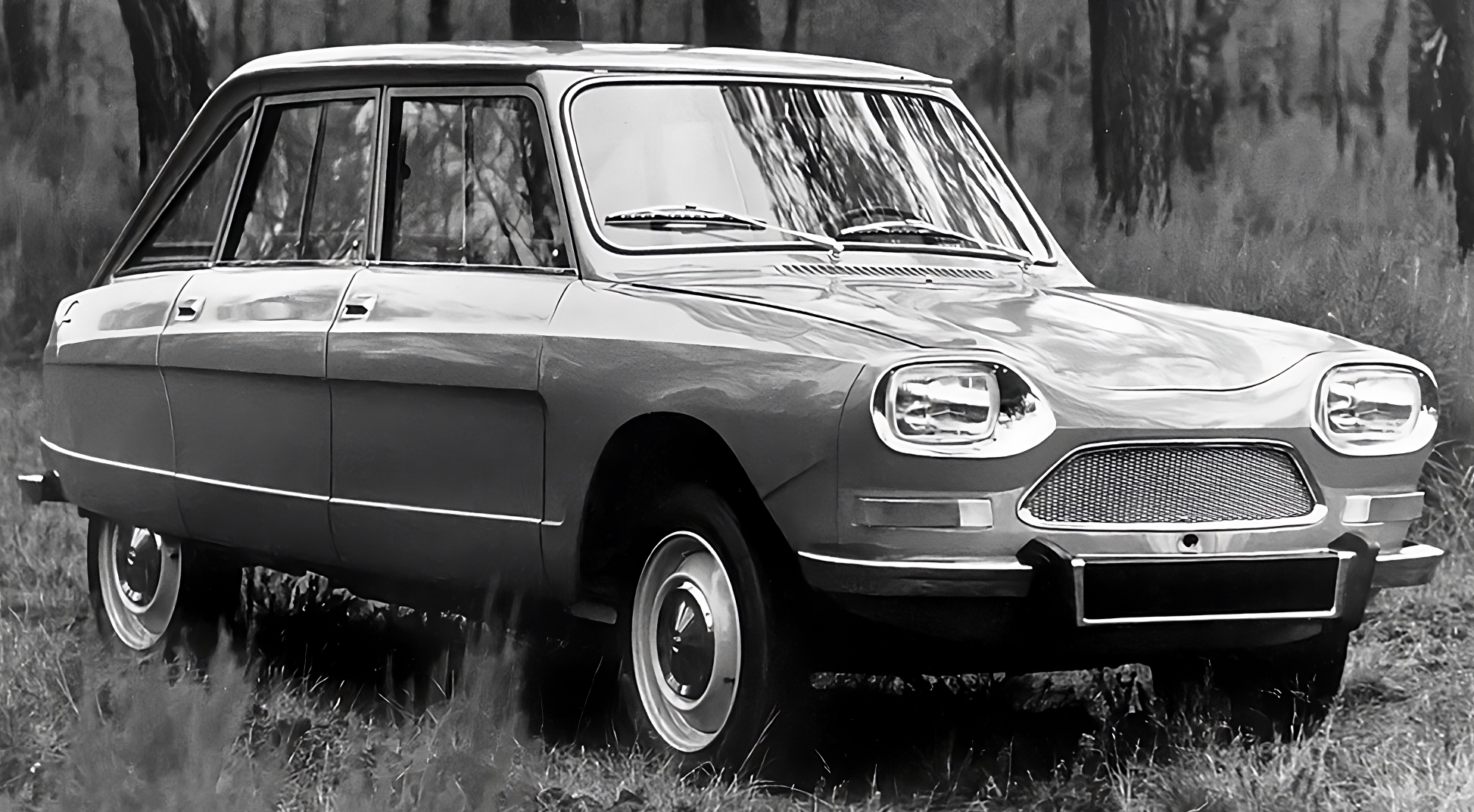
Under Opron’s direction, the Ami 6 was redesigned and relaunched as the Ami 8 — a name referring to the car’s eight side windows. The Ami 8 received a cleaner front end without the sloping hood while retaining rectangular headlights (a common feature of French cars in the 1960s, and an intentional nod to Bertoni’s work). It incorporated a larger windshield, smoother flanks, and recessed door handles. At the rear, the saloon abandoned the inverted rear window for a more conventional fastback profile. Despite the two-box design, the Ami 8 still lacked a hatchback and retained a conventional trunk lid; Citroën executives at the time considered hatchbacks more appropriate for commercial vehicles.
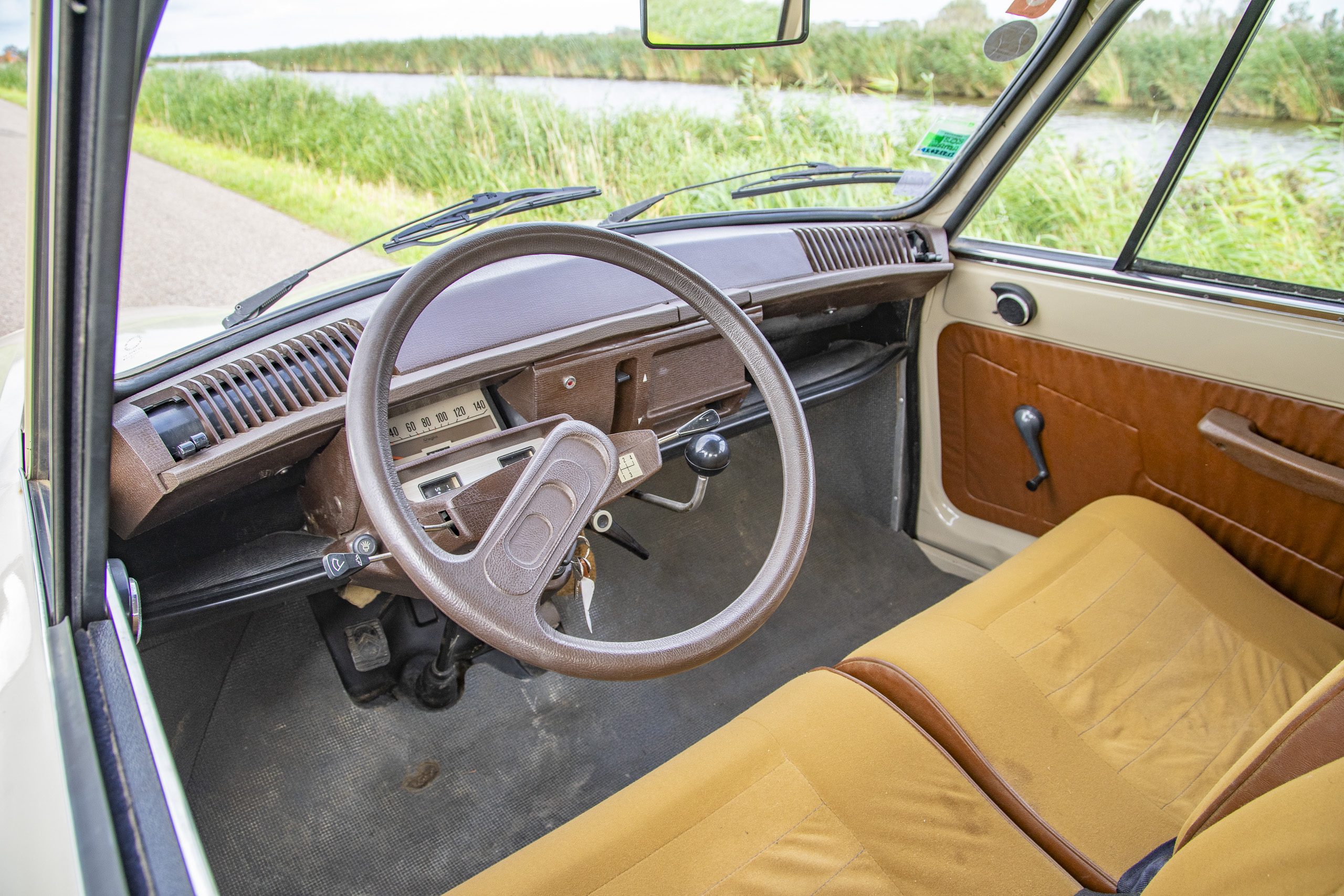
The interior received modest updates, including a new dashboard inspired by the Dyane and practical improvements such as a Neiman ignition switch, eliminating the pull-start handle inherited from the 2CV.
Technically, the Ami 8 remained largely identical to the Ami 6; the most notable addition was a front anti-roll bar. It initially retained drum brakes all around, but by July (four months after launch) it gained front disc brakes and switched to LHM brake fluid.
Launched in March 1969, the Ami 8 was initially offered only as a saloon in two trim levels: Confort and Club. The Club featured stainless-steel window surrounds, side moldings, mixed fabric-and-imitation-leather upholstery, reclining seats, carpeting, and luggage-compartment lining.
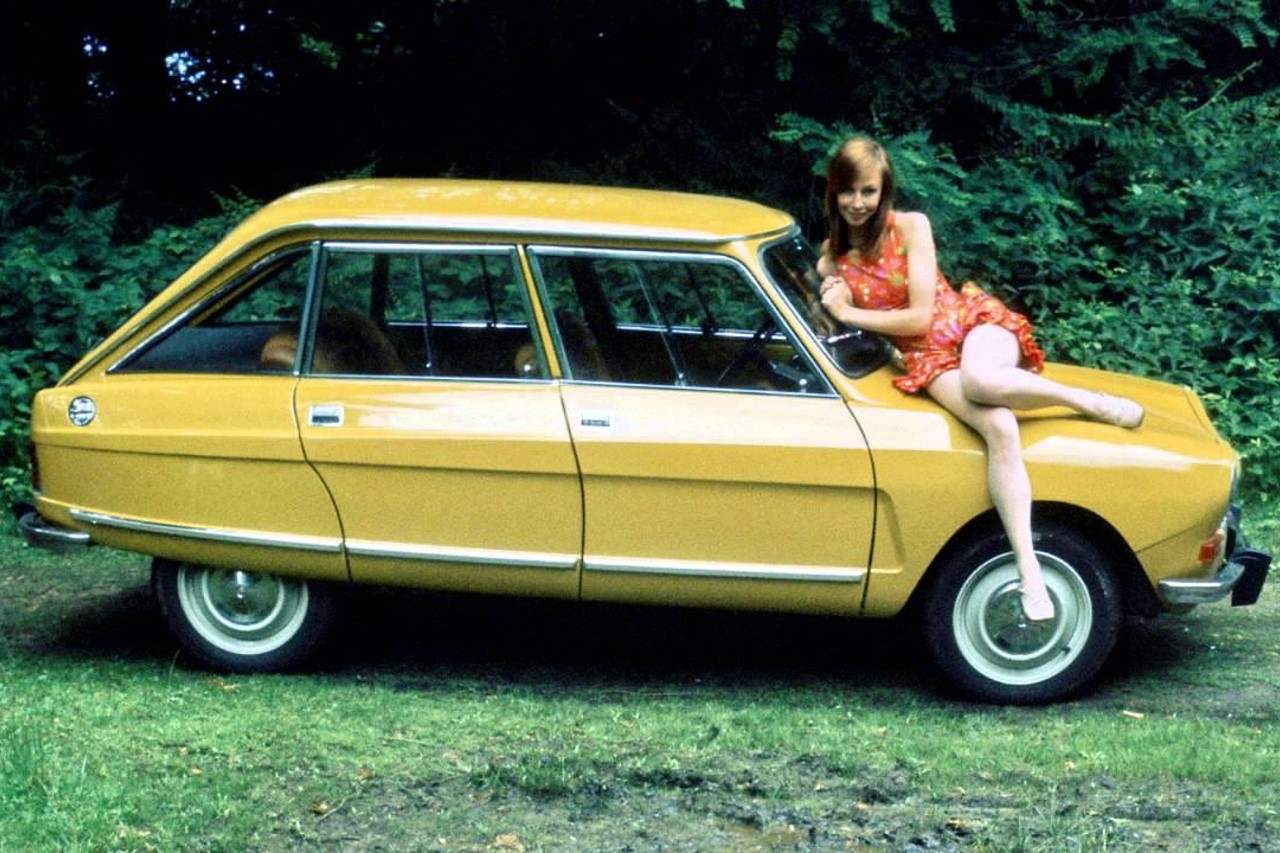
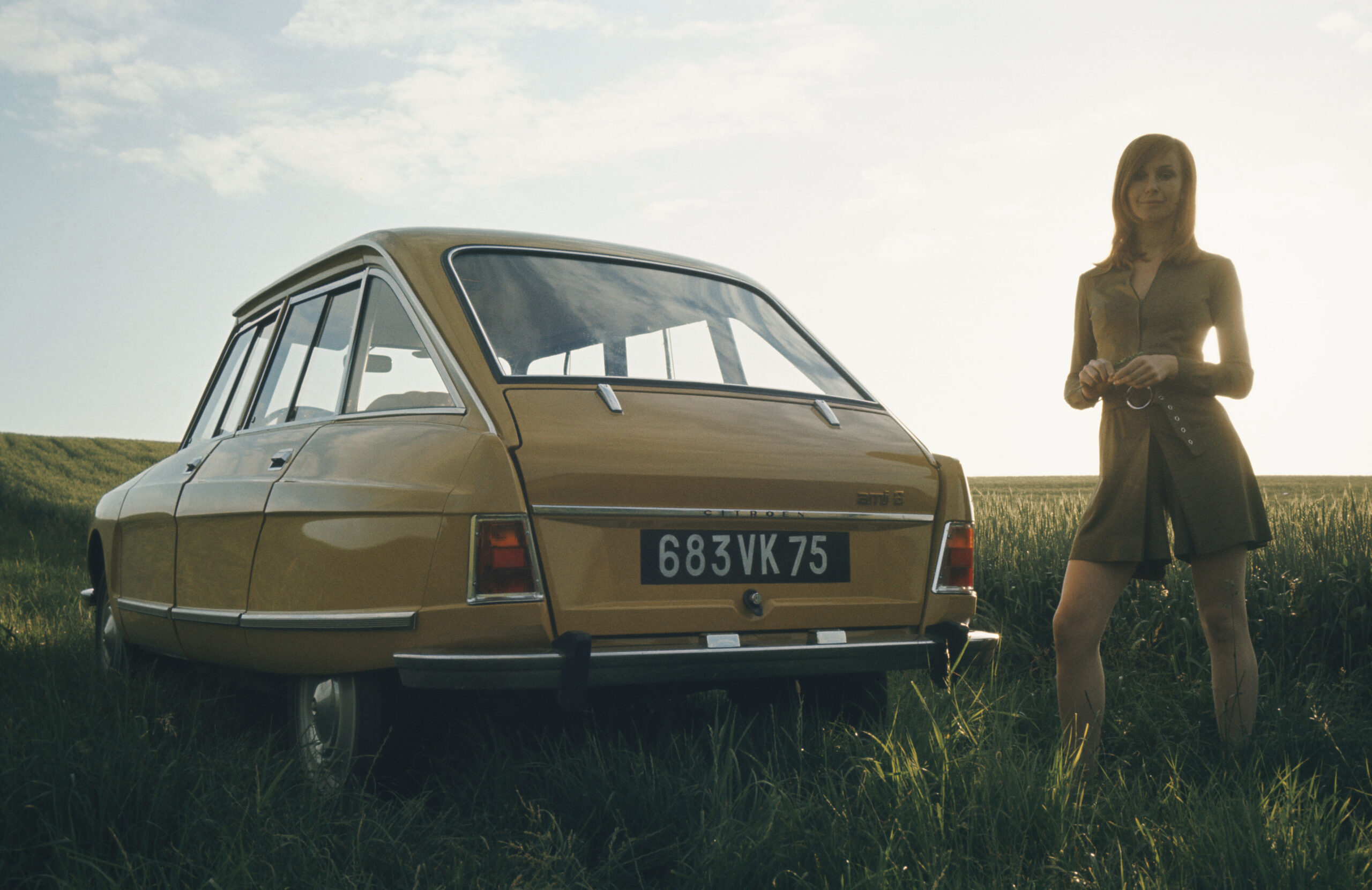
In November 1969 a station-wagon body joined the range and gradually replaced the Ami 6 wagon.
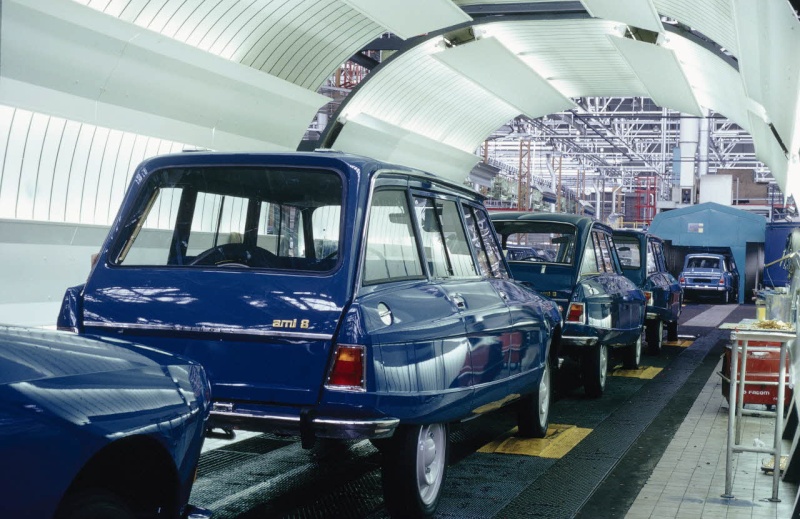
Overall, the Ami 8 underwent few major changes during its nearly ten-year production run; most modifications were minor, whether technical or cosmetic.
In early summer 1970 the front doors lost their sliding windows in favour of roll-down windows, prompting revised door panels and the removal of storage pockets (including on the rear doors) and the double-chevron emblem from the center of the grille. The exterior rear-view mirror (only on the driver’s side, since legislation then did not require a passenger-side mirror) was standard on the station wagon from launch; the saloon received it as standard from September 1971. Around the same time, the Ami 8 received Boge shock absorbers across the range.
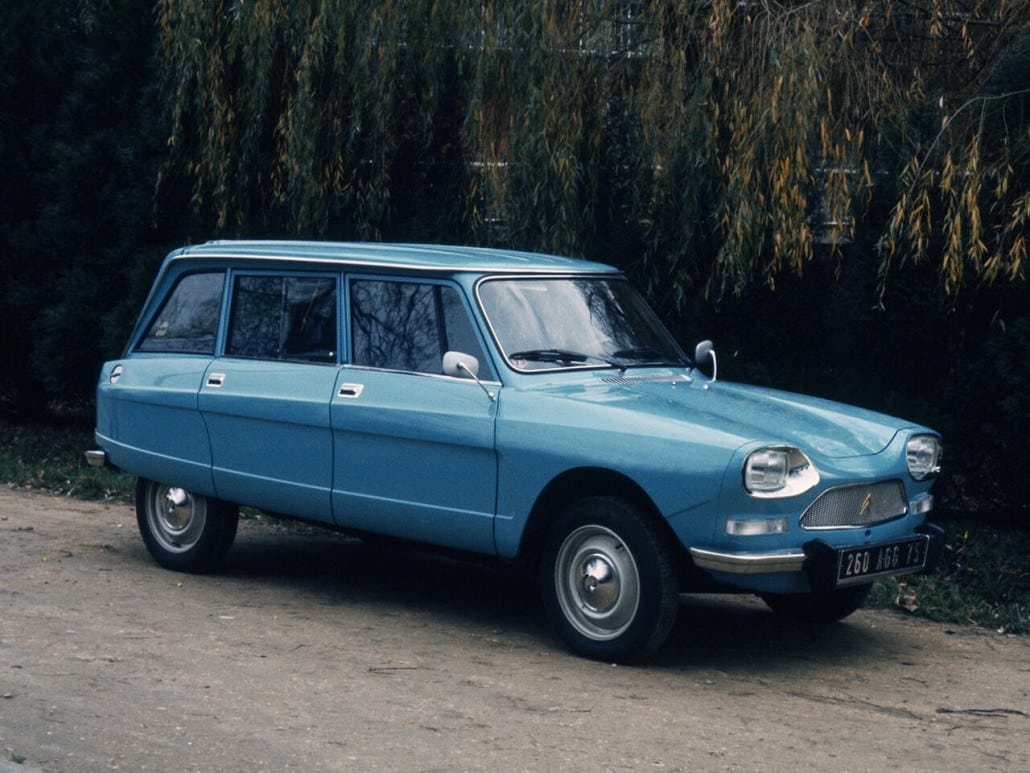
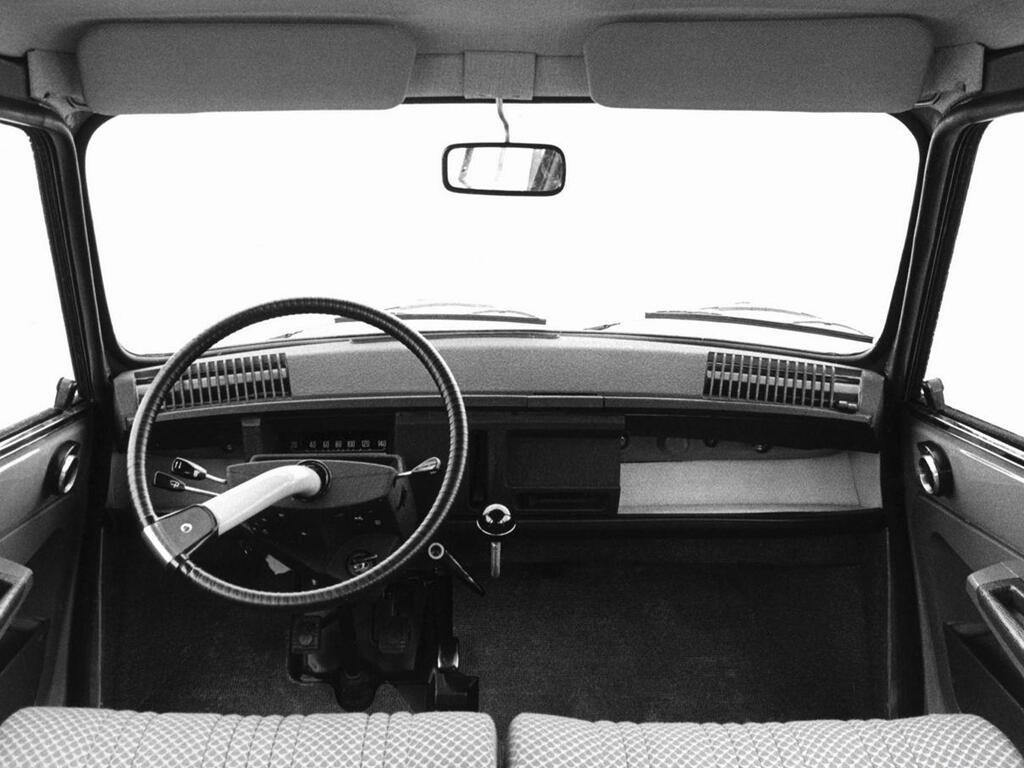
In September 1972 the fuel system was fitted with a new, lower-emission carburetor. In January 1973 the steering wheel was changed to a smaller-diameter foam rim, and the Club trim was discontinued. That summer the windshield-wiper finish changed from chrome to matte black; in early autumn the dashboard adopted a “Havana” brown finish, turn signals switched from orange to white, and a new interior light activated when the driver’s door opened.
In October 1975 the glazed Service variant (a three-door utility version of the Ami 8 wagon) was discontinued. In September 1976 the front end received a new grille and a black-trim dashboard; separate front seats replaced the traditional bench, and a folding rear seat became standard across the range. In July 1977 retractable seat belts were fitted to meet new safety standards.
These were the last significant changes before production ended in June 1978 (with a few examples assembled for export into the following year). As with the Ami 6, the station wagon accounted for the majority of sales.
Production totaled just over 729,300 Ami 8s (compared with about 1,035,000 Ami 6s). A respectable figure: roughly 40% of Ami 8 production was exported.
In addition to the Belgian factory in Forest, the Ami 8 was produced in Vigo (Spain), Portugal, and Yugoslavia. Outside Europe it was assembled from CKD kits in Argentina, Ecuador, Paraguay, and Uruguay. African production took place in Tunisia, Benin, and Madagascar.
The Ami Super
The launch of the GS in 1970 finally allowed Citroën to fill the long-standing gap between the Ami (Ami 6 and later Ami 8) and the D-range (ID and DS). Nevertheless, there remained room in the lineup for a model that combined the Ami 8’s compact body with the GS’s larger flat-four engine.
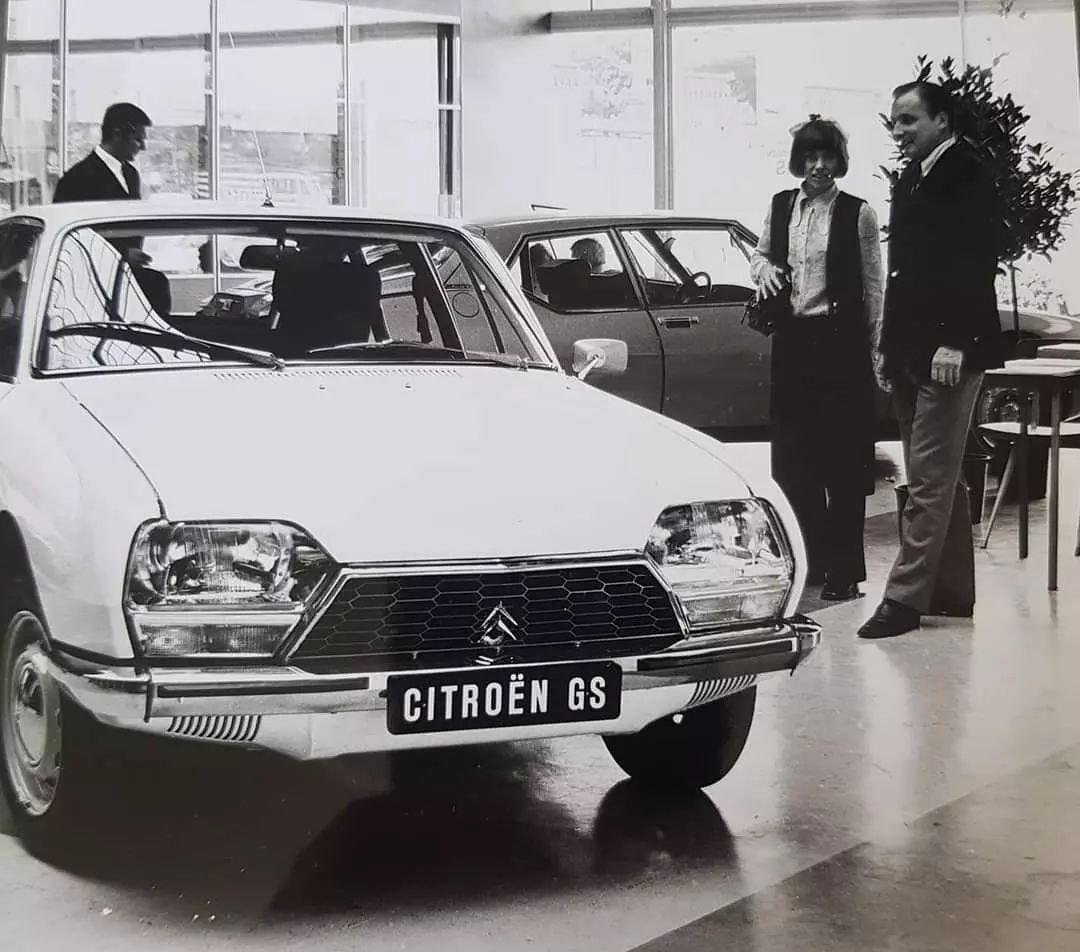
Designers quickly realized that marrying the two would yield a compact yet spirited model. By also incorporating the GS gearbox, Citroën added the “Super” designation to the Ami.
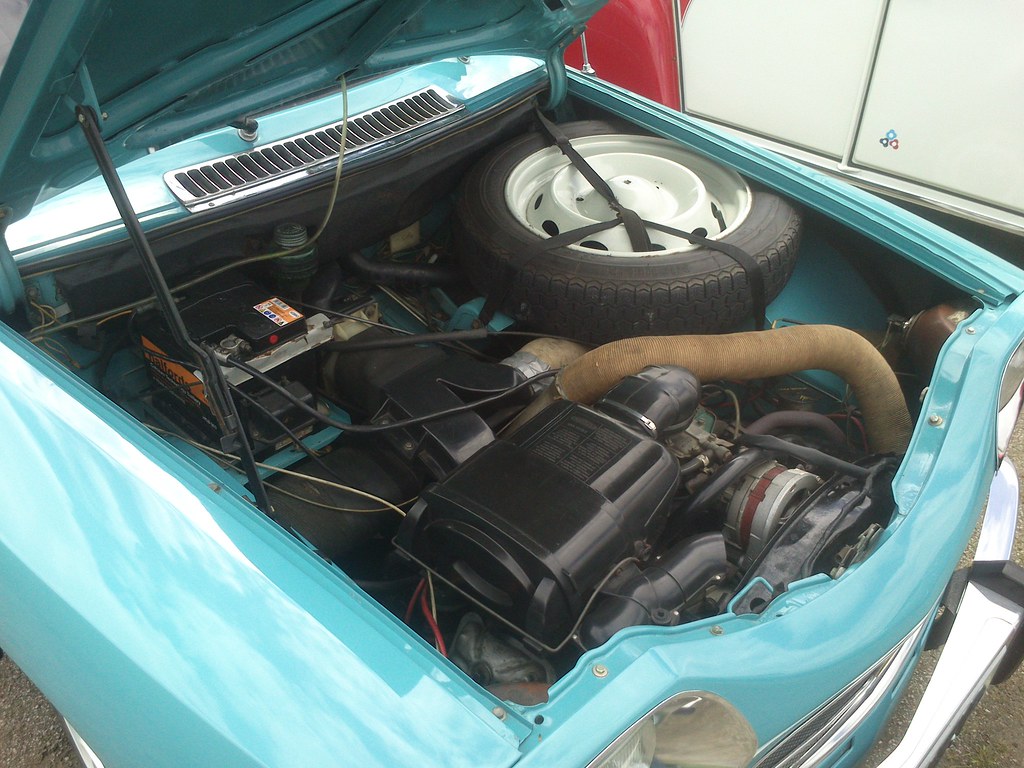
The Ami Super was presented in 1973 as a distinct model, visually distinguished up front by a larger grille with a broad horizontal trim and six vents below the grille to improve engine airflow. The Club trim offered on the Ami 8 was dropped.
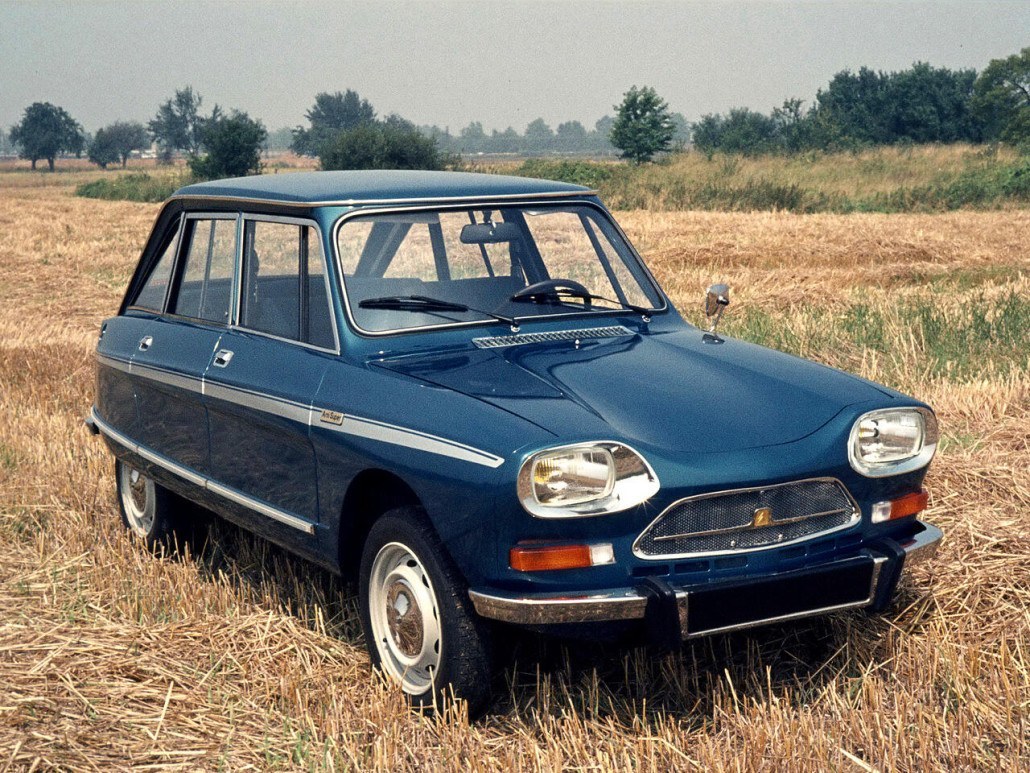
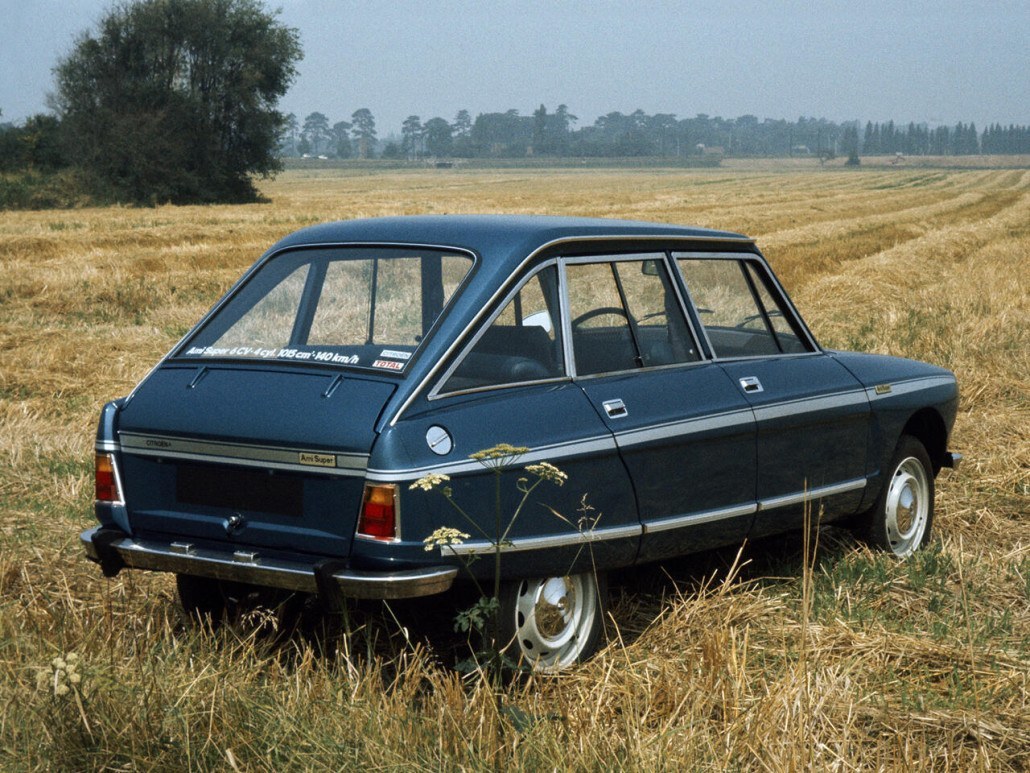
The Ami Super also offered a pragmatic technical advantage: the GS had just moved to a 1.2‑liter engine in its newer versions, so using the original GS engines in the Ami Super allowed Citroën to run down remaining stock. Even with the earlier GS engine, the Ami Super delivered strong performance for its class (power rose from about 35 hp in the Ami 8 to roughly 61 hp in the Ami Super), though fuel consumption was relatively high for a compact car—an important drawback during the oil crisis. This likely explains why, despite a competitive base price (11,600 francs versus just over 13,000 francs for the Peugeot 204), the Ami Super had a brief, discreet career. It was discontinued in February 1976 after just over 44,000 units were produced (nearly 24,800 station wagons and just over 19,200 hatchbacks).
In Summary
Citroën developed the Ami line in the 1960s to bridge the gap between the 2CV and its larger models: Bertoni’s striking Ami 6 (with its inverted rear window) won rapid domestic success despite initial stylistic controversy and was followed by the more conventional Ami 8 under Robert Opron, who modernized the front, interior, and mechanical details to broaden appeal abroad. The Ami range evolved technically (suspension, brakes, electrics, engine upgrades) and commercially (station-wagon popularity, wide international assembly), and peaked with the short‑lived high‑performance Ami Super (1973–1976) using a GS flat‑four engine.
In total, more than 1,840,396 Amis were manufactured over the model’s production run.
The Ami 8 sedan was replaced by the Visa in 1978, but the station-wagon version had no direct successor; it retained the Ami 8’s mechanical components in entry-level versions and thus continued, alongside the 2CV, Citroën’s two-cylinder line.

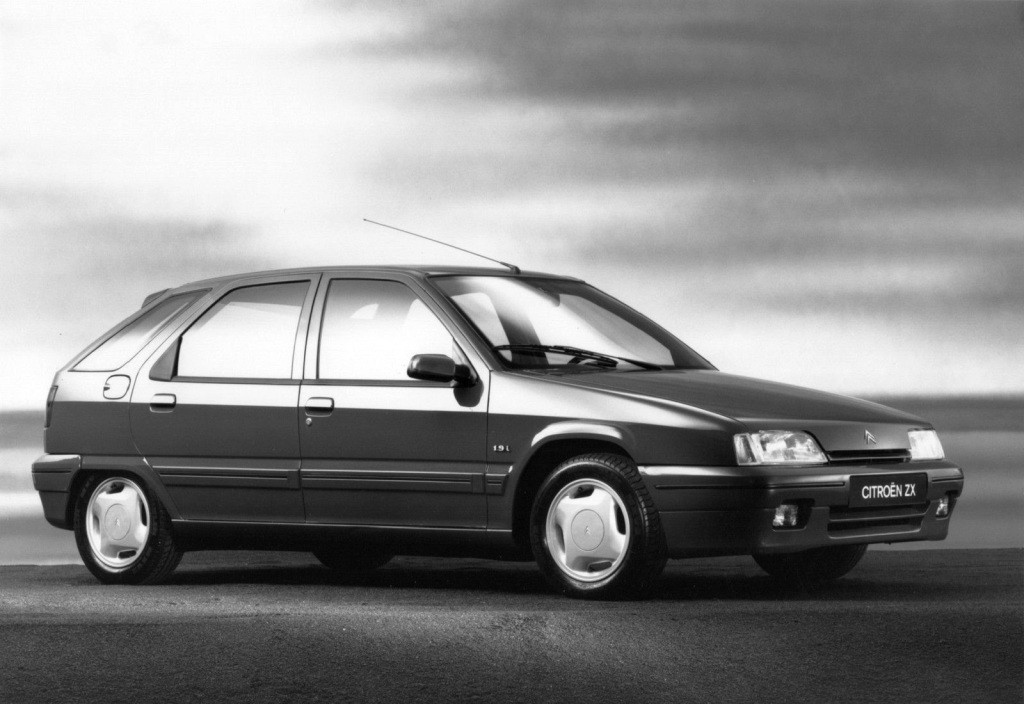
Although the Visa is better described as a city car, Citroën did not fully re-enter the compact-car segment until the ZX in 1991.